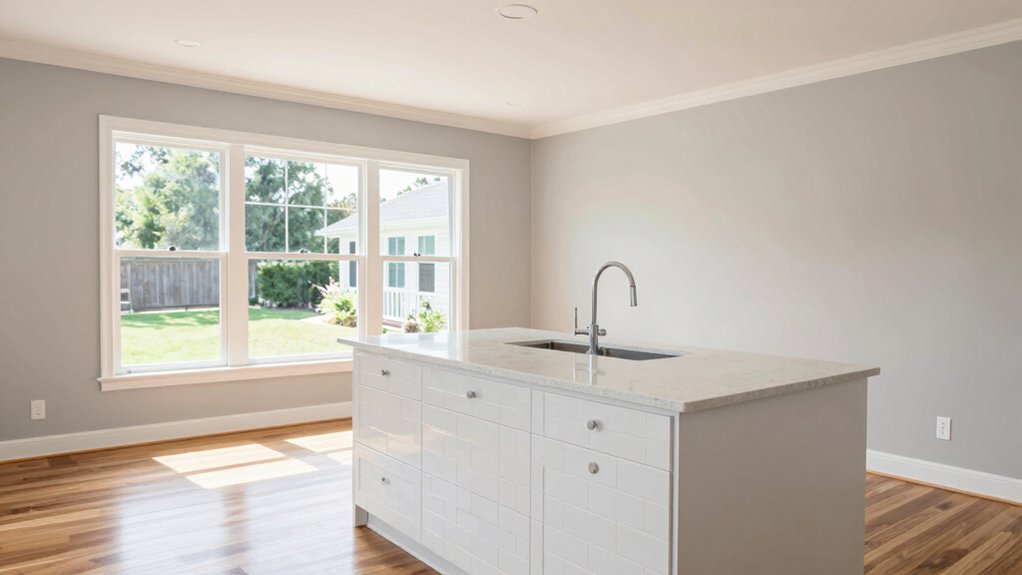
Like a spotlight on a stage, your eye lands first on visual upgrades—white cabinets, sleek counters, modern lighting—but what you miss can cost you later. You’ll notice layout flow and open sightlines, yet subtle details like seam alignment or material consistency often go unchecked. The finishes feel polished, yet small craftsmanship cues and hidden costs hide in the background. This tension between first impression and long-term value is exactly where you should look next.
What Immediately Stands Out: Visual Upgrades That Catch the Eye

Colorful, high-impact upgrades immediately grab attention: fresh white cabinetry, sleek quartz countertops, and updated lighting unite to create a modern first impression. You notice the visual hierarchy first: clean lines, balanced contrast, and consistent finishes that signal quality at a glance.
Data shows buyers assign a premium to kitchens and baths with cohesive palettes and contemporary fixtures, translating to higher perceived value and faster interest. You’ll also see how lighting temperatures shape mood—warm whites feel welcoming, cool whites feel modern—affecting perceived space and practicality.
Practical metrics matter: square footage density, cabinet footprint, and countertop usability correlate with quick offers. You should expect strong emphasis on maintenance-visible surfaces—uniform grout, scratch resistance, and fingerprint resistance—since these factors reduce perceived upkeep.
In short, visual upgrades drive initial engagement and anticipated market value.
The Hidden Details That Signal Quality (or the Lack Thereof)
Hidden quality shows up in small, objective signals that buyers can’t ignore. You’ll notice how seams align, thresholds sit flush, and finishes prove durable over a quick walkthrough.
Data shows buyers penalize visible gaps, misaligned cabinetry, and inconsistent grout more than they credit glamour shots. You should track material consistency: same cabinet hardware style, uniform edge profiles, and joined corners free of gaps.
Markets with tight supply punish questionable framing, off-spec drywall tapes, and uneven paint sheen; these cues correlate with lower offers and longer days on market. You’ll gain trust when textures read correctly across rooms, when lighting matches tile undertones, and when hardware meets backsplash without gaps.
In short, measurable precision beats aspirational polish for perceived quality and value.
Layout and Flow: How Space Transformation Impacts Perceived Value
Layout and flow transform how buyers perceive space efficiency and future livability. You’ll notice open sightlines, logical room ordering, and clear circulation patterns that reduce perceived clutter.
Data show layouts with intuitive flow speed up decision times and raise perceived value by signaling functional flexibility for daily life and hosting. Movable walls, door placements, and corridor widths matter: even small tweaks can alter perceived square footage and usable area.
Buyers compare once-familiar paths to renovated layouts, rating ease of movement and privacy as core benefits. Clean separation of public and private zones often correlates with higher comfort scores and quantified willingness to pay more.
Avoid awkward bottlenecks; guarantee transitions feel natural, not forced. In short, thoughtful layout changes boost perceived efficiency and lifeability, enhancing market appeal.
Finishes and Finesse: Small Touches That Make a Big Difference

Finishes and finesse matter because small touches compound to boost perceived quality without a full remodel. You’ll notice that buyers value precise millwork, uniform caulking, and clean progressions between surfaces.
In data terms, minor upgrades often yield outsized perceived value, with finish quality correlating to willingness to pay more across inventory segments. Focus on consistency: matching hardware finishes, door gaps within a tight tolerance, and edge detailing on countertops and cabinetry.
Lighting consistency matters too; color temperature alignment reduces visual noise and speeds decisions. Prioritize durable, wipeable surfaces in high-traffic zones and guarantee grouting is bright, not stark.
Small investments—aligned hardware, sealed seams, and refreshed trims—deliver a measurable uplift in perceived care and overall exit price, without triggering a full-scale renovation.
What Buyers Overlook Yet Should Consider Before Buying
While many buyers focus on upfront price and obvious features, what you overlook can quietly erase value after closing. You should scrutinize inspection gaps, not just the big-ticket items. Prioritize structural integrity, HVAC efficiency, and electrical panel capacity, as hidden costs rise when systems age or were undersized for current loads.
Review permitting records for recent renovations; unpermitted work can trigger future liens or required updates. Assess moisture risks in basements and around foundations, since remediation costs exceed typical cosmetic fixes.
Compare utility bills against neighborhood benchmarks to gauge actual operating costs, not advertised estimates. Consider resale dynamics: homes with scalable layouts, durable materials, and smart-R value upgrades tend to hold price better.
Finally, verify neighborhood supply trajectories, school zoning stability, and crime data to forecast long-term demand shifts.
Frequently Asked Questions
Do Energy Efficiency Upgrades Affect Resale Value More Than Cosmetic Changes?
Yes, energy efficiency upgrades typically boost resale value more than cosmetic changes, because buyers value lower operating costs and practicality; you’ll see faster offers and higher perceived value when you can quantify annual savings and energy certifications.
How Long After Renovation Should Buyers Reserve Judgment on Quality?
“Give it time.” You should reserve judgment about quality for 2–4 weeks after a renovation, during which buyers notice maintenance consistency, finish durability, and any hidden issues, backed by data showing longer observation aligns with higher perceived value.
Do Hidden Defects Undermine the Perceived Value of a Renovation?
Hidden defects do undermine perceived value; you’ll lose buyer confidence, slow offers, and reduce appraisal odds. You should promptly disclose, remediate, and document fixes with receipts so market perception improves and the sale proceeds stay competitive.
Which Permits or Approvals Are Essential to Avoid Future Issues?
Essential permits or approvals protect you; failing to obtain them can drop resale value by up to 15%. You’ll want stamped drawings, final inspections, and code compliance docs, kept organized to avoid enforcement delays and costly post-sale disclosures.
How Do Maintenance Costs Influence Perceived Long-Term Value?
Maintenance costs shape perceived long-term value; you’ll value efficient systems and predictable expenses, so buyers discount high upkeep. You see lower lifetime costs as a market signal, boosting resale appeal, while rising repairs erode confidence and price expectations.