Transform your small front yard with a solid foundation, cohesive plant palette, and practical irrigation and edging plans. Start by evaluating drainage, grading, and soil stability, then map sun exposure and sightlines to guide bed layout. Choose durable, low‑maintenance perennials and pair them for balanced growth and color. Install clean, below‑grade edging and space plants for mature size. Add space‑enhancing hardscape, mulch, and a water‑smart irrigation plan. If you keep going, you’ll gain a complete, actionable workflow.
Foundations Your Small Front Yard Must Have Before You Start
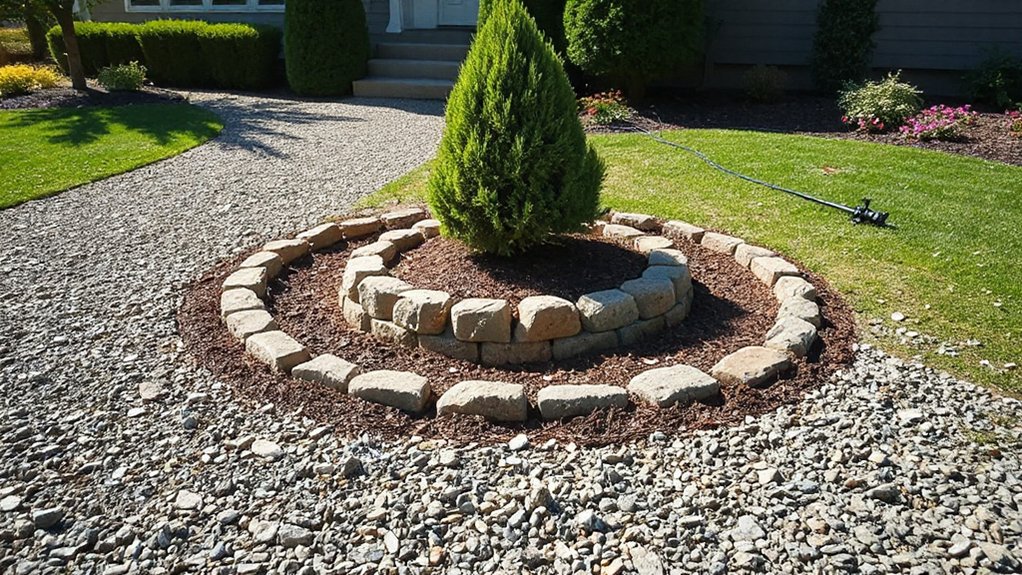
Foundations establish the structural and aesthetic integrity of your small front yard, so verify soil stability, drainage, and grading before any planting or hardscape work. You evaluate site conditions with objective measurements, recording soil bearing capacity, compaction depth, and abrupt slope changes.
Effective soil preparation begins with removing undesirable materials, loosening compacted layers, and amending with appropriate nutrients and organic matter to achieve a uniform profile.
Address drainage solutions by locating high and low points, installing trench drains or perforated piping where necessary, and ensuring positive surface runoff away from foundations.
Material selection follows, prioritizing load-bearing compatibility and frost heave resistance.
Establish target elevations for walkway edges and planting beds, then verify that subgrades remain stable under anticipated loads.
Conclude with documentation of tests, corrections, and ongoing maintenance requirements.
Budget-Friendly Perennials That Pack a Punch
Once you’ve guaranteed a stable foundation and proper drainage in your small front yard, you can select perennials that maximize impact without overspending. Budget-friendly options deliver durable performance, reduced maintenance, and reliable flowering across seasons.
Prioritize species with complementary growth habits to minimize competition and maximize space utility. For robust color, choose plant combinations that pair foliage texture with bloom timing, ensuring visual interest from spring through fall.
Favor perennials known for low input requirements, pest tolerance, and drought resilience in your climate zone. Create concise color palettes by grouping plants with similar hues and contrasting accents to emphasize focal points without overplanting.
Plan for staggered bloom windows to maintain continuity, and document care routines to sustain longevity. This approach optimizes impact while preserving budget integrity.
Clean Edging and Lines for Instant Curb Appeal
Clean edges and crisp lines transform the first impression of your front yard by defining spaces, guiding foot traffic, and enhancing overall symmetry. Precision in edging supports durable garden edging, preventing encroachment on beds and pathways.
Implement a consistent baseline height across borders to maintain line definition, then verify with a taut string or laser line to guarantee true verticals. Use a sharp, stable edging material—metal, concrete, or plastic—set below grade to resist root intrusion and shifting.
For mulch containment, install a narrow, integrated barrier that creates a clear, uninterrupted boundary. Regularly trim adjacent turf to preserve crisp transitions, and reseal any porous joints to reduce erosion.
Document measurements for repeatability and communicate line definition as a maintenance standard to sustain curb appeal.
Space-Enhancing Hardscaping You Can Do This Weekend
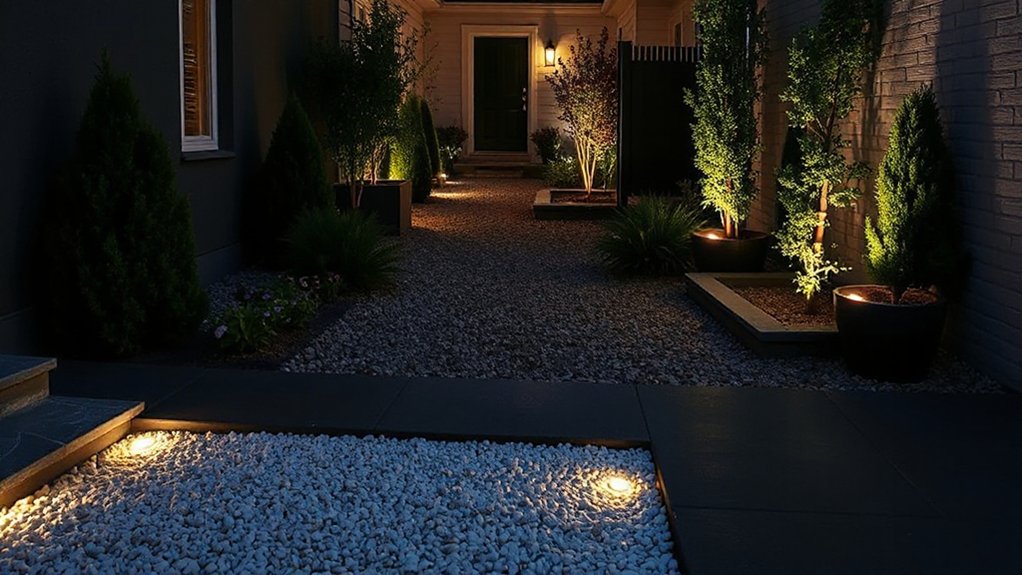
With a few practical weekend steps, you can elevate space efficiency and function through targeted hardscaping. You’ll approach layout from a practical grid: measure setbacks, define clear circulation, and minimize wasted area.
Start by selecting durable, low-maintenance materials appropriate for your climate; pavers, crushed stone, and concrete borders offer predictable performance.
Create defined zones for traffic, seating, and storage, using perpendicular lines to reinforce order. Install edging to maintain clean boundaries and reduce weed intrusion.
Integrate garden sculptures at focal nodes to orient sightlines without crowding. Apply decorative mulch to planting beds to reduce evaporation and simplify maintenance, ensuring color contrast remains restrained.
Execute curb-to-door progression with a single, cohesive material palette. Avoid oversized features; prioritize proportion and accessibility, ensuring permanence aligns with long-term yard usability.
Focal Points and Seasonal Color With Low Maintenance
You’ll begin by selecting clear focal points that guide the eye and anchor your yard’s composition.
We’ll pair seasonal color schemes with low-maintenance plantings and durable materials to minimize upkeep.
This discussion emphasizes precise choices in focal elements, color timing, and practical maintenance tactics.
Focal Points Selection
Focal points organize a landscape by drawing the eye to features that anchor the design, while seasonal color schemes guarantee year-round interest with minimal upkeep. You select focal points by evaluating sightlines, scale, texture, and proportion relative to the façade and path network.
Prioritize durable components that endure exposure, foot traffic, and climate variability, ensuring long-term stability and minimal replacement. Position primary focal elements at intersections or termini of sightlines to produce a clear rhythm, then subordinate accents along secondary routes to guide movement without crowding the core composition.
Incorporate garden sculptures and decorative lighting as noninvasive anchors that reinforce form and illumination, respectively, while avoiding clutter. Document placement coordinates, dimensions, and maintenance tasks to support predictable performance across seasons.
Seasonal Color Schemes
Seasonal color schemes should reinforce focal points and pathways while remaining low maintenance, guaranteeing year-round visual interest with minimal intervention. You select a cohesive palette aligned to the color wheel, prioritizing contrast between warm and cool tones to enhance spatial perception.
Begin with a core set of flower combinations that repeat across beds to create continuity without overplanting. Limit species to easily managed varieties with similar growth rates and minimal pruning needs, restricting shrubs to moderate heights near entrances and sightlines.
Plan bloom timing to yield staggered interest, coordinating edge plantings with seasonal foliage on evergreens. Document irrigation, fertilization, and mulch requirements to sustain color fidelity without frequent intervention.
Regular inspection ensures deadheading and pest management remain targeted, efficient, and low effort.
Low Maintenance Tactics
Implement focal points and seasonal color with low maintenance as a cohesive strategy by selecting durable plants and simple design cues that repeat across beds. You establish a clear hierarchy by deploying a restrained palette of perennials and evergreens, reducing cultivar churn and soil disturbance.
Use consistent bed edges, mulch depth, and plant spacing to minimize maintenance labor while preserving visual rhythm. Choose garden furniture positioned to highlight focal elements without obstructing sightlines, and opt for materials that weather well with minimal care.
For seasonal interest, schedule lightweight, time-efficient rotations—primarily color accents from low-water species—avoiding high-frequency pruning. Integrate outdoor lighting to illuminate key features and pathways, leveraging low-voltage options to curb energy use and simplify upkeep.
This approach sustains clarity, accessibility, and durable appeal throughout the year.
Easy, Water-Smart Irrigation for Small Yards
Smart irrigation for small yards balances water efficiency with reliability by employing zone-based watering, weather-based controllers, and compact components that fit tight spaces.
You’ll configure multiple zones for plant types and sun exposure, reducing overwatering. For accuracy, select a controller compatible with local climate data and rain sensors, ensuring irrigation pauses after rainfall.
In-line filters and pressure regulators prevent clogging and maintain consistent spray patterns.
Drip irrigation delivers targeted moisture at the root zone, minimizing evaporation and runoff; use emitter spacing aligned with plant spacing to avoid dry spots.
Consider a seasonal adjustment schedule to reflect changing temperatures.
Rain sensors prevent unnecessary activation during wet periods, preserving water and reducing utility costs.
Document zone maps and maintenance intervals for reliable, scalable performance.
A Two-Weekend Plan for a Cohesive Front Yard
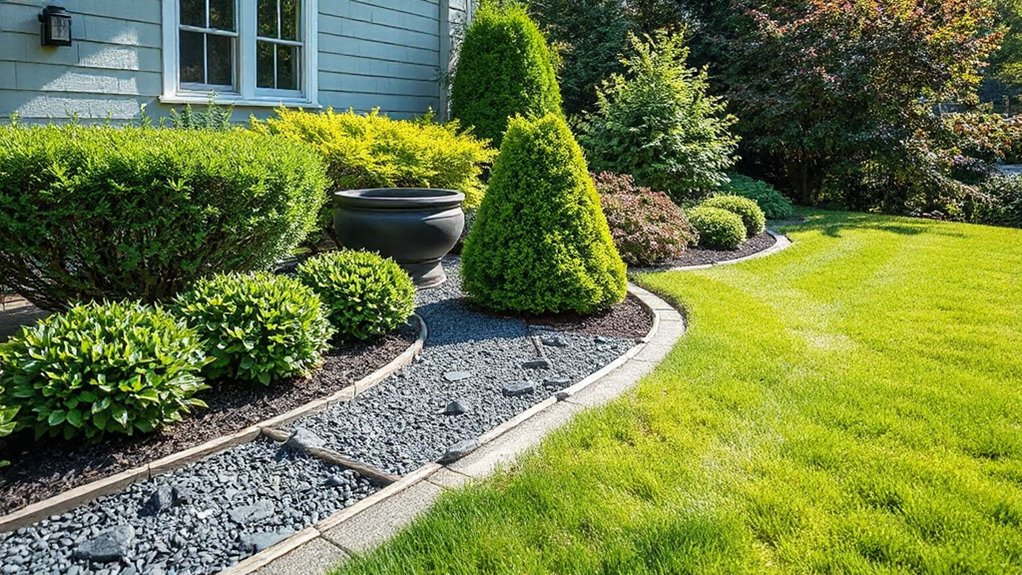
To coordinate a cohesive front yard in two weekends, build on the irrigation framework from the previous topic by aligning plantings, hardscape, and irrigation zones into a single, repeatable plan.
Begin with a clear site map that identifies sun exposure, drainage, and line-of-sight for sightlines to garden statues.
Select a unifying palette of plant materials that repeat across zones and establish a maintenance-friendly mulch strategy, incorporating decorative mulch where texture and weed suppression are needed.
Create installation phases: week 1 concentrates on framing beds, irrigation zoning, and edging; week 2 completes plantings, mulching, and minor hardscape adjustments.
Validate spacing with mature-size calculations, document routines, and verify irrigation coverage.
Conclude with a uniform finish and an evaluative checklist for ongoing cohesion.
Frequently Asked Questions
How Much Weekly Maintenance Should a Small Front Yard Require?
Weekly maintenance for a small front yard should be about 2–3 hours, depending on plant types. Establish a watering schedule and pruning frequency, monitoring soil moisture, and adjusting as seasons shift to sustain healthy growth and appearance.
Which Plants Attract Pollinators Without Foot Traffic Issues?
You should select native species that attract pollinators while minimizing foot traffic issues, integrating them with thoughtful garden design. This approach improves resilience, supports biodiversity, and maintains accessibility, ensuring stable habitats and predictable maintenance within your landscape scheme.
Can I Achieve Color With Drought-Tolerant Options Year-Round?
Yes, you can achieve color with drought-tolerant options year-round, provided you select plants with practical seasonal color and implement proper irrigation. Focus on resilient varieties offering colorful droughts and guarantee a year round bloom through staggered timing.
What Is the Best Mulch Depth for Tiny Planting Beds?
Depth about tiny beds is key: apply mulch to 2–3 inches, not thicker, to balance ease and life. Juxtapose mulch longevity with soil moisture retention, optimizing aeration and weed suppression for sustained, precise, technical front-yard performance.
How Do I Hide Utilities or Setbacks Creatively?
You can hide utilities or setbacks by installing decorative fencing and exploring creative screen options that balance access with aesthetics; choose materials, heights, and anchoring methods, and guarantee zoning compliance while maintaining unobstructed maintenance routes.
Conclusion
You can transform a small front yard quickly by following these focused steps: define clean edges, choose budget-friendly perennials, and install compact hardscaping that enlarges perceived space. Use smart irrigation to sustain color with minimal effort. For example, a homeowner implemented a two-weekend plan, adding a low stone border, drought-tolerant grasses, and drip irrigation, achieving cohesive curb appeal with reduced maintenance. By staying data-driven and precise, you’ll optimize both aesthetics and functionality in a compact footprint.