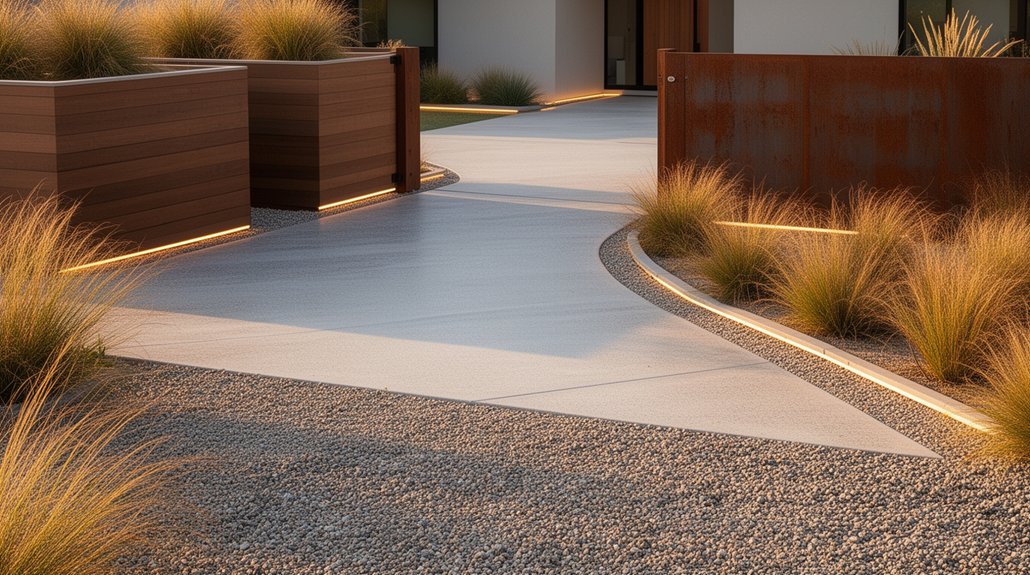
Regional driveway design for modern homes blends local materials, climate, and landscape into cohesive curb appeal. You’ll balance durability with aesthetics, selecting stone, brick, or native aggregates that echo regional character. Thoughtful drainage, permeable options, and low-maintenance finishes keep the approach resilient. With color palettes and textures inspired by nearby landscapes and streetscapes, you’ll cultivate harmony from curb to entrance. The next step reveals how to translate these cues into your site plan.
Regional Driveway Design: Guiding Principles for Modern Homes
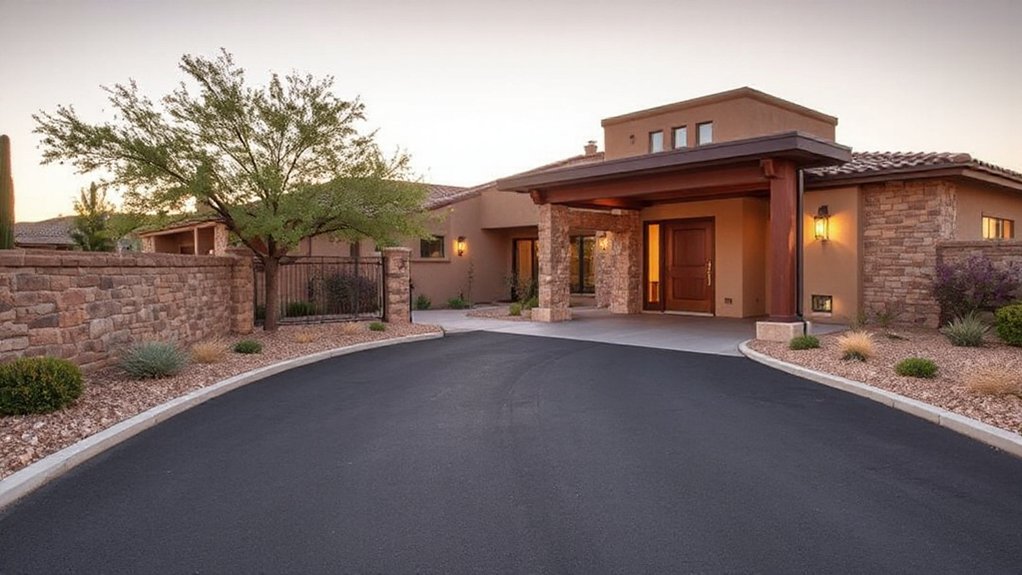
Regional driveway design should start with a clear design brief that aligns site conditions, climate, and local materials with the home’s architectural language. You establish guiding principles that translate strategy into practice, ensuring coherence with the surrounding landscape and the building envelope.
You evaluate grading, drainage, and accessibility early, preventing future conflicts with margins and setbacks. You prioritize durable, low-maintenance finishes that endure local weather while reducing lifecycle costs.
You integrate innovative lighting to enhance safety and curb presence without glare, and you embed sustainability practices that minimize heat gain and runoff. You calibrate material palettes to the climate, selecting resilient textures that weather gracefully.
You document criteria for performance, maintenance, and adaptability, guaranteeing consistency across changes in ownership and use.
Local Materials That Define Regional Curb Appeal
Local materials set the tone for curb appeal by tying the home to its environment and regional traditions. You select surfaces that reflect local geology and cultural context, ensuring cohesion between house, driveway, and landscape.
The emphasis is on durable, authentic textures that resist weathering while aging gracefully. Prioritize stone, brick, timber, or native aggregates that express regional craftsmanship and minimize maintenance.
Local craftsmanship conveys a tangible skill set and pride, reinforcing durability and aesthetic integrity across generations. Regional symbolism should inform material choices, aligning patterns, colors, and finishes with shared memories and landscape character.
Maintain consistency in scale, mortar detail, and joint lines to preserve visual discipline. Informed decisions today preserve authenticity tomorrow, supporting curb appeal that speaks to place, not trend.
Climate-Smart Surfaces for Durability and Drainage
You’ll consider how drainage-driven durability informs material choice and layout, ensuring water is directed away efficiently.
Climate-responsive surfaces adapt to local conditions to minimize wear while preserving traction and aesthetics.
Drainage-Driven Durability
- Confidence in durability through proven drainage strategies
- Assurance that water management gates wear well over time
- Clarity about materials that tolerate freeze-thaw cycles
- Focus on predictable performance during heavy rainfall
- Motivation to prioritize upkeep and inspections
Subtopic not relevant ideas: driveway maintenance, seasonal snowfall.
Climate-Responsive Surfaces
Weather resistant finishes protect underlying substrates from freeze–thaw damage, chemical exposure, and UV degradation, extending service life with minimal maintenance.
Optimized surface textures balance skid resistance with drainage efficiency, preventing ponding while preserving traction.
Layering strategies integrate porous subgrades with surface aggregates designed for rapid infiltration during rainfall and swift runoff during dry spells.
Select materials and coatings that maintain mechanical integrity under cyclic temperature shifts.
Together, these elements deliver durable, resilient surfaces that perform consistently across diverse climates and seasonal conditions.
Color Palettes Drawn From Nearby Landscapes
You can start by selecting Landscape-Inspired Hues that mirror the region’s tones, from sunlit grasses to quiet shadows.
Pair these hues with Local Flora to create cohesive curb appeal that respects the surrounding landscape.
This approach yields a refined palette that remains harmonious, durable, and visually grounded.
Landscape-Inspired Hues
Drawing color palettes from nearby landscapes can ground a modern home in its setting while preserving contemporary clarity. You’ll select hues that echo natural tones, ensuring color harmony across materials and surfaces, from paving to accents.
Subtle shifts create depth, while careful saturation preserves legibility under varying light. Use silhouette-inspired neutrals as a base, then layer muted greens, warm browns, and cool grays to reflect terrain and sky.
Texture contrast remains essential: combine smooth, reflective surfaces with rugged, matte elements to emphasize form and craftsmanship.
- Base neutrals that unify with surroundings
- Earthy greens and browns for organic warmth
- Cool grays to mimic stone and shadow
- Warm accent tones for visual interest
- Varied textures to enhance depth and tactility
Local Flora Pairings
How can local flora influence color palettes for modern driveways? You assess nearby landscapes to identify dominant hues, textures, and seasonal contrasts that translate into hardscape choices.
Begin with native plantings as the foundation; their colors—grays, greens, crimsons, or golds—guide paving tones, edging, and stone selection. Align materials with regional color schemes to guarantee cohesion across the site, using muted grays or warm browns when adjacent flora present cool blues or purples.
Consider bloom timing, repeating accents, and subtle contrasts to sustain visual interest year-round. Use plant-inspired motifs for inlays, boundary panels, or resin-bound surfaces, assuring durability amid local climate cycles.
Document color references from surrounding gardens to inform consistency, maintenance cycles, and long-term design integrity.
Texture and Pattern Cues From Regional Streetscapes
Texture and pattern cues drawn from regional streetscapes offer immediate, legible ways to ground a modern driveway in place. You translate local texture into your design, leveraging material language that resonates with streetscape identity. Through careful selection, you emphasize textural contrast and pattern repetition to guide perception and movement.
- Emphasize textural contrast between paving surfaces
- Align patterns with regional stone or brick rhythms
- Use subtle changes in scale to read as distance cues
- Integrate tactile materials for legibility underfoot
- Coordinate edge treatments with surrounding streetscape
This approach creates a cohesive arrival experience, affording clarity and civic resonance. You achieve a refined, durable result by balancing material tactility with disciplined repetition, ensuring the driveway communicates rooted place while remaining versatile for modern use.
Grading and Drainage for Mess-Free Driveways
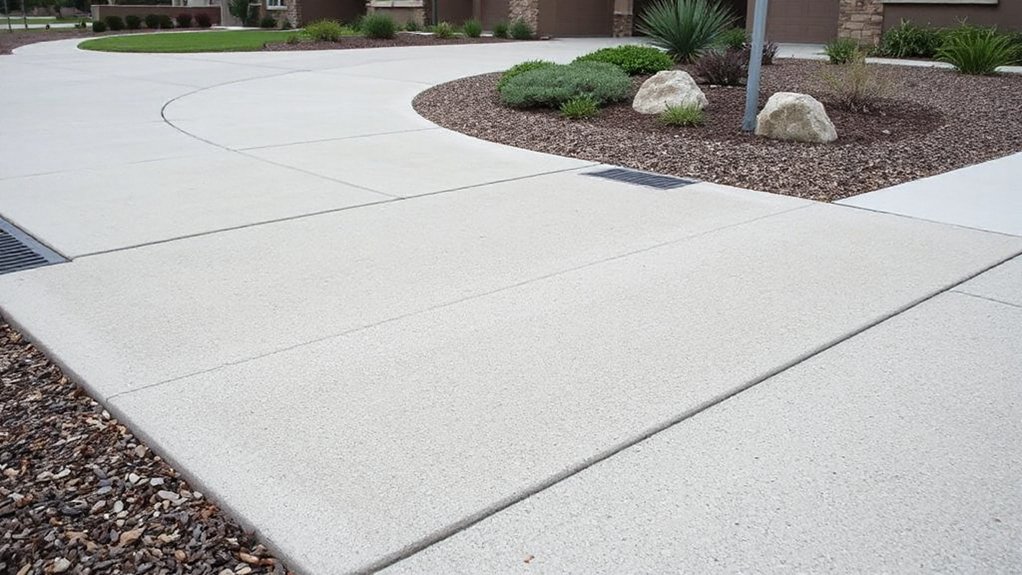
Grading and drainage establish the practical backbone of a mess-free driveway, ensuring rainwater sheds efficiently and surface wear doesn’t degrade appearance or function. You determine slope and crossfall to guide runoff toward designed termini, avoiding ponding and base washout.
Precise grading minimizes deformation from tire loads and seasonal freeze–thaw cycles, preserving material integrity. Implement a crown or crowned shoulders that promote rapid shedding while maintaining convenient access grades.
Integrate a controlled drainage plan, including swales, curb inlets, and localized outfalls, to prevent urban infiltration issues and downstream erosion. Regular site audits verify alignment with grading tolerances and drainage performance.
Reinforce erosion prevention by stabilizing adjacent soils and ensuring vegetative buffers where appropriate. Document specifications and maintenance triggers to sustain long-term reliability and curb appeal.
Permeable Paving Options That Balance Beauty and Practicality
Permeable paving offers a practical balance of aesthetics and function by combining appealing materials with surface that’s capable of managing stormwater at source. You pursue long-term value through design choices that prioritize drainage, durability, and visual cohesion with surrounding architecture.
The goal is paving durability without compromising style, delivering an aesthetic balance that remains refined through seasons and traffic.
- Choose permeable pavers that harmonize color and texture with your home
- Favor modular grids that ease maintenance and repairs
- Prioritize high-load compatible surfaces for driveways
- Integrate compatible aggregates to enhance durability and appearance
- Commission professional installation to guarantee performance and longevity
Plantings That Keep Driveways Tidy and Regionally Authentic
When selecting plantings to accompany a driveway, prioritize species that control erosion, suppress weeds, and require minimal upkeep while echoing regional character. You should choose native species that establish quickly, root deeply, and tolerate local soil and climate conditions.
Carefully layer groundcovers, grasses, and low shrubs to form a tidy, weed-resistant edge without obstructing sightlines or drainage. Favor plants with seasonal interest—early spring blooms, summer foliage, and autumn color—to maintain year‑round curb appeal.
Consider drought-tolerant varieties where water is limited, and select species that resist pests common to your region. Install mulch or composted mulch to retain moisture and suppress weeds, then implement a simple maintenance routine: trimming, mulching, and annual invasive-species checks.
This approach yields a durable, regionally authentic, low‑maintenance driveway landscape.
Case Studies: Coastal, Prairie, and Mountain Driveway Ideas
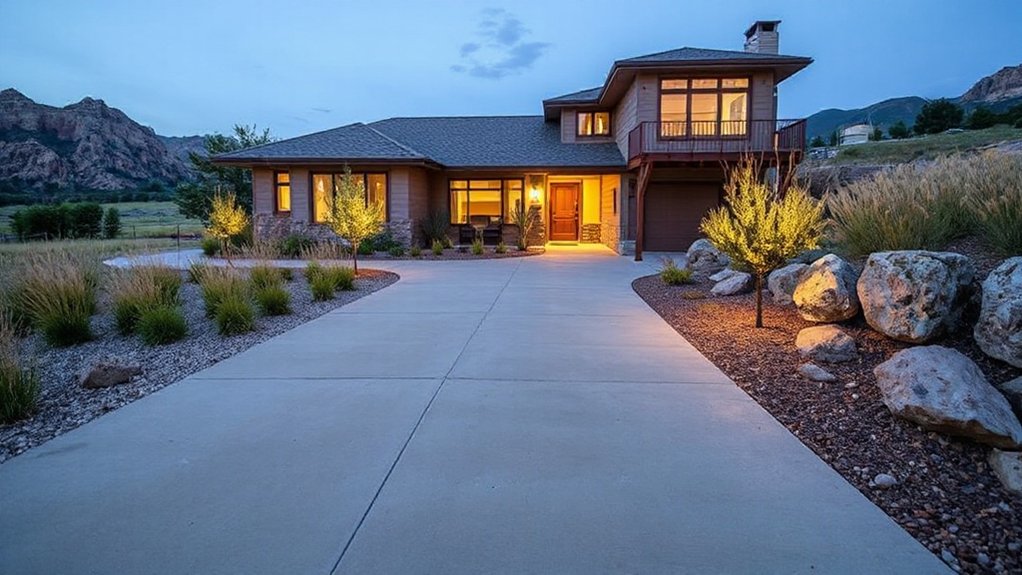
Coastal, prairie, and mountain settings demand tailored strategies that reflect regional climates while preserving curb appeal. In these case studies, you observe how historical influences shape material choices, layout, and drainage, from coastal boardwalk textures to prairie-wide expanses and mountain rockwork.
You’ll see cultural symbolism expressed through native motifs, color palettes inspired by landscape, and durable finishes designed for exposure. Each scenario demonstrates how driveway design communicates place while balancing function, safety, and low maintenance.
By comparing strategies, you identify transferable lessons for modern homes that honor heritage and environment.
- Embrace locally sourced materials that echo regional character
- Prioritize drainage-led layouts to prevent wear and erosion
- Use symbolism in subtle, durable detailing
- Select finishes that weather gracefully with climate
- Align drive access with historic precincts and scenic vistas
Frequently Asked Questions
How to Maintain Regional Curb Appeal Over Time?
To maintain regional curb appeal over time, you should monitor landscaping harmony and material durability, performing regular upkeep. Re-seed and prune to sustain balanced plantings, replace failing edging, and refresh the driveway’s surface with durable, appropriate materials.
Schedule seasonal inspections for cracks, drainage, and weed control, addressing issues promptly.
Use consistent colors and textures across hardscape and planting beds to preserve cohesion, ensuring long-term visual harmony and resilient materials for enduring curb appeal.
What Is the Budget Range for Regional Driveways?
Budget ranges for regional driveways vary by project, but you’ll typically allocate roughly $8,000 to $20,000 for standard layouts.
With higher-end materials and complex designs, costs can climb beyond $30,000.
You should consider Cost estimation early and balance with Material options to fit your site.
You plan strategically, evaluating climate, foundation needs, and long-term maintenance.
You’ll decide on durability, aesthetics, and value, and you’ll document all assumptions for transparent budgeting.
Can You Integrate Smart Functionality With Regional Styles?
Yes, you can. You implement Smart integration with regional styles by selecting sensors, lighting, and controls that harmonize with local materials and forms.
You’ll map automation to typical regional daylight patterns, optimize heating or cooling of adjacent surfaces, and guarantee weather resilience.
Smart integration should respect vernacular textures, color palettes, and landscape harmony.
This approach maintains authenticity while delivering convenience, reliability, and energy efficiency through precise, purposeful technology aligned with regional styles.
Which Maintenance Schedule Preserves Local Materials Best?
A well-tuned schedule preserves local materials best, like a clockwork bridge between time and terrain. You should prioritize seasonal maintenance and monitor shifts in moisture, wear, and finish.
This approach sustains material durability by aligning tasks with climate cycles, not arbitrary dates. Conduct inspections quarterly, seal porous surfaces after wet seasons, and address cracks promptly.
Your plan must document results, ensuring ongoing durability and consistent performance across years.
How Do Setbacks Affect Driveway Design Choices Regionally?
Setbacks restrict your driveway’s footprint and drive‑through access regionally, shaping curb appeal and safety. Regional zoning and setback regulations determine minimum distances from property lines, structures, and public rights‑of‑way, influencing driveway width, turning radii, and sightlines.
You must align materials, drainage, and grading with these rules. Compliance ensures permitting proceeds smoothly and avoids fines.
In practice, design to maximize visibility, maintain accessibility, and respect buffers while harmonizing with local architectural cues and regional climate considerations.
Conclusion
Embrace regional guidance as a quiet, guiding hand for your driveway’s future. By choosing locally sourced materials and climate-smart finishes, you’ll gently reinforce durability and harmony with the landscape. Thoughtful color, texture, and native plantings create a subtle, enduring curb appeal that respects regional character. With careful grading and practical drainage, maintenance remains discreet, and safety stays paramount. In short, design becomes a considerate partner, unobtrusively supporting daily life while elevating your home’s refined sense of place.