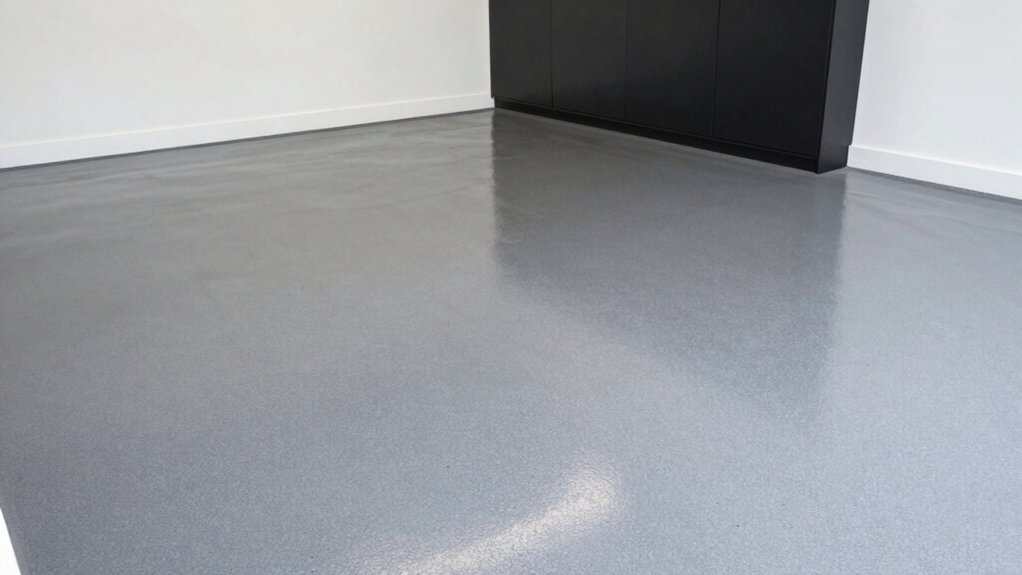
A coincidence you might appreciate: your garage floor and the idea of low maintenance both crave simplicity. You’ll want durable options that resist spills and stains, like epoxy coatings that shine with minimal effort, or interlocking tiles you can lift for quick cleaning. Clear sealants spare you frequent upkeep, while solid colors keep dirt less noticeable. Start with a plan that fits your space, then weigh how each choice handles spills, cleaning, and future changes—there’s more to contemplate before you commit.
Epoxy Coatings: Durability and Shine
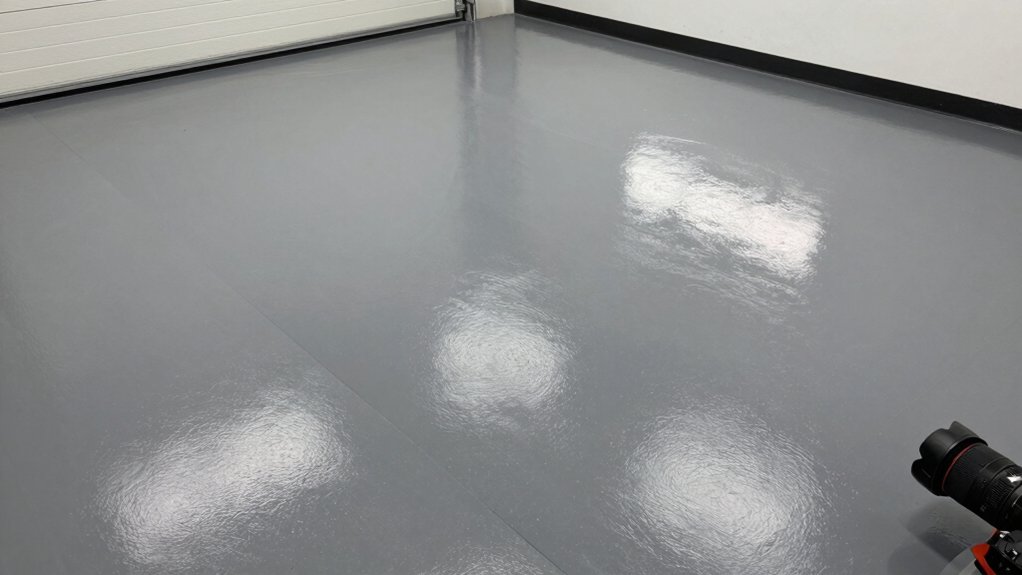
Epoxy coatings deliver real durability and a lasting shine, making garage floors more resistant to stains, chemicals, and everyday wear. You choose a kit or hire pros, but prep matters most: remove debris, repair cracks, and etch or grind the surface for bonding.
When mixing two components, follow the manufacturer’s timing and pot life to avoid lumps or rushed application. Apply a priming coat if required, then roll or squeegee the epoxy evenly in thin, continuous passes. Maintain a wet edge to prevent roller marks and bond failures.
After the topcoat cures, you’ll appreciate chemical resistance, color depth, and a seamless finish. For maintenance, use mild cleaners and a soft mop; avoid bleach or abrasive scrubbers that could dull the shine.
Solid Color and Minimalist Paint Options
Solid color and minimalist paint options deliver a clean, affordable look without the texture or sheen of coatings like epoxy. You’ll choose solid, matte or satin finishes that resist scuffs and wipe clean easily.
Prep matters: aggressively etch or lightly remove existing coatings, clean the surface, and fill minor cracks to prevent pinholes. Use a high-quality primer compatible with concrete and your chosen floor paint; this improves adhesion and color uniformity.
Pick light or neutral tones to reflect light, brighten the space, and reduce the appearance of imperfections. Apply two thin coats, allowing proper drying time between layers.
Add a clear, durable topcoat if you expect heavy traffic or chemical exposure. Maintain by regular sweeping and occasional damp mopping.
Interlocking Tiles for Quick Upgrades
Interlocking tiles offer a fast, mess-free upgrade that sidesteps major prep and drying times. You’ll find panels snap together with minimal tools, creating a seamless, grout-free surface that’s easy to clean.
Choose a low-ploathed base to prevent water pooling, and ensure the concrete is dry and dust-free before installation. Measure the area, cut tiles at edges with a sharp utility knife, and keep a spare row for adjustments.
Use edge trim to finish borders neatly and prevent chipping. For load-bearing reliability, select tiles rated for garage use and verify weight specs align with your vehicle and workbench traffic.
Install a uniform pattern to hide seams, test for fit, then lock each tile firmly. Periodically lift and rearrange sections if needed for spill cleanup.
Micro-Sealants and Clear Topcoats
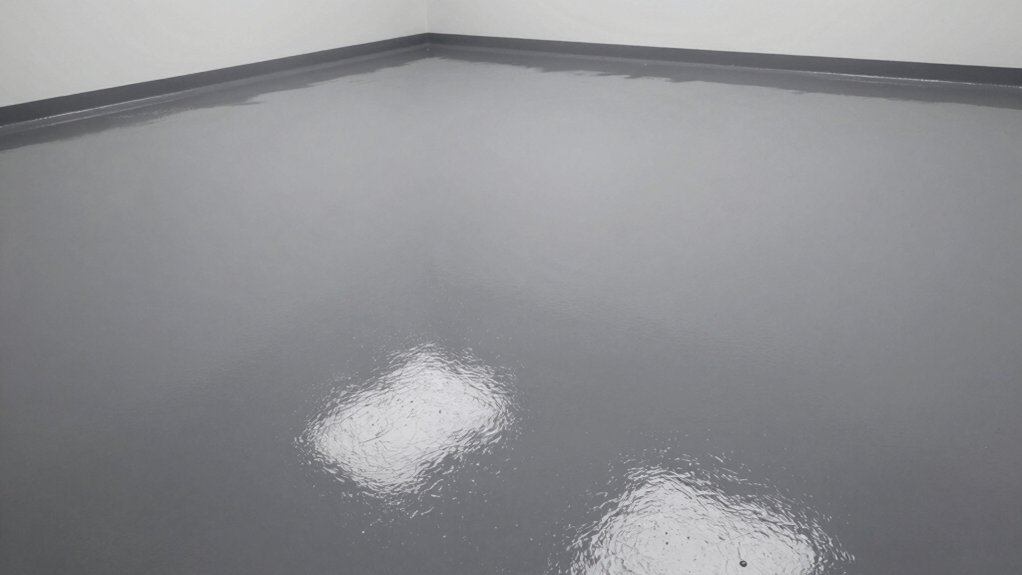
Micro-sealants and clear topcoats lock in moisture resistance and shine, giving garage floors a durable, easy-to-clean surface. You apply sealants to penetrate slightly and block moisture, then add a transparent layer that seals pores, minimizes staining, and enhances glare-free visibility.
Choose water- or solvent-based formulas based on your substrate and ventilation; water-based options are forgiving and lower odor, while solvent-based yields tougher hardness.
Prep matters: clean, dry, and degrease, then sand glossy patches for adhesion. Apply in thin, even coats with a quality roller or brush, keeping a wet edge to avoid lap marks.
Allow proper curing times, avoid traffic, and recoat as recommended by the manufacturer.
For practicality, pair with light-colored topcoats to brighten the space and simplify cleanup.
Maintenance Hacks for a Fresh-Looking Floor
To keep your garage floor looking fresh, stick to quick, practical maintenance hacks that minimize downtime and stress.
Start with a weekly sweep to prevent abrasive grit from grinding into sealants or coatings, then mop with a neutral cleaner and warm water to avoid residue buildup.
Spot-clean spills immediately with a mild degreaser and a soft brush, rinsing thoroughly.
Use door mats to trap dirt before it enters, and place inert absorbents near potential spill zones so you can toss the material without delay.
Schedule a light recoat or re-seal every year or two, based on traffic, to maintain gloss and barrier performance.
When in doubt, test a small area first and document results for future touch-ups.
Consistency beats intensity for lasting, fresh-looking floors.
Frequently Asked Questions
How Long Before You Can Park on Newly Finished Floors?
You can park once the coating is fully cured, typically 24 to 72 hours, depending on product and humidity. Check manufacturer guidelines, use a foot traffic test first, and avoid parking until it’s hard as nails, no impressions. Trust the cure.
Which Option Hides Oil Stains Best Besides Epoxy?
Polyurea or concrete stain with a dense pigmented epoxy overcoat hides oil stains best besides epoxy, plus its tough top layer resists spills. Clean thoroughly, seal with a solvent-based sealer, and recoat every few years for ongoing protection.
Do Garage Floors Need Resealing After Cleaning?
Yes, you should reseal after cleaning to restore protection and prevent stains; think of the sealant as armor guarding your concrete, locking in cleanliness, resisting spills, and keeping maintenance minimal over time. Reapply as recommended by product guidelines.
Are Transparent Coatings Slip-Resistant in Wet Conditions?
Yes, transparent coatings can be slip-resistant in wet conditions if you choose a product rated for slip resistance, apply the textured or anti-slip additive, follow curing times, and maintain clean surfaces for consistent grip. Regular inspection helps too.
Can You Install Flooring Over Radiant Heated Slabs?
Yes, you can install flooring over radiant heated slabs, but you must choose compatible materials, install proper insulation, and follow manufacturer guidelines; guarantee even heat distribution, allow for expansion gaps, and verify warranty coverage before proceeding.