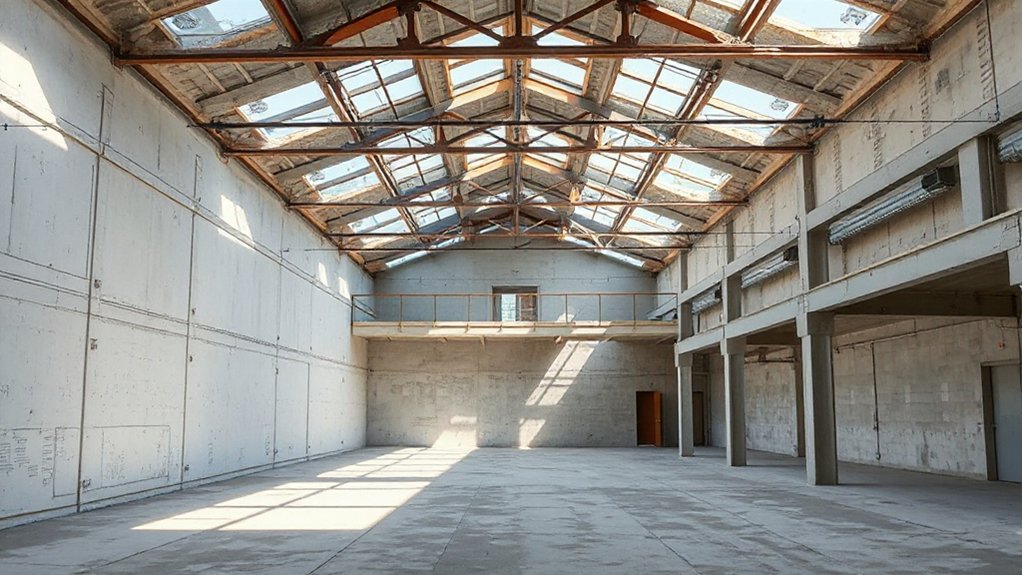
Key considerations before converting a commercial building into housing include securing licensing, zoning, and permits; ensuring code compatibility for occupancy, egress, and life-safety; and confirming structural suitability for new layouts and envelope upgrades. Plan HVAC, plumbing, and fire protection retrofits with energy efficiency in mind. Build a risk-managed approvals roadmap and align market demand with unit mix and amenities. Prepare exit pathways for market or regulatory changes. Detailed guidance awaits as you proceed.
Licensing and Zoning: What to Expect in a Conversion

Managing licensing and zoning is a critical first step in converting a commercial building to housing. You’ll navigate municipal planning departments to confirm permissible uses, density limits, and parking requirements, then align your concept with official maps and overlays.
Expect to submit a site plan, floor plans, and a sustainability statement for review. Historical preservation may influence approvals or require design concessions, so you’ll document any protected elements and propose respectful adaptations.
Zoning analyses also clarify whether variances or special exceptions are needed, and timelines hinge on public notices, hearings, and staff approvals.
Throughout, you’ll balance regulatory demand with aesthetic considerations, ensuring the project remains technically compliant while preserving the building’s character. Clear documentation speeds permits and reduces revision cycles.
Code Compatibility for Housing Conversions: Key Requirements
Code compatibility is essential to a successful housing conversion, and you’ll must‑match existing building code standards with the intended residential use from day one. You’ll assess occupancy classifications, egress spacing, and fire protection requirements to prevent delays in permits and operations.
In practice, you’ll harmonize mechanical, electrical, and plumbing systems with residential expectations, ensuring adequate ventilation, moisture control, and accessibility features where required.
Historical preservation informs acceptable alterations, guiding where you can modify envelopes, systems, and finishes without eroding heritage value.
Throughout, you’ll balance safety, healthcare, and fire life‑safety codes with budget realities.
Consider aesthetic considerations—light, texture, and proportion—to maintain a cohesive interior environment that still meets code.
Document decisions meticulously to support compliance reviews and future maintenance.
Structural Suitability for Conversion: Assessments and Thresholds
You’ll start by evaluating structural load capacity to determine what floors and columns can safely support new housing layouts.
Next, you’ll inspect the building envelope integrity to guarantee enclosure performance won’t undermine safety or energy targets.
Finally, you’ll outline retrofit thresholds and fees that govern necessary upgrades and approvals, setting a clear path for compliance and cost planning.
Structural Load Capacity
Structural models quantify strength, stiffness, and fatigue limits under expected occupancy patterns, construction tolerances, and future renovations. You examine load paths to guarantee consistent load transfer from floors, walls, and diaphragms to primary supports, avoiding localized overstress.
Foundation stability factors into overall capacity, shaping foundation modifications or reinforcements as needed. You document allowable deltas, redundancy, and potential restraint requirements, guiding safe deconstruction of surplus elements and staged occupancy.
This disciplined approach supports compliant, resilient conversions while preserving performance margins throughout the building lifecycle.
Building Envelope Integrity
The building envelope must demonstrate structural suitability for conversion by resisting air, water, and thermal transfer while maintaining continuity across additions and reconfigurations. You perform a rigorous integrity assessment to identify material delamination, moisture intrusion, and thermal bridging, then quantify performance against code and project targets.
Focus on envelope assemblies, flashing, joints, and interface details to guarantee long-term durability and occupant comfort. Establish measurable thresholds for air leakage, water intrusion risk, and dew point control, then document failure modes and mitigation options.
Your evaluation guides design decisions, cost planning, and risk management, while preserving architectural intent and energy performance.
- Define envelope boundary conditions and continuity across transitions
- Assess moisture sources, drainage, and flashing integrity
- Quantify air leakage and thermal performance with test data
- Correlate materials with durability and compatibility
- Document integrity assessment findings for approvals
Retrofit Thresholds and Fees
Retrofit thresholds set the baseline for evaluating structural suitability and guiding both design decisions and cost planning. You’ll assess load paths, frame resilience, and component redundancy to determine feasible retrofit scopes without overreaching budgets.
Thresholds establish minimum performance criteria for lateral stability, floor–to–floor continuity, and enclosure integrity, shaping sequencing from assessment to implementation.
Fees reflect required studies, third‑party reviews, and permit pathways, so you can forecast total project costs and cashflow implications with clarity.
Use these benchmarks to balance safety, build quality, and aesthetics, ensuring structural changes respect building aesthetics while meeting code mandates.
When historical preservation enters the equation, adapt thresholds to honor character, material heritage, and fabric integrity.
Clear documentation, transparent fee structures, and compliant procedures minimize risk and support an efficient conversion pathway.
Life-Safety and Egress: Codes, Means of Escape, and Fire Protection
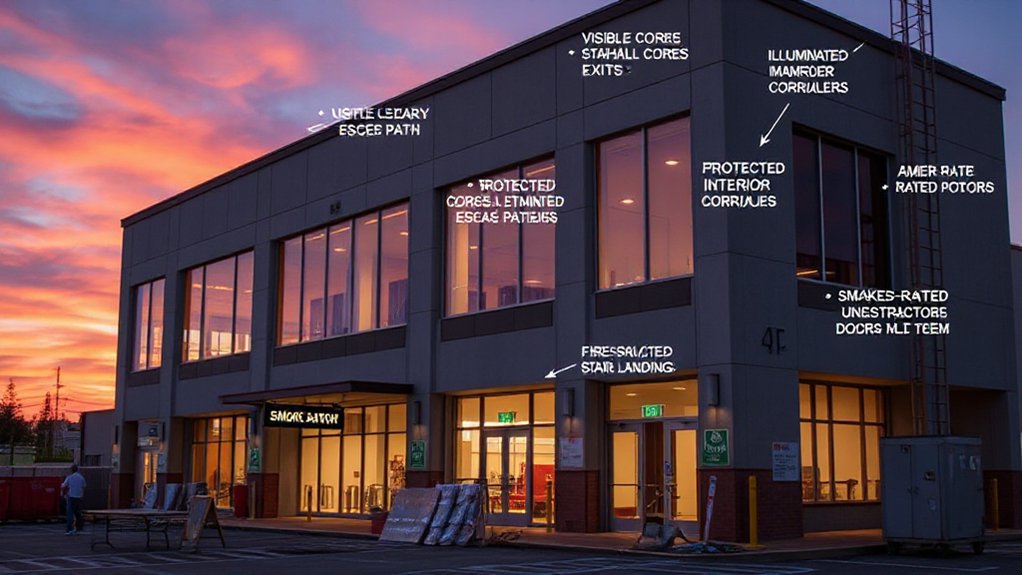
Because life-safety and egress requirements govern every step of a conversion, you must align Codes, Means of Escape, and Fire Protection from the outset.
You’ll plan, document, and verify compliance across design, construction, and occupancy. Focus on how emergency exits, occupancy counts, and fire safety systems interact to control risk. You’ll coordinate building code references, fire barriers, and egress paths to guarantee reliable evacuation with minimal delay.
- Align Codes with Means of Escape to optimize travel distance and exit placement
- Specify fire-rated assemblies and compartmentalization for occupant safety
- Dimension corridors, doors, and stairs to support swift egress
- Integrate automatic detection and notification with reliable shutdowns
- Validate through inspections, tests, and commissioning for ongoing fire safety
HVAC and Plumbing Retrofits: Planning for Comfort and Compliance
To deliver reliable comfort and code-compliant operation, you’ll map HVAC and plumbing upgrades to occupancy needs, existing systems, and regulatory requirements from the outset. You’ll assess load profiles, zoning, and heat-recovery opportunities to minimize energy use while maximizing indoor air quality.
Prioritize scalable HVAC upgrades that align with the building’s envelope, existing ductwork, and compliance milestones, avoiding overdesign. For plumbing, plan fixture counts, pressure balance, and water efficiency, selecting plumbing fixtures that meet accessibility and backflow provisions.
Document integration with fire and life-safety systems where applicable, and confirm commissioning requirements before occupancy. Maintain spatial intelligence by coordinating mechanical rooms, penetrations, and service routes to minimize disruption.
Aim for a cohesive, durable system that supports occupants’ comfort and long-term compliance.
Acoustic Design: Reducing Noise and Ensuring Tenant Comfort
Acoustic design begins with a clear performance target: minimize sound transmission between units and from exterior sources while preserving indoor comfort and usability. You’ll implement precise sound criteria, balancing room acoustics with structure, ventilation, and aesthetics to support tenant satisfaction and code compliance.
Focus on isolating impact and airborne noise, selecting materials and assemblies that deliver proven STC and IIC performance, while maintaining max usable space and bright, welcoming interiors. Integrate mechanical belts and flexible connections to reduce vibration paths without compromising efficiency.
Prioritize continuous envelopes, resilient channels, and decoupled partitions to lessen flanking paths. Document tested results for future maintenance and tenant inquiries.
- Soundproofing strategies for partition assemblies
- Acoustic treatments that enhance aural comfort
- Vibration isolation and mechanical coupling considerations
- Surface finishes balancing reflectivity and warmth
- Compliance metrics and performance verification
Parking and Accessibility Feasibility for Converted Homes
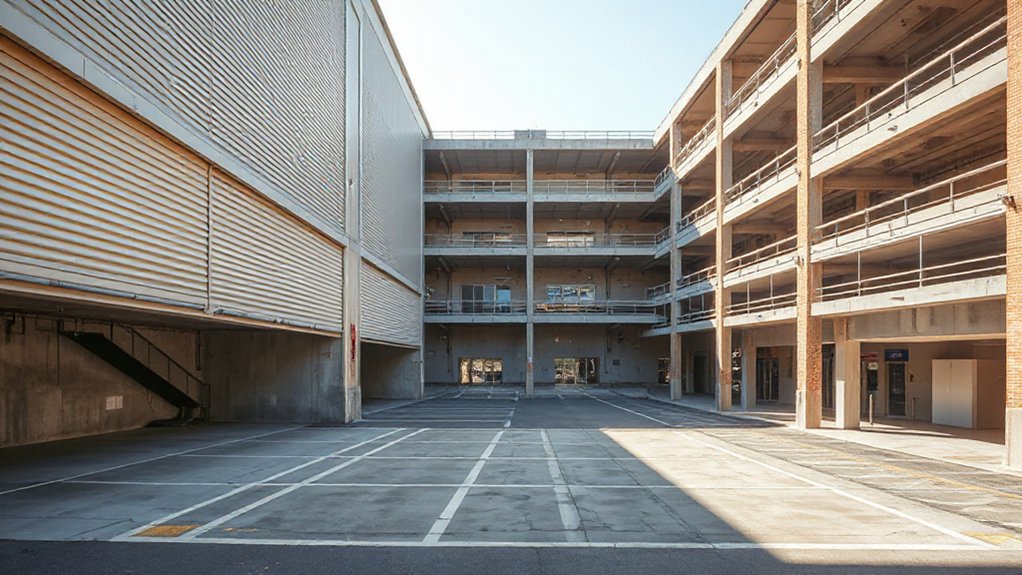
Accessibility challenges demand a holistic approach: entrances, door widths, elevator access, reachable routes, and tactile wayfinding must be integrated with building core plans. You should prioritize universal design principles, ensuring barrier-free routes from public streets to primary units.
Consider alternative mobility options, such as nearby transit access and drop-off zones, to mitigate parking constraints. Document feasible concessions early, verify ADA/IBC compliance, and coordinate with civil, structural, and life-safety teams for compliant, inclusive conversions.
Utilities and Fire Protection Integration in Convert Projects
Integrating utilities and fire protection in convert projects requires aligning existing systems with new occupancy needs while meeting code and safety standards. You’ll assess vertical transportation, electrical loads, water supply, waste lines, and fire protection interfaces, ensuring compatibility with residential use.
Coordinate between old distribution mains and new metering, add backup power where needed, and plan hydrants, alarms, and suppression devices to meet local requirements. You’ll review egress lighting, smoke control, and fire-rated assemblies to maintain life safety without compromising habitable space.
Document changes for permits, inspections, and ongoing maintenance. Consider phased implementations to minimize disruption, and verify coordination with fire officials early.
Utility integration, fire safety, and disciplined commissioning are your safeguards for compliant, reliable conversions.
- utility integration
- fire safety
- zoning and code alignment
- phased implementation
- commissioning and documentation
Thermal Performance and Energy Efficiency Options
You’ll assess insulation and air leakage as foundational steps to tighten the building envelope, reducing heat loss and drafts.
Next, you’ll select efficient systems and controls that optimize comfort, energy use, and long-term maintenance.
This discussion will map practical approaches for balancing performance, cost, and code compliance.
Insulation and Air Leakage
- Continuous air barriers and detailing
- Airtight doors, windows, and penetrations
- Thermal bridging mitigation
- Moisture control integration
- Verification testing and documentation
Efficient Systems and Controls
You optimize HVAC design with zoned layouts and demand-controlled ventilation to match occupancy, reducing peak load and improving comfort.
Choose high-efficiency equipment, low-leak ductwork, and meticulous commissioning to guarantee performance aligns with design intent.
Integrate smart thermostats to tailor temperature and humidity setpoints by space, time, and usage patterns, supporting efficient operation without sacrificing occupant comfort.
Leverage renewable energy sources where feasible, such as rooftop solar or on-site heat pumps, to lower utility dependence and stabilize long-term costs.
Monitor performance with real-time metrics and fault detection, enabling proactive maintenance and sustained compliance with code and sustainability goals.
Design Standards for Conversions: Unit Mix and Common Areas
Design standards for conversions require careful planning of both unit mix and common areas to guarantee long-term viability and resident satisfaction. You align unit types with market demand, balancing studio, one-, and two-bedroom configurations to optimize occupancy and operability, while preserving accessible design.
Common areas receive proportional attention, ensuring circulation efficiency, daylighting, acoustics, and safety are integrated into layout decisions.
Design aesthetics influence material choices, color systems, and tactile finishes to support wayfinding and cognitive ease, without compromising durability.
Interior layouts emphasize flexible spaces, multi-use rooms, and universal design principles, enabling residents to adapt as needs evolve.
You document standards for corridor widths, door liveliness, and shared amenity adjacencies to sustain compliant operations and appealing living environments.
- Unit type balance and market alignment
- Accessible, efficient common areas
- Durable, aesthetic materials
- Flexible, universal-design interiors
- Clear wayfinding and safety integration
Financial Viability: Costs, Incentives, and Financing
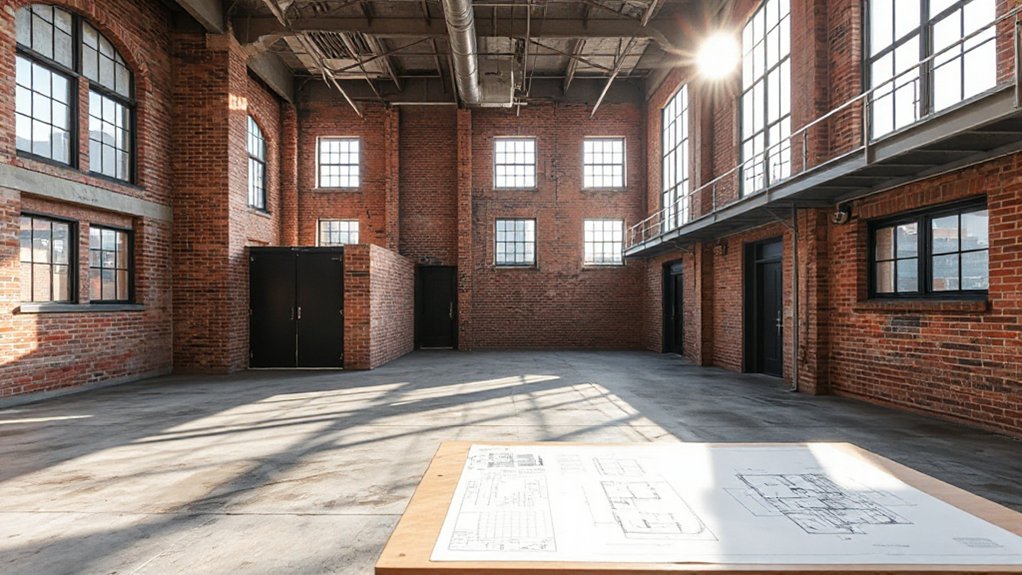
You’ll assess capital costs and budgeting upfront to map a realistic financial path for the project.
Incentives and subsidies can alter economics, so you’ll compare eligible programs and timing to maximize net gains.
Financing strategies and access—types, terms, and lender requirements—will shape your cash flow and risk management as you move from concept to completion.
Capital Costs And Budgeting
- Cost categorization and contingency planning
- Timeline-linked cash flow and financing
- Historical significance and aesthetic considerations impact
- Risk management and sensitivity analysis
- Clear documentation for lenders and stakeholders
Incentives And Subsidies
Targeted programs may reward energy efficiency, accessibility, and resilient construction, reducing net project costs without altering design intent. You should map eligibility criteria, application timelines, and reporting requirements early to avoid delays and guarantee compliance.
Consider how incentives influence hurdle rates, depreciation, and cash flow forecasts, then adjust the development plan accordingly. Be mindful of neighborhood impact and maintain building aesthetics while meeting program rules.
Documented, transparent financing paths help secure permits, align stakeholders, and sustain long‑term viability.
Financing Strategies And Access
Strategic financing for converting a commercial building into housing hinges on aligning capital sources with project risk and timeline while optimizing overall cost of capital. You’ll assess debt structure, equity mix, and grant eligibility to balance leverage with residual risk, all while preserving program certainty and cash flow.
Historical preservation and aesthetic considerations influence underwriting, construction costs, and lease-up assumptions, so treat them as value drivers, not afterthoughts.
Diversify funding: mezzanine, low-interest loans, tax credits, and public subsidies can reduce equity burden if sequencing aligns with milestones.
Due diligence should privilege lender confidence, sustainability metrics, and long‑term operating budgets.
Align partnering incentives with project stages to prevent capital gaps and enhance exit parity.
- Capital source alignment and risk timing
- Debt, equity, and incentives interplay
- Historical preservation as value driver
- Aesthetic considerations and cost implications
- Milestone-based funding and liquidity planning
Project Timeline and Sequencing Essentials
Project timelines for converting a commercial building to housing hinge on clear sequencing and tight coordination among design, permitting, and construction teams. You’ll map critical paths, align milestones, and lock in approvals early to minimize delays.
Begin with a detailed master schedule that links architectural decisions to permit submissions, value-engineering reviews, and building-code audits. Maintain a biweekly cadence for status updates, issue tracking, and change orders, ensuring traceability and accountability.
Sequence trades to optimize logistics, material lead times, and safety compliance, while preserving interior design intent. Coordinate tenant amenities integration with mechanical and electrical coordination drawings to prevent rework.
Emphasize quality control at handoffs between design, approvals, and field teams. Document as-built conditions and verify space flexibility for future occupancy shifts and scalability.
Risk Management and Contingency Planning for Conversions
Risk management and contingency planning are essential when converting a commercial building to housing, because unforeseen conditions can derail schedules and inflate costs. You’ll establish a risk register, define triggers, and assign owners to monitor critical path activities, permitting, and budget variances.
Plan for phased decoupling of trades, and reserve a contingency fund aligned with project complexity. Emphasize Building aesthetics and community integration in design decisions, preserving value while minimizing surprises.
Use pull-planning sessions to synchronize schedules and flag escalations early. Document change-control criteria to keep scope stable, yet adaptable to findings from site investigations.
- Identify risks early and quantify impact on time, cost, and quality
- Maintain a transparent contingency budget with predefined triggers
- Align aesthetics with functional code and occupant expectations
- Proactively address community integration considerations in design
- Use formal change control to protect schedule integrity
Stakeholder Coordination and Approvals Roadmap

You’ll map stakeholder alignment across agencies and define who approves what, when, and how. This roadmap clarifies permit and approval timelines, flags bottlenecks, and sets milestones to keep approvals on track.
Stakeholder Alignment Across Agencies
- Define approvals and owners per agency
- Set realistic decision timelines and milestones
- Establish clear communication channels
- Integrate community engagement and environmental impact considerations
- Maintain a living, auditable approvals register
Permit and Approval Timeline
Coordinating permits and approvals requires a clear, time-bound roadmap that aligns agency requirements with the project milestones established in stakeholder alignment. You’ll map regulatory stages to design phases, establishing target dates for submission, review, and decision points.
Your plan should include pre-application meetings, environmental assessments, and zoning reviews, with explicit responsibilities and escalation paths. Track dependencies across agencies to avoid sequencing bottlenecks and guarantee concurrent processing where possible.
Incorporate Historical preservation considerations early, documenting historic fabric, compliance measures, and any required mitigations. Address aesthetic considerations in design reviews to accelerate approvals while preserving character.
Maintain a transparent approvals log, update stakeholders weekly, and embed contingency buffers for delays. Clear documentation, modular submissions, and explicit acceptance criteria reduce rework and shorten overall timeline.
Market Demand Alignment and Tenant Targeting
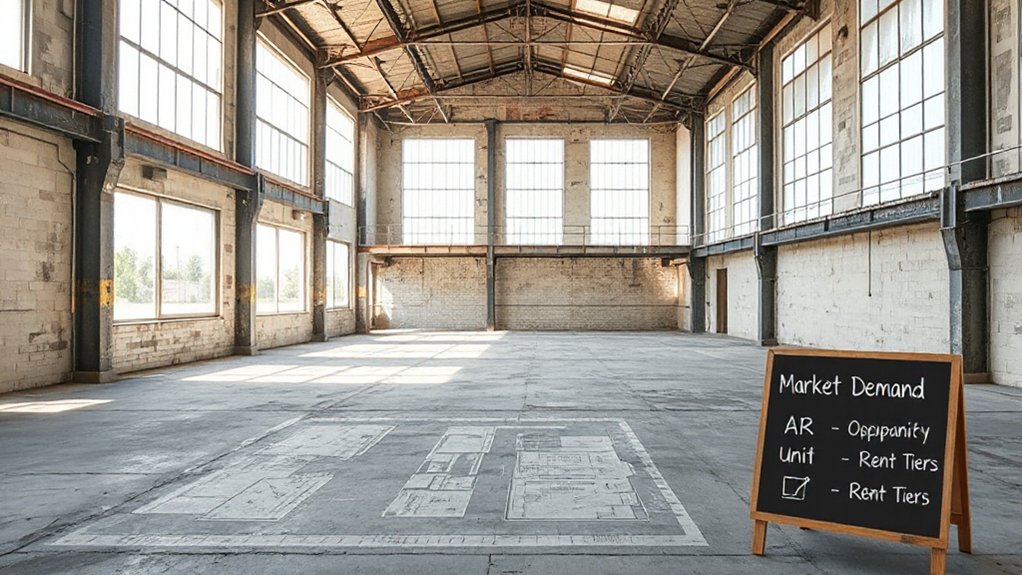
Market demand alignment begins with a precise assessment of local tenant need and absorption potential. You’ll triangulate data from rent levels, vacancy trends, and demographic shifts to gauge target segments and achievable density. This Market analysis informs unit mix, amenity prioritization, and construction sequencing, ensuring returns align with market realities rather than aspirational design alone.
You’ll engage stakeholders early to refine assumptions, quantify risk, and validate pricing strategies. Maintain rigorous documentation to support feasibility and lender confidence. Tenant engagement throughout the process yields practical insights, improves conversion rates, and sharpens positioning against competing projects.
By focusing on real, measurable demand signals, you redirect design decisions toward stable occupancy and sustainable cash flows. Your targeting becomes precise, data-driven, and adaptable.
- Data-driven audience segmentation and prototype unit testing
- Rent elasticity and absorption rate forecasting
- Competitive benchmarking and positioning
- Amenity and service mapping aligned with demand
- Risk-adjusted financial sensitivity analyses
Exit Scenarios and Alternative Pathways for Conversions
Exit scenarios for conversions require a clear plan of alternative pathways that preserve value under uncertainty. You’ll map exit options early, linking them to regulatory climates, capital timing, and market signals. Consider keeping options flexible: retain tenancy, pivot to mixed-use, or revert to office if housing markets falter.
Develop trigger points for each path, with financial thresholds, permitting timelines, and risk buffers. Historic preservation informs feasible interventions, ensuring heritage features remain integral while accommodating new layouts.
Evaluate aesthetic considerations alongside structural constraints to maintain appeal across buyer segments. Align exit choices with capitalization rates, debt covenants, and grant eligibility.
Document decision trees, assign owners, and rehearse contingencies to reduce decision latency during volatility. This disciplined approach protects asset value and accelerates post–conversion pivots.
Frequently Asked Questions
What Are the Hidden Soft Costs in Conversions?
Hidden soft costs include zoning regulation compliance and historical preservation assessments, you’ll encounter. You’ll navigate zoning regulations, obtain permits, and fund preservation studies, ensuring aesthetics and compliance while aligning timelines and budgets for a smooth conversion.
How Long Is Typical Construction Insurance Coverage Needed?
One hundred years of coverage? Typical construction insurance lasts until substantial completion, then often extends to project closeout. You’ll need construction permits and zoning regulations tracked, with policy extensions as required; you remain compliant, proactive, and risk-aware throughout.
Can Existing Elevators Be Retrofitted for Residential Use?
Yes, you can retrofit existing elevators for residential use, but you’ll face elevator safety and retrofit challenges that require expert assessment, structural modifications, and code-compliant controls; proceed methodically to minimize downtime and guarantee aesthetic, compliant operation.
Are There Tenant Relocation Requirements During Conversion?
You face tenant displacement during conversion; you must plan relocation assistance and timelines. Like a careful conductor, you orchestrate notices, exits, and support, ensuring compliance, minimizing disruption, and guiding residents through orderly, humane shifts.
What Lease Structures Work Best Post-Conversion?
Post-conversion, you should favor flexible lease structures with triple-net or gross formats, aligning incentives in Lease negotiations and Rental agreements to reflect new residential obligations while protecting NOI and occupancy goals through clear subordination and renewal options.
Conclusion
You’ve mapped the maze, checked the codes, and drafted the contingency playbook. So here’s the punchline: switching from bricks to bachelors—without a plan—isn’t a loophole; it’s a lawsuit with nicer drywall. Keep the math honest, the risks bounded, and the approvals moving. If you treat zoning like a diary and life-safety like a warranty, you’ll sleep at night knowing your conversion isn’t just clever, it’s compliant, market-ready, and painfully practical. Now, go build something responsible and beautiful.