To design interiors that suit Victorian terraces, you set a cohesive foundation with authentic period detailing and modern practicality. Embrace a restrained palette, crave clean lines, and restore original features like cornices and paneled doors. Lighten with sash window treatments, use subtle yet rich textures, and layer textiles for warmth. Plan flow with open sightlines, smart storage, and seamless indoor‑outdoor links. Balance bold walls with lighter woodwork, and let timeless details steer the space—there’s more to refine as you go.
Victorian Terrace Moodboard: Set the Foundation
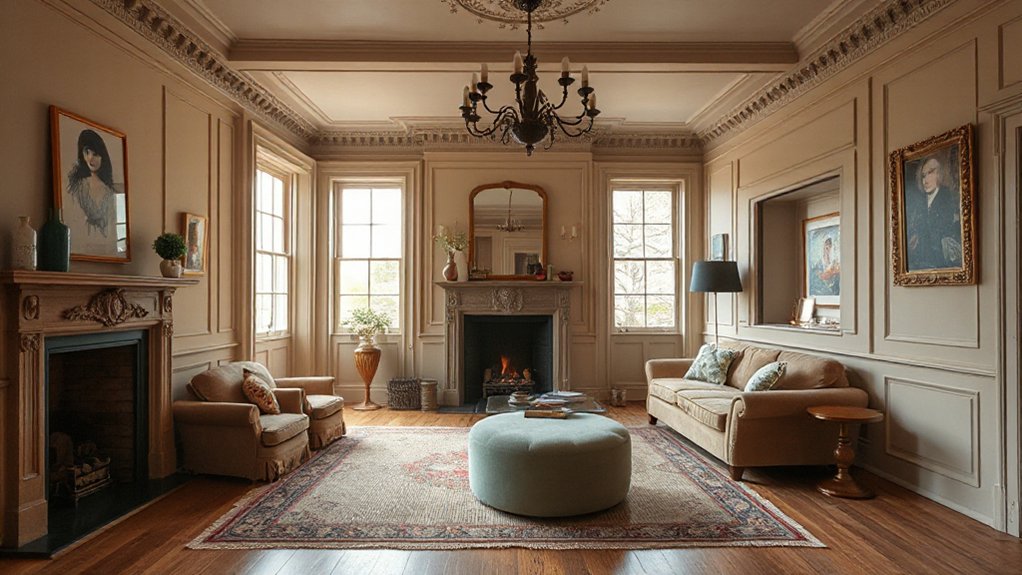
A Victorian terrace moodboard isn’t just inspiration—it’s a map for your design decisions. You begin by identifying the core silhouette you’ll honor: brick texture, slender window frames, and a refined roofline.
Let Victorian architecture guide your palette, aligning color, material, and proportion with period cues while allowing modern practicality. Collect swatches that echo plaster, dark-wood floors, and muted greens or oxblood accents, ensuring cohesion from entrance to parlor.
Prioritize historical authenticity in detailing—cornices, fretwork, paneled doors—yet avoid pastiche. Organize images by hierarchy: exterior setting, interior rhythm, and key focal points.
Define scale relationships early: room widths, ceiling height, and door proportions, then curate lighting and textiles that reinforce that cadence. With clarity, your moodboard becomes a precise compass for authentic, elegant spaces.
Restore Original Details With Confidence
Prioritize honesty in materials and methods, matching period-appropriate finishes and textures to preserve historical character. Use meticulous restoration techniques—patterned plasterwork, timber moldings, and original joinery—while stabilizing any damage with reversible, compatible repairs.
Seek guidance from period resources and, where feasible, consult craftsmen skilled in traditional techniques. Maintain historical accuracy by selecting finishes that align with era authenticities, avoiding modern imitations that overwhelm the fabric.
Refrain from excessive alteration; celebrate the fabric’s age, enhancing rather than replacing. Your goal is seamless continuity, where enhancements honor the past and elevate the space with restrained, thoughtful refinement.
Lighten, Brighten, Elevate: Sash Window Treatments
You’ll brighten rooms with sash window treatments that reflect light and enhance your view. Consider light-reflecting options—like pale, high-gloss trims or glass-backed blinds—and pair them with privacy enhancers that don’t interrupt the silhouette.
The goal is a cohesive elevation of natural light, while preserving the sash’s architectural character.
Light Reflecting Treatments
Sash window treatments can dramatically brighten Victorian terraces by maximizing natural light and emphasizing architectural details. Light reflecting treatments harness pale surfaces, metallic accents, and reflective fabrics to amplify daylight without overpowering the room’s character.
You’ll want soft, neutral tones on walls and trims to create color boundaries that guide the eye toward the sash’s lines, enhancing depth. Consider translucent voiles or light-pleated shades that bounce daylight inward while preserving window integrity.
Choose reflective glass or enamel finishes for sashes that catch sunbeams at different times of day, elevating luminance without glare. Pair these with minimal hardware and clean cornices to maintain a refined silhouette.
The result is a brighter, more spacious feel that respects period features while supporting contemporary living. window treatments. color boundaries.
Sash Window Privacy Enhancers
Consider privacy without sacrificing light or charm by selecting sash window treatments that lighten, brighten, and elevate the room. You’ll balance openness with discretion by choosing options that respect period details while modernizing function.
Start with sheer liners paired to lightweight fabrics, so daylight diffuses softly across plaster and timber. Install adjustable, minimalist hardware to preserve the sash’s silhouette, ensuring a clean exterior profile.
For privacy, consider privacy screens that slide or fold, offering controllable opacity without heavy drapery. Complement with window decals applied to interior panes for a subtle, graphic moment that respects Victorian proportions.
Choose treatments in pale neutrals or muted pastels to reflect natural light and emphasize trim. Finish with tailored edges, aligning precise hem and peak to maintain architectural integrity.
Colour Boundaries: Boundary-Pushing Hues for Walls and Woodwork
Bold wall colors command attention, redefining the room’s rhythm while you balance them with restrained woodwork tones. You’ll explore how rich hues on walls pair with carefully chosen wood finishes to preserve Victorian elegance rather than clash with it.
Start by testing bold color–wood pairings in small areas to reveal how texture and light shift your boundaries.
Bold Wall Color Choices
Bold wall colors can transform Victorian terraces by defining mood and drawing attention to architectural details. You’ll aim for bold accents that highlight plasterwork, cornices, and fireplace surrounds without overpowering proportions.
Choose deep, saturated hues for focal walls in living rooms or dining rooms, pairing them with lighter neutrals on adjacent surfaces to preserve rhythm. Dramatic contrasts work best when a single color anchors the scheme, while lighter tints frame doors and alcoves to create depth.
In bedrooms, consider a charcoal or emerald feature wall with crisp white trim to sharpen silhouette lines. For hallways, a single strong tone at the far end creates perspective and invitation.
Balance saturation with natural light and material textures to avoid visual fatigue.
Woodwork Hue Pairings
Are you ready to fuse wall color with woodwork in a way that heightens architectural details without shouting for attention? In Victorian terraces, the harmony between walls and wood reveals refined contrast.
Start with woodwork hue pairings that respect the grain—deep timber tones against subtle wall veils can accentuate moldings, doors, and staircases without overwhelming the room.
Consider restrained palettes: a charcoal or espresso wood finish paired with soft off-whites, or a warm honey against cool greiges to emphasize profiles.
Paint finish options matter: matte walls recede, satin or eggshell woodwork adds gentle sheen, while semi-gloss highlights intricate joinery with durability.
Test samples in natural light to judge how tones age.
Prioritize cohesion over matchiness, letting architectural features lead the color narrative.
Living Rooms the Hydrangea-Luxe Way
Step into living rooms the Hydrangea-Luxe way, where lush blooms frame architectural detail and soft, sculptural furniture anchors a serene color palette. You cultivate Victorian aesthetics by balancing floral textures with muted backdrop tones, preserving the terrace’s refined cadence.
Hydrangea-inspired accents appear in upholstery, drapery, and carefully cropped greenery, creating a focal softness without overpowering crown moldings or waist-high wainscoting. You select furniture styles that honor period restraint: rolled-arm sofas, elegant slipper chairs, and inlaid tables with subtle brass or noire accents.
Lighting remains intimate and layered, with shaded lamps and crystal prisms echoing garden light. The result is a cohesive, timeless space that feels modern through restraint, clarity, and purposeful contrasts—where botanical drama and refined craftsmanship coexist, honoring both Heritage and contemporary taste.
Hallway Transformations: Narrow, Welcoming, Wow
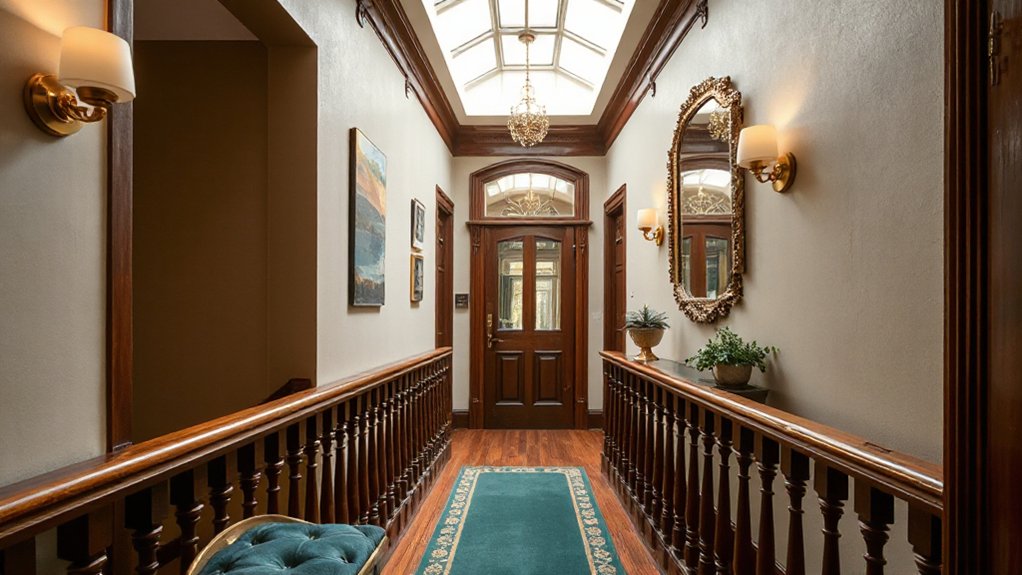
Narrow hallways in Victorian terraces can read like a blank canvas, but with thoughtful detailing they become a welcoming passage that sets the tone for the entire home. You curate a route that feels effortless yet deliberate, prioritizing viewlines and balance.
Emphasize vintage charm with restrained period pieces, like a slim console, a mirror with a brass frame, and small art accents that reflect light. Choose hallway lighting that flatters architectural details while guiding movement: wall sconces at eye level, a ceiling pendant, and discreet floor lamps near seating nooks.
Paint stays soft and authentic—creams, warm taupe, or a muted sage—so color amplifies depth. Add a runner with subtle pattern to extend length, avoid clutter, and maintain a calm, curated welcome.
The result: a wow without sacrificing coherence.
Timeless Yet Modern: Moldings and Carved Woodwork
Moldings and carved woodwork anchor Victorian terraces in a way that feels both timeless and contemporary, balancing ornate detail with clean, modern lines. You’ll notice that precise profiles—egg-and-droplet, cyma reversa, or fluted reeds—frame doors, windows, and niches without shouting.
Choose ornate moldings sparingly, letting stark white walls and understated hardware keep the look current. In living spaces, whip up a restrained cornice or a slim picture rail to define zones rather than overwhelm them.
Carved woodwork can act as quiet punctuation: a stair-newel with subtle scrolls, a doorway surround that echoes architectural rhythm. Maintain contrast by pairing dark, carved elements with light, matte surfaces.
Layered Textiles for Warmth and Airiness
Layered textiles bring warmth and airiness to Victorian terraces by balancing richness with breathability. You’ll create depth without heaviness, using a thoughtful mix of textures and tones that reads refined rather than fussy. Focus on scale, contrast, and light threading to keep rooms feeling open.
- Combine a tactile velvet upholstery with sheer drapery in a pale neutral to glow softly in daylight.
- Layer wool throws over linen sofas, selecting a palette that echoes architectural details.
- Introduce a patterned rug with a breathable weave to anchor seating zones.
- Add tactile cushions in varying textiles—silk, cotton, bouclé—for subtle texture shifts that invite touch.
Smart Storage for Compact Victorian Rooms
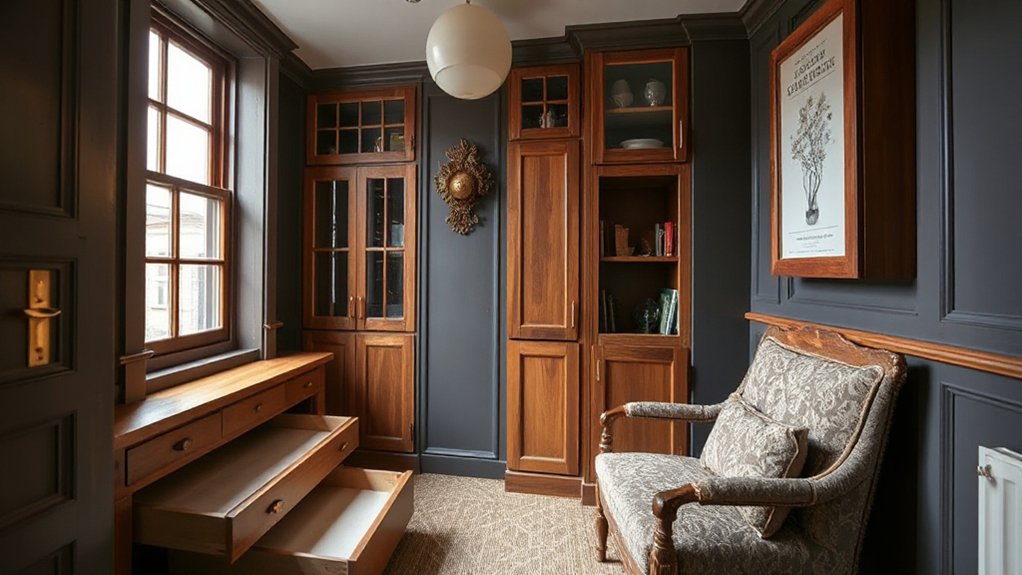
Smart storage is essential in compact Victorian rooms, where every inch counts and style matters as much as function. You’ll prioritize hidden units that blend with original architecture, avoiding bulk.
Opt for tall, slender cabinetry that reaches ceiling height, using pull-down shelves and rotating carousels to maximize corners.
Integrate seating with lift-up storage or upholstered benches that conceal daily essentials, preserving the room’s line and proportion.
Choose furniture with built-in drawers, slim profiles, and soft-close hardware to reduce clutter noise.
Use wall-mounted organizers and magnetic strips for small items, keeping surfaces clear.
Space optimization comes from double-duty pieces, mirrors to expand perception, and neutral finishes that reflect light.
Maintain a disciplined approach: every item earns a place, every surface stays purposeful.
Kitchen Proportions That Respect the Architecture
When designing a Victorian kitchen, let proportion guide every choice so the new work feels like it’s always belonged to the home. You’ll see how Victorian proportions dictate cabinets, counters, and flow, yielding architectural harmony across the room.
- Align cabinet heights to doorways and hearth sightlines, preserving rhythm.
- Match counter depth to traditional scales to maintain balance between work zones.
- Use drawer spacing and leg clearance that echo period furniture for graceful, usable spaces.
- Integrate open shelving and panel details to reinforce cohesion without heaviness.
You respect the architecture by treating every element as a single, measured chorus. The result: a kitchen that reads as a natural extension, precise yet inviting, with Victorian proportions guiding every tactile choice and visual cue.
Dining Rooms: Grand Yet Cozy for Everyday Living
You’ll balance grandeur with everyday comfort by blending stately details—like paneling or a sizable chandelier—with warm textures and approachable seating.
The room should feel ceremonial enough for gatherings, yet intimate enough for daily meals, so choose durable fabrics and a thoughtfully scaled table.
Start by outlining how the grand and the cozy coexist, inviting discussion on how these elements shape everyday dining ambiance.
Grand Yet Cozy Elements
Entertaining in a Victorian dining room isn’t about formality alone; it’s about a confident balance of grandeur and everyday ease. You weave grand scale with intimate details, creating rooms that feel both museum-like and lived-in. Focus on proportional furniture, layered lighting, and textural contrast to sustain comfort without losing polish.
- Sleekly carved sideboard paired with a lamp that casts warm shadows, hinting at Victorian elegance.
- Upholstery in rich fabrics balanced by cozy accents like wool throws and sheepskin drapes.
- Statement chandelier above a modest table, ensuring drama without intimidation.
- Subtle metallic accents and antique-framed art that anchor the space with refined warmth.
This approach yields a dining room that breathes: formal presence softened by approachable, welcoming notes.
Everyday Dining Ambiance
After embracing the grand yet cozy vibe in the dining room, you’ll notice everyday gatherings feel naturally elevated without feeling formal.
In Victorian terraces, the dining table becomes the anchor of daily life, not just special occasions. Choose a substantial, smoothly finished surface with understated detailing to invite lingering meals.
Surround it with comfortable seating that supports conversation, yet stays elegant. Ambient lighting should choreograph mood—layer brass or glass pendants with wall sconces to soften corners and create a warm horizon of glow.
Allow natural daylight to play across textures, balancing polished wood with soft fabrics. Keep decor restrained: a single centerpiece, tidy place settings, and meaningful art.
The result is an inviting space that remains precisely tuned to everyday moments.
Lighting to Elevate Ceilings and Architectural Details
To elevate ceilings and architectural details in Victorian terraces, use lighting that emphasizes height and texture rather than flatly illuminating space. You’ll sculpt atmosphere with directional cues, hidden cove glow, and high-contrast shadows that reveal mouldings and plasterwork.
Focus on ceiling fixtures that cast upward light, spotlighting cornices while keeping glare minimal for a refined silhouette. Thoughtful placement creates architectural accentuation, transforming ceilings into canvases rather than backgrounds.
- Up-lighting coves and cornices to elongate vertical space
- Recessed ceiling fixtures with warm dimming for subtle drama
- Wall sconces beside panels to frame ornate detailing
- Chandeliers and pendant clusters positioned to balance proportion and airiness
Color Palettes That Lighten and Honor History
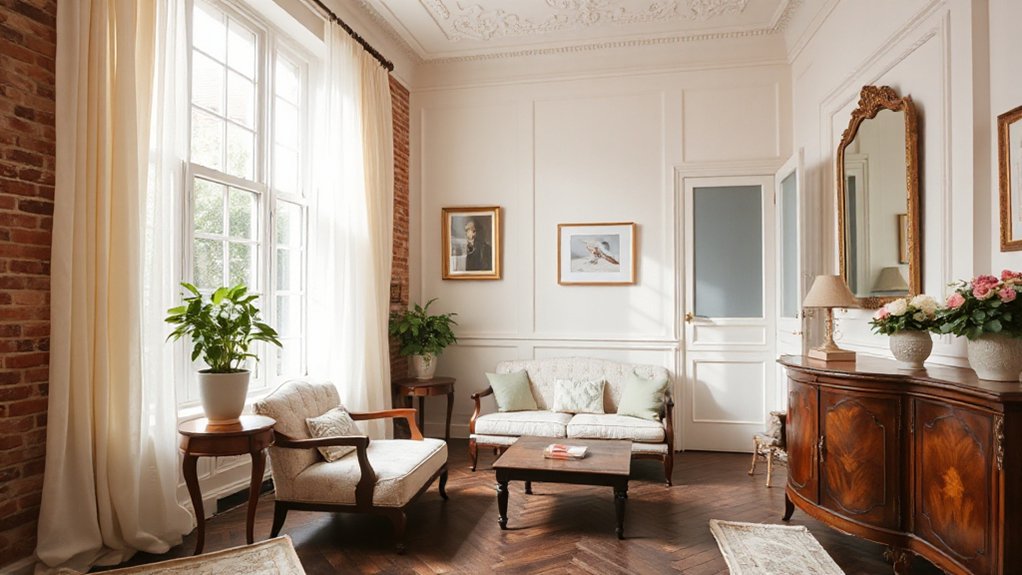
Color palettes for Victorian terraces should acknowledge history while brightening spaces for modern living. You’ll balance period-accurate undertones with contemporary brightness, using restrained hues that echo era-appropriate schemes. Think muted greens, dusty blues, and warm neutrals as foundations, then pair with lighter whites or creams to amplify natural light.
Color psychology guides you to select tones that influence mood and perception, so consider softer contrasts to maintain calm elegance and legibility in small rooms. Historical accuracy matters, but you avoid nostalgia trap by testing swatches in daylight and coordinating trims, walls, and ceilings in cohesive shades.
Introduce accent colors through furnishings, textiles, and architectural details rather than overpowering walls. The result: a refined palette that honors heritage while scanning fresh, inviting atmospheres.
Flooring That Connects Old and New
Flooring in Victorian terraces should bridge eras with tactful restraint and tactile appeal. You’ll choose materials and layouts that nod to history while performing daily duties with modern reliability.
Prioritize flooring patterns that read as cohesive rather than nostalgic, guiding sightlines through rooms without shouting. Material durability matters: opt for hardwearing options that tolerate foot traffic and occasional renovations.
Implement contrasts in grain, width, and finish to delineate spaces subtly while preserving flow. Keep transitions smooth between living, dining, and passage.
Favor low-sheen finishes to hide wear and echo period craft. Prioritize underfoot comfort in high-traffic zones with warm tones that unite old and new, avoiding abrupt shifts.
- Reclaimed oak planks with a brushed texture
- Wide-format porcelain tiles in a neutral field
- Engineered hardwood with muted satin
- Herringbone patterns in durable laminate
Flow and Entertaining: Opening Spaces Without Losing Character
Opening spaces in a Victorian terrace should feel effortless and intentional, balancing openness with the character that defines the home. You cultivate flow by prioritizing sightlines and purposeful junctions, so rooms read as a cohesive whole rather than isolated boxes.
Embrace open plan layouts where possible, but preserve period details—mouldings, ceiling heights, and panelled doors—through consistent materials and proportions.
Allow natural lighting to guide furniture placement: low, reflective surfaces and strategically placed mirrors amplify daylight without creating glare.
Use zones rather than walls to define functions, with soft progressions like pocket doors or sliding panels that can close for intimacy.
Keep color and texture restrained yet deliberate, ensuring continuity from room to room.
In all, design feels spacious, curated, and true to Victorian character.
Outdoor-Indoor Links for Victorian Terraces
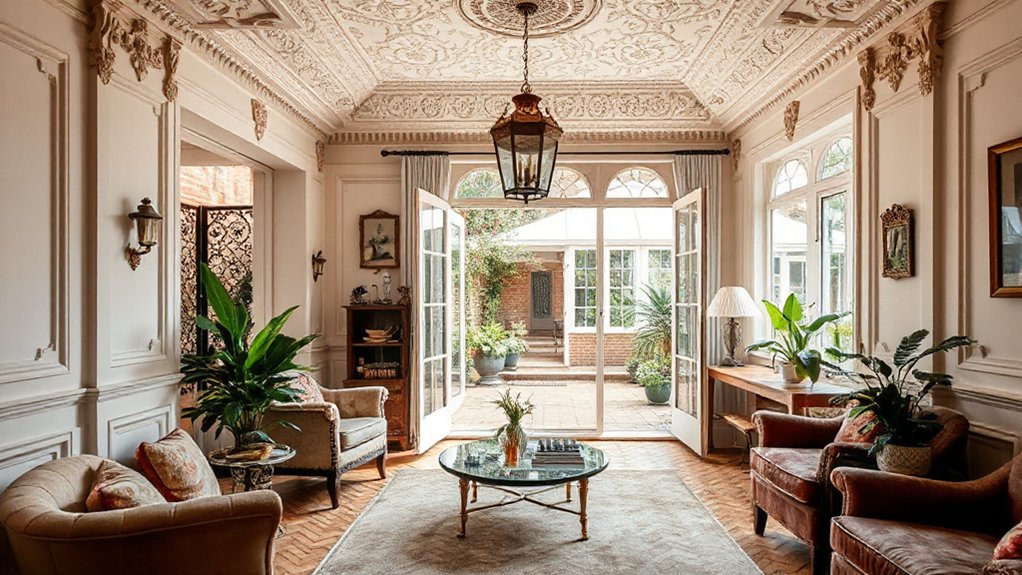
You’ll cultivate a seamless indoor-outdoor flow by aligning threshold details and sightlines so rooms open naturally to decks or patios.
Choose outdoor materials that mirror interior textures for cohesion, while ensuring durability under Victorian-era conditions.
Use lighting that guides shifts—soft ambient tones inside extend outward to shaded zones, defining space without breaking atmosphere.
Seamless Indoor-Outdoor Flow
To create seamless indoor-outdoor links in a Victorian terrace, design with a deliberate flow that unites rooms and garden alike. You’ll craft transitions that feel inevitable, not added on, so spaces breathe together.
1) Align thresholds and sightlines to extend the same palette from parlor to patio, ensuring continued proportion and scale.
2) Use large glazed doors or bi-folds that open fully, enabling alfresco dining moments without visual disruption.
3) Introduce garden integration through clipped hedges, potted specimens, and a corridor of scent that travels indoors.
4) Select furniture with weather-friendly finishes and refined silhouettes that echo interior detailing, maintaining cohesion.
These choices reinforce seamlessness, encouraging effortless movement between indoors and out. Alfresco dining and garden integration anchor the harmony.
Outdoor Materials Selection
For Victorian terraces, the choice of outdoor materials sets the tone and durability of the whole scheme. You’ll balance aesthetics with resilience, selecting surfaces that endure weather, foot traffic, and evolving textures.
Prioritize materials with proven material durability, such as treated timber, composite decking, or stone pavers that resist cracking and fading.
Consider a cohesive palette that mirrors interior finishes, ensuring seamless progressions from indoors to out.
Use outdoor seating that complements the period character, opting for weather-resistant fabrics and powder-coated metals.
Avoid overly glossy finishes that clash with brickwork or cornice lines.
Think about maintenance cycles: plan for resealing, cleaning, and seasonal inspections to preserve color and grip.
Finish with durable thresholds and well-placed planters to anchor the terrace’s rhythm.
Lighting for Transitions
Even a well-lit shift can anchor the Victorian terrace by guiding the eye from interior to exterior while enhancing texture and proportion. You create seamless progressions with calibrated lighting that reads as continuous, not separate rooms. Ambient glow softens edges, while sharper pockets emphasize architectural detail and landscape depth, forging visual harmony between indoors and out.
Use lighting contrasts to sculpt pathways, undercroft steps, and boundary lines, so night becomes an extension of day.
- Dimmed wall washes near seating juxtaposed with bright focal lamps at entry points
- Subtle uplights for cornices and trellises to reveal texture without glare
- Floor-mounted indicators along thresholds to cue movement
- Warm-temperature LEDs that balance interiors and exteriors without color distortion
Texture Secrets: Furs, Velvets, and Natural Fibers
Texture is the soul of Victorian terraces, and furs, velvets, and natural fibers play the leading roles. You shape the room by weighing materials with purpose, not abundance. Textural layering becomes the quiet agent of tactility, guiding light and shadow across surfaces.
Choose velvet for upholstery to absorb glow from gas or candlelight, then ground with a textured wool or boucle your hands appreciate. Furs and faux fur trims offer instant opulence without overpowering architecture, especially on chairs, throws, or cushions.
Natural fibers—hemp, linen, raw silk—introduce breath and warmth, balancing sheen and matte finishes. Fabric choices hinge on proportion: mix small-scale patterns with solid velvets, so ornament remains deliberate, not loud.
Maintain rhythm through repeats and contrasts, letting texture tell the story.
Art, Accessories, and Personal Storytelling
Artful objects and personal artifacts are the threads that give Victorian terraces their intimate, lived-in soul. You shape spaces where stories sit alongside silhouettes, guiding how you display, protect, and rotate cherished items.
Thoughtful art curation and deliberate accessory placement anchor rooms, balancing ornament and function with restraint. Choose pieces that speak to eras, yet keep you in the foreground, not overwhelmed by nostalgia.
- Curate a focal arrangement with a single centerpiece, flanked by supporting works that echo color and era.
- Layer frames of varied sizes on a wall, but limit to a cohesive palette to avoid visual noise.
- Place small collectibles at eye level in open shelves for accessible storytelling.
- Rotate meaningful objects seasonally to refresh mood without clutter.
Budgeting and Phasing Your Victorian Refresh
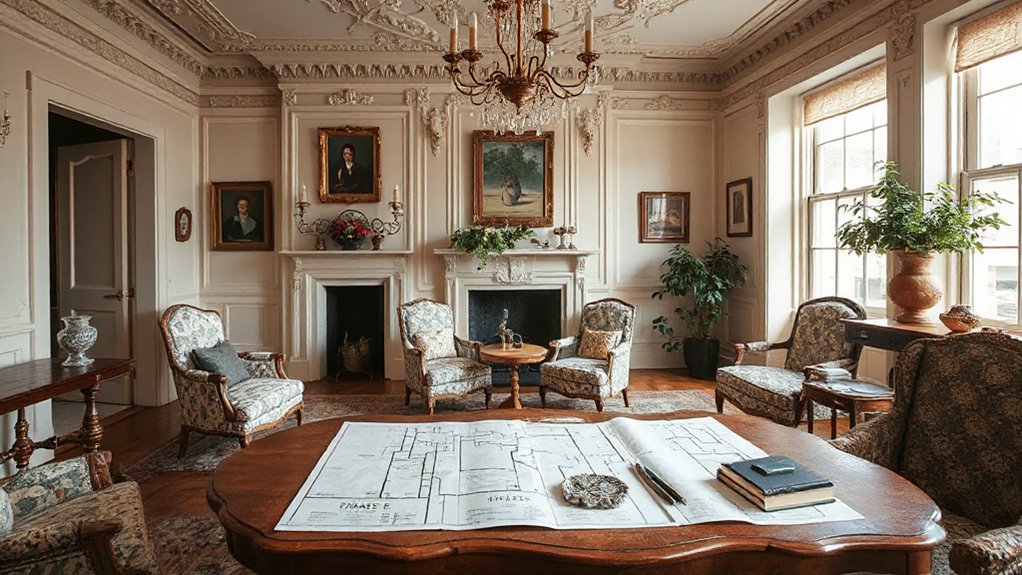
Setting a clear budgeting milestones helps you map costs against your goals, from paint and wallpaper to fixtures and finishes.
Plan a phased timeline that matches your home’s rhythm—start with essential structural updates, then layer in styling details as funds allow.
Budgeting Milestones
Budgeting milestones keep your Victorian refresh on track by outlining clear phases, costs, and decision points from the outset. You’ll map spend to outcomes, guardrails to prevent overruns, and prioritize craft without compromising historical accuracy or aesthetic.
Track materials, labor, and permitting in a single ledger, and reserve a contingency for surprises. Your plan should balance timeless detail with eco-friendly materials where appropriate, ensuring durability and authenticity.
- Define core priorities (structural, plaster, woodwork) and assign provisional budgets.
- Source sustainable, period-appropriate options that meet historical accuracy without inflating costs.
- Stage payments to contractors, aligning milestones with visible progress.
- Review quarterly, trimming nonessential items while preserving the design intent.
Phasing Timeline Tips
To keep your Victorian refresh organized, map your phasing timeline alongside budgeting milestones from the outset. A clear timing strategy keeps expectations aligned and funds flowing, preventing stall costs.
Start with a master sequence that prioritizes structural checks, then moves to essential finishes, ensuring suppliers and trades align with your calendar. Embrace project sequencing that nests smaller tasks within larger phases, so delays don’t cascade.
Build in buffers for delivery windows, and mark non-negotiables like permits or historic compliance dates. Track progress weekly, adjusting timelines as needed without compromising design intent.
Use milestone reviews to verify scope, quality, and budget adherence before advancing. This disciplined approach yields a cohesive, lasting result that honors your Victorian character while delivering measurable value.
Frequently Asked Questions
How to Balance Period Features With Modern Living Needs?
Yes—balance period features with modern living by integrating period appropriate furnishings alongside sleek, functional pieces, preserving Victorian inspired decor. You’ll juxtapose antique accents with smart storage, subtle tech concealment, and natural light to maintain authenticity and usability.
Which Color Schemes Best Honor Victorian History?
Like a carefully tuned instrument, you harmonize hues. Victorian color palettes lean toward muted teals, oxides, and creams, while prioritizing Historical color accuracy to honor era details in your rooms. You balance richness with restraint, thoughtfully.
What Storage Ideas Suit Compact Terraces?
Hidden compartments and multi functional furniture optimize storage on compact terraces, letting you tuck away essentials without sacrificing style. You’ll maximize space, keep surfaces tidy, and maintain aesthetic flow with sleek, durable pieces that adapt to daily needs.
How to Light Spaces Without Diminishing Character?
You prioritize natural lighting by maximizing window heights and using light-reflective finishes, then add vintage fixtures for character; avoid harsh spots, aim for layered, subtle illumination that preserves atmosphere while ensuring function.
Where to Invest for Lasting Impact and Budget Control?
Prioritize period renovations for lasting impact and budget control; invest in durable materials, proven methods, and skilled trades. Balance modern conveniences with historical authenticity, so spaces feel cohesive, respectful, and functional without overspending.
Conclusion
Step back, and you’ll feel the house respond—like a well-loved violin, tuned to your touch. You’ve mapped the moodboard, revived the details, and choreographed light and color to sing together. As you layer texture and memory, the terrace becomes a private gallery, a whispered dialogue between past and present. You’re not decorating; you’re composing. Let the walls tell your story, and the room will greet you, happily, like a familiar refrain returning at dusk.