
To avoid HMO legal pitfalls, you must know when licensing applies by checking if three or more unrelated tenants share facilities, and register with your local council on time. Maintain fire, electrical, and gas safety, keep up-to-date risk assessments, and guarantee self-closing doors and alarms function properly. Use approved deposit schemes, provide timely information, and handle renewals and notices consistently. Conduct Right-to-Rent checks before tenancy starts, and keep a precise audit trail. Stay compliant, or penalties mount—there’s more you can learn below.
How to Tell If Your Property Is an HMO and When Licensing Applies
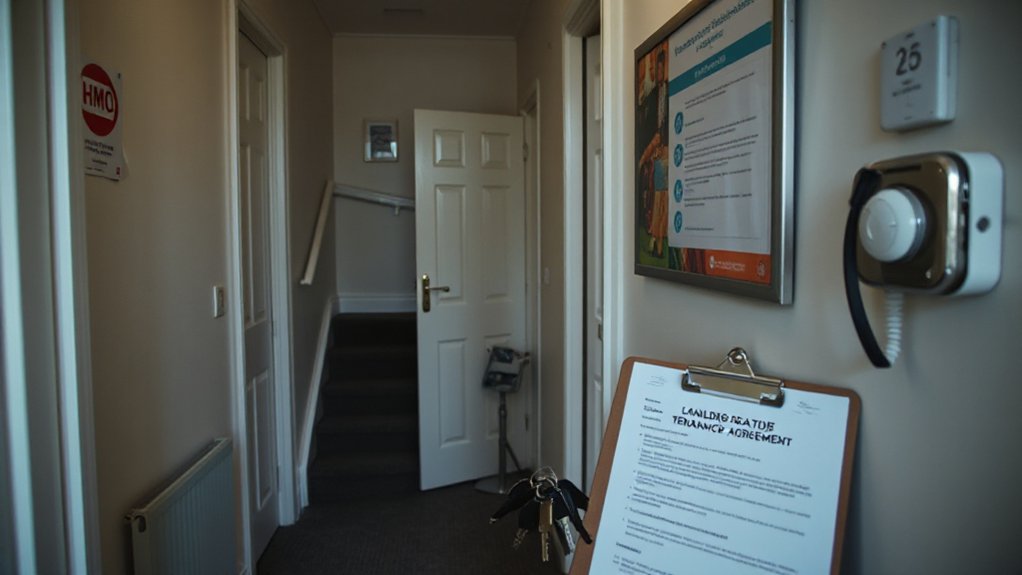
If you’re unsure whether your property counts as an HMO, start by checking how many unrelated tenants share facilities like kitchens and bathrooms.
In practice, you determine HMO status by occupancy patterns and property size, not by intent.
If three or more unrelated tenants share facilities, an HMO licensing requirement may apply, depending on local rules.
For two or more tenants who share basic amenities, you’ll still want to verify local thresholds, as they vary by borough and building type.
You should perform tenant screening to assess risk, confirm compliance, and prepare for potential inspections.
Keep records of occupancy, room sizes, and shared facilities.
If licensing is triggered, you’ll know to obtain the correct authorizations and avoid penalties.
How to Register, Meet Conditions, and Align With Local Rules
To register correctly, you’ll check your local council’s HMO requirements and submit any needed forms and fees on time.
You must meet the stated conditions, from capacity limits to fire safety and amenities, and document compliance clearly.
Align with local rules by keeping records current and staying informed about any changes to licensing or enforcement policies.
Registering Requirements
Registering requirements are non-negotiable for UK landlords: you must know exactly what to register, how to register, and which local rules apply. You’ll verify registration with the appropriate local authority or statutory body before letting to guarantee compliance.
Prepare a clear timeline and gather essential documents—property details, tenancy data, and license status—so you can complete registrations promptly.
Meet conditions by confirming the property meets safety and space standards, then submit any required evidence to avoid delays.
Align with local rules by checking variations in licensing periods and renewal obligations, and updating records as rules change.
Practical steps include standardizing processes for tenant screening and lease agreements, so registrations reflect accurate terms and protect both parties throughout the HMO tenancy.
Local Rules Alignment
Local rules shape your registration, conditions, and ongoing compliance, so you should align early and stay current. You’ll map neighborhood zoning requirements against your HMO plan, ensuring the property qualifies for licensure before submitting documents.
Verify landlord registration, fire safety standards, and occupancy limits in your council’s policy pages, then cross-check against your lease agreement terms to avoid conflicts.
Keep your rent, service charges, and utility allocations transparent to satisfy local audits.
Documented evidence of approved alterations and electrical works should accompany your application, with dated plans and professional certificates ready for review.
Build a compliance calendar: renewal deadlines, inspection windows, and notification timelines.
Aligning practices with neighborhood zoning and lease agreement terms reduces delays and strengthens your licensing case.
Deposit Protection, Penalties, and Tax Implications for HMOs
Deposit protection isn’t optional for HMOs, and failing to secure the correct scheme or to timely return the deposit can trigger penalties and dispute costs. You’ll face landlord liability if you mishandle protections, so align with approved schemes and provide prescribed information promptly.
Tax implications affect cash flow; consider how deposits, interest, and penalties influence taxable income and deductibility.
- Confirm the correct protection scheme and document its reference details.
- Return deposits on time and provide a clear statement of all deductions.
- Record penalties or interest payments for non-compliance and report them accurately.
- Track tax consequences for deposits, refunds, and any penalties to avoid over- or under-payment.
This approach minimizes tenant disputes and protects your cash flow.
Fire Safety Standards Every HMO Must Meet
Fire door compliance, alarms, and clear evacuation protocols are non-negotiable for every HMO. You must guarantee doors meet fire resistance standards, alarms are properly positioned and tested, and residents know exactly how to evacuate safely.
Start with a documented plan, regular checks, and prompt remediation to avoid costly penalties and safety failures.
Fire Door Compliance
To comply with fire safety standards in every HMO, doors must resist fire long enough to protect occupants and allow safe evacuation. You must prioritize proper Fire door maintenance and ensure door installation regulations are followed from the outset.
Key points:
- Verify FR ratings and ensure doors are rated for the relevant fire resistance.
- Confirm intumescent seals and correct hardware are installed and functional.
- Schedule regular inspections; replace damaged or warped doors immediately.
- Maintain clear door sweeps and ensure self-closing mechanisms operate consistently.
Adopt a documented maintenance plan and keep records. Use compliant doors for all occupied spaces, especially fire exits.
Your approach minimizes liability, improves safety, and aligns with UK HMO standards.
Alarm & Evacuation Protocols
Alarm and evacuation protocols must be clear, practiced, and enforceable across every HMO. You’ll implement formal emergency procedures that specify who, what, where, and when, ensuring everyone understands their role during a fire.
Keep plans simple, accessible, and visible in common areas, with multilingual captions if needed. Schedule regular evacuation drills that simulate realistic scenarios, document attendance, and review results to close any gaps promptly.
Your procedures should cover alarm activation methods, escape routes, assembly points, and responsibilities for tenants, staff, and visitors. Maintain up-to-date contact details for emergency services and building management.
Train occupants on how to raise an alarm, assist others, and avoid unsafe shortcuts. Regular testing and concise revisions protect lives and limit liability.
Right-to-Rent Checks and Tenancy Eligibility
Right-to-Rent checks are a legal must for UK landlords, ensuring tenants have the right to live in the property before any tenancy begins. You’ll verify eligibility early to avoid disputes and penalties, and you’ll align with tenant screening best practices. Use clear processes to document immigration status, and attach compliant evidence to lease agreements.
- Confirm identity and immigration status for all adult applicants.
- Keep copies of documents securely and know how long to retain them.
- Decide fair, consistent criteria in line with tenancy rules.
- Integrate eligibility checks with your lease agreements from day one.
Planning Permission, Use Class Changes, and Property Uprating

If you plan to convert a dwelling into additional units, confirm the use class order and any permitted development rights that could apply. You’ll need to assess how alterations impact fire safety, amenity space, and waste management, and budget for application fees and potential disputes.
Engage your planning authority early, document rationale, and seek professional guidance if in doubt. Planning permission and use class decisions determine legality, valuation, and future rentability, so handle them before any construction begins.
Use class clarity avoids penalties.
Fitness for Habitation and Housing Standards Compliance
As you move from planning and use-class decisions to expanding or upgrading your property, fitness for habitation and housing standards compliance becomes the practical benchmark you must meet. You must guarantee your HMO offers safe, healthy living, and that inspections verify compliance with housing standards and tenancy protections.
Tenant rights hinge on visible maintenance and timely remedy of hazards, while property inspections test Electrical, gas, fire safety, and means of escape. Stay proactive, not reactive, to avoid penalties and voided tenancies.
Use these steps:
- Schedule regular internal checks and remedial work
- Maintain fixed electrical installations and meters
- Complete annual gas safety tests and fire risk assessments
- Document compliance for tenants and inspectors
Common HMO Management Pitfalls: Deposits, Renewals, and Notices
Deposits, renewals, and notices are the three critical moving parts you must manage meticulously to avoid disputes and penalties in an HMO. You should lodge deposits correctly, document conditions, and outline timeframes to prevent hold-ups at checkout.
When renewals approach, provide clear notices, confirm terms in writing, and align them with the tenancy agreement to avoid ambiguity.
Notices—especially for rent increases, terminations, or change of occupancy—must be timely, compliant, and delivered through proper channels.
Maintain consistent tenant communication to prevent misunderstandings and demonstrate fairness.
For lease enforcement, apply rules uniformly, log breaches, and issue proportionate remedies.
Regular audits of documents and dates help you stay ahead of disputes and regulatory scrutiny, supporting smoother turnovers and compliant operations.
Building a Compliant Compliance Checklist and Audit Trail
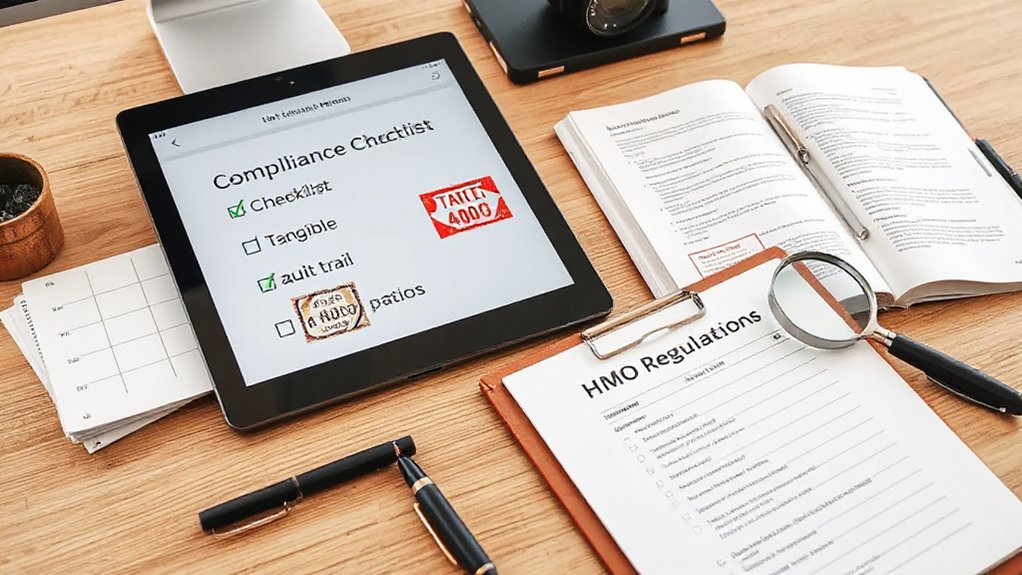
A compliant compliance checklist and audit trail are your frontline defenses against disputes and penalties in an HMO. You build them to prove processes, not promises, and to safeguard your occupancy, payments, and safety standards.
Keep records precise, dated, and easily locatable so inspections, audits, or disputes stay resolveable. Your focus should be on clarity, accessibility, and consistency in every entry.
- Establish a central, timestamped log for tenant communication and key actions.
- Link each task to a policy, with a checkmark to confirm completion and follow-up.
- Pair every lease agreement drafting step with changed clauses and version numbers.
- Archive copies of notices, renewals, and safety compliance certificates for easy retrieval.
Frequently Asked Questions
Do HMO Licenses Automatically Cover Lease Renewals and Deposits?
No, HMO licenses don’t automatically cover lease renewals or deposit protections. You should review lease agreements, verify deposit protections are compliant, and coordinate renewals separately, citing tenancy rules and HMO licensing requirements for ongoing compliance and clarity.
How Often Must an HMO Fire Risk Assessment Be Updated?
You must update your HMO fire risk assessment annually, like checking a smoke alarm awake each dawn. Fire safety and risk management depend on timely review; you stay prepared, proactive, and compliant, protecting tenants and property as you govern.
Are There Penalties for Minor Non-Compliance in Planning Changes?
Yes, there can be penalties for minor non-compliance in planning changes. If you miss or delay approvals, expect Compliance penalties, potential fines, and enforcement actions; guarantee timely planning permissions and document decisions to minimize risk and penalties.
What Constitutes Lawful Rent Increase in Shared Occupancy HMOS?
You should-verify: lawful rent increases in shared HMOs depend on tenancy terms, fair market value, and any agreed rent schedule; avoid coercive hikes. Rent escalation must align with occupancy limits and proportionality to unit size and amenities.
How Does Energy Performance Affect HMO Licensing and Grants?
Energy efficiency influences licensing criteria and grant eligibility, shaping your HMO approach; you’ll meet higher standards, reduce running costs, and access funding. Licensing criteria prioritize energy performance, condition, and safety, guiding you to target required improvements promptly.
Conclusion
Being diligent about HMO compliance protects tenants and your investment, yet haste invites penalties. You must balance caution with momentum: follow the rules, but don’t stall decisions. You’ll win by embracing structure—checklists, audits, timelines—instead of chasing shortcuts. The law is rigorous, but your process can be steady, transparent, and scalable. In neglect, risk multiplies; in vigilance, clarity multiplies. Your vigilance today preserves tenancy credibility tomorrow.