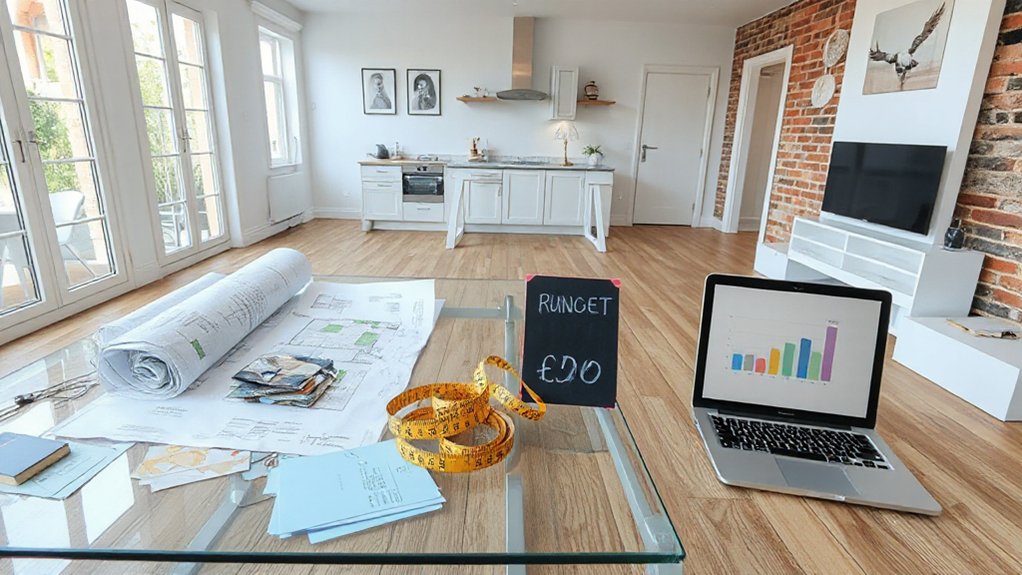
Flat and apartment reno costs in the UK vary widely by size, scope, and finish, so you’ll want a precise budget that accounts for structural work, plumbing, and electrical upgrades alongside finishes. Start with a core cost framework, then test how space size and regional prices shift the bottom line. You’ll find that contingency and phased work matter as much as the choices you make, and there’s a practical path forward—if you’re ready to map it out with discipline.
Quick Budgeting Framework for UK Flat Renovations

A quick budgeting framework for UK flat renovations helps you lock in costs before you start. You map core phases: design, permits, trades, and finishes, then assign fixed targets and buffers.
Begin with a scope baseline: list essential updates, avoid optional extras, and quantify every item you must complete. Use unit costs from reputable suppliers to price materials like timber, plaster, and fixtures, and apply realistic lead times to each purchase.
Prioritize value by comparing two eco-friendly materials options for key components, measuring long-term maintenance versus upfront spend. Track historical architecture considerations that influence finish choices, ensuring compatibility with existing fabric without inflating expenses.
Build contingency of 10–15% for unseen issues, then review quarterly to keep the project financially disciplined.
Core Cost Categories for a Typical UK Flat
- Furniture placement impacts space utility and budget alignment.
- Color schemes guide fixture choices and material selection.
- Scheduling buffers reduce costly rework.
How Space Size Changes Your Renovation Budget
Space size directly shapes your renovation budget by scaling both material needs and labor time. In larger spaces, you’ll see proportionally higher costs for demolition, wiring, plumbing runs, and finish finishes. However, you may gain leverage on per-square-meter pricing if you optimize layout.
Smaller areas demand tighter planning, tighter waste management, and precise budgeting to avoid overruns. Space optimization matters: it reduces needed materials, simplifies permit scopes, and shortens labor days, all of which compress the budget.
Conversely, open plans or awkward geometry can raise costs through custom cabinetry, longer run lengths, and extra cuts. Keep design aesthetics consistent with budget realities, choosing scalable fixtures and modular systems that perform well across varied room sizes.
Prioritize efficient layouts and accurate takeoffs to prevent surprises.
Finish Levels Explained: Basic, Mid, Premium

Finish levels map your total spend: Basic, Mid, and Premium define finishes, fixtures, and labour variance, so you can forecast costs more accurately.
You’ll compare budget vs. premium options within the Finish Level Tiers to spot where small upgrades drive big value or cost.
Use this framework to align choices with your budget, then quantify trade-offs before you commit.
Finish Level Tiers
- Basic, Mid, Premium distinctions drive cost clarity
- Vintage fixtures and eco friendly materials influence value
- Lifecycle costs anchor tier selection decisions
Budget vs Premium Finish
Basic offers reliable function with lower materials cost; Mid adds durability and style upgrades without excessive markup. Premium prioritizes longevity, aesthetics, and finish quality, often increasing labor intensity.
Consider tradeoffs: cabinet quality, tile ranges, and smart or eco-friendly materials can elevate costs quickly. If you crave vintage charm, plan for period-appropriate fixtures and finishes that stay within your budget.
Align selection with your schedule and risk tolerance to reduce cost creep while delivering the look you want.
Regional Price Differences in UK Renovation Costs

- Regional disparities affect labor-hour estimates and subcontractor quotes.
- Materials pricing varies by transport costs and supplier competition.
- Renovation subsidies, when available, can shift the overall cash flow.
Focus on local market intel, track subsidy eligibility, and adjust your contingency based on area norms.
Estimating Demolition and Structural Work
You then quantify structural reinforcement needs, weighing options between temporary shoring, underpinning, or full frame alterations, each with distinct pricing curves. Consider coordination with utilities, waste management, and load-bearing assessments to avoid costly rework.
Develop a contingency based on uncertainty in old builds, but ground it in actual site data. Document assumptions, unit rates, and risk triggers, so stakeholders understand why a chosen approach is cost-efficient under reuse, renovation, or extension scenarios.
Plumbing and Heating Costs for Flats and Apartments
For flats and apartments, start with a clear plumbing costs breakdown, including fixture install, pipework, and potential water efficiency upgrades, so your budget captures every line item.
You’ll also want to weigh heating system upgrades—combustion, controls, and gear compatibility—to estimate true lifecycle costs and futureproofing needs.
This groundwork sets precise targets for procurement, trades time, and contingency planning, avoiding overruns as you price plumbing and heating improvements.
Plumbing Costs Breakdown
When budgeting plumbing and heating costs for flats and apartments, you’ll want a clear breakdown of essential components: fixtures and fittings, pipework, boilers and heating systems, controls, and labour.
You’ll see costs hinge on fixture quality, material longevity, and labour efficiency. Vintage fixtures add charm but can raise replacement and maintenance spend; sustainable materials may offset long-term costs through durability and lower utility bills.
Prioritise streamlined pipe routing to minimise disruption and capex, while choosing reliable controls that optimize energy use.
Budget contingencies for unexpected fixes, such as valve replacements or sealant failures, keep plans realistic.
- Fixtures and fittings
- Pipework
- Labour and installation timing
Note: This excludes future heating system upgrades and focuses on immediate plumbing components and material choices.
Heating System Upgrades
Could upgrading a heating system deliver meaningful long-term savings in a flat or apartment? Yes, with careful scope and budgeting. Begin by evaluating current heat loss and zoning to avoid overpaying for oversized equipment.
Smart thermostats can optimize energy use by learning occupancy patterns and cycling heat, reducing idle consumption and aligning delivery with demand.
When considering radiator upgrades, target replacements where old radiators underperform or leaks exist, prioritizing high-heat-output units with compatible valves to maintain balanced rooms.
Costs include units, controls, installation, and potential pipework or insulation upgrades.
Expect a short-term disruption, but note payback timelines often hinge on tariff stability and efficiency gains.
Compare quotes from reputable installers, and document energy savings to validate the investment.
Prioritise proven efficiency, durable components, and clear maintenance plans.
Electrical Upgrades: Essential Wiring & Safety Costs
Electrical upgrades are a core, cost-driven safety measure in UK renovations, and they demand precise budgeting from the start. You’ll scope essential wiring upgrades, balancing compliance with future-proofing, to prevent outages and hazards.
A focused wiring inspection identifies noncompliant or degraded components, informing mandatory enhancements and cost sequencing. Budget for consumer unit upgrades, added sockets, and robust earthing while prioritizing critical circuits first.
Plan for ventilation and arc-fault considerations where applicable to current UK standards. Expect costs to scale with property size, existing loom complexity, and accessibility.
Track contingency for surprises from asbestos-free rewiring or rewiring in occupied spaces.
- Wiring inspection findings drive scope and spend
- Essential safety upgrades first, then enhancements
- Permits, inspections, and certifications included
Kitchen Refresh: Cabinets, Fittings, and Appliances

After establishing wiring safety groundwork, a focused kitchen refresh centers on cost-conscious decisions for cabinets, fittings, and appliances. You’ll evaluate cabinet styles by cost-per-year value, prioritizing soft-closed drawers, durable laminates, and modular layouts that minimize waste.
Consider cabinet refacing where feasible to cut expenses without full replacement, and align heights to enhance ergonomics and workflow.
Fittings demand a balance between reliability and price: water-efficient taps, budget-friendly pullouts, and standardized sizes to reduce custom orders.
Appliances should be energy-rated and sized to your space, with selective upgrades like a 30-inch range or a quiet dishwasher to improve daily use without breaking the bank.
Furniture arrangements and lighting design influence perceived space and function, guiding placement and ambient tactics for efficiency.
Bathroom Remodels: Showers, Tiles, Fixtures
Expect shower reno costs to hinge on fixture choices and trade rates, with installation timing tied to supply lead times and service windows.
Tiling materials vary by durability and thickness, so budgeting should factor underlayment, grout, and edge details upfront.
Plan fixture installation timelines around supplier delivery, trades availability, and permit or inspection steps to avoid delays and cost overruns.
Shower Renovation Costs
Renovating a shower typically costs between £2,000 and £6,000, depending on enclosure type, tile quality, fixture choices, and whether plumbing or waterproofing must be upgraded. You should plan for the core drivers: enclosure and doors, waterproofing, and basic fixtures.
Expect costs to rise with premium glass, resin panels, or smart controls, and to drop with simplified layouts and standard fittings. Prioritise water efficiency to reduce ongoing bills and maintenance.
Budget guidance below helps you compare options and stay within project aims.
- Enclosure and door choice: standard cubicle vs. framed glass vs. walk-in mains
- Waterproofing and plumbing upgrades: necessary for leak prevention and code compliance
- Fixtures and controls: low-flow taps, shower heads, and thermostatic valves to balance comfort and efficiency
Tiling Materials Choices
Tiling materials shape both the look and the long-term cost of a bathroom remodel, so pick with durability and maintenance in mind. You weigh ceramic, porcelain, ceramic-metal blends, and natural stone by surface wear, absorption, and slip resistance, aligning choice with your budget.
Size and layout influence waste and installation time, affecting labor costs. Tiling patterns matter for visual impact and edge finishing; simple grids minimize cuts, complex patterns boost material waste and skilled labor hours.
Grout selection drives maintenance and sealing needs; epoxy grouts resist stains but cost more, while cementitious options save upfront but demand more upkeep.
Plan for waterproofing compatibility with showers and niche shelves. Favor materials with low porosity in wet zones, confirm certification, and quantify long-term durability to avoid premature replacement.
Fixture Installation Timelines
When planning bathroom remodels, you should map fixture installation timelines against shower, tile, and fixture scopes to avoid scheduling bottlenecks and cost overruns. Precision in sequencing minimizes downtime and budget swings. You’ll need clear lead times for fixtures, grout, and seals, plus contingency buffers for supply delays.
Align carpentry, plumbing, and tiling windows to prevent overlaps that inflate labour costs. Track procurement milestones and confirm compatibility of sizes, thread types, and valve placements before ordering. A disciplined timeline reduces rework and waste, supporting accurate cost forecasting and on-time delivery.
- Fixture timelines: confirm delivery windows, compatibility, and installation order
- Renovation scheduling: sync trades, buffer for delays, and monitor cost impact
- Cost-focused checks: lock prices, track changes, and align with budget milestones
Flooring Options and Price Ranges
Flooring choices drive upfront costs and long-term durability, so it helps to compare options by material life span, install complexity, and maintenance needs rather than sticker price alone. You’ll balance initial outlay with ongoing expenses, especially for UK flats where subfloor conditions and room layout influence install time.
Luxury finishes add perceived value but raise per-square-meter costs and potential shipping delays. For durability, consider engineered wood for stability, LVT for moisture resistance, and ceramic tile where heat or moisture are concerns.
Eco-friendly materials, like cork or bamboo, can align with budgeting while reducing environmental impact, though price volatility exists. Gather quotes that separate material, underlayment, and contingency, then project total cost over ten years to guide a pragmatic decision.
Windows and Doors: Energy and Cost Savings

Energy-saving windows reduce heat loss and can lower annual bills, so you’ll want to quantify payback based on your UK region and current heat usage.
When evaluating doors, consider insulation quality and installation constraints, as these directly affect overall energy performance and retrofit costs.
We’ll compare upfront costs against long-term savings to decide if upgrading windows and doors fits your budget and timeline.
Energy Saving Windows
Are energy-saving windows a smart lever for cutting UK home costs? You’ll see steady savings when you prioritize energy efficiency and professional window installation.
High-performance frames, double or triple glazing, and airtight seals reduce heat loss, lower heating demand, and shrink monthly bills.
Budget thoughtfully by balancing upfront costs with long-term gains and grant options.
Durability and maintenance impact total cost, so choose materials with proven performance and warranties.
Consider room-by-room needs, glare control, and ventilation compatibility to avoid nuisance replacements.
Track payback periods to compare suppliers and avoid over-specification.
By targeting energy efficiency, you’ll optimize comfort and resale appeal while keeping costs predictable.
- Focus on energy efficiency
- Prioritize window installation quality
- Balance upfront and long-term savings
Cost Impact Doors
Doors have a clear cost impact: choosing energy-efficient models, proper installation, and airtight fittings can cut heating loads as much as or more than window upgrades in the same budget.
You assess door options by materials, thermal performance, and security features, then compare long-term savings to upfront costs.
Prioritize insulated, low-U-value doors and solid cores for stability and draft resistance.
Budget for high-quality seals, weatherstripping, and correct frame alignment to prevent heat loss and air leakage.
Door materials influence price, maintenance, and durability; steel and fiberglass often balance security with efficiency, while timber may require finishing and more care.
Consider door security upgrades (multipoint locks, reinforced frames) as a parallel investment, reducing risk and insurance costs.
Target a blended payback within five to ten years, depending on usage.
Damp, Insulation, and Condensation Fixes: Cost Ranges
Damp, insulation, and condensation issues can hit a home’s comfort and value hard, but they’re also highly controllable within a clear budget. You’ll see cost ranges hinge on problem scope, chosen treatments, and dwelling type; units and labour drive most of the delta.
Priorities are damp prevention and condensation control, addressed by targeted ventilation improvements, moisture barriers, and timely sealing. Expect higher costs for structural repairs or retrofit insulation in older flats, and lower, punchy investments for quick fixes in well-insulated units.
Budget planning should itemise diagnostics, materials, and labour, with a contingency for unforeseen damp travel. Early fixes reduce long-term damage and ongoing energy waste.
- Damp prevention
- Condensation control
- Diagnostic + treatment planning
Planning, Permissions, and Building Regs: Budgeting Tips
You’ll map the full cost of Permissions, Building Regs compliance, and the Timeline and Approvals Process upfront to avoid surprises.
Pin down application fees, potential professional fees, and any differing site requirements so your budget reflects real constraints rather than guesswork.
Use a staged plan that aligns approvals with your build milestones, so funding gaps don’t derail progress.
Budgeting For Permissions
Securing planning consent, permissions, and Building Regulations approvals isn’t optional if you want a compliant project, so start by outlining all likely costs and a realistic timeline. You’ll face application fees, professional fees (planner, architect, surveyor), and potential specialist reports.
Build in contingency for delays, differing site conditions, or renotifications, and map milestones to funding. Track design trends and material durability to avoid repeated spend later.
- Estimate consent fees, planning portal costs, and potential s106 or discharge of conditions
- Budget architect and engineer commissions, plus surveyor and party-wall costs
- Allocate contingency for delays, amendments, and verification inspections
A precise budget keeps scope aligned with value, reducing overrun risk while ensuring compliant progress.
Building Regs Compliance
Start with a conservative contingency for potential changes demanded by inspectors. Factor in fees for plan checks, site inspections, and potential amendments; these are predictable but sometimes underestimated.
Use a pragmatic approach: map requirements to costs, not hopes. Track compliance standards alongside material choices to avoid rework.
Consider risk-weighted allowances for alternative solutions if standard routes push up prices. Document decisions, justify deviations, and align with your overall budget to prevent overruns while preserving safety and quality.
Timeline And Approvals Process
Coordinating the timeline and approvals process starts with a realistic, cost-linked schedule that aligns planning, permissions, and Building Regulations. You’ll map high-impact milestones, estimate approval windows, and factor contingency to protect your budget from delays.
Focus on design decisions that influence scope, such as interior lighting and furniture placement, since these choices affect costs and sequencing. Align contractor readiness with permit deadlines and ensure documentation is complete to reduce back-and-forth.
Track inspections, compliance reviews, and potential revocation risks so you can adjust early rather than endure costly mid-project fixes.
- Define permit timelines and required drawings up front
- Sync interior lighting and layout decisions with electrical and structural checks
- Build in buffer for approvals and inspection windows
Trade Labour Rates in the UK: What to Expect
Trade labour rates in the UK vary by trade, region, and project scale, so you should start with a clear budget baseline and a plan to update it as you refine specs.
You’ll notice rates differ for carpenters, electricians, plasterers, and plumbers, with regional demand shaping final quotes.
Build a granular line item structure: hourly or day rates, materials margins, and contingency.
Compare trades’ availability and lead times to avoid delays that inflate costs.
Factor in contractor premiums for complexity, access, and after-hours work.
Use a staged pricing approach to reduce exposure: initial estimates, then a defined scope refinement, then a fixed-price window for core trades.
Track changes against the baseline, adjusting your budget before committing to milestones.
Maintain transparency to prevent unwelcome surprises in the UK rates landscape.
Prioritising High-Impact Updates for ROI
- Exterior landscaping: low-cost, high-visibility impact
- Furniture selection: elevates space without major reno
- ROI tracking: measure, adjust, finalize decisions
Smart Cost-Saving Strategies Without Sacrificing Quality
Smart cost-saving strategies can preserve quality by targeting efficiency and value at every stage of a UK renovation budget. You should start with a clear prioritisation framework to separate must-haves from nice-to-haves, then model costs against outcomes.
Seek durable, low-maintenance finishes to reduce lifecycle expenses, and compare quotes using a consistent scope. Eco-friendly materials can cut long-term waste and disposal costs, while sourcing locally lowers transport emissions and delays.
Integrate smart technology only where it delivers measurable savings—smart lighting, heating schedulers, and energy monitors that align with occupancy patterns.
Reuse and repurpose existing fixtures when feasible, avoiding unnecessary replacements.
Create a phased plan with precise milestones to prevent scope creep, and set a contingency capped at a realistic percentage to maintain control over total spend.
Financing Renovations: Loans, Credits, and Timelines
If you’re financing a UK renovation, understanding loan types, credit options, and realistic timelines is essential to keep costs in check. You’ll compare secured vs. unsecured loans, drawdown vs. personal lines of credit, and consider interest rates, repayment terms, and total cost of borrowing.
Align these with project phases to avoid cash gaps and penalties. Plan for furniture placement and color schemes within permitted budgets, ensuring design choices don’t inflate financing needs. Use a timeline that phases draws with milestones, not upfront lump sums.
- Evaluate loan terms against project milestones
- Match credit limits to staggered renovation costs
- Schedule payments with completion targets and contingency cushions
Creating a Realistic, Contingency-Rich Budget
Allocate a separate contingency fund, typically 10–20%, tied to risk exposure such as structural issues or permit delays. Track escalation risk for materials and labour, adjusting weekly as prices shift.
Use a phased payout plan aligned with milestones to avoid cashflow gaps. Include nontraditional costs: vintage fixtures value, delivery delays, and disposal fees.
For outdoor work, plan gardening tips into the schedule to prevent scheduling clashes. Finally, document changes with a transparent audit trail to preserve cost integrity and decision accountability.
Case Study Snapshots: Small, Medium, Large Flats, With Takeaways
Small, Medium, and Large flats illustrate how unit size drives cost drivers and contingency needs. You’ll see how tiny footprints push plumbing and wiring precision, while larger spaces amplify HVAC, flooring, and latency in deliveries.
Our snapshots reveal how vintage decor elements can raise material costs, yet offer durable appeal with careful sourcing. Eco friendly materials, though sometimes pricier upfront, can trim long‑term waste and maintenance, improving overall value.
Each case spotlights budgeting pivots: contingency buffers, contractor coordination, and phased scope to manage risk. You’ll walk away with practical takeaways you can apply to your project.
- Prioritize scalable layouts and phased milestones
- Balance vintage decor with durable, eco friendly materials
- Build rolling contingencies tied to unit size and trades
Frequently Asked Questions
How Long Does a Typical UK Flat Renovation Take End-To-End?
Typically, a UK flat renovation takes 6–12 weeks end-to-end, depending on scope. You’ll budget for design trends, eco friendly options, lead times, and disruption. You’ll coordinate trades, track costs, and adjust timelines with pragmatic precision.
What Are Common Hidden Costs in Flat Refurbishments?
Hidden fees sneak up like hidden stairs, you’ll spot them only when you pay. Expect Unexpected expenses, such as permits and disposal, and budget 10–15% contingency to keep your refurbishment on track and financially precise.
Do Permissions Impact Project Timelines Significantly?
Permits and approvals can considerably impact timelines, so you should budget for delays. Building permits and legal approvals often add weeks to months, driving scheduling adjustments and contingency costs while you coordinate surveys, plans, and contractor availability.
How Should I Choose Between Mid Vs Premium Finish Levels?
Choose mid or premium finish by weighing finish quality against budget considerations; mid offers solid value while premium delivers durability and appeal, but you’ll pay more upfront. Analyze long-term costs, resale impact, and maintenance implications before deciding.
What’s the Average Hourly Rate for UK Tradespeople Today?
You’ll typically see average hourly rates around £20–£60, depending on trade skill levels, region, and urgency. Consider a precise cost comparison, weigh labor intensity, and plan for premium specialists only if the budget permits.
Conclusion
You stand at the door of your budget, and every pound is a key. Use the blueprint of categories as your lockpick, turning uncertainty into clarity. Size, finish, and regional prices are the weather; your contingency is the compass. Treat delays as shadows that reveal risks, not wreckage. With phased planning and disciplined choices, you’ll harvest durable value from every square foot, and your renovation becomes a symbol of prudent ambition turned into tangible space.