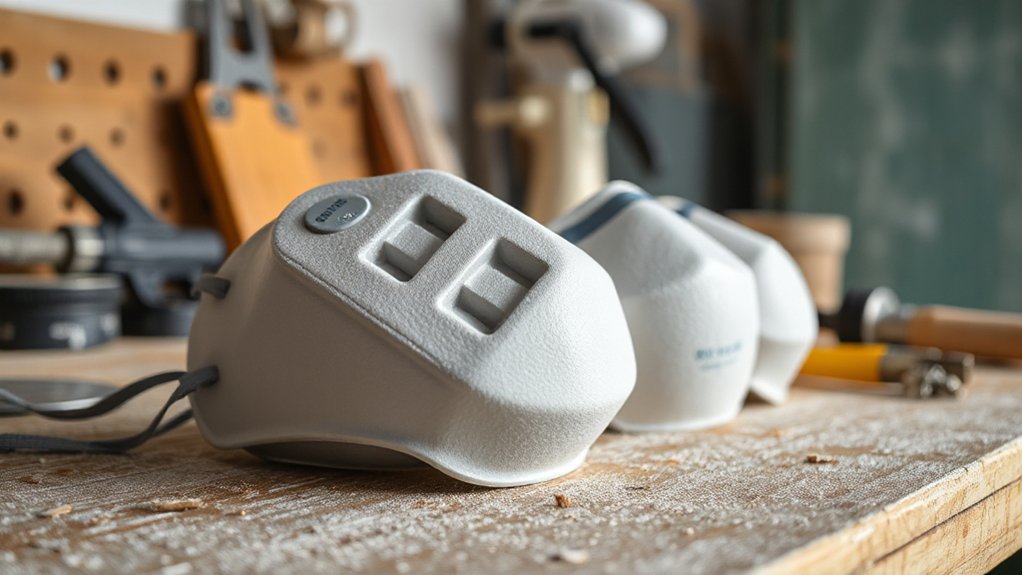
You’ll safeguard yourself on DIY projects by choosing masks with proven filtration, a secure seal, and the right rating for the dust you’ll encounter. For sanding, cutting, or remodeling, pick respirators rated for particulates (P100/N100 or N95 where appropriate) and make certain a snug seal with proper fit tests. Reusable elastomeric models offer higher efficiency for longer jobs, while disposables work short-term. Maintain filters, check for damage, and store cases dry—more tips await as you continue.
Understand Filtration Ratings and What They Mean for Your Project
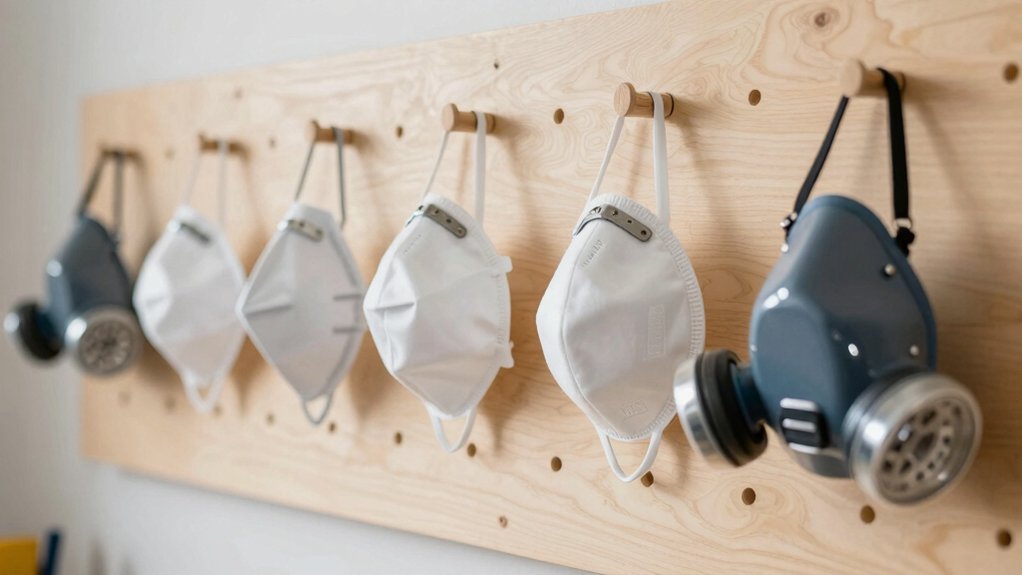
Understanding filtration ratings helps you choose the right mask for the job and stay safe. You’ll rely on filtration efficiency data to gauge particle capture at common work heights and dust loads, so you can predict real-world protection rather than guesswork.
Look for masks that meet recognized standards and display clear mask certification to verify performance. In practice, higher filtration efficiency typically pairs with tighter fit and lower breathing resistance, creating a balance between protection and usability.
Review the specific rating system for your region, and compare against the expected particle size and concentration you’ll encounter. Use this knowledge to select a respirator or disposable mask that aligns with the task’s risk level, ensuring consistent, proven protection rather than assumptions.
Match Mask Types to Sanding, Cutting, and Remodeling Tasks
When you sand, fit matters: a proper mask seals well to your face to prevent fine dust from bypassing filtration.
For cutting dust, choose a respirator or mask rated for particulates and wear eye protection, since shards and grit can irritate airways.
For remodeling, assess respiratory protection across tasks—dust, fumes, and aerosols may require layered PPE and a fit test to guarantee you’re protected.
Sanding Mask Fit
Selecting the right sanding mask starts with fit. A secure seal matters more than fancy features, because leakage undermines filtration efficiency. Start by checking strap placement: two headbands should distribute tension evenly without pinching. If you can slide a finger under the edge and feel a gap, you’ve got a leak path to seal.
Choose a mask that contours to your face, with a malleable nose bridge that stays put during dust bursts. Comfort matters, but never at the expense of filtration. Look for soft, skin-friendly mask material and an adaptable seal that remains effective as you sweat.
Verify compatibility with your respirator’s rated P100 or N95 standards, and replace after visible soiling or compression. Dust mask comfort and mask material directly influence sustained, safe performance.
Cutting Dust Control
Cutting dust creates a lot of fine particles quickly, so choosing the right mask type is essential for ongoing protection. For cutting tasks, opt for respirators with P100 or N100 filters to capture fine particulates, including silica. Guarantee a snug seal and correct strap tension to maximize protection during high-speed cuts.
Respirator maintenance matters: inspect cartridges for damage, replace per manufacturer guidelines, and store them away from contaminants that degrade filter media. Mask material selection should prioritize filter efficiency, breathability, and compatibility with any chemical exposures from coatings or adhesives.
Choose models with integrated valves only if you’re comfortable with facial fit checks and cleaning needs. Match your respirator to the task, and verify fit and seal before each cut to sustain effective protection levels.
Remodeling Respiratory Gear
To protect yourself across sanding, cutting, and remodeling tasks, match respirator types to the specific dust and exposure you’ll encounter, then verify fit and seal before each use.
In remodeling work, select respirators with appropriate filter cartridges and P100 or HEPA filters for fine dust, mold spores, and silica.
For light sanding, a half-face respirator with organic vapor cartridges can reduce fumes; for aggressive material removal, upgrade to a full-face or turbocharged system to protect eyes and lungs.
Always check seal integrity, facepiece comfort, and cartridge expiration.
Air quality matters: choose masks with high filtration efficiency and reliable fit.
Prioritize mask materials that resist moisture and sweat, ensuring durability and consistent protection throughout remodeling projects.
How Materials and Surface Work Affect Your Mask Choice
Material filtration and surface texture interaction guide your mask choice: particles from different surfaces may vary in size, shape, and charge, affecting how effectively a given filter captures them.
For rough, fibrous, or dusty materials, prioritize higher-efficiency filters and a snug fit to maintain protection during ongoing work.
Consider how sanding, grinding, or planing alters airborne debris, and adjust respirator type, cartridges, and fit accordingly to sustain safety.
Material Filtration Impact
What matters most for filtration is the material’s ability to capture particles without letting them pass or leak around the edges. You select masks based on how the material handles common contaminants, not just brand claims. Material compatibility matters: some fabrics resist oils, others swell or shed fibers under humidity, altering fit and seal.
Filtration efficiency directly links to fiber density, weave, and electrostatic properties, so you must verify that the chosen material maintains performance across real-use conditions. Tubing, exhale valves, and closures can undermine filtration if the filter layer is ineffective.
Look for standardized testing data, and favor materials proven to maintain integrity after repeated flexing and dust exposure. Precision choices protect respiratory health and maximize your project’s safety margin.
Surface Texture Interaction
Surface texture matters because rough or fibrous surfaces can trap dust differently and affect seal performance. You’ll assess how surface texture interaction influences mask choice before you start a project.
Smooth, nonwoven filter media may shed loose fibers when abrasive contact occurs, while highly textured substrates increase friction and can disrupt contact at the seal edge, elevating inhalation risk.
Consider whether dust particle adhesion to surfaces varies with material hardness or coating, altering local concentrations near the mask interface.
In high-dust environments, select respirators with robust seal design and a fit-tested facepiece to compensate for surface irregularities.
Rely on evidence-based testing data and user reports to predict real-world performance.
Prioritize a design that maintains consistent seal integrity, minimizing leakage and maximizing protection.
Achieve a Secure, Comfortable Fit and Seal
To achieve a secure, comfortable fit and seal, start by selecting the right mask size and model for your face shape. Then adjust the straps and nosepiece until the mask sits flat against your face without gaps.
You’ll maximize filtration efficiency when the seal is uniform and free of creases. Check for comfortable pressure across the cheeks and nose, and re-tighten or reposition if you notice shifting during movement.
Perform a simple seal test by exhaling gently; if air escapes peripherally, re-seat and re-tighten.
Maintain proper ventilation strategies to reduce moisture buildup and fogging.
After use, store masks with their filters intact in clean, dry conditions and follow mask storage options that protect the seal and material integrity.
Reusable vs Disposable Respirators: Pros, Cons, and When to Choose
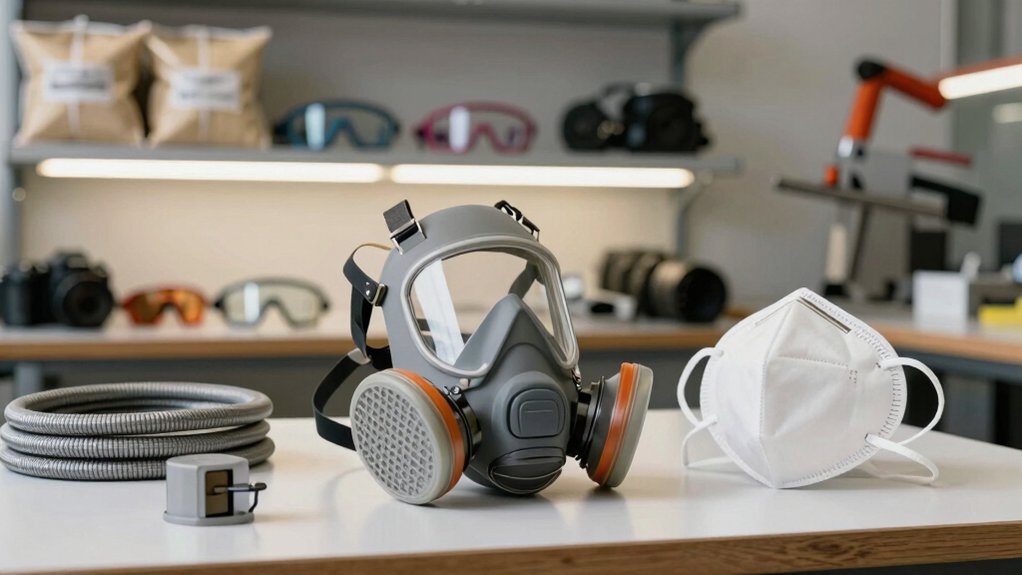
Reusable respirators and disposables each have clear roles in home improvement projects. You’re weighing protection level, comfort, and practicality to maximize safety and productivity.
Reusable elastomeric respirators typically offer higher filtering efficiency at a lower long-term cost, with replaceable filters you can tailor to dusty, oily, or acrid environments. They demand proper fit testing and maintenance to sustain peak performance.
Disposable respirators deliver immediate protection with minimal upkeep, often convenient for brief tasks or unpredictable conditions; however, their filtering efficiency can degrade with moisture, and fit can vary across users.
When you decide, consider the task duration, contaminant type, and your tolerance for mask comfort. In many scenarios, a reusable option paired with appropriate filters provides sustained protection and reliable performance.
Use, Maintenance, and Storage for Long-Lasting Protection
Regular inspection and mindful handling are essential for long-lasting protection, so you should follow a routine that starts before every use and continues after each task. You verify fit, seal, and donning sequence, ensuring the facepiece remains intact and the straps retain elasticity.
After use, inspect for damage, contamination, and valve integrity, then adhere to manufacturer guidance for cleaning or disposal. Cleaning, when permitted, uses mild soap and water, air-drying fully before reuse, and never dampen filters that must be replaced.
Store masks in a cool, dry place away from sunlight and chemicals, using breathable containers to prevent moisture buildup. This discipline preserves mask longevity and informs disciplined storage techniques, ensuring peak performance and consistent protection across demanding DIY sessions.
Expert Tips to Maximize Protection on Common DIY Projects
When tackling common DIY projects, maximize protection by selecting the right mask type for the task, ensuring proper fit, and following a disciplined donning sequence every time you start.
You’ll boost protection by aligning project planning with respirator capabilities, evaluating dust types, concentrations, and exposure duration before you cut or sand.
Choose a mask with an appropriate filtration rating, and test fit with a user seal check each use.
Maintain a tight seal during work, avoid touching the face, and replace cartridges or filters per manufacturer guidance.
Adhere to safety regulations and document steps in your project plan to guarantee compliance.
Integrate protective eyewear, ventilation strategies, and enclosures when necessary to minimize exposure and sustain peak protection across tasks.
Frequently Asked Questions
Do Masks Block Odors From Solvents and Paints?
Yes, masks don’t reliably block odors from solvents and paints. You’ll want mask material with activated carbon and high filtration efficiency; however, odor control isn’t guaranteed. Rely on proper ventilation, respirator fit, and documented filtration efficiency.
Can Dust Masks Protect Against Mold Spores and Pollen?
Yes, you can, with proper gear. You’ll get mold protection and pollen filtration when you wear a certified respirator with a P100 or N95 mask, plus a good fit and routine seal checks.
Are There Masks Suitable for Kids or Small Faces?
Your best option is child sized masks or small face coverings designed for kids. They fit better, seal tighter, and reduce exposure, so you protect them in workshops, following safety guidelines with snug, tested, reputable models.
How Do I Verify a Mask’s Real Filtration Rating?
You verify a mask’s real filtration rating by checkingCertification verification and Filtration standards on the packaging and official listings, confirm NIOSH/EN marks, model numbers, and test reports, and compare against independent lab data before purchasing for safety.
What if I Have Allergies or Asthma and DIY Indoors?
If you have allergies or asthma and DIY indoors, choose allergy friendly options and asthma safe masks, like N95 or P100 respirators. Startled by a pollen spike, your protection—fitted, tested, and worn correctly—keeps irritants at bay and breathing clear.
Conclusion
You’ve got this—choose a mask that matches your task, fits snugly, and stays comfortable, so you actually wear it. In one home remodel, a painter switched from a dusty disposable respirator to a properly fitted elastomeric half-face with P100 filters, and dust exposure dropped by over 90%. The takeaway: fit and filtration beat price. Use the right rating, seal well, and maintain it. When in doubt, RPE beats generic masks for serious DIY projects.