Hardscaping defines the non-living framework of your outdoor space, delivering stability, drainage, and controlled circulation. You’ll select materials—concrete, natural stone, or terrazzo—based on durability, climate, and usage, then integrate them with site grading and accessibility standards. Design choices establish spatial hierarchy and flow, while installation and maintenance preserve performance and aesthetics. The balance of function and form dictates long-term value, yet missteps can undermine longevity—a risk you mitigate by aligning layout, materials, and upkeep from the outset.
What Hardscaping Is and Why It Matters
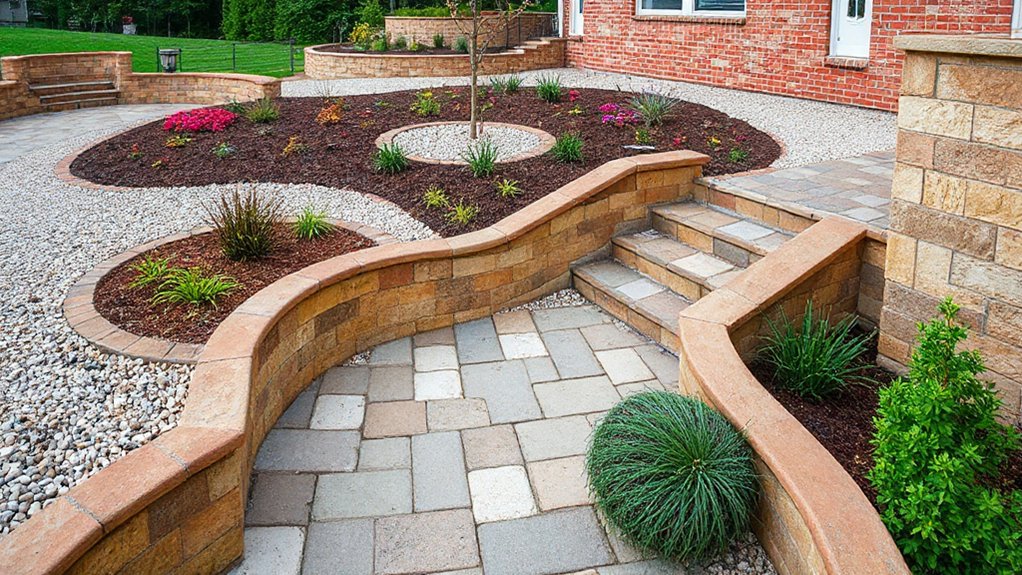
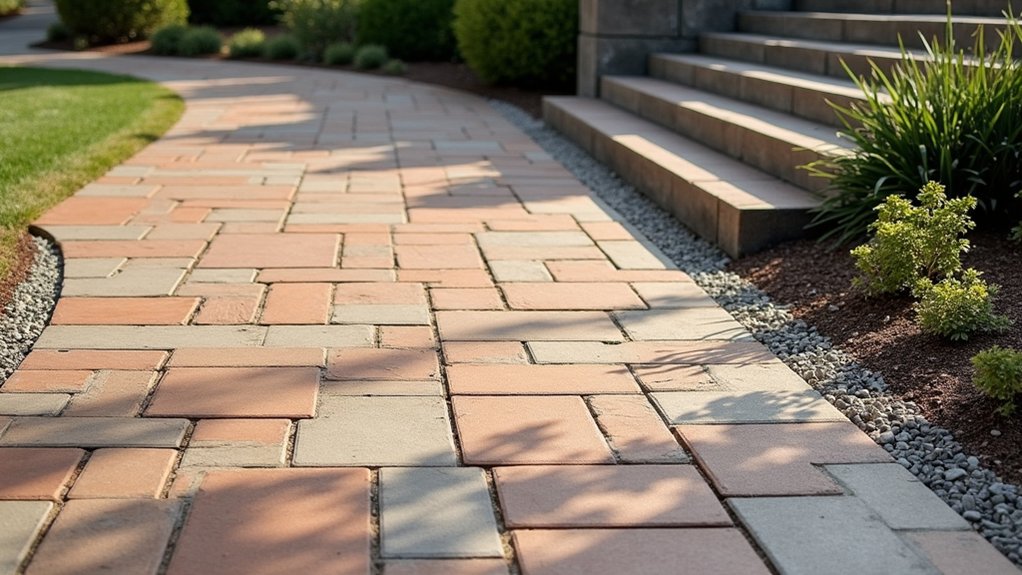
Hardscaping refers to the non-living components of an outdoor space, such as pavement, walls, and structures, installed to provide durable, functional features and define circulation. You utilize these elements to establish spatial order, control movement, and support sustainable site performance.
Defined surfaces, edges, and vertical inserts translate design intent into measurable parameters, enabling precise grading, drainage, and accessibility compliance. Garden aesthetics emerge through texture, contrast, and rhythm, while landscape integration ensures cohesion with surrounding planting zones, topography, and built forms.
You evaluate material performance, load-bearing capacity, and maintenance implications to sustain long-term function. By aligning hardscape geometry with functional programs, you optimize safety, permeability, and seasonal usability, supporting a holistic approach that elevates both usability and visual coherence across the landscape.
Hardscaping Materials: Pros, Cons, and Best Uses
When selecting hardscaping materials, you must weigh performance, durability, and cost to match the project’s functional demands and long-term maintenance goals. This assessment informs material selection for structural integrity, load-bearing capacity, and environmental exposure.
Common options include concrete pavers, natural stone, and precast terrazzo, each offering distinct compression strength, slip resistance, and porosity controls. Pros and cons hinge on installation complexity, colorfastness, and long-term maintenance cycles.
For exterior surfaces, consider weathering resistance, freeze-thaw durability, and UV stability to preserve aesthetic appeal.
Plant integration remains a critical constraint; choose joints, planters, and permeable substrates that support root systems without compromising grade stability.
Best uses align with traffic patterns, drainage, and accessibility, balancing cost, performance, and lifecycle environmental considerations.
Final selections optimize durability, functionality, and visual coherence.
How to Design Layouts for Function and Flow
Designing layouts that prioritize function and flow requires mapping traffic patterns, accessibility, and space utilization from the outset. You establish circulation axes, zone delineation, and clearance runtimes before material selection, ensuring ergonomic reach and compliant progressions.
Begin with a site survey documenting grade changes, utilities, and sun exposure, then develop a schematic that aligns functional corridors with entry points, seating, and work zones.
Apply grid or modular frameworks to enforce repeatable dimensions, reducing decision latency during installation.
Assess landscape aesthetics in tandem with circulation, integrating sightlines, focal points, and material contrasts that guide user movement without disruption.
Plan for Plant integration early, embedding vegetative buffers that soften hardscape edges while preserving drainage and accessibility.
Finalize with documented tolerances, maintenance access, and scalable expansions.
Durability and Upkeep: Keeping Hardscapes Durable
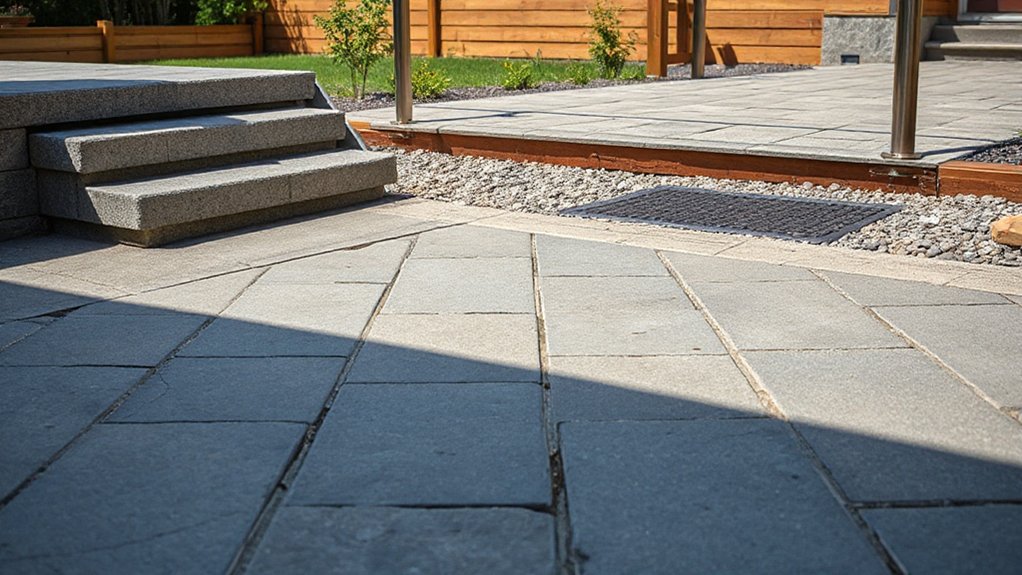
Material durability factors, routine maintenance practices, and weather-resistant design tips collectively shape long-term performance of hardscapes.
You’ll evaluate substrate selection, load-bearing capacity, and joint materials to anticipate wear, schedule upkeep, and mitigate cracking or settling.
Implement concise maintenance protocols, informed by climate exposure and traffic patterns, to sustain durability and minimize lifecycle costs.
Material Durability Factors
Durability and upkeep hinge on selecting core materials with appropriate mechanical properties, environmental resistance, and long-term performance. You evaluate material lifespan and structural integrity through quantified properties, including compressive strength, modulus, abrasion resistance, freeze–thaw durability, and moisture tolerance.
Selection targets compatible shrinkage, dimensional stability, and load transfer—reducing microcracking and edge spalling over time.
- Consider compressive strength and modulus alignment with expected loading to preserve structural integrity under service conditions.
- Assess environmental resistance, including UV exposure, chemical compatibility, and moisture cycling, to extend material lifespan.
- Verify long-term performance indicators (creep, wear, degradation) through performance data and warranty terms to minimize maintenance interventions.
Routine Maintenance Practices
Conduct periodic inspections of joints, bedding layers, and slope continuity to identify settlement, displacement, or erosion indicators.
Execute timely seasonal cleaning to remove deposits, organic matter, and staining without abrading texture or exposing base materials.
Apply weed control measures that inhibit vegetative intrusion while protecting adjacent substrates and coordinated drainage.
Test drainage channels and weep holes for obstruction and restore crossfalls as needed to sustain permeability.
Calibrate cleaning and sealing procedures to material type, climate, and exposure, documenting outcomes and maintenance intervals.
Maintain records to support warranty compliance and lifecycle cost analysis.
Weather-Resistant Design Tips
To guarantee long-term performance, align weather exposure considerations with your hardscape design as you move from routine upkeep toward proactive durability. You assess material resilience, installation tolerances, and drainage strategy to minimize weather-induced degradation. Emphasize Weatherproof finishes and fastening systems optimized for anticipated cycles of loading and freeze–thaw events, and implement detailing that resists preferential weathering.
Integrate seasonal adjustments into maintenance calendars, ensuring inspections occur after extreme events and prior to seasonal transitions. Coordination between substrates, joints, and sealants is essential to sustain dimensional stability and surface integrity over time.
1) Specify materials with proven weather resistance and compatible coatings to reduce permeability and moisture ingress.
2) Schedule post-storm and pre-winter inspections to verify joint integrity and drainage performance.
3) Apply protective sealing and reseal schedules aligned with expected exposure and service life.
Budgeting for Hardscaping: Costs and Value
You consider upfront material costs as the baseline for project feasibility, aligning selections with structural requirements and expected performance.
Assess long-term value benefits by weighing durability, maintenance needs, and lifecycle costs against initial expenditure.
This framing guides budgeting decisions, ensuring selections optimize return on investment while meeting design intent.
Upfront Material Costs
1) Material sourcing considerations include bulk pricing, salvage options, and regional availability affecting overall cost efficiency.
2) Delivery logistics cover schedule windows, lift assistance, and access charges, which can shift cash flow and completion timelines.
3) Vendor minimums and handling fees determine minimum purchase levels, impacting bagged or palletized material costs and alignment with staging plans.
Long-Term Value Benefits
Long-term value in hardscaping stems from durability, maintenance efficiency, and lifecycle cost optimization, which collectively elevate return on investment beyond initial expenditure. You assess material longevity, installation quality, and systemic interoperability to forecast depreciation timelines and replacement intervals.
Lifecycle costing integrates upfront capital, ongoing upkeep, and energy or remediation savings, yielding a holistic budget framework. Durable substrates, modular components, and proper drainage reduce service interruptions, enabling predictable maintenance campaigns and minimized downtime.
You quantify residual value through performance metrics, warranty terms, and potential for landscape enhancement that preserves site utility. Strategic design choices influence aesthetic appeal while preserving function, supporting higher resale or benchmarking within maintenance plans.
In practice, you align procurement with performance guarantees, weather resilience, and scalability to optimize overall landscape value without compromising efficiency.
Common Pitfalls to Avoid and Fixes
Despite meticulous planning, common hardscaping pitfalls can undermine permanence and aesthetics; understanding these failures and their fixes is essential for durable results. You should assess substrate prep, drainage, and material compatibility to maintain structural integrity and minimize maintenance cycles. Focus on alignment, load distribution, and seasonal movement to preserve long-term performance.
- Inadequate drainage and slope management: regrade and install perimeter and trench drains to prevent pooling and freeze–thaw damage.
- Poor material selection and joint detailing: specify compatible pavers, bedding, and edge restraints; implement proper joint spacing and polymeric or sand-filled joints to resist settling.
- Insufficient plant integration and visual balance: integrate resilient planting with appropriate spacing to sustain aesthetic balance and reduce soil erosion around hardscape edges.
Frequently Asked Questions
How Long Does a Typical Hardscape Project Take to Complete?
A typical hardscape project takes several weeks to a few months, depending on scope and conditions. You’ll experience site preparation, drainage assessment, material delivery, and installation sequencing that affect timing.
Your landscaping budget guidance helps prioritize tasks and contingencies, while material selection influences lead times and crew efficiency.
You should expect phased milestones, permitting where required, and weather-related adjustments.
Monitor progress with precise scheduling, quality checks, and documentation to guarantee timely completion without compromising structural integrity or longevity.
Which Hardscape Features Boost Curb Appeal the Most?
You’ll boost curb appeal most with a cohesive entry sequence, defined with lighting, a prominent path, and drought-tolerant accents.
Landscaping trends favor contrasting textures and architectural lines, while material selection guides durability and style cohesion.
You’ll pair pavers or natural stone with steel edging and low-voltage LEDs, creating a polished, timeless façade.
This technically precise approach improves sightlines and function, making the hardscape a durable, inviting landscape centerpiece.
Can I Install Hardscaping Myself or Should I Hire a Pro?
You can install some aspects yourself, but for durable, code-compliant results, hire a pro. DIY tips cover planning, substrate preparation, drainage layout, and tool safety.
Professional benefits include engineered base design, permit navigation, and precise compaction. If you lack masonry, grading, or drainage experience, opt for a pro; otherwise, you can tackle select components like minor paving under supervision.
Balance cost, warranty, and timeline to decide between DIY and professional execution.
How Do I Prevent Moss and Staining on Paving?
You can prevent moss and stains with targeted maintenance; use moss prevention treatments and timely stain removal strategies.
Begin with routine cleaning, then apply a non-ionic detergent followed by a pressure wash on low settings to avoid surface damage.
Guarantee proper drainage and sunlight exposure to inhibit moss growth.
Incorporate algaecide as needed, and seal pavers after cleaning to lock in protection.
Monitor joints, reapply moss prevention, and schedule annual stain removal checks.
What Maintenance Tasks Are Annual, Seasonally, and Monthly?
You should schedule annual inspections of drainage, structural integrity, and joint stability.
Seasonally, perform power washing, reseal surfaces, and prune adjacent vegetation.
Monthly, inspect for cracks, clean debris, and test drainage outlets.
Implement Landscaping tips to guide maintenance planning, and select Hardscape materials appropriate for exposure and load.
Maintain professional records, coordinate with contractor timelines, and adjust procedures for weather.
This regimen preserves aesthetics, safety, and longevity while underpinning predictive upkeep.
Conclusion
Hardscaping anchors outdoor spaces with durable, functional structures—pavers, walls, or terrazzo—while guiding drainage, accessibility, and flow. You’ll optimize long-term performance by selecting materials suited to climate, load, and use, then integrate with softscape for cohesion. Regular inspection, sealing, and timely repairs preserve integrity and value. Are you leveraging proper detailing, joint design, and drainage to prevent failures and maintain aesthetics over time? With precise execution, your hardscape delivers reliable function and enduring appeal.