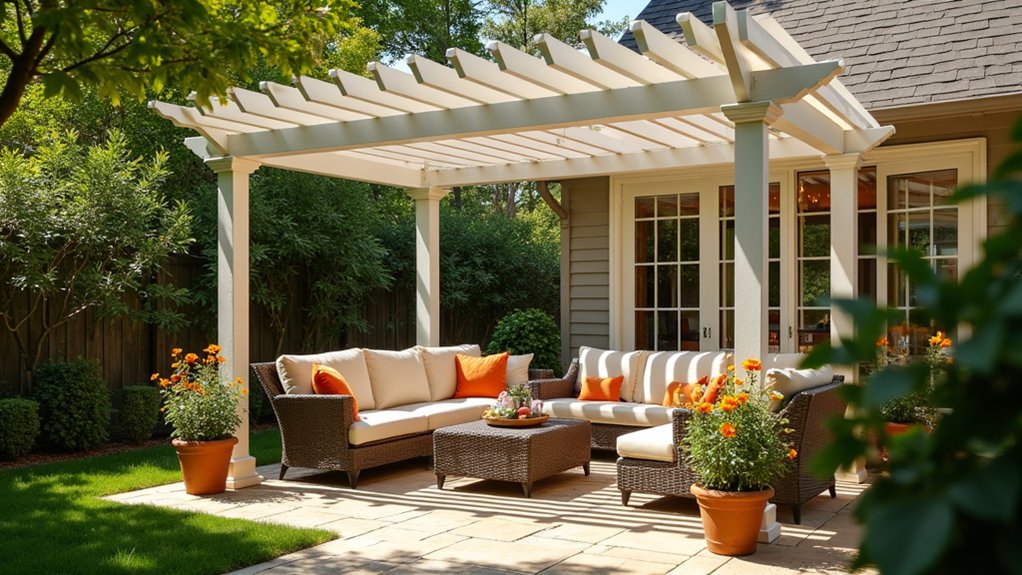
A vinyl pergola gives you low maintenance, durability, and stable color with minimal upkeep, plus straightforward installation. You’ll avoid rot, pests, and frequent repainting, yet you’ll face limited aesthetics, fewer customization options, and a more synthetic look. Heat management and design flexibility can also lag behind wood or metal, impacting how it fits your yard. If you’re weighing long-term value and appearance alongside practicality, you’ll want a clear set of criteria before you decide.
What a Vinyl Pergola Is and When to Consider It
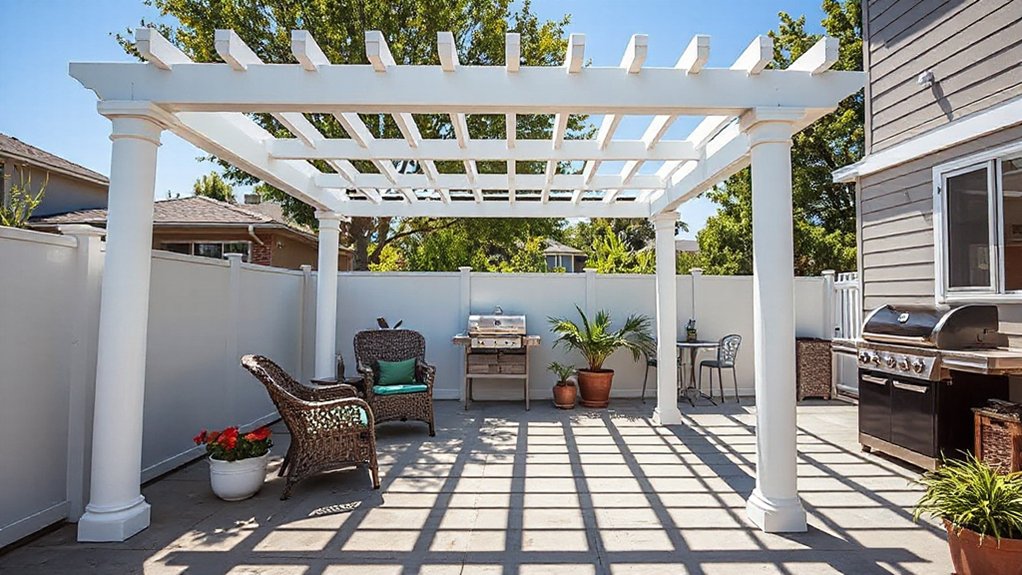
A vinyl pergola is a low-maintenance outdoor structure made from PVC or vinyl composite materials that resists rot, warping, and insect damage. You consider it when you want a durable framework for defined outdoor spaces without heavy maintenance.
You’ll appreciate its moisture resistance and stabilized color, which reduce upkeep compared with wood. Evaluate site conditions, load requirements, and entry access to guarantee proper scaling and mounting.
For practical use, plan Garden lighting integration to extend usability after dark and to enhance safety along pathways. You can also factor Plant integration by selecting trellis panels or integrated posts that support climbing species or planters.
Durability and Maintenance Advantages of Vinyl Pergolas
Vinyl pergolas demand minimal upkeep, so you spend less time on maintenance and more on enjoying your space.
Their weather-resistant build delivers consistent performance across seasons, reducing repainting or sealing needs.
With long-term durability advantages, you gain a resilient structure that sustains appearance and function over years.
Low Maintenance Requirements
Low maintenance is the hallmark of vinyl pergolas: they resist rot, rust, and insect damage, so you won’t spend time painting or sealing. You’ll appreciate durability that stays intact with minimal upkeep, reducing long-term costs and effort. Consider these factors to maximize benefits:
- Color options
- Installation process
- Cleaning routine
- Long-term resilience
Color options provide consistent appearance with little fading, aiding curb appeal without frequent refinishing. The installation process is straightforward, with precise fittings that minimize upkeep surprises. Cleaning is simple: a rinse or light soap restores surface texture without abrasives.
Long-term resilience comes from weatherproof polymers that resist warping and cracking, preserving structural integrity with minimal maintenance. In practice, you’ll schedule periodic inspections rather than routine restoration, keeping your pergola functional and attractive for years.
Weather Resistance Strength
Weather resistance defines vinyl pergolas’ durability and maintenance edge: the material resists moisture, warping, and cracking, so you won’t wrestle with frequent repairs or repainting. You’ll gain predictable performance under sun, rain, and humidity, with minimal swelling and stable margins.
Vinyl’s non-porous surface resists mold and mildew, simplifying cleaning and reducing long-term upkeep. Color options remain consistent, avoiding fade-prone finishes and minimizing the need for coating refreshes.
Installation complexity is relatively low, with precise fabrication and fewer structural concerns compared with wood or metal; post-install care centers on occasional cleaning and seal checks rather than frequent refinishing.
Scoreable strength derives from reinforced profiles and UV-stable compounds, which maintain rigidity without sacrificing ease of maintenance. Overall, weather resilience translates to lower lifecycle costs and steady outdoor usability.
Long-Term Durability Pros
Long-term durability of vinyl pergolas hinges on structural resilience and minimal maintenance, delivering a consistently strong outdoor structure over time. You’ll benefit from a rigid frame, corrosion resistance, and fade-stable color with little upkeep, preserving appearance without frequent repairs.
Key advantages include predictable performance and efficient long-term costs. Consider these points:
- Color options: UV-stable finishes keep shade structures looking new longer, reducing repaint needs.
- Installation process: Typically modular, precise fit reduces gaps and stress on joints.
- Maintenance cadence: Gentle cleaning prevents buildup without harsh chemicals or weatherproofing.
- Longevity factors: Resistant to warping, cracking, and insect damage, ensuring sustained structural integrity.
Drawbacks to Know: Aesthetics, Heat, and Design Limits
Aesthetics, heat, and design limits shape your vinyl pergola choices, so you’ll want to weigh visual options against long-term appeal.
Heat management poses practical challenges, potentially increasing cooling loads or requiring additional shading.
Be mindful of design flexibility bounds, as certain custom shapes or extensions may be constrained by the material and fabrication methods.
Aesthetic Limitations
While vinyl pergolas offer durability and low maintenance, their aesthetic versatility can be limited compared with wood or metal options. You’ll assess visuals, not just structure, since color and texture options matter for cohesion with surroundings.
1) Color options: limited palette compared to natural materials; avoid staining, yet customization may rely on factory finishes.
2) Decorative patterns: mass-produced profiles restrict unique motifs; complex detailing can look repetitive.
3) Texture depth: flat surfaces can read as synthetic; consider beveled edges or embossed slats to counteract sameness.
4) Compatibility: blends vary by manufacturer; mismatch with existing hardscape or roofing can compromise overall style.
In practice, weigh uniformity against the need for character, then decide if standardized aesthetics suit your project.
Heat Management Challenges
Vinyl pergolas may mimic elegance, but heat management poses a practical drawback you’ll want to address early. You’ll confront limited natural ventilation compared with open structures, so heat dissipation becomes a defining performance metric. Profile shading, materials, and spacing to reduce radiant gain without compromising structure.
Aluminum or vinyl components can reflect heat, yet joints may trap temperature if poorly sealed. Consider vented panels, lattice accents, or adjustable louvers to improve air flow and shade optimization; these options influence both comfort and energy use.
Adequate overhangs, southern exposure planning, and color choices further modulate surface temperatures. Keep detailing precise: verify insulation continuity, guarantee proper drainage, and avoid gaps that accumulate heat.
Informed planning minimizes hotspots, delivering cooler spaces and predictable performance over time.
Design Flexibility Bounds
Design flexibility for vinyl pergolas comes with notable trade-offs: while the material offers clean lines and low maintenance, aesthetic versatility, heat management, and structural design limits constrain customization.
1) Color options: choices are finite, often limited to standard hues, reducing harmony with surrounding architecture.
2) Customization potential: fittings and shapes are restricted by manufactured profiles, narrowing unique configurations.
3) Aesthetic impact: seamless seams and uniform textures can look less natural than wood, influencing overall mood.
4) Thermal considerations: color heat absorption and panel spacing affect shade quality and comfort.
You gain durability and predictability, yet you trade personal expression for consistent performance and cost control.
Consider how color options and customization potential align with your design goals before committing to vinyl’s design pathway.
Costs, Value, and Long-Term Ownership of Vinyl Pergolas
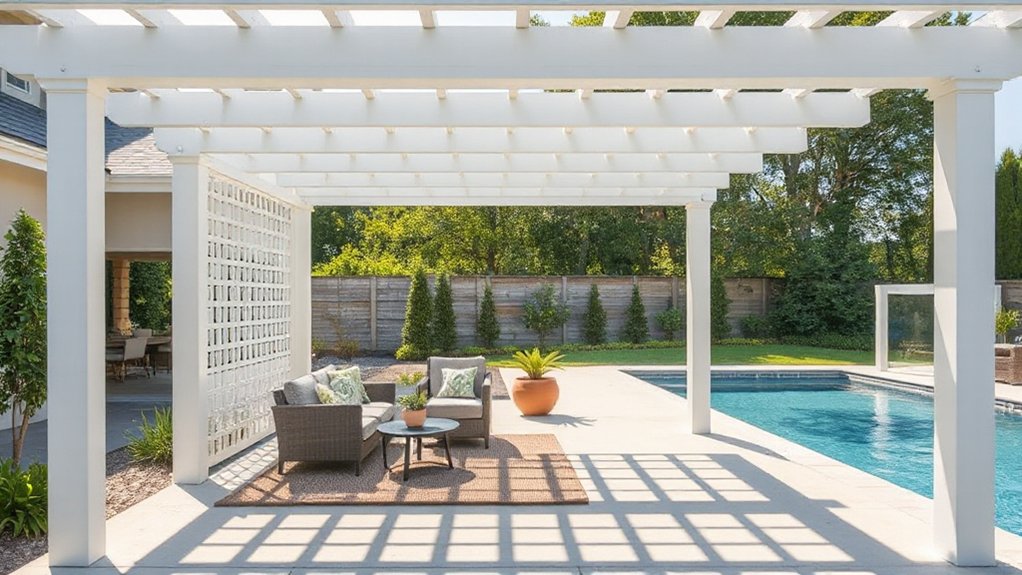
Costs for vinyl pergolas are typically lower upfront than wood or metal options, but long-term ownership hinges on maintenance, replacement parts, and energy-related savings. You assess lifecycle costs by factoring coating or sealant needs, curl resistance, and UV degradation over time.
Vinyl’s low maintenance reduces yearly labor and material interruptions, yet you should budget for occasional panel or post hardware replacements, especially after severe weather. Value is driven by predictable expenses and energy perks, including shading efficiency that lowers cooling loads and supports landscaping integration.
When planning, account for durable outdoor lighting compatibility and system integration, since wiring, fixtures, and weatherproofed connections affect total cost and functionality. Long-term ownership benefits accrue with factory warranties, component availability, and prudent replacement scheduling.
Vinyl vs Wood vs Metal: A Quick Material Comparison by Key Criteria
When choosing among vinyl, wood, and metal for a pergola, you should weigh durability, maintenance, cost stability, and environmental impact.
You compare materials by these criteria and rely on objective contrasts to guide decisions. Here’s a quick snapshot:
- Durability: vinyl resists rot and insects, wood varies by species, metal endures but risks corrosion without coatings.
- Maintenance: vinyl is minimal; wood requires staining or sealing; metal needs coatings to prevent rust.
- Cost stability: vinyl often upfront affordable, long-term costs favorable; wood and metal can rise with market swings.
- Environmental impact: vinyl uses plastics; wood is renewable but depends on sourcing; metal recycling adds value.
Notes: Material versatility, Customization options drive choice, enabling tailored designs without compromising performance.
Is a Vinyl Pergola Right for Your Yard? Practical Checklist
A vinyl pergola can be a smart yard addition, especially if you value low maintenance and consistent weather resistance; however, it isn’t the right fit for every landscape or décor. To decide, perform a practical checklist assessment.
Start with site conditions: level ground, drainage, and sun exposure influence performance and perceived size. Consider color options that align with your siding or fencing; vinyl offers limited hues and may require custom finishes.
Evaluate installation complexity: while DIY kits exist, structural accuracy, fastener corrosion resistance, and post spacing demand precision.
Assess load capacity for future fixtures or shade fabric. Budget for additives like UV stabilizers and trim details.
Finally, verify warranty terms and service support, ensuring visibility into maintenance needs and replacement parts over time.
Frequently Asked Questions
How Long Does a Vinyl Pergola Typically Last?
A vinyl pergola typically lasts 20 to 40 years, depending on climate, installation, and care.
You’ll minimize wear by performing regular maintenance, like cleaning with mild soap and water and inspecting for cracks or loose fasteners.
You won’t face rot or termite damage, but you should plan for occasional replacement of hardware.
Maintenance requirements are moderate, and cost considerations remain favorable compared to wood.
You’ll enjoy low ongoing upkeep and a solid long-term investment.
Can Vinyl Pergolas Support Heavy Structures or Plants?
Yes, you can, but with limits. Vinyl pergolas offer moderate heavy weight support for added structure when engineered properly, yet they’re not true load-bearing beams.
Always verify manufacturer ratings and use reinforced posts, brackets, and footings, plus professional installation.
For plant climbing capacity, expect good support for vines and lightweight trellises, but avoid letting heavy plants add overburden.
Consider supplemental supports or alternative materials for sustained heavy loads.
Are Vinyl Pergolas Recyclable or Curbside-Bleed Sustainable?
Yes, vinyl pergolas are recyclable, but curbside options vary by locality. You should check local recycling programs for vinyl siding or complex plastic streams.
Recycling processes for vinyl typically involve mechanical shredding and reprocessing into new plastics, which helps reduce environmental impact when done properly.
You’ll want to partner with certified recyclers who handle polyvinyl chloride safely to minimize emissions, dioxins, and residue, ensuring you address end-of-life options responsibly.
Do Vinyl Pergolas Qualify for Outdoor Living Tax Credits?
Yes, vinyl pergolas can qualify for outdoor living tax credits, depending on your jurisdiction. You’ll need to meet the tax incentives’ eligibility criteria, such as installation in a primary residence and meeting specified energy or accessibility standards.
Verify current program rules, documentation requirements, and deadlines. If eligible, you may claim the credit on your filing, but timelines and caps vary.
Consult a tax professional to confirm your eligibility criteria and maximize benefits.
Can I Install a Vinyl Pergola Myself or Require a Pro?
You can install a vinyl pergola yourself, but you should weigh DIY installation against professional assistance.
If you have strong carpentry skills, tools, and permit knowledge, a DIY approach is feasible.
For complex layouts, structural requirements, or code compliance, opt for professional assistance to guarantee safe, durable results.
In tight spaces or on uneven ground, a pro helps avoid common mistakes and warranty issues.
Decide based on your experience, local codes, and project scope.
Conclusion
A vinyl pergola offers low maintenance, durability, and consistent color with solid long‑term value. Yet its aesthetic limitations, limited customization, and potential heat buildup can temper appeal in certain landscapes. If you prioritize longevity and minimal upkeep over ornate styling, it’s a smart choice; otherwise, consider wood or metal for greater design flexibility. In short, a vinyl pergola is a reliable, practical shelter, but weigh your aesthetic goals against your climate and budget before committing. It’s the steady drumbeat of practicality.