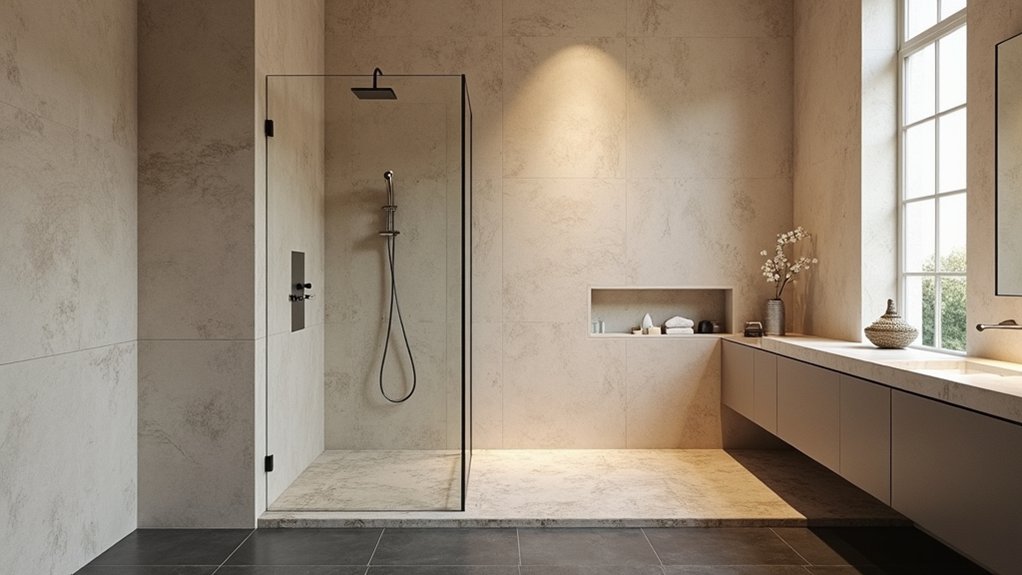
Natural stone tiles transform your bathroom with enduring texture, color depth, and refined resilience against moisture and temperature shifts. You’ll gain a timeless aesthetic that ages gracefully, yet demands informed selection—finishes, grouts, and layouts matter as much as the stone itself. With the right choices, you create a space that blends quiet luxury with practical durability, a retreat that rewards careful planning and precise installation. The next step reveals how to tailor stone to your bath’s exact character.
Why Natural Stone Elevates Bathroom Interiors
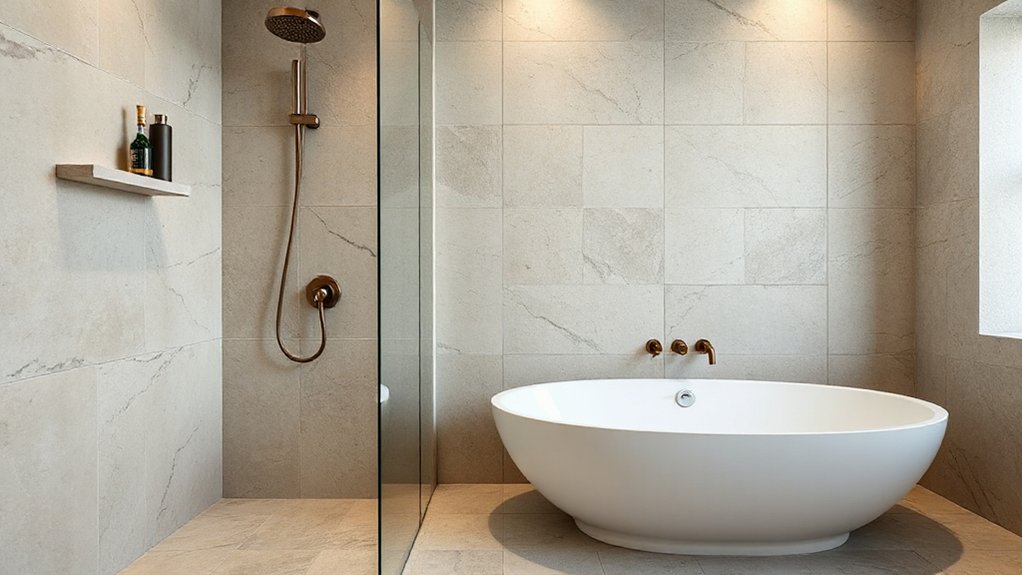
Natural stone elevates bathroom interiors by delivering intrinsic durability, timeless aesthetics, and tactile richness that other materials can’t match. You gain long-lasting performance under moisture, temperature swings, and daily use, with reduced maintenance compared to alternative surfaces.
Natural textures contribute depth and variability, creating a layered look that remains cohesive as seasons change. The material’s inherent density resists staining and wear, supporting a pristine, polished appearance over years.
Its aesthetic appeal arises from unique veining, color ranges, and texture, ensuring each installation is singular. You’ll notice improved spatial perception; subtle reflectivity enhances light diffusion, producing a brighter, more inviting environment.
Pairing natural stone with complementary fixtures amplifies value, credibility, and a lasting sense of quality throughout the bathroom.
How to Choose Stone for Your Bath: Marble, Granite, Travertine, and More
Choosing the right stone for your bathroom hinges on balancing performance with aesthetics; marble, granite, travertine, and other options each offer distinct strengths. You’ll weigh hardness, porosity, and stain resistance against color, veining, and overall mood.
Marble delivers timeless elegance but needs sealing and care; granite blends durability with bold patterns; travertine offers warmth and texture. Consider specimen consistency to avoid dramatic shifts across surfaces.
Factor installation practicality, maintenance intervals, and budget into your choice. Color coordination and texture contrast become guiding principles for cohesive design, ensuring the stone harmonizes with fixtures, cabinetry, and tile.
For high-traffic zones, prioritize materials with lower porosity and easier upkeep. Align your selection with room size, lighting, and desired atmosphere, then confirm warranty and care guidelines before proceeding.
- Color coordination
- Texture contrast
- Maintenance expectations
Stone Finishes and Grout: Durability, Style, and Practicality
Stone finishes and grout choices define both the performance and the look of a bathroom, influencing durability, maintenance, and visual impact. You select finishes—polished, honed, or tumbled—based on slip resistance, cleaning ease, and stain tolerance.
Then pair them with grout that resists staining and cracking. In high-traffic zones, opt for epoxy or polymer-modified grouts to reduce cracking risk and moisture ingress.
Color coordination matters: grout can harmonize or highlight stone veining, while contrasting shades can emphasize geometry or seams. Texture contrast matters too; pairing a textured tile with a smooth grout line enhances tactile depth without compromising cleanliness.
Practicality hinges on sealing schedules, re-seal frequency, and routine remediation of efflorescence. When executed thoughtfully, finishes and grout deliver durable performance with refined, cohesive style.
Layout and Installation Tips for Seamless Stone Bathrooms
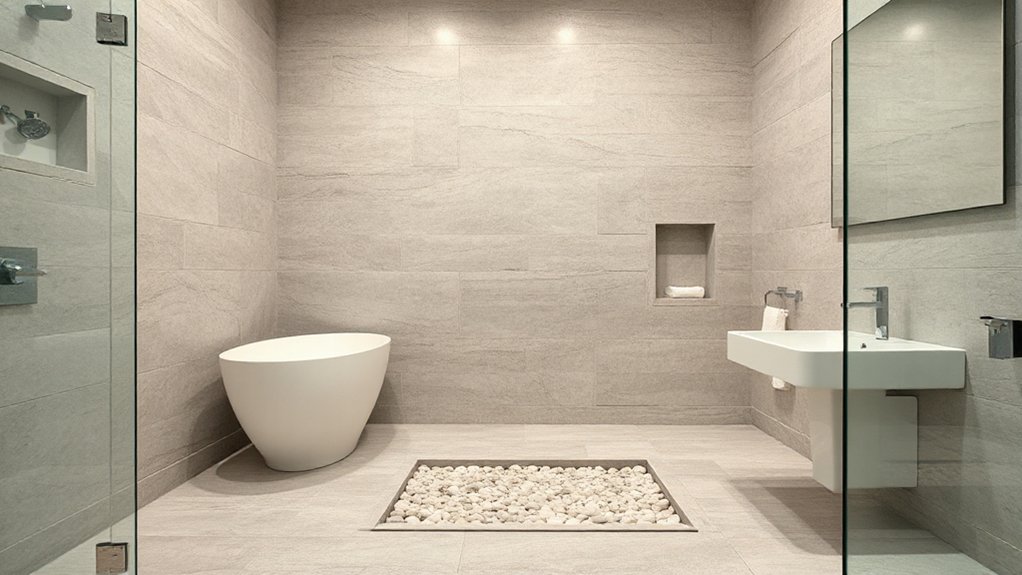
Achieving a seamless stone bathroom begins with precise layout planning and meticulous installation. You’ll align tile runs to minimize grout lines, map progressions between shower, vanity, and niche areas, and verify substrate flatness before setting.
Use full-thickness stone where possible to reduce substrate cuts and create uniform joints. Plan grout color to complement stone veining, enhancing cohesive color coordination across surfaces.
Employ appropriate waterproofing, expansion joints, and controlled cuts to avoid lippage and reveal crisp edges. Document layout tolerances and thermal movement for future repairs within the budget considerations, ensuring costs stay predictable without compromising performance.
Maintain consistent stock sizes to limit waste and facilitate even tonal variation.
- Verify substrate flatness and plan for wall-to-floor continuity
- Choose grout and edge profiles that emphasize clean lines
- Budget for contingencies and material waste without sacrificing quality
Maintenance and Longevity: Keeping Stone Tiles Beautiful Over Time
Maintaining the beauty and performance of natural stone tiles hinges on proactive care and informed routines. You’ll maximize longevity by implementing consistent sealing techniques and disciplined cleaning routines.
Begin with a professional assessment of porosity and susceptibility to staining, then select a sealant compatible with your stone type and finish. Reapply as recommended by the manufacturer, typically on a schedule aligned with traffic and moisture exposure.
For cleaning, use pH-neutral cleaners and soft brushes, avoiding acidic or abrasive products that wear the surface or dull the seal. Dry surfaces after showers to reduce mineral buildup, and promptly address spills.
Implement a maintenance calendar, log sealant dates, and isolate high-risk areas. With precise sealing and routine cleaning, your stone tiles preserve color, texture, and structural integrity over time.
Frequently Asked Questions
How Do Stone Tiles Affect Bathroom Resale Value?
Stone tiles can boost resale value, especially when they convey luxury aesthetics and durability. You’ll see higher perceived quality, which supports stronger appraisals, though cost implications matter: premium materials and installation raise upfront costs.
While maintenance and potential repairs add ongoing expense, to maximize value, you should prioritize timeless stone, proper sealing, professional installation, and documented warranties.
Ultimately, you’ll gain appeal and competitiveness, balancing initial expenditure against longer-term resale benefits.
Can Natural Stone Withstand High Humidity and Mold?
Yes, natural stone can withstand humidity and mold with proper care. You’ll want durable sealing, steady ventilation, and meticulous maintenance.
Stone cleaning remains essential, and mold prevention hinges on timely drying and humidity control. You’ll notice fewer issues when you scrub joints and surfaces regularly, seal correctly, and monitor moisture.
Use breathable grouts and cleaners suited for stone, and you’ll sustain stylish, sanitary surroundings with consistent, confident craftsmanship.
Are Heated Floors Compatible With Stone Tile Bathrooms?
Yes, heated floors are compatible with stone tile bathrooms when you select proper materials and install correctly.
With radiant heating, guarantee the stone tile and underlayment are rated for low-temperature operation and moisture exposure.
Use a compatible mortar, proper thinset, and an appropriate tile thickness.
Maintain even heat distribution, verify floor sensors, and follow manufacturer guidelines.
Radiant heating provides comfortable warmth.
Tile compatibility depends on stone type, substrate, and installation details; consult a pro for maximum performance.
What Warranties Cover Natural Stone Installations?
Warranties for natural stone installations vary by manufacturer, installer, and product, but most cover material defects, installation workmanship, and surface failures for a defined period.
You’ll typically see limits on staining, sealing, and maintenance.
Investigate the truth of a theory: proper installation reduces future claims and extends life.
You should review warranty terms for stone, cleaning, and installation tips, confirm substrate compatibility, and insist on a written, transferable guarantee that names both the material and labor.
How Often Should Stone Sealant Be Reapplied?
You should reapply stone sealant every 1–3 years, depending on usage and stone type.
For high-traffic bathrooms, expect the Sealing frequency to be closer to annually; milder spaces may stretch to every two to three years.
Incorporate this into your Maintenance schedule, testing water absorption annually to confirm effectiveness.
Use a breathable sealer, reapply after deep cleanings, and document dates to guarantee consistent protection and long-term performance.
Conclusion
You’ll finish with a bathroom that feels timeless, like a stone worn smooth by tides of time. Picture your space as a quiet cathedral, where marble’s quiet veining and granite’s steadfast grain echo strength. You’ll recognize how finishes and grout anchor durability, while layout guides the eye with seamless flow. As you maintain, your tiles endure—an intentional dialogue between function and finesse—leaving a lasting impression, already preparing you for the next chapter of refined, resilient living.