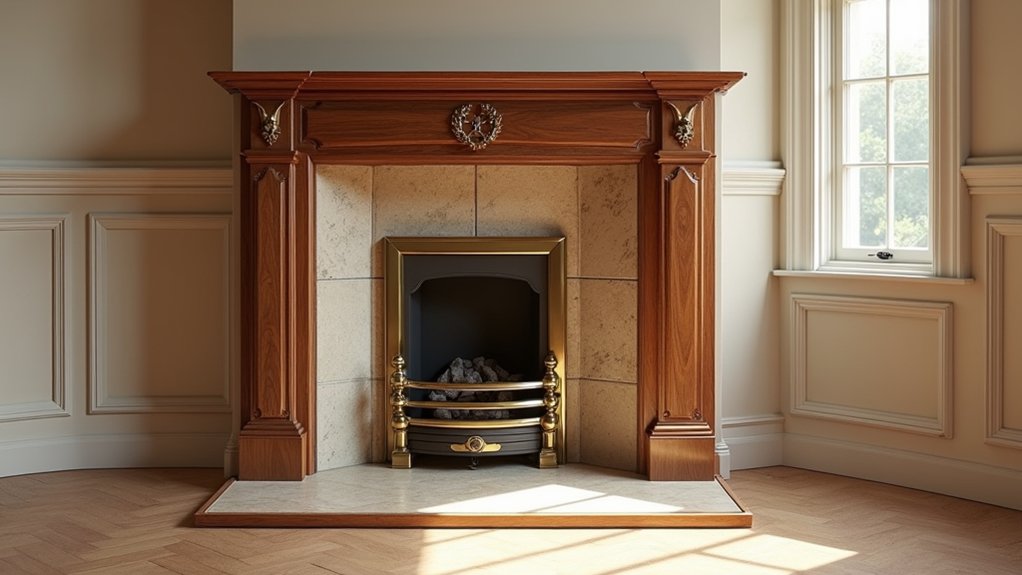
To install an Edwardian fireplace with authentic period style, you’ll evaluate space, discern period options (open grate, coal effect, gas, or electric), and plan chimney routing, flue sizing, and ventilation for realism. You must verify clearances, select period-appropriate materials, and align trim, tiles, and mantels with the room’s architecture. Safety codes, permits, and proper connections matter, but the path to a convincing, durable result hinges on precise detailing and a clear site plan—the next steps will expose critical choices and constraints.
Identify Edwardian Styles: Open Grate, Coal Effect, Gas, or Electric
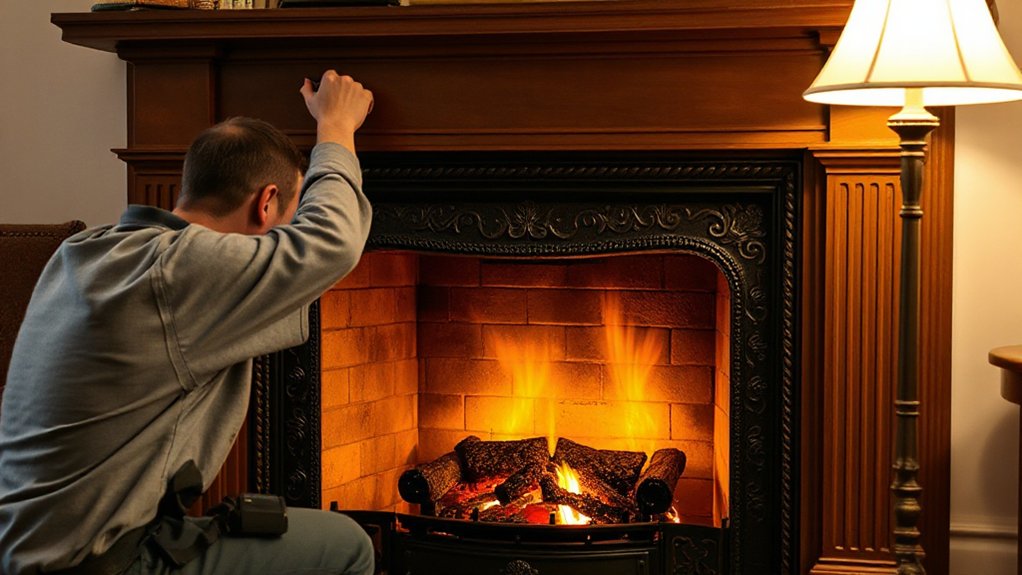
When selecting an Edwardian fireplace style, start by recognizing four common options: open grate, coal effect, gas, and electric.
You evaluate historical accuracy by matching design cues to period features: proportions, surround detailing, and grate shaping.
Open grate delivers authentic wood-burning behavior, but requires expert install and ongoing maintenance; expect higher heat loss without modern efficiency tweaks.
Coal effect recreates look while using gas or electric inserts, offering safer, cleaner operation with credible flame presentation.
Gas units provide controllable heat and authenticity through ember beds, yet may compromise exact period detailing if over-modernized.
Electric options maximize convenience, offering realistic flame visuals with minimal emissions, though attention to surround styling preserves period feel.
Material durability matters: select robust cast iron, slate, marble, or timber with proper finishing and tested components to ensure lasting performance.
Assess Your Space: Room Size, Hearth Access, and Aesthetic Fit
Evaluating your space starts with the layout: room size, available hearth access, and how the fireplace will sit within the overall aesthetic. You assess clearances, sightlines, and ventilation paths, ensuring functional flow without compromising period accuracy.
Space planning requires precise measurements of wall depth, mantel height, and alcove dimensions to prevent interference with doors, furniture, or traffic patterns. Consider existing architectural features, chases, and socket positions to determine mounting options, surround choices, and trim compatibility.
Aesthetic fit hinges on proportion, material finish, and color harmony with decorative accessories. Prioritize modularity: choose a fireplace that accommodates your room’s scale and focal point needs while enabling subtle integration with lighting and textiles.
Maintain concise documentation of dimensions, clearances, and accessory requirements to support predictable installation outcomes.
Choose Your Fuel and Heat Source: Pros, Cons, and Real-World Costs
Choosing your fuel and heat source hinges on balancing efficiency, emissions, and installation practicality, then weighing real-world costs. You’ll evaluate options by availability, maintenance demands, and compatibility with a period aesthetic.
Gas, electric, and wood or denser biofuel blends each offer distinct heat profiles; you’ll compare steady output, peak demand, and burn control. Fuel efficiency matters most for long-term running costs, while emissions influence indoor air quality and regulatory compliance.
Electric systems provide clean installation and minimal venting, but may rely on high electricity use and modest heat span. Wood and biomass deliver authentic flame dynamics yet demand seasoned storage, cleaning, and seasonal refueling.
Perform a cost comparison that includes equipment, installation, fuel, and service intervals to determine the most economical, authentic choice for your Edwardian display.
Plan Chimney, Flue, and Ventilation for Authenticity
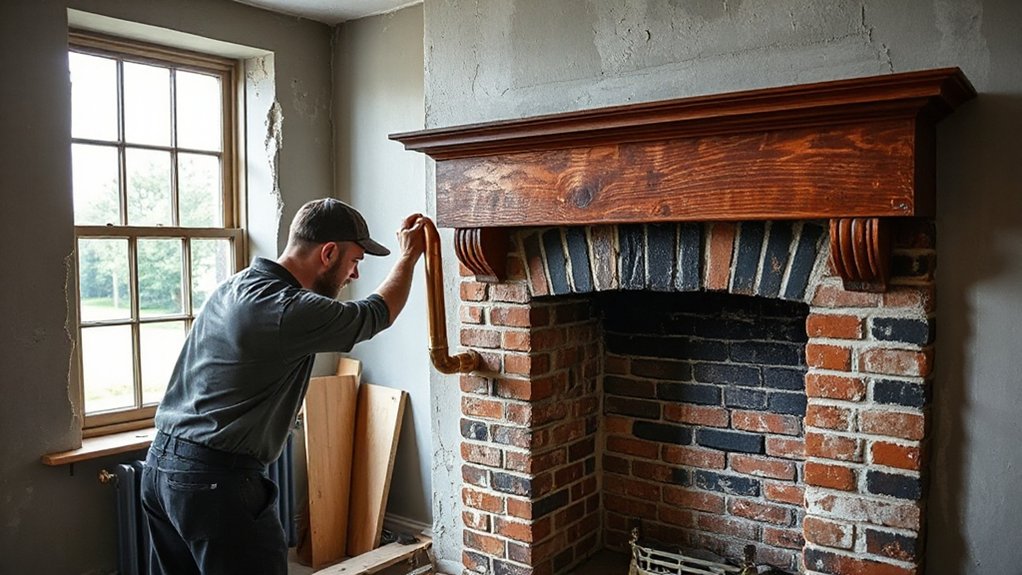
Plan the chimney, flue, and ventilation to match the chosen heat source and the Edwardian aesthetic. You’ll map chimney routing to the fireplace’s output, ensuring fuel type aligns with draft requirements and heat delivery.
Confirm vertical rise, offsets, and hearth depth support efficient draw while preserving period lines. Select flue materials that resist corrosion, thermal cycling, and soot deposition; prioritize clay or ceramic liners when feasible, with a masonry exterior for authenticity.
Specify standard flue diameter to suit nominal firebox size, avoiding oversized openings that reduce draft. Integrate ventilation provisions to manage room air exchange without compromising fire safety or odor control.
Document clear progressions between the firebox, throat, and flue, and verify connection points for accessibility during maintenance and cleaning.
Safe Installation and Compliance: Codes, Permits, and Best Practices
Safe installation and compliance with codes, permits, and best practices guarantee that an Edwardian fireplace performs safely and authentically. You must verify local building regulations, submit planned alterations for review, and secure any required permits before work begins.
Follow applicable safety regulations for gas or solid-fuel devices, clearances, and fire-rated enclosure requirements to prevent combustion hazards. Adhere to manufacturer instructions for clearance, venting, and installation hardware, documenting each step for inspections.
Confirm proper fireplace ventilation to maintain indoor air quality and efficient operation, preventing backdraft and soot buildup. Hire a licensed professional for gas line or chimney work when needed, and schedule final inspections after completion.
Maintain records of permits, materials, and test results to support ongoing compliance and warranty validity.
Finishing Touches: Tiles, Mantels, and Period-Accurate Detailing
You’ll evaluate tile selection and plating for durability and period-accurate appearance, prioritizing tile size, pattern, and edge details that align with Edwardian conventions.
Consider mantel style and proportions to optimize the hearth’s balance, ensuring proportionate height, expansion gaps, and materials that read as authentic.
Finally, select period-accurate detailing and accents—mouldings, inlays, and metalwork—that reinforce the era without compromising function or safety.
Tile Selection And Plating
- Inspect tile thickness and edge finish to prevent gaps and cracking.
- Confirm grout color complements both tile and surround, avoiding mismatched tones.
- Verify alignment along mantle line and hearth plane for a seamless visual flow.
Focus on support, substrate compatibility, and a tight, period-accurate joint pattern to achieve authentic authenticity without sacrificing performance.
Mantel Style And Proportions
With tilework secured and the hearth plane established, the mantel becomes the defining horizontal proportion that frames the Edwardian look. You determine scale by aligning mantel width to the surrounding masonry and hearth opening, then select profiles that emphasize clean lines over ornate excess.
Victorian influence guides overall silhouette, favoring substantial timber, plaster, or stone with restrained ornament. Maintain symmetry for formal balance, ensuring the mantel extends beyond the firebox by a predictable margin to preserve legibility at distance.
Proportions should respect room height; a 2:1 width-to-height ratio often yields a grounded presence without overpowering the cavity. Modern adaptations favor integrated materials, concealed fasteners, and minimal overhangs that preserve readability while permitting easy maintenance.
Finalize detailing with precise joinery and secure mounting to structural backing.
Period Detailing And Accents
- Match tile patterns to mantel lines, preserving linearity and rhythm.
- Choose period-appropriate lighting fixtures that cast soft, even illumination without glare.
- Apply vintage paint with thin, uniform coats to maintain smooth symmetry and subtle sheen.
This approach emphasizes clean junctions, deliberate proportions, and authentic textures over ornate excess.
Maintain consistent grout widths, register joints, and spline detailing where appropriate.
Document each choice to verify period accuracy, then integrate these elements into a unified, technically sound fireplace presentation.
Maintenance to Preserve the Edwardian Look and Function
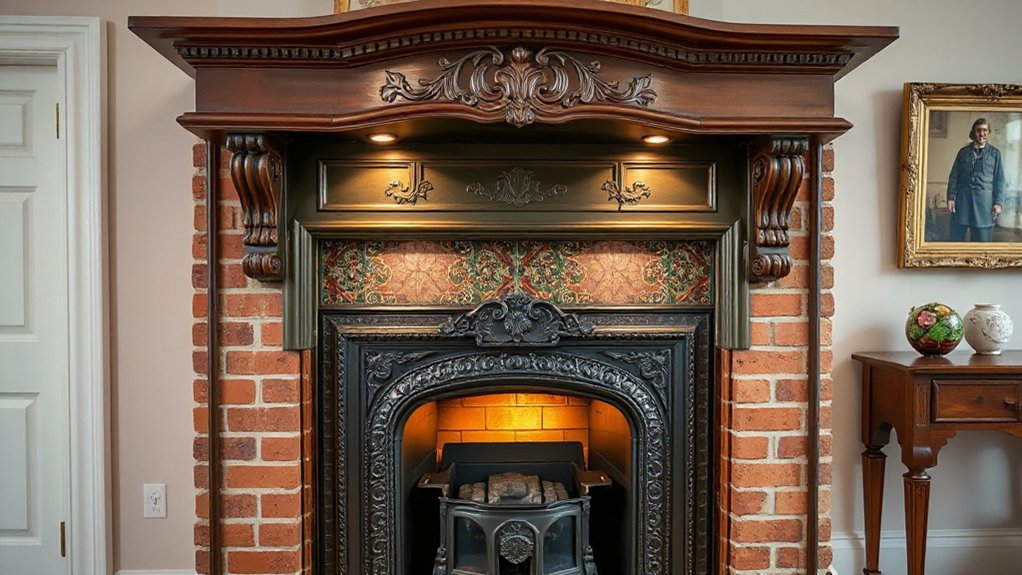
Schedule annual sweeping and flue integrity checks to prevent soot buildup and fire risk. When cleaning, use non-abrasive agents appropriate for porous surfaces to protect historical accuracy.
Inspect firebox linings for spalling and replace only with period-appropriate materials where feasible. Maintain proper clearances and verify damper operation before use.
Select fireplace accessories that conform to the original design to sustain historical accuracy without compromising safety or performance.
Frequently Asked Questions
What Are the Typical Heat Output Ranges for Edwardian Fireplaces?
Typically, Edwardian fireplaces deliver about 4–8 kW of heat, though actual output depends on fuel, insert design, and room volume.
You should assess your space for historical accuracy while planning, ensuring the mantel and brickwork don’t impede venting.
For efficiency, consider a sealed insert with proper flue sizing.
Regular Fireplace maintenance, including chimney clearance and gasket checks, will sustain consistent output and safety.
If needed, calibrate with a heat-recovery system for balanced comfort.
Can I Install an Edwardian Fireplace Myself or Need a Pro?
Yes, you can DIY install only if you have solid wiring, flue, and chimney access and you follow code. Otherwise, seek professional assistance.
You’ll reduce risk with proper ventilation and rigid clearances, and you’ll avoid voiding warranties.
If you’re unsure, opt for Professional assistance to guarantee compliance, heat efficiency, and safe operation.
In serious cases, professional installs minimize fire hazards and insurance issues, while DIY may be suitable for cosmetic prep, not active venting or gas connections.
How Do I Ensure Authentic Period-Safe Electrical Integration?
You should consult a licensed electrician to guarantee authentic, period-safe electrical integration.
You must comply with current electrical codes, using conduit, appropriate gauge wiring, and protected outlets.
Inspect your existing circuit load, install GFCI protection where required, and add tamper-resistant devices to meet safety standards.
Avoid DIY shortcuts; document approvals, use UL-listed components, and schedule a periodic safety test after installation to verify compliance and reduce fire hazards.
Are There Lightweight Alternatives to Fragile Period Tiles?
Approximately 60% of modern tile failures stem from weight stress, so you’ll want lightweight options. Yes: there are lightweight material options that mimic porcelain or ceramic without the fragility.
For [CURRENT QUESTION], consider modern tile alternatives like high-density fiber cement, reinforced plaster panels, and advanced polymer composites. These keep installation simple, reduce load, and resist cracking.
Guarantee compatibility with your substrate and heat clearance, and verify fire ratings. Inspect edges, sealants, and mounting systems for long-term reliability.
How Often Should I Reseal Brickwork for Authenticity?
You should reseal brickwork every 5 to 10 years to maintain authenticity. Use breathable sealants that match historical accuracy and avoid trapping moisture.
Regular inspections after seasonal fluctuations help you spot cracks early. Your approach should emphasize restoration techniques that preserve original texture while preventing spalling.
Document every treatment to sustain historical accuracy, and limit resealing to areas showing wear. Rely on expert guidance for salt damp and lime-based mortars to guarantee long-term integrity.
Conclusion
You’ve planned the layout, chosen authentic materials, and wired the system for period-accurate performance. Now, install with meticulous precision, verifying clearances, flue integrity, and ventilation flow. Maintain historic proportions in mantels and tiles, and document every retrofit for compliance. Schedule regular inspections to prevent deterioration and guarantee safe operation. Treat your Edwardian fireplace as a living artifact—update only with compatible components. And yes, even a time-traveling toaster can’t match the steam-punk efficiency of a properly maintained hearth.