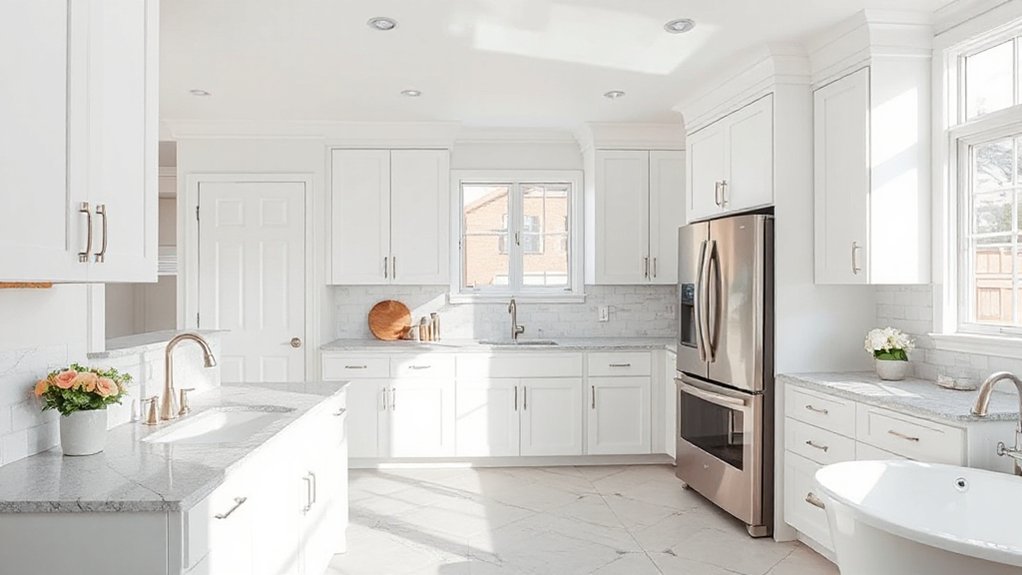
When you target renovations with the highest ROI, you lean on data: cost-effective upgrades that boost function and curb appeal, like cabinet refreshes, timeless finishes, and energy-efficient appliances. Modernize key spaces, improve layout flow, and upgrade exterior lighting and landscaping to signal value to buyers. Use a tight budget with contingency and prioritize projects supported by market evidence. It’s a practical framework—but the real payoff hinges on disciplined execution and staying within proven cost bands. Ready to quantify the payoff?
Highest-ROI Renovations: A Clear ROI Framework
When you’re evaluating renovations with the highest return on investment, start with a clear ROI framework that translates costs into measurable value. You’ll quantify project costs, salvageable value, and risk-adjusted gains using a consistent metric like payback period or net present value.
Track incremental resale uplift by comparing comparable properties and adjusting for market cycles. Prioritize metrics that reveal durable demand, such as occupancy or sale speed, to validate fit with buyer preferences.
Historical preservation can preserve baseline value while enabling favorable appraisal treatment in some markets, so account for potential tax incentives and maintenance costs.
Luxury additions may yield higher-perceived value, but require rigorous scoping, budget discipline, and quality controls to preserve ROI integrity.
Align choices with market data, not anecdotes, to sustain measurable upside.
Kitchen Upgrades That Pay Back the Most
Upgrading your kitchen consistently delivers strong resale uplifts, so focus on cost-effective choices that align with buyer priorities and market data.
You’ll maximize ROI by targeting updates with proven impact: cabinet updates that enhance storage efficiency, durable finishes, and timeless styling. Prioritize custom cabinetry for personalized storage solutions that echo higher-end designs without a full-scale overhaul.
Pair that with luxury appliances only when they meet functional needs and buyer expectations, avoiding over-specification that inflates costs. Energy efficiency, modern outlets, and better lighting drive perceived value and ongoing savings.
Use standardized, widely available materials to control price pain points while maintaining appeal. Track market data on renovation premiums versus project budgets to refine pacing and scope.
Keep metrics transparent, decisions data-driven, and outcomes measurable for credibility.
Bathroom Refreshes With Big ROI Returns
You’ll see that fresh fixtures and finishes set the baseline for ROI, delivering noticeable value with minimal disruption.
An efficient layout boost reduces remodeling time and user friction, enhancing overall appeal and resale potential.
Pair these with appealing aesthetic upgrades to maximize perceived quality and drive stronger market interest.
Fresh Fixtures Finishes
Fresh fixtures and finishes deliver standout ROI by modernizing key bathroom touchpoints without a full remodel. You’ll see measurable impact from targeted updates that brighten lighting, taps, and hardware, while preserving existing plumbing.
Data shows high ROI when you swap dated components for efficient, attractive alternatives, balancing cost and perceived value. Focus on durable materials, water-saving specs, and easy-to-clean surfaces to optimize lifecycle costs.
Vintage fixtures can yield a premium feel in *interior design* spaces, especially when paired with cohesive finishes. Unique finishes add visual interest without a full teardown, driving buyer perception and marketability.
Track price-per-square-foot uplift, time-to-sale, and review variance from baseline remodels to validate efficiency. Prioritize consistent styling, predictable upgrades, and minimal disruption for maximal ROI impact.
Efficient Layout Boost
Redesigning the bathroom layout can yield higher ROI than cosmetic updates alone by reducing travel distance, increasing storage efficiency, and boosting perceived value. You’ll gain measurable gains through open concept planning that minimizes corridor waste and improves daily flow.
Emphasize space optimization by relocating fixtures to create a clear, functional triangle and reduce crossing paths during use. Compact vanities with integrated storage, recessed medicine cabinets, and multi‑purpose shelves lower clutter and maximize usable area without enlarging square footage.
Consider a single, cohesive color and material palette to enhance perceived size and reduce visual fragmentation. Data shows that layouts prioritizing accessibility and storage typically deliver higher resale multipliers than cosmetic changes alone, with ROI concentrated in improved maintenance costs, occupant satisfaction, and faster market time.
Appealing Aesthetic Upgrades
- Update color schemes with neutral bases and bold accents to broaden appeal and reduce repaint risk.
- Replace dated fixtures with WaterSense options to improve efficiency without sacrificing style.
- Add decorative accents—like concise shelving or curated art—to elevate perceived luxury at low cost.
- Choose durable, timeless tile patterns that minimize future remodels and maximize longevity.
Layout and Flow Improvements for Low Cost, High Impact
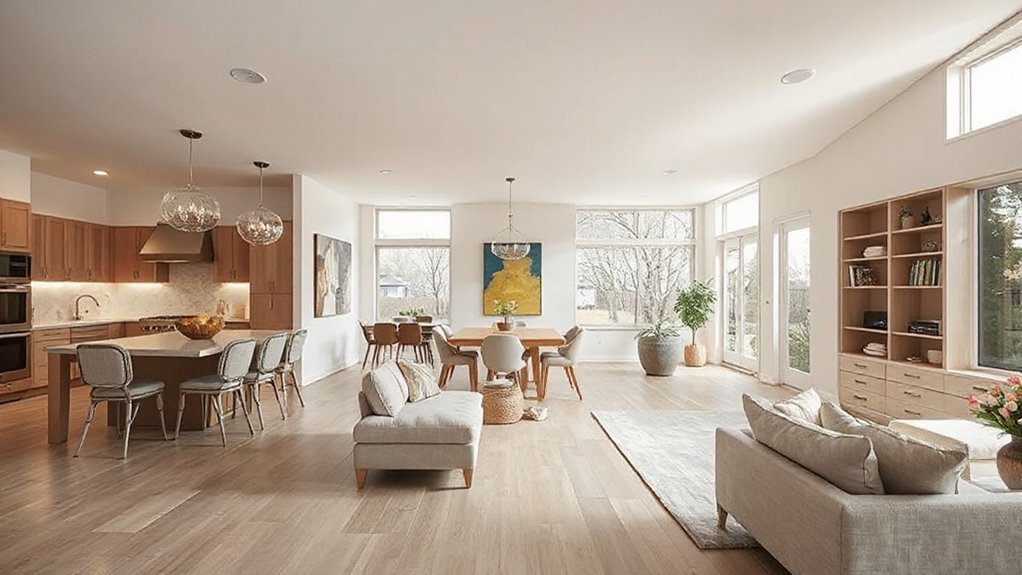
Reconfiguring layout and improving flow can yield high impact at low cost by prioritizing functional zones, reducing wasted movement, and leveraging existing structures. You’ll maximize space without major construction by evaluating current traffic patterns, appliance placement, and door swing interactions.
Open concept layouts can be simulated with partial walls, furniture zoning, and strategically located islands to create distinct areas while preserving airy sightlines. Focus on space optimization by aligning storage, work zones, and living areas to minimize backtracking.
Use data from previous renovations or square footage benchmarks to justify changes, not guesswork. Test changes with temporary layouts, measuring if pathways shorten and spaces feel cohesive.
Prioritize scalable solutions that adapt to evolving needs, ensuring ROI through improved usability and perceived value.
Curb Appeal Upgrades That Win Buyers
Curb appeal sets the first impression and often drives buyer engagement before interior details are considered. You’ll see immediate value when you elevate exterior cues that signal quality, durability, and care. Data shows small, targeted curb fixes correlate with faster offers and higher selling prices. Focus on cost-efficient, high-ROI choices to maximize return.
1) Prioritize landscaping enhancements that frame the entry and guide the eye to key features.
2) Install exterior lighting that extends curb value into evening view and boosts perceived security.
3) Refresh hardscape edges and trim to convey maintenance discipline without major overhauls.
4) Choose an updated front door and trim color to harmonize with the home’s palette and first impression.
These steps create a compelling, data-backed upgrade path without overinvesting.
Energy-Efficiency Tweaks That Slash Bills and Raise Value
Energy efficiency isn’t just about cutting bills—it’s about measurable value adds to your home. You’ll see impact through lower operating costs and higher appraisal values when you pursue targeted tweaks with proven ROI.
Data show insulation improvements dramatically reduce heat transfer, improving comfort and zipping energy use by single-digit to double-digit percentages depending on climate and existing conditions.
Pairing upgraded insulation with efficient windows and doors yields compounding savings that recoup installation costs in a typical market cycle.
Solar incentives can further boost value by offsetting capital outlay and accelerating payback, especially where utility rates rise.
Prioritize envelope enhancements, then verify performance with a professional energy audit to quantify projected annual savings and home value uplift.
Smart Budgeting: How Much to Spend on Each Project
When you plan renovations with solid ROI in mind, budgeting becomes a priority, not an afterthought. You’ll use data to guide cost estimation and budget allocation, avoiding guesswork and overrun risk. Effective budgeting assigns value-based limits to each project phase and tracks variance against a baseline forecast.
1) Allocate a core contingency to absorb unforeseen costs without derailing ROI.
2) Prioritize high-ROI upgrades first, aligning spend with measurable payback timelines.
3) Use unit costs and recent bids to refine cost estimation across trades.
4) Revisit the budget mid‑project to recalibrate scope and preserve overall value.
Avoiding Renovation Pitfalls That Harm Resale Value
To protect resale value, you’ll avoid common renovation missteps that drain appeal or price. You’ll quantify impact by basing decisions on data, not trends.
DIY pitfalls often inflate costs and extend timelines, eroding ROI when workmanship quality varies. Prefer licensed trades for structural, electrical, and plumbing upgrades, and insist on clear warranties and specs.
Timing considerations matter: delays can push project costs beyond competitive markets, while misaligned completion windows reduce buyer excitement.
Avoid overcustomization that doesn’t fit adjacent homes or target buyers; neutrality often yields broader appeal.
Budget overruns undermine perceived value, so set milestones with contingency and track variances.
Prioritize projects with proven resale lift, document materials, and maintain consistent finishes.
Plan reviews with appraisers to confirm alignment between improvements and market expectations.
Frequently Asked Questions
Which Renovations Least Affect Resale Value if Poorly Executed?
Poorly executed renovations least hurt resale value when you avoid DIY pitfalls, hire strong contractor selection, and strictly check permits and quality. You’ll minimize risk, compare data-driven estimates, and guarantee durable workmanship over flashy but risky upgrades.
How Long Does ROI Typically Take to Realize After a Project?
Typically, you realize ROI within 1–3 years, but it varies by project and market. Do a cost analysis first, then refine your timeline estimation, considering resale window, financing costs, and home appreciation rates.
Do ROI Factors Differ by Housing Market or Region?
Yes, ROI factors differ by housing market and region. You’ll notice regional trends and market variations shaping payback, so you should tailor renovations to local demand and timing for best returns, supported by current data and metrics.
Which Renovations Require Permits but Yield Low ROI?
You’ll find that certain renovations require permits yet yield low ROI, often due to lengthy permit processes and heightened compliance. You confront ROI challenges as you navigate the permit process, deterring value gains and extending timelines.
How Should I Prioritize Projects With Conflicting ROI Estimates?
“Measure twice, cut once.” You prioritize by cost-benefit analysis, then align with renovation timing, resolving conflicting ROI estimates through sensitivity checks and scenario planning to decide where the biggest, timely gains lie for your project portfolio.
Conclusion
You’re steering your budget toward high-ROI moves that punch above their weight. Think of each upgrade as a well-placed brick in a sturdy, growth-fueled wall: cheap now, priceless later. Let data guide you—kitchen tweaks, bathroom refreshes, smart layouts, curb appeal, and energy saves deliver the strongest resale lift. Avoid missteps with clear contingencies and quality craft. When you connect practical dollars to durable value, your home’s story compounds, turning modest investments into lasting equity.