You’re weighing a practical upgrade against a capital risk, and the numbers don’t lie: per‑m² costs vary widely with finish, access, and regional market conditions. You’ll face damp-proofing, insulation, and finishes that push total outlays higher in urban sites than in rural ones. If you want a dependable budget, you must account for structural work, utilities, and compliance as fixed levers rather than afterthoughts, yet the exact mix will still hinge on your scope and standards. So, where should you start?
UK Cellar Conversions: Cost per M² Explained
In the UK, the cost per square metre for cellar conversions varies mainly with the complexity of the underlying structure, the required waterproofing, and the quality of finishes. You assess structural integrity, load paths, and damp protection to estimate baseline per-m² outcomes.
Historical architecture influences detailing, alignment, and preservation requirements, potentially increasing material and workmanship costs.
You select waterproofing systems based on groundwater risk, ensuring continuity from excavation to finished floor level.
Finishes drive final pricing through insulation, ceiling treatments, and fit-out specs. Eco-friendly materials can modestly affect unit costs but offer long-term savings through durability and energy efficiency.
You document unit measures, tolerances, and testing protocols to support accurate cost per m² projections for planning and procurement.
What Drives Cost per M² in a UK Cellar Conversion
Material and labour costs set the baseline for per‑m² pricing, with material quality and labour intensity directly shaping the rate.
Regulatory and structural factors add variability through permits, compliance, and structural reinforcements that can alter scope and cost per metre.
In practice, you’ll see these drivers interact, as project complexity and site conditions constrain budgeting and choice.
Material And Labour Costs
While the total cost per square meter for a UK cellar conversion hinges on both materials and labor, the specific choices you make about finishes, structural work, and durability dictate the major cost drivers.
- Material selection directly affects unit price, curing times, and install complexity.
- Labour rates vary by skill level, region, and project sequencing.
- Finishes influence long-term maintenance, energy efficiency, and space usability.
- Structural work, including damp control and insulation, governs required scope and risk mitigation.
- Historical trends and environmental impact guide sourcing, waste reduction, and lifecycle costs.
Environmental impact considerations now feed procurement strategies, while historical trends inform cost dispersion and supplier stability.
Regulatory And Structural Factors
Structural assessments determine allowable alterations, underpinning, and floor loading, influencing reinforcement costs and project sequencing. Permits and inspections add time-bound overheads and documentation burdens, while insurance and risk mitigation drive contingency budgeting.
Historical trends show evolving compliance expectations and tighter controls, often increasing upfront fees but reducing long-term liabilities.
Aesthetic considerations, though secondary to safety, affect finishes, ceiling heights, and light wells, subtly altering material choices and installation complexity within regulatory limits.
Damp-Proofing and Waterproofing Costs per M²
What’re the typical damp-proofing and waterproofing costs per square metre in UK cellar projects, and what factors drive those prices? You assess substrate condition, existing moisture levels, and material choices to determine bid ranges. Proper detailing reduces post-construction failures, minimizing future remediation.
You’ll weigh damp-proof membranes, liquid coatings, drainage, and tanking options against labour, access, and showroom expectations. Historical influences and cultural significance shape preferred finishes and installer familiarity, affecting cost and lead times.
You prioritize performance data, warranty terms, and compatibility with insulation strategies to avoid thermal bridges. You’ll select concise specification and measurement standards to ensure consistent cost tracking.
- Substrate evaluation and moisture testing
- Membranes, coatings, and tanking types
- Drainage and ventilation interplay
- Labour and access constraints
- Warranty, standards, and documentation
Ventilation and Moisture Control per M²
Ventilation and moisture control in UK cellars directly influence long-term durability and occupant comfort, so you’ll assess how airflow, relative humidity, and surface moisture interact with chosen damp-proofing or tanking systems.
Effective ventilation reduces mold risk and mitigates condensation on cold surfaces, supporting sustained performance of moisture barriers and barrier-backed finishes.
You should evaluate foundation-air exchange, fan sizing, and inlet/outlet placement to minimize stagnant zones without creating drafts.
Consider ventilation upgrades that balance energy use with humidity targets, and guarantee controls respond to seasonal shifts.
Pair ventilation with robust moisture barriers to manage capillary rise and wall damp.
Document performance metrics, including air change rate, relative humidity, and surface moisture levels, to confirm ongoing compliance and cost-effectiveness for the project scope.
Structural Work Versus Finishes per M²
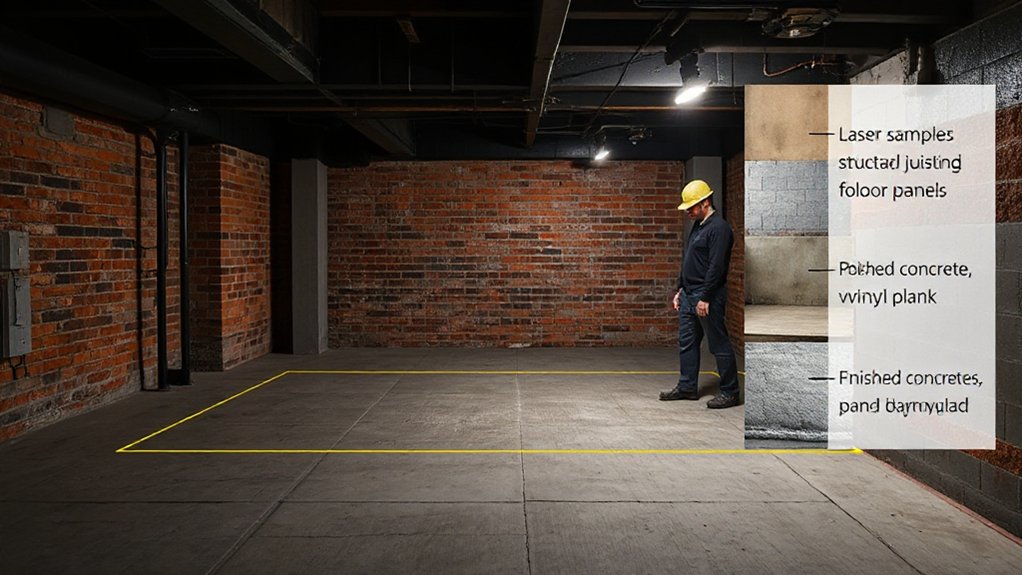
Structural work and finishes per m² require clear demarcation of scope, cost drivers, and sequencing to prevent overlaps and overruns. You’ll balance structural alterations with surface treatments, recognizing how each decision shifts totals and timelines. Historic preservation and interior design considerations influence both domains, shaping acceptable methods and aesthetics within regulatory bounds.
- Define scope boundaries: framing, plaster, coatings, and final fixtures
- Assess load requirements versus finish intricacy and material compatibility
- Sequence work to minimize rework, scheduling damp-proofing before finishes
- Quantify risk-adjusted costs for unforeseen structural constraints
- Align design intent with practical implementation, avoiding over-design
Your approach should prioritize precision, traceability, and compliant detailing, ensuring that structural improvements support durable interiors and respectful historic context within a coherent finish strategy.
Insulation Options and Costs per M²
You’ll compare insulation material options by their thermal performance, durability, and suitability for a cellar environment.
Expect per‑m² costs to reflect material type, thickness, and installation complexity, with moisture management and fire ratings as key factors.
We’ll outline typical cost ranges per square metre and how these choices impact overall conversion budgets.
Insulation Material Options
What insulation materials are most cost-effective per square meter for a UK cellar conversion, and how do their thermal performance and installation requirements compare?
You evaluate options by R-value per cost, vapor control needs, and compatibility with existing walls. Rigid foam boards deliver high insulation with straightforward installation, but require structural framing for some applications. Mineral wool provides fire resistance and sound attenuation, at a moderate price and easier handling. Phenolic boards offer excellent thermal performance with thinner layers, yet cost more and need careful moisture management. Loose-fill or spray foams maximize continuous coverage yet can be costly and require skilled application.
You’ll balance air leakage control, ease of retrofit, and long-term durability to minimize disruption to garden landscaping and interior decor during finishing.
- Rigid foam boards vs mineral wool
- Vapor control considerations
- Fire safety and ratings
- Application ease and labour costs
- Long-term performance and maintenance
Cost Per Square Metre
Choosing insulation materials for a UK cellar conversion hinges on cost per square metre, balanced against performance and installation requirements. You assess insulation options by R-value per metre, material density, and compatibility with existing walls.
Per m² costs vary with method: rigid board systems deliver predictable installed pricing; spray foams reduce gaps but may incur higher consumables. Thin-line composites save space yet increase product complexity.
In renovations targeting cellar renovation, consider moisture management, vapor barriers, and thermal bridging corrections to protect historic preservation goals. Labour intensity and access limitations influence pricing; restricted access raises day-rate charges and safety measures.
For historic preservation projects, ensure compatibility with original fabric to avoid damage and maintain value. Documented performance data per square metre guides budgeting, procurement, and procurement validation throughout the project lifecycle.
Floor and Ceiling Finishes per M²
Floor and ceiling finishes cost per m² vary by material and specification, but the typical range reflects installation complexity, moisture exposure, and required thickness. You assess finish options to balance moisture resistance, thermal performance, and acoustic needs, then align with your design goals.
- Floor finish materials: concrete, epoxy, ceramic, vinyl, or wooden boards, with installation nuances.
- Ceiling finishes: plaster, gypsum board, mineral fibre, or timber panels, influencing load and air gaps.
- Moisture considerations: damp-proof membranes and vapor barriers impact cost and longevity.
- Thickness and fittings: joints, coving, and trims add labor and materials.
- Aesthetic and light integration: choose finishes that support garden design accents and interior lighting plans.
Plumbing, Electrical, and Utilities per M²
When planning a cellar conversion, you’ll need to quantify plumbing, electrical, and general utilities per m² to align with the design and moisture considerations from floor and ceiling finishes.
You determine trunking allowances, pipe routes, and service ceilings with minimal impact on usable area. Map mains, condensate lines, and venting for damp zones, ensuring corrosion resistance and accessibility for maintenance.
Electrical design should specify circuit loading, RCD protection, and outlet siting to support furniture arrangement without clutter. Consider utilities density during early space planning to avoid overrun of usable height.
Allocate lighting fixtures and control zones that optimize energy use and comfort, while preserving service routes. Document coordination drawings to avoid clashes and unexpected retrofits later.
Lighting Design Costs per M²
- Fixture specification impacts pricing and energy performance
- Control strategy drives wiring, controllers, and commissioning costs
- Installation complexity influences labour and access considerations
- Dimming, sensors, and automation affect ongoing maintenance
- Comparative analysis informs total cost per m² for lighting design
Egress, Safety, and Building Regulation Costs per M²
You’ll assess Egress Planning Standards, Safety Compliance Costs, and Building Regulation Upgrades to understand how they drive costs per m².
This section highlights the required criteria, typical cost ranges, and the process for securing approvals.
Expect precise references to applicable regulations, mandatory features, and the impact on overall project economies.
Egress Planning Standards
There are clear minimal and ongoing costs tied to Egress Planning Standards in cellar conversions, encompassing egress capacity, safety features, and building regulation compliance per square metre. You must assess egress planning to meet safety standards, ensuring exits, routes, and door hardware support compliant flow.
Per metre, costs cover permanent fixtures, signage, and accessibility enhancements aligned with regulatory expectations. You’ll balance practical space use with compliance timelines and inspection points.
Attention to structural integrity, material durability, and fire separation informs budgeting decisions. Planning also accounts for compliance documentation, testing, and potential revisions during design progression.
- Egress capacity requirements
- Fire-rated enclosure provisions
- Exit door hardware specifics
- Escape route clearances
- Compliance documentation and testing
Safety Compliance Costs
Fire protection measures, such as smoke detectors and fire-rated doors, incur costs tied to material quality and installation complexity.
Structural adequacy must be demonstrated via compliance reviews, often translating into inspections, certifications, and possible retrofit work.
Ventilation and condensation controls align with moisture mitigation standards, affecting both upfront expenditure and ongoing maintenance.
You should also factor in aesthetic considerations like interior decoration and garden landscaping as part of an approved, code-compliant finish strategy, since applicable guidelines can influence layout visibility, accessibility, and overall space usability without compromising safety targets.
Building Regulation Upgrades
Plan approvals, inspection milestones, and documentation drive timeline and cost certainty. You should anticipate trade-offs between historical preservation and compliance, ensuring retained character while meeting current norms.
Eco friendly materials often earn best-practice credits, influencing material choices and long-term maintenance. The following considerations establish cost baselines and sustainable options:
- Egress design requirements and door/threshold specifications
- Fire safety and compartmentalization criteria
- Structural reinforcement and moisture management
- Material sourcing, lifecycle costs, and environmental impact
- Documentation, approvals, and ongoing compliance monitoring
Radon Barriers and UK Compliance per M²
Radon barriers are a critical component of UK builds, and compliance per square metre hinges on certifiable materials, correct installation, and consistent workmanship. You must select certified radon barriers meeting relevant BS or Eurocodes and guarantee they’re installed per manufacturers’ guidance, in conjunction with underlying airtightness strategies.
Radon mitigation effectiveness relies on continuous coverage, proper overlap, and joints sealed with compatible tapes or sealants, without gaps at penetrations. Documentation is essential: retain supplier declarations, test certificates, and installation records for Building permits and future inspections.
Perimeter detailing, floor-slab continuity, and proper access to service voids prevent radon ingress pathways. Regular quality checks during build, plus post-construction verification, confirm long-term compliance and maintain value in your cellar conversion project.
Regional Price Variations per M² Across the UK
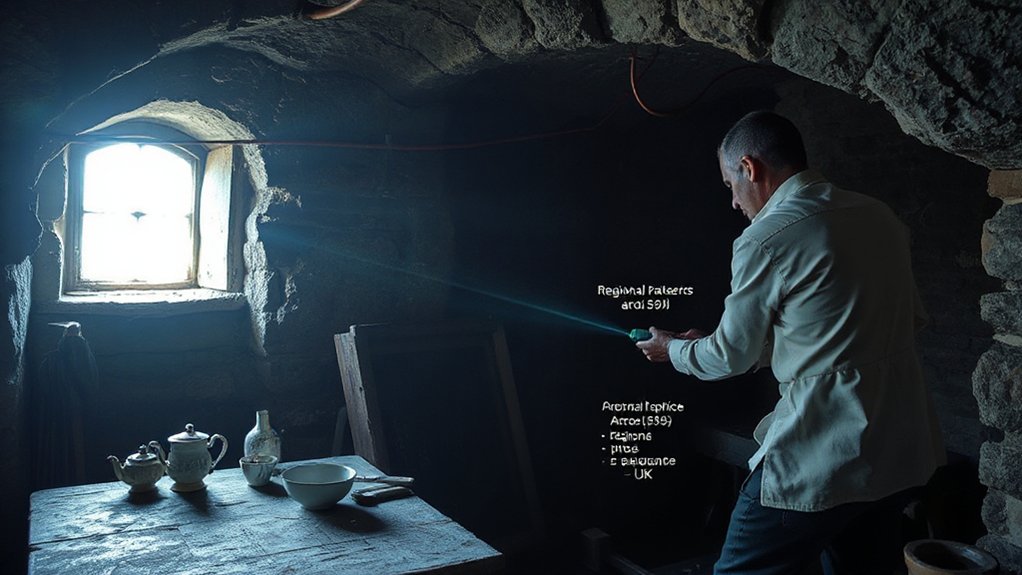
What regional price variances shape the cost per square metre for cellar conversions across the UK, and how do they influence budgeting? You’ll notice patterns by region that affect materials, labour, and permitting. Differences stem from wage scales, supplier logistics, and local regulation, which collectively shift per-m² totals.
You should weight these factors against historical preservation requirements and environmental impact, which can add complexity and cost in certain areas. Budgeting becomes more accurate when you map regional baselines and adjust for site-specific constraints.
The following factors typically drive variation:
- Labour rate differentials by region
- Material sourcing and transport costs
- Local permit and inspection fees
- Historic district overlays and protection rules
- Environmental impact mitigation obligations
City Versus Countryside Cost Differences per M²
City-area projects typically command higher per‑m² costs than rural equivalents, driven by tighter site constraints, higher labour rates, and denser supply chains.
You’ll find urban cellar conversions incur premiums from restricted access, disruption management, and municipal compliance overheads, compared with countryside permits and simpler logistics.
Differences emerge in labour mix, with skilled trades concentrated in cities, raising daily rates and schedule risk. Material transport and storage costs also vary, favouring local suppliers in urban cores and increasing on-site handling.
Where garden landscaping and interior decoration elements are integrated, urban projects may require temporary protection measures and bespoke finishes for compact footprints, elevating per‑m² pricing further.
To put it differently, city versus countryside differentials reflect site practicality, risk, and coordination complexity, not just unit-area calculations.
Budgeting Scenarios: Low-End Vs High-End per M²
Budgeting for cellar conversions hinges on per‑m² ranges that reflect the project’s finish level and scope. You weigh low‑end versus high‑end options to set realistic budgets and avoid scope creep.
- Finish quality drives cost per m², from basic walls to premium detailing.
- Structural work and damp proofing create a clear differential between levels.
- HVAC, lighting, and electrical layouts scale with comfort targets.
- Garden landscaping integration affects exterior-perimeter budgeting and flow.
- Interior decor choices determine final perception and revision needs.
Your budgeting checklist aligns features with intended use, ensuring you reserve for contingencies.
Step-By-Step: Estimating Your Per‑m² Costs
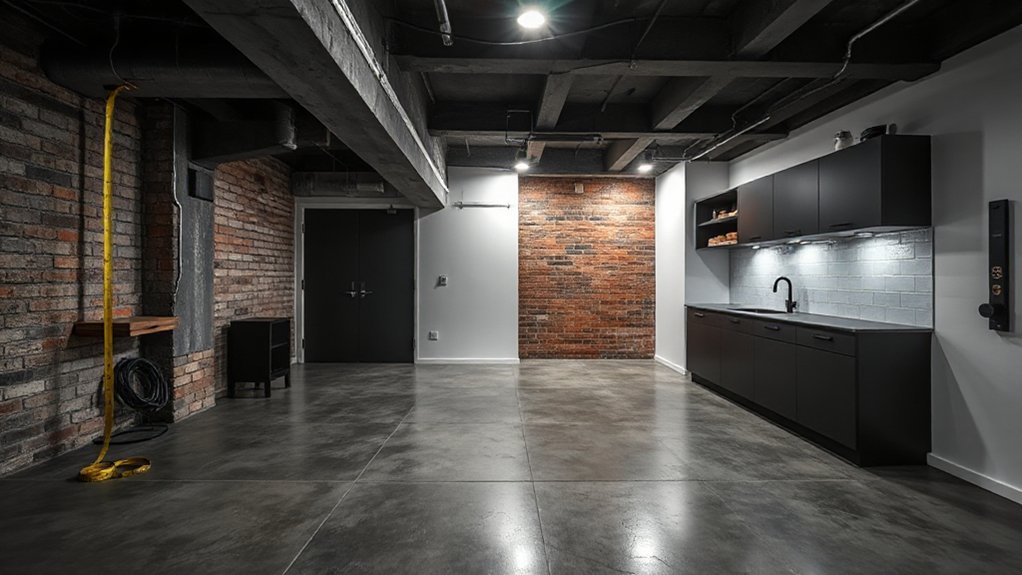
To estimate per‑m² costs accurately, start with a clear scope and quantify finish levels, structural work, and services before applying unit rates. You’ll define build-up areas, exclude non‑core elements, and map dependencies between trades to avoid double counting.
Next, establish a consistent measurement method: floor area, wall area, and ceiling enclosure, incorporating ceiling height as a driver for insulation, damp proofing, and HVAC allowances.
Break costs into identifiable components: demolition, excavation, load-bearing changes, drainage, electrical, plumbing, and finishes. Apply unit rates derived from current market data, adjusting for project complexity and access constraints.
Consider historical features where relevant, detailing preservation work, finish matching, and contingencies.
Finally, assemble a per‑m² spreadsheet, review assumptions, and validate with a risk-adjusted tolerance.
Value and Resale: Does Per‑m² Spend Pay Off?
Value per square meter is a useful benchmark, but its impact on resale hinges on market judgment and project quality. You’ll see value when structural quality, finish, and utility align with buyer expectations, not just a metric.
Historical trends show price per m² fluctuates with demand, location, and perceived prestige, affecting resale timing and price.
Aesthetic appeal matters: cohesive design, lighting, and acoustic comfort drive buyer willingness to pay a premium. You should consider how practical features translate into market desirability, rather than chasing arbitrary per‑m² sums.
Relative value hinges on end results, not cost alone.
- Market timing and location shape resale impact
- Finish quality correlates with buyer perception
- Visible upgrades boost appeal and perceived value
- Historical trends inform strategy on price expectations
- Aesthetic appeal influences buyer willingness to pay a premium
Practical Tips to Keep Costs Down per M² Without Sacrificing Quality
You can curb costs per m² without compromising quality by standardizing materials and methods across the project, selecting durable, mid-range options with proven performance, and enforcing strict cost controls from design through completion.
Begin with a detailed bill of quantities to prevent scope creep and identify long-term savings from improved detailing.
Favor modular or off-site fabrication where feasible to reduce on-site labor and waste.
For Garden landscaping, specify durable, low-maintenance planting, permeable surfacing, and standardized irrigation components to minimize future repairs.
In Interior design, prioritize robust finishes with reliable warranties, and template finish schedules to avoid duplication.
Implement value engineering reviews at design milestones, and maintain rigorous change-control logs.
Regular cost tracking and post-occupancy feedback ensure quality while preserving budget integrity.
Frequently Asked Questions
How Long Does a UK Cellar Conversion Typically Take?
Typically, you’ll complete a UK cellar conversion in 6–12 weeks, depending on scope. You’ll require robust basement insulation and effective waterproofing methods, with precise planning, permits, and professional coordination to minimize delays and guarantee long-term stability.
What Affects Variability in Per‑M² Drywall Costs?
First off, material quality and labor efficiency drive drywall cost variability. You’ll see higher costs with premium materials and slower crews; otherwise, faster, efficient labor and consistent materials stabilize per‑m² pricing, reducing overruns, smoothing budgeting.
Can Extensions Reduce Per‑M² Costs of a Cellar?
Extensions can reduce per‑m² costs if you consolidate structure and services, but you still need robust basement insulation and ventilation systems to prevent moisture and energy losses. You’ll save long‑term while meeting safety and efficiency standards.
Do Listed Buildings Restrict Per‑M² Budgeting?
Listed buildings constrain budgeting with strict Historical restrictions and Building regulations, limiting per‑m² allowances. You confront approvals, documentation, and compliance demands, measure costs precisely, document variances, and anticipate delays, while maintaining quality, safety, and heritage integrity throughout the project.
How Do Resale Value and Time to Recoup Costs Compare?
Market valuation influences resale value positively when renovations meet quality standards, and time to recoup costs depends on market demand; Renovation incentives can shorten payback, while robust valuation metrics help you gauge break-even horizons and cost efficiency.
Conclusion
You’ve seen the spectrum of costs, from damp-proofing to finishes, and how location and scope shift the per‑m² price. The key? Every penny ties back to function, safety, and longevity. As you approach your build, subtle choices—the insulation method, ventilation strategy, and finishes—will tilt the budget and the outcome. Will your final figure hit the target and deliver value that endures, or reveal itself only when the access doors close on completion? The next decision may define the result. Stay tuned.