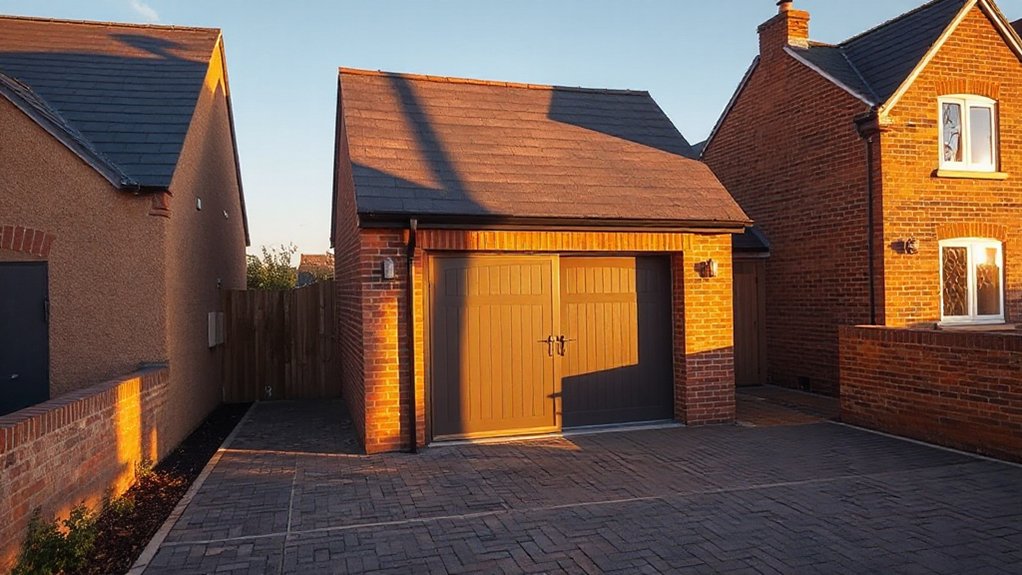
Think of budgeting a UK garage like mapping a route: your starting point is a typical range of £5,000 to £15,000, but the exact mileage hinges on size, materials, and foundations. You’ll weigh single-car (roughly £5k–£8k) versus double-car (£10k–£15k+), plus doors, insulation, and roof choices. Planning, permits, and site conditions can shift the final figure. Want a clear path to your project’s true cost and options? Let’s outline the key drivers and limits.
Should You DIY or Hire a Pro for a UK Garage Build?

If you’re weighing DIY versus hiring a pro for a UK garage build, start with a clear set of requirements and a realistic budget. You’ll compare time, risk, skill, and compliance needs, then quantify costs with a detailed spreadsheet.
DIY can save labor fees but may extend timelines and trigger warranty concerns or building-control queries. A pro delivers code-compliant framing, insulation, and electrical work, with predictable milestones and permits.
Consider ongoing costs for maintenance, tools, and safety gear if you tackle it yourself.
Evaluate Garage security and Garage ventilation implications early: securing access points, sensors, and lighting reduces future risk, while proper ventilation affects moisture, fungi, and air quality.
Decide based on your ability to meet critical standards, risk tolerance, and the project’s complexity.
What Determines a UK Garage Price: Scope, Size, Materials
Garage price in the UK hinges on three core factors: scope, size, and materials. You’ll see price shifts driven by what you include (doors, insulation, electrical, finishing), the overall footprint, and the build quality of chosen materials.
To compare options, track how each element affects longevity, upkeep, and aesthetics, then translate that into ongoing costs. Scope determines complexity; size sets base costs per square metre; materials define durability and maintenance.
You’ll want to quantify tradeoffs between upfront outlay and long-term value, balancing speed with standards. Consider how garage aesthetics influence perceived value and integration with your property, alongside material durability for weather and wear.
- Scope: features and finish levels
- Size: footprint and floor plan
- Materials: structural and cladding choices
Typical Price Ranges by Garage Size and Scope
Prices for UK garages vary by size and scope, with clear step-ups as you add features or expand footprint.
In practical terms, a single-car garage typically ranges from £6,000 to £12,000, depending on walls, roofing, and doors.
A double-car footprint commonly lands between £12,000 and £25,000, with higher costs for insulated walls or steel framing.
Mid-range builds with basic electrics and damp-proofing sit around £15,000 to £20,000 for a standard-sized structure.
If you include features such as enhanced garage security systems, integrated shelving, and optimized storage solutions, expect a £2,000–£5,000 increment.
Storage solutions influence interior layout efficiency, while security upgrades add both upfront and ongoing maintenance considerations.
Foundations and Groundwork: What to Expect and Cost Impact

Groundwork scope and variations directly influence price, site prep time, and disruption to your build schedule.
Foundation type choices—slab, beam-and-block, or trench fill—carry different material and labour costs.
Site conditions and access affect crew efficiency and logistics.
Start with a clear assessment of soil type, drainage, and access constraints to gauge potential cost impact and contingency needs.
Groundwork Scope and Variations
- Site access and logistics considerations
- Soil and drainage assessment requirements
- Utility trenching and access points
Foundation Type Impacts Cost
Foundation type is a major cost driver for UK garages, and the choice you make hinges on ground conditions, soil tests, and load requirements identified in the groundwork phase.
If your site demands shallow slabs, costs remain moderate, whereas heavy-duty footings or trench fills raise ex-works outlay considerably.
Concrete strength, reinforcement, and drainage influence long-term performance and maintenance, so quantify load paths precisely.
Groundwater, frost risk, and soil bearing capacity guide material specs and curing time, affecting project scheduling and labor costs.
Budget for temporary works and utility sleeves during formation.
A well-chosen foundation supports garage security, reducing movement and future repair needs, while proper ventilation systems must be integrated at substructure levels if required by local codes.
Align foundation strategy with projected use and security considerations.
Site Conditions and Access
- Land clearance
- Utility connections
- Access and sequencing
Roofing, Doors, and Insulation: Main Cost Drivers
Roofing, doors, and insulation are the main cost drivers in a UK garage build. You’ll notice that material choices and installation methods heavily influence total expense, with long-term benefits tied to durability and energy performance.
Roofing options range from lightweight panels to tiled systems, each costing per square meter and varying by insulation compatibility.
Doors vary by material (upvc, steel, wood) and security features, directly affecting upfront price and ongoing maintenance.
Insulation strategy—ceiling, walls, and floor—determines heat retention, climate comfort, and environmental impact, often yielding lower running costs over time.
Assess garage security implications, selecting robust locking and reinforced frames without over-investing.
Compile a cost bracket using local supplier quotes, then adjust for any environmental impact considerations in your region.
Permits, Planning, and Legal Steps in the UK
- Planning permissions and permitted development checks
- Compliance with building regs, warranties, and inspections
- Security considerations and material choices (eco friendly materials)
Hidden Costs That Surprise UK Garage Projects

Hidden permit costs and material price swings often catch projects off guard. You’ll want to budget for unexpected permit fees and time-linked charges.
Plus, volatile material costs can shift by season or supplier. This section starts by outlining how these hidden costs appear and influence overall UK garage budgets, so you can plan with real-time data and precise estimates.
Hidden Permit Costs
- Permits issued by local councils
- Inspections and compliance documentation
- Variable permit fees by project scope
Material Fluctuations Impact
Material costs can swing during a UK garage build, turning a fixed budget into a moving target. You’ll notice material fluctuations as you plan timelines, deliveries, and subcontractor schedules.
Material shortages often arrive without warning, delaying assemblies or forcing substitutions that alter finish quality and long-term durability. Price volatility can widen contingency buffers, eroding margins even when quoted fees seem solid.
To quantify impact, track regional supplier price indices, monitor lead times, and model best- and worst-case scenarios across key components: steel, timber, cement, insulation, and cladding.
Build a refresh cadence into your budget reviews, updating forecasts after each procurement cycle.
In practice, document all supplier communication, compare alternative products, and maintain a risk-adjusted reserve so you’re prepared when volatility hits.
Budgeting Strategies: Save Without Compromising Safety

Careful budgeting can trim costs without compromising safety by prioritizing essential features, selecting cost-effective materials, and planning with a clear timeline. You’ll optimize value by sequencing trades, validating quotes, and using modular components that scale with need.
Track cost per square metre, energy efficiency, and long-term maintenance to avoid spikes. Prioritize robust foundations, secure enclosures, and compliant electrical layouts, then layer aesthetics and storage within safe limits.
Practical decisions hinge on reliability data, manufacturer warranties, and local regulations, ensuring every pound supports safety margins and future adaptability. By keeping a precise scope, you reduce change orders and missteps while preserving finish quality.
Garage aesthetics and storage solutions should align with use, while meeting budget thresholds and safety standards.
- Focused feature prioritization
- Data-driven material selection
- Clear phased planning
Case Studies: Real UK Garage Builds and Budgets
Case studies reveal what real UK garages cost and how budgets hold up under practical constraints. You’ll see varied builds across regions, sizes, and finishes, with data you can rely on.
In straightforward terms, materials drive most variance: blockwork or brick, roof type, doors, and insulation. Labour typically accounts for about half the total, plus permits and inspections where required.
Sizing trends show single-car garages averaging 18–20 m2, while double garages push toward 30–35 m2, influencing unit costs per square metre.
Project timelines reveal scheduling influences, weather windows, and supplier lead times, all affecting final totals.
Across cases, you’ll find consistent emphasis on garage security and parking convenience as budget multipliers, not optional extras.
Concrete cost ranges and maintenance expectations help frame informed decisions.
Frequently Asked Questions
How Long Does a Typical UK Garage Build Take?
Typically, a UK garage build takes 4–12 weeks, depending on size and complexity. You’ll finalize garage design, obtain building permits, and schedule inspections, keeping timelines tight as you coordinate suppliers and trades for a precise, data-driven process.
What Is the Minimum Garage Builder’s Warranty in the UK?
The minimum UK garage builder’s warranty is typically 10 years on structure; you should verify with your contractor. You’ll guarantee Garage insulation is compliant, and Parking space regulations are met, documenting exact measurements and performance standards throughout construction.
Do Garages Require a Party Wall Agreement in the UK?
Yes, you’ll often need a party wall agreement if your garage touches or affects a neighboring structure. Approximately 20% of UK disputes hinge on party walls; guarantee compliance with Building Regulations to protect both parties.
What Are Common VAT Considerations for Garage Builds?
VAT exemptions may apply to your garage build, affecting eligible costs and VAT reclaim. You’ll need to assess tax implications, track qualifying expenditure, and consult HMRC guidance to determine if any exemptions or partial reliefs apply to your project.
How Can Grants or Subsidies Apply to Garage Projects?
Grants can help you, guiding your plans like a steady compass. You’ll assess grant eligibility, then complete the subsidy application with precise data, timelines, and receipts, ensuring every detail supports funding for your garage project.
Conclusion
You’ve got the numbers and the plan, so let’s not improvise a cathedral in your backyard. The data says expect £5k–£8k for a single-car, £10k–£15k+ for a double, with foundations, roofing, doors, and insulation doing most of the heavy lifting. Permits, surprises, and regional quirks will nibble the margins. So budget with a clear scope, test every assumption, and avoid DIY vanity projects masquerading as pro-grade safety. In short: plan, price, perspire—profit not guaranteed.