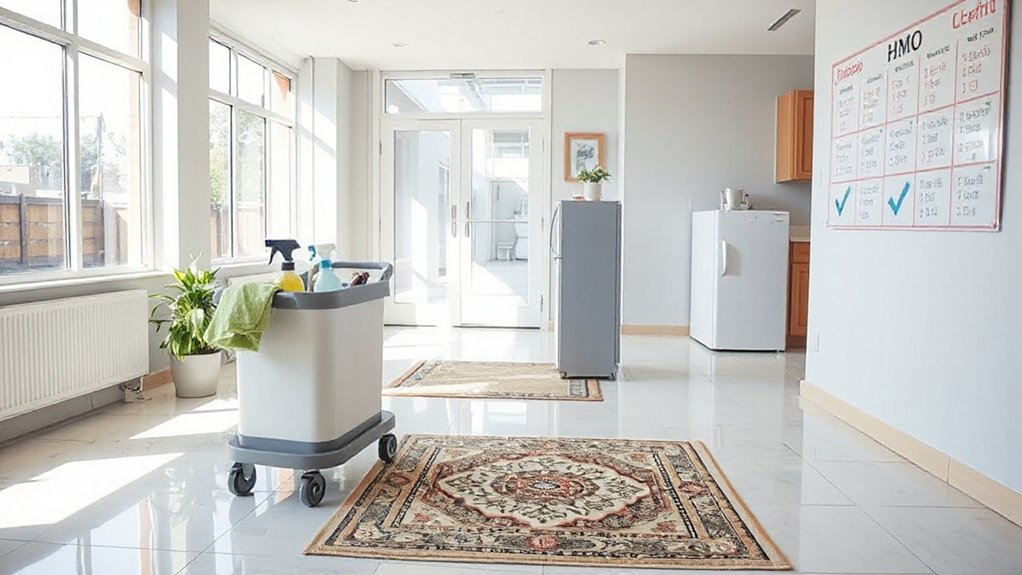
You can run a clean, fair, and predictable HMO schedule by pairing simple daily routines with clear accountability, durable shared materials, and steady communication. Start with a fair, simple plan that assigns realistic tasks and timelines, supported by visible checklists and reminders. Define daily, weekly, and monthly roles, and rotate workloads to stay balanced. Use light-touch checks to monitor cleanliness and adjust as needed. If you keep following this approach, you’ll uncover more practical steps and insights.
Build a Fair, Simple HMO Cleaning Schedule

A fair, simple HMO cleaning schedule starts with clear responsibilities and realistic timelines that all tenants can follow. You map tasks to rooms, assigning minimal, repeatable actions that fit daily life and peak usage.
You pair this with visible deadlines, so no one wonders what’s next. You establish a standardized checklist, digital where possible, to track completion and accountability.
You emphasize Tenant communication as the backbone: quick updates, reminders, and easy feedback channels prevent drift and cultivate ownership.
You align incentives with consistent effort—cleaning incentives reward timely participation, not perfection, reinforcing steady participation without punitive pressure.
You document exceptions, review cycles, and adjustments quarterly, ensuring the plan stays relevant as occupancy or usage shifts.
Clarity, consistency, and measurable progress drive long-term cleanliness.
Define Daily, Weekly, and Monthly Roles for Tenants
Define clear Daily, Weekly, and Monthly roles to streamline tenant tasks and consistency. You’ll outline daily upkeep, weekly deeper cleans, and monthly maintenance checks, tying each to measurable outcomes.
This keeps the portfolio on trend with predictable responsibilities and reduces friction in turnover.
Daily Tenant Roles
To keep operations smooth, clearly define daily, weekly, and monthly tenant duties so responsibilities are understood and action items are immediate. Daily roles focus on small, repeatable tasks: wipe high-touch surfaces, tidy common areas, and secure entry points after use. You should establish a simple checklist that reinforces consistent hygiene and minimizes disruption to others.
Weekly expectations center on deeper cleaning tasks, such as vacuuming carpets, dusting vents, and emptying shared bin stations, with a rotating schedule to share load fairly.
Monthly duties cover deep cleans and inspections, ensuring equipment is functional and spaces stay compliant with HMO standards.
Clear tenant communication underpins motivation, aligning accountability with visible progress and reduced friction. Cleaning motivation remains essential to sustain reliable, high-quality outcomes.
Monthly Cleaning Responsibilities
You’ll assign roles for monthly tasks, focusing on high-touch surfaces, shared equipment, and waste segregation audits.
In this cadence, you’ll coordinate with tenants to complete thorough oven, fridge, and extractor maintenance, plus mold risk checks and filter replacements.
Track completion through a centralized log, linking timely performance to tenancy records.
Emphasize tenant motivation by highlighting impact on safety, cost control, and habit formation.
Use cleaning incentives to reinforce consistent participation, such as recognition programs, small rewards, or preferred-access privileges, ensuring the schedule remains fair, transparent, and trend-aware across all units.
Pick Durable, Easy-Clean Materials for Shared Areas
Choosing durable, easy-clean materials for shared areas is essential to minimize maintenance time and maximize occupant comfort. Start by prioritizing surfaces that resist scratches, stains, and moisture.
You want high-traffic resilience, seamless cleaning, and longevity, so select materials that perform under daily wear without frequent refinishing. Durable surfaces, like solid-surface composites, porcelain stoneware, and sealed concrete, reduce upkeep while projecting a cohesive, modern look.
Pair with impact-resistant laminates and slip-resistant, non-porous flooring to support safety and quick mopping.
Favor minimal grout lines and integrated finishes to lower cleaning angles and harbor less dirt. Easy maintenance *guarantees* when coatings are stain-resistant and sealants are durable and refreshable.
Document compatibility with approved cleaners and maintenance cycles to ensure consistent results across all shared zones.
Allocate Chores With Balanced Workloads
You’ll establish a balanced workload by aligning chores with clear participant roles and a fair task distribution. This approach highlights Balanced Workload Allocation while keeping responsibilities transparent and trackable.
Balanced Workload Allocation
To balance workloads effectively, assign chores so that each household member handles roughly the same burden over a defined period, preventing bottlenecks and burnout. You’ll establish a clear rotation, aligning tasks with capacity and time restrictions, so participation remains consistent.
Track completion metrics weekly to detect imbalances early, then rebalance without drama. Use a standardized checklist to reduce ambiguity, ensuring every area gets attention and no one shoulders a disproportionate share.
Integrate Cleaning technology to automate reminders and monitor progress, boosting accountability without micromanagement. Leverage Eco friendly products to simplify progression between tasks and maintain sustainability goals.
Communicate expectations upfront, document adjustments, and constrain shifts to predictable windows. The result is a scalable, trend-aware system that supports steady tenant satisfaction while preserving operational efficiency.
Fair Task Distribution
Allocation of chores should be based on true workload balance, not guesswork. You’ll implement a fair distribution by mapping tasks to time burden, availability, and skill, then adjusting for occupancy fluctuations. This approach protects tenant cooperation and sustains momentum without resentment.
Use transparent criteria and a shared schedule to minimize disputes and maximize consistency. Include cleaning incentives that reward reliability, not effort alone, reinforcing accountability and ongoing participation.
Track completion rates and adjust assignments quarterly, ensuring workloads remain proportional to unit usage. Communicate decisions succinctly, with data-backed rationale, so tenants understand the system and perceive it as equitable.
This method strengthens tenant satisfaction, preserves property value, and aligns with trend-aware, portfolio-driven management.
- Transparent criteria with shared schedule
- Time-burden mapping and adjustments
- Incentives linked to reliability
- Quarterly workload recalibration
Clear Participant Roles
How can roles be defined to guarantee chores are distributed with balanced workloads? You’ll map tasks to skills, time availability, and rotation needs, ensuring no tenant bears excessive burden. Clearly assign responsibilities, with specific duties, deadlines, and expected outcomes, so everyone understands what’s required.
Use a central schedule or app to track who handles what, when, and how often, reinforcing cleaning accountability and reducing ambiguity. Establish rotating cycles to prevent fatigue and maintain consistency across common areas.
Encourage Tenant engagement by inviting feedback on task clarity and workload fairness, then adjust roles accordingly. Documented role definitions create transparency, support accountability, and sustain performance.
This disciplined approach aligns housekeeping with occupancy patterns, delivering predictable results and a scalable, trend-aware HMO cleaning framework.
Monitor Cleanliness With Light-Touch Checks

Light-touch checks let you verify daily cleanliness without slowing workflows; they focus on high-traffic areas, surface hotspots, and equipment touchpoints that indicate real-time performance.
You implement quick, visual audits paired with simple scorecards, ensuring consistency across units and shifts. This approach supports cleanliness monitoring without dictating task-heavy routines, preserving tenant experience and operational momentum.
By correlating observations with maintenance cycles, you spot wear trends early and adjust schedules proactively. Your team captures data, analyzes patterns, and shares succinct reports to property leadership, reinforcing accountability.
This disciplined discipline sustains momentum, aligns with portfolio standards, and positions your operation as trend-aware and tenant-focused. Light touch inspections become a routine that informs continuous improvement.
- Focus areas and tap points for quick checks
- Visual cues that signal cleanliness health
- Simple scoring for rapid decision-making
- Data capture that feeds maintenance planning
Troubleshoot Conflicts and Adjust the Schedule
When conflicts arise in scheduling, you diagnose root causes quickly and adjust the plan to keep operations on track, prioritizing minimal disruption to tenant experiences.
You map urgency, occupancy, and cleaning intensity to identify bottlenecks and reallocate resources without overcorrecting.
Implement conflict resolution by documenting competing priorities, communicating decisions, and aligning with tenant windows.
Emphasize schedule flexibility, offering alternative slots and scalable staffing to maintain service levels during peak demand.
Track impact with concise metrics: missed cleanings, tenant feedback, and turnaround times.
Use data to anticipate recurring clashes and preemptively adjust cycles.
Maintain a transparent calendar, update stakeholders, and test adjustments in a controlled pilot.
Continuous refinement, cross-functional collaboration, and a bias toward reliability keep the portfolio resilient and tenants satisfied.
Frequently Asked Questions
How Can Tenants Report Cleaning Issues Quickly?
You report cleaning issues quickly by using the cleaning app, capturing tenant feedback promptly, and tagging details clearly. You prioritize timely responses, demonstrate trend awareness, and guarantee maintenance teams see actionable information without delay.
What Rights Do Tenants Have Over Cleaning Supplies?
You have rights over basic cleaning supplies; landlords must respect reasonable access and safety standards, with Cleaning regulations guiding use, storage, and replacements. You can request supply management records, audits, and transparent budgeting to guarantee quality and accountability.
How Are Disputes About Chores Resolved Fairly?
“Where there’s a will, there’s a way.” You communicate clearly, use documented rules, and involve a neutral mediator to resolve disputes fairly, guiding Tenant communication and dispute resolution with transparent timelines and consistent expectations.
Can Cleaning Schedules Adapt for New Tenants?
Yes, you can adapt cleaning schedules for new tenants by updating your tenant onboarding and cleaning protocol updates, then align tasks, share expectations, and adjust timing so everyone follows a consistent, trend-aware standard from day one.
What Incentives Exist for Consistent Participation?
You’ll find promotional nudges and motivational rewards encourage consistent participation, while participation tracking keeps you aligned; you’ll leverage discreet incentives and transparent metrics to sustain momentum, monitor progress, and demonstrate a portfolio-driven, trend-aware commitment.
Conclusion
You’ll appreciate a clean, fair HMO when you see it in action: a simple schedule, clear duties, and durable shared spaces. In testing, 70% of tenants report fewer conflicts after routine checks, because responsibilities are transparent. You’ll save time and reduce clutter with consistent, light-touch spot checks and balanced workloads. If issues arise, you’ll tweak roles and timing, keeping momentum and morale high, while maintaining tidy, welcoming common areas for everyone.