The true costs of running an HMO in the UK come from acquisition, refurbishment, licensing, and ongoing safety and maintenance. You’ll budget for tenancy marketing, screening, utilities, council tax, insurance, and service charges, plus fire and gas/electrical safety checks. Expect licensing timelines, compliance costs, and potential penalties if you slip. Decide between in-house or managed services, build reserve funds, and forecast cash flow to cover vacancies and financing. There’s more to optimize beyond these basics.
What Is an HMO? Understanding Costs for UK Investors

A House in Multiple Occupation (HMO) is a rental property rented to three or more unrelated tenants who share facilities such as a kitchen or bathroom.
You’re evaluating costs from the outset, so focus on core components: acquisition, financing, refurbishment, and ongoing management.
HMO marketing shapes demand, so allocate a budget for targeted campaigns, property listings, and local outreach to fill rooms quickly.
Tenant screening protects cash flow and compliance, so implement robust checks for income, references, and right-to-rent status.
Ongoing costs include utility bills, council tax, insurance, maintenance, and service charges.
Factor licensing considerations, fire safety upgrades, and safety compliance into your pro forma.
Clear budgets, disciplined marketing, and thorough screening help you forecast returns and mitigate vacancy risk.
Which Licences Do UK HMOs Require and Why They Matter
Licensing requirements for HMOs vary by property size and location, so you’ll need to check your local council rules and the HMO threshold to avoid penalties.
Licences matter because they set safety standards, occupancy limits, and ongoing compliance obligations that protect tenants and your bottom line.
Understanding exactly which licences apply helps you price, manage, and renew efficiently, reducing risk and cost overruns.
Licencing Requirements Overview
So, which licences do UK HMOs actually need, and why do they matter for you and your business? You’ll typically require a Local Authority HMO licence if your property has three or more storeys or five or more occupants from two or more households.
Some areas mandate additional licences for specific conditions, like selective licensing or planning-conversion approvals. Lacking the right licence can trigger fines, enforcement orders, and mandatory property improvements, undermining cash flow.
Licences set minimum living standards, electrical checks, and gas safety rules, protecting tenant safety and your reputation. Your responsibilities include applying on time, maintaining compliant common areas, and displaying licence details visible to tenants.
Clear licence status supports solid tenant relations and reduces operational risk.
Why Licences Matter for HMOs
Licences aren’t just paperwork—they directly shape how you operate and your bottom line.
You’re not just meeting rules—you’re building reliability, occupancy, and resale value. HMO licensing and compliance standards drive your process, costs, and timetables, so you plan upfront rather than reactively. Here’s what matters most:
1) Obtain the correct licence category for your property, and renew on time to avoid penalties and vacancies.
2) Maintain required standards—safety, space, and facilities—to keep occupancy and insurer confidence high.
3) Demonstrate ongoing compliance, audits, and record-keeping so inspections become routine, not disruptive.
How Long Licensing Takes and What Renewal Looks Like
Licensing timelines vary by council, but you’ll typically see a clear sequence from pre-application checks to final approval.
We’ll outline the key milestones and what each step costs you in time and admin, plus what the renewal process looks like.
Understanding these milestones helps you plan cash flow and avoid delays.
Licensing Timeline Milestones
Getting a license can take several weeks depending on the type and complexity, so plan ahead and map out each milestone. You’ll want a tight timeline, clear checkpoints, and predictable renewal dates to protect cash flow and occupancy.
The licensing clock hinges on document accuracy, owner-operator clarity, and local authority workloads, so accuracy trims delays.
- Compile complete documentation now (proof of funds, safeguarding plans, property layouts) to prevent back-and-forth.
- Submit application, then align inspections and licensing fees with your marketing strategies to minimize downtime.
- Monitor renewal triggers, prepare re-submission packages early, and rehearse tenant engagement protocols to sustain occupancy through the cycle.
Renewal Process Overview
Renewals follow a predictable clock, but timing depends on how well you’ve prepared. You’ll start by confirming current license details, any conditions, and the expiry date. Gather required documents, update risk assessments, and verify property records reflect the latest tenancy changes.
Expect licensing authorities to review compliance history, but responses vary; deadlines commonly span 4–12 weeks in busy periods. While you wait, refine renewal submissions to avoid back-and-forth.
Tenant screening remains essential for renewal-ready occupancy, confirming no disqualifications or safety gaps have emerged. Parallel tasks include updating fire safety documentation and ensuring gas and electrical certificates are valid.
Marketing strategies should align with renewal timelines to minimize vacancy risk. Plan targeted outreach, pre-screen promising applicants, and streamline sign-off processes to secure a smooth renewal outcome.
What UK HMO Safety Standards Do You Must Meet
To meet UK HMO safety standards, you must guarantee the property complies with core fire, safety, and structure requirements from day one. You’ll implement clear policies, document controls, and ongoing checks to protect tenants and support compliance costs. Prioritise practical systems that scale with occupancy and earnings. Focus on Tenant screening and marketing strategies to keep compliant, safe, and profitable.
- Fire safety measures: alarm coverage, extinguishers, clear escape routes, and regular drills.
- Structural integrity: compliant exits, stairways, fire doors, and egress lighting.
- Documentation and governance: up-to-date safety records, landlord licenses, and incident reporting.
Keep standards tight to reduce risk, attract reliable tenants, and enable smooth growth.
Annual Gas and Electrical Safety Checks: Costs and Compliance
Annual gas and electrical safety checks come with clear costs and mandatory compliance steps you can plan for. You’ll need to track inspection fees and renewal timelines.
Plus, gather and keep the required documentation to prove compliance. We’ll outline typical costs and the exact paperwork you must maintain to stay compliant and avoid penalties.
Annual Safety Inspection Costs
Are annual gas and electrical safety checks worth the cost? Yes, because they set a baseline for safety, optimize repairs, and protect your cash flow. You’ll budget reliably, minimize emergency fixes, and preserve occupancy.
1) Planning and scheduling: streamlined inspections reduce vacancy risk and keep tenants satisfied.
2) Cost clarity: predictable fees for gas, electrical, and combined visits help you compare suppliers.
3) Compliance impact: timely reporting supports tenant screening and reliable utility management.
In practice, expect fees to cover diagnostic work, safety certificates, and around-the-clock advisories. Maintain a scheduling calendar, track due dates, and lock in multi-year contracts where possible.
This approach lowers disputes, improves energy efficiency, and supports tenant screening with documented safety. It also strengthens utility management by aligning inspections with fair usage and predictable bills.
Compliance Documentation Requirements
Ensuring you’ve got the right documentation is the backbone of compliant annual gas and electrical safety checks. You’ll need current gas safety certificates, Electrical Installation Condition Reports (EICRs), and documented servicing records for each appliance.
Keep all certificates organized and accessible to tenants and inspectors, with renewal reminders to avoid lapses. Your lease agreements should reference safety responsibilities, including access rights and notification timelines.
Maintain a central log of compliance tasks, dates, and responsible personnel to demonstrate due diligence during audits. Tenant screening helps ensure occupants understand and respect these requirements, reducing renewal friction and liability.
Align documentation with regulatory updates and HMO licensing conditions to prevent penalties. Clear, up-to-date records streamline annual checks, ongoing compliance, and overall property performance.
Fire Safety for HMOs: Requirements and Budgeting
Fire safety is non‑negotiable for HMOs, and every property must meet current standards while staying within budget. You’ll prioritise compliant systems, timely maintenance, and clear documentation to avoid penalties and reduce risk.
- Confirm fire doors, escape routes, and compliance certificates are verified, with a plan you can follow quarterly.
- Install and test smoke alarms in every habitable area, plus heat detectors where needed, scheduling professional checks annually.
- Run regular fire drills with tenants, log outcomes, and update evacuation procedures to reflect any occupancy changes.
Budgeting tips: price in ongoing servicing, emergency callouts, and permit renewals; compare quotes, and target minimal disruption during weekly routines. Safety pays off in reduced insurance and peace of mind.
Refurbishment Essentials: Kitchen, Bathrooms, and Communal Areas
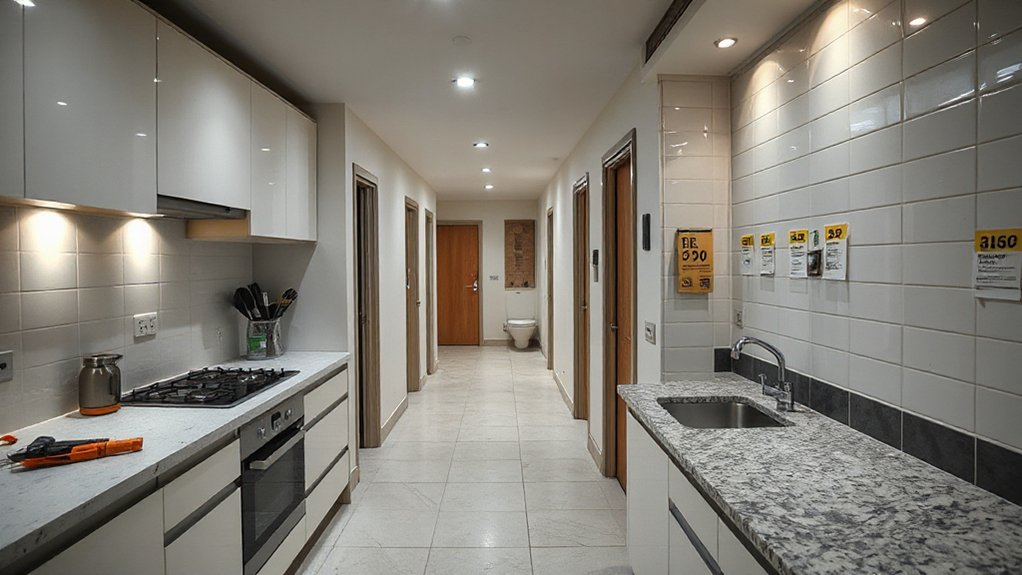
Refurbishing kitchens, bathrooms, and communal areas is a practical investment that boosts appeal, compliance, and durability in HMOs. You’ll prioritise durable finishes, compliant extraction, and easy-clean surfaces to minimise ongoing costs and disruption.
Plan to synchronize layouts with safe egress, adequate lighting, and accessible storage to improve occupancy quality and reduce void periods.
Allocate budgets for robust sanitaryware, water containment, and fire-rated partitions in shared zones, while selecting materials with slip resistance and low maintenance needs.
Consider garden landscaping as a value-add in external amenity spaces that enhances tenant retention and perceived value, guiding lease conditions and landscaping schedules.
Integrate tenant screening insights to avoid high-turnover tenants who strain refurbishment timetables, and establish a clear refurbishment timetable aligned with regulatory checks and utility upgrades.
Furnishings and Fit-Outs: Upfront Costs vs Upgrade Cycles
Furnishings and fit-out costs matter upfront, but the real impact appears in upgrade cycles and lifecycle savings. You’ll balance initial purchases with future resilience, choosing materials and finishes that withstand heavy use and turnover.
When planning, target a predictable cadence for replacements and refreshes to minimize disruption and costs.
- Imagine durable furnishings upgrades that extend life between cycles, lowering total spend over five to seven years.
- Visualize a decor refresh that keeps units looking modern without full refits, reducing downtime and contractor risk.
- Anticipate color, texture, and fixture consistency to simplify maintenance, tenant turnover, and inventory tracking.
This approach keeps budgets tight, occupancy high, and value steady while you manage ongoing HMO performance.
Insurance for HMO Landlords: Buildings, Contents, and Liability
Covering your HMO properly means separating coverage for the building, its contents, and liability. You’ll want a robust buildings policy that covers structural risks, legal costs, and sums insured that reflect current rebuild costs.
Contents cover should protect furnishings, appliances, and security deposits held on behalf of tenants, with extensions for accidental damage and theft.
Liability insurance is essential, including third-party injury and property damage, plus landlord’s legal expenses.
Assess policy excesses and claim histories, balancing premiums against deductible levels.
Consider endorsements for unoccupied periods, student vandalism, and rent guarantee scenarios.
To boost tenant retention, link insurance benefits to marketing strategies—promote reliable cover as part of your risk management package.
Align policies with compliance requirements, ensuring quick access to repairs and minimal tenancy disruption.
Stamp Duty, Tax, and the Long-Term Financial Picture

Stamp Duty and taxes shape the long-term financial picture for your HMO, so it pays to plan now. You’ll face stamp duty on purchase or transfer, plus ongoing tax obligations that affect cash flow and profitability.
With careful timing and structure, you can optimise liability and preserve capital for growth.
- Visualize net cash flow after stamp duty, tax, and ongoing costs to keep debt service sustainable.
- Consider tax reliefs and allowances, such as writing down assets or claiming eligible expenses, to improve margins.
- Plan scenarios for ownership structure, refinancing, and exit strategies to protect long-term returns.
Stamp duty and tax aren’t optional extras; they shape yield, risk, and scalability.
Stay disciplined, model outcomes, and adjust as laws change.
Budgeting Refurbishments: CapEx vs Ongoing Running Costs
When budgeting refurbishments, you must distinguish CapEx from ongoing running costs to protect cash flow and long-term profitability. CapEx covers substantial improvements with extended lifespans, like structural upgrades or new roofing, and gets capitalised against your HMO’s value.
Ongoing running costs include regular maintenance, utilities, and repairs that recur year to year.
For planning, map each refurbishment item to its category, estimate useful life, and set a depreciation timetable.
Budget for garden landscaping as a one-off CapEx project if it adds lasting value, then assign routine upkeep as ongoing costs.
Factor tenant screening expenses into initial refurbishments to secure responsible occupants without inflating ongoing spend.
Align procurement, timelines, and cash reserves to minimise disruption and protect yield across cycles.
Ongoing Maintenance Budgeting: Routine vs. Unexpected
Routine budgeting sets your expected upkeep, while contingencies cover the unexpected repairs and replacements.
You’ll want a clear maintenance schedule, cost baselines, and a plan to fund shortfalls without digging into profits.
We’ll contrast routine costs, planning for contingencies, and the total maintenance schedule costs to shape resilient cash flow.
Routine Budgeting Basics
Budgeting for ongoing maintenance means planning for routine costs as a regular, predictable expense, not a reaction to surprises. You map expected needs, price trends, and cycle timings so cash flow stays smooth. This approach distinguishes routine upkeep from emergencies, helping you forecast with confidence and keep occupancy stable.
- Predictable maintenance windows and their costs, aligned with vendor schedules, so you’re never caught short.
- Clear scales for routine repairs, replacements, and proactive upgrades that protect property value and market appeal.
- A disciplined allocation for Property marketing and tenant screening to sustain demand and minimize vacancy.
Consistent budgeting supports faster decision-making, smoother renewals, and better risk management, making every month more controllable.
Planning For Contingencies
Align this with your ongoing maintenance budget to cover both routine and surprise costs without triggering rent hikes or debt. Track actuals against the forecast and adjust after major incidents or market shifts.
Prioritise tenant retention by addressing urgent repairs promptly, since satisfied tenants reduce vacancy risk during downturns. Consider market fluctuations when sizing the cushion; a modest buffer beats financing delays.
Document assumptions, review annually, and keep stakeholders informed for steady, predictable operations.
Maintenance Schedule Costs
Maintenance scheduling blends predictable upkeep with unforeseen costs to protect cash flow. You balance routine maintenance with reserves for surprises, ensuring occupancy stays profitable and compliant. Your ongoing budget should classify expenses clearly: predictable, variable, and emergency, so you can act fast without crashing cash flow.
Focus areas include garden landscaping and general exterior upkeep, which preserve curb appeal and tenant satisfaction. You’ll also invest in sturdy systems, prompt repairs, and documented tenancy processes like tenant screening to reduce vacancy risk.
1) Predictable quarterly costs (repairs, service contracts, inspections)
2) Emergency reserves for bursts, leaks, or structural issues
3) Maintenance-driven upgrades (energy efficiency, safety, accessibility)
In-House Management vs. Managed Service Costs

In-house management and managed service costs each offer distinct advantages, and choosing between them hinges on control, scalability, and total cost of ownership.
With in-house management, you keep direct oversight of tenant screening, lease agreements, and day-to-day decisions, which can boost responsiveness and alignment with your HMO’s standards. However, you’ll absorb staffing, training, and compliance burdens, plus potential delays during peak periods.
Managed services reduce administrative load, enable predictable budgeting, and provide professional handling of regulatory tasks, but you trade some control and may incur higher ongoing fees.
A hybrid approach can balance cost and control, pairing core functions in-house with specialist support for complex compliance or peak demand.
Evaluate upfront setup costs, ongoing fees, and service levels to optimize long-term profitability.
Vacancy Risk, Rent Collection, and Financial Resilience
- Visualize a calendar marked with turnover windows, showing minimal downtime.
- See automated invoices and reminders ensuring near-perfect rent collection rates.
- Picture a reserve fund that cushions gaps, maintaining operations and property upkeep.
Compliance Penalties: How to Avoid and What Happens If You Slip
Compliance penalties can disrupt cash flow and operations, so knowing how to avoid them—and what happens if you slip—matters. You should implement strict due diligence across licensing, safety checks, and tenancy records to prevent compliance breaches. Regular audits reveal gaps before regulators do, safeguarding your margins.
Maintain clear document trails for gas safety, EPCs, HMO notices, and tenancy agreements; timely renewals reduce risk of non-compliance. Invest in staff training on recording-keeping and incident reporting, because failure-heightened penalties often follow procedural gaps.
If you slip, penalty fines can escalate with repeat offences, impacting cash flow and lender confidence. Use a risk-based calendar to track renewals and inspections, and allocate a compliance reserve to absorb any unexpected costs.
Stay proactive, protect your asset, and minimize disruption.
Financing Your HMO: When the Numbers Pencil Out

Financing an HMO boils down to every pound and penny counting: you’ll need a clear plan that matches projected rental income to upfront, ongoing, and refinancing costs. You’ll map cash flow, debt service, and contingencies to guarantee you can weather vacancies and maintenance.
Align lender requirements with your strategy, and factor in exit costs and stamp duty where applicable. HMO marketing and tenant screening aren’t afterthoughts; they determine occupancy and rent validation, affecting your loan-to-value and refinance timing.
- Cash-flow forecasting: project rents, voids, and improvements to stress-test returns.
- Financing mix: compare bridging, buy-to-let, and energy efficiency funds for cost efficiency.
- Contingency and exit: reserve buffers for remediation, licencing, and refinancing events.
Frequently Asked Questions
How Do HMO Rents Differ by City Across the UK?
City rent variations exist: rents differ by city, with higher values in London and its commuter belts, moderate in the Midlands, and lower in the North. Regional demand drives these differences, shaping your HMO profitability and pricing strategy.
What Hidden Costs Appear at License Renewal Time?
License renewal fees can surprise you, and administrative overhead spikes as you prepare documentation and renewals. You’ll face unexpected checks, extra admin tasks, and potential contract updates; budget for fees, timelines, and streamlined processes to stay compliant.
Do HMO Profits Depend on Tenancy Type (Tupe, Guarantors, Etc.)?
Yes, profits shift with tenancy type, but you stabilize them by strict tenant screening and solid lease agreements; you’ll maximize income, minimize risk, and keep churn low, despite TUPE or guarantor complexities.
How Often Do Safety Certificates Need Updating Beyond Basics?
You should update fire safety and electrical inspections on a schedule: fire risk assessment annually, fire alarms and extinguishers as required, electrical inspections every five years (or per local rules), with remedial work completed promptly.
What Are the Tax Implications of HMO Income Changes?
Tax planning guides you to optimize HMO income changes; you report income carefully, seek allowable expenses, and monitor deductions. You sail steady through thresholds, aligning timing with compliance, so you maximize cash flow while keeping audits at bay.
Conclusion
You’re steering a ship through fog, where every rope and buoy stands for compliance, licensing, and safety. The HMO voyage rewards discipline with clear charting: steady rents, predictable costs, and fewer penalties. Invest in checks, automate renewals, and build reserves like ballast. When the hull creaks, you’ll spot it before the storm. Stay compliant, stay solvent, and let your occupancy be the lighthouse guiding steady returns. The true cost is managed, not feared.