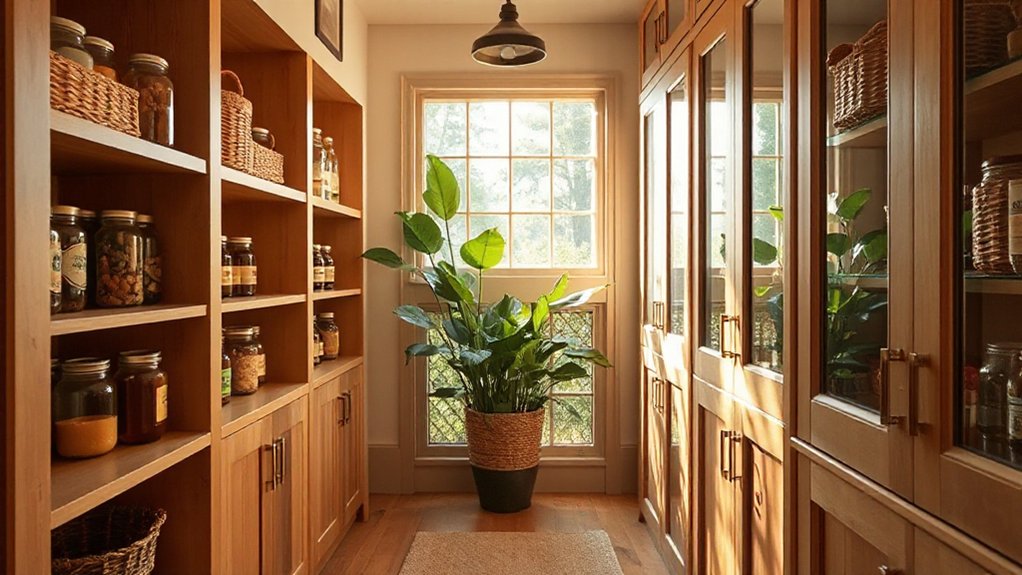
Create a calm, efficient tiny pantry by mapping a clean footprint, prioritizing light, airflow, and visibility. Keep most-used jars at reachable heights and group items into clear zones for staples, baking, and snacks. Choose adjustable shelving, sealed containers, and moisture-resistant finishes. Use a slim door option or pocket doors to maximize space, with soft-close hardware and low-profile thresholds. Maintain a consistent color palette, add lighting, and label jars for quick grabs—and you’ll discover more smart tweaks ahead.
How to Design a Small Walk-In Pantry: Step-by-Step
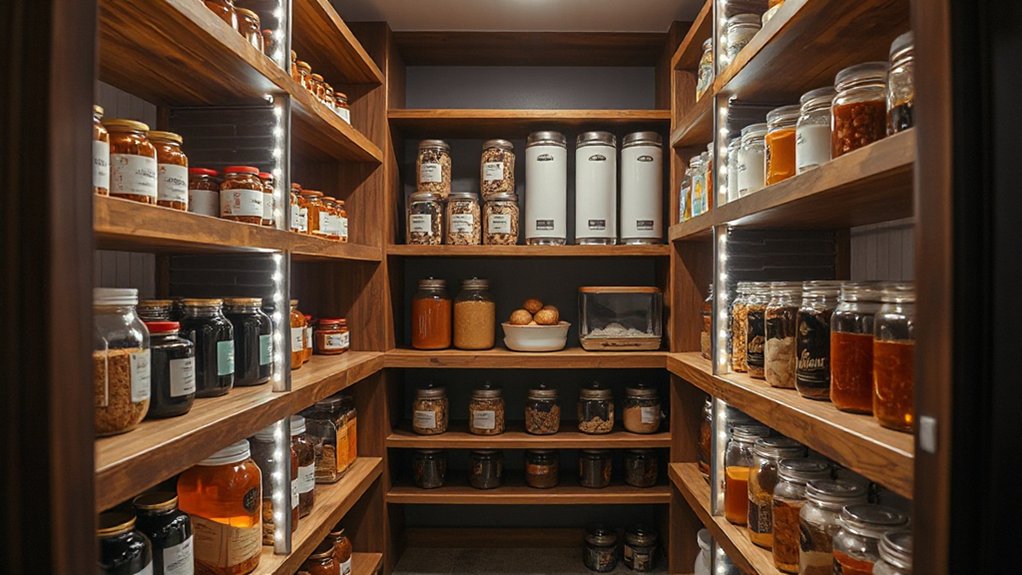
Design a small walk-in pantry that feels open and functional from the start. You map a clean footprint, then prioritize light, airflow, and visibility. Install adjustable shelves at eye level to display pantry decor while keeping bulk items tucked away.
Plan a clear workflow: zone dry goods, beverages, and easy-reach items near the door, with tall storage for canned goods. Choose storage containers that seal, stack, and breathe, reducing clutter and extending freshness.
Use slim, labeled bins for snacks and spices, and glass jars for grains to add a calm, cohesive aesthetic. Incorporate a compact lighting plan and a mirror or glossy back panel to expand perception of space.
Finish with a neutral palette and purposeful hardware for a polished, practical pantry.
Layout Rules for Maximum Vertical Storage
Maximize vertical storage by optimizing vertical shelf height so every inch counts without crowding eye level. Plan for access above the counter—keep frequently used items within reach and lighter items higher up for safer, tidy stacking.
Lean into narrow-aisle efficiency by staggered shelving and clear sightlines to make the most of limited space.
Vertical Shelf Height
To get the most from vertical storage, set shelf heights to match the items you reach most often and leave room for containers, lids, and labels. You’ll gain immediate access without digging, while maintaining a clean, cohesive look.
Prioritize adjustable shelving so you can tune spacing as you reorganize or stock seasonally. When planning, think in zones: baking, snacks, and pantry staples, then tailor each shelf to fit those items snugly.
Use full-width shelves for large canisters and reserve narrower gaps for lids and boxes. Introduce custom shelving to maximize corners and awkward spans, avoiding wasted space.
Add decorative accents—slender baskets, labeled jars, and a small tray—to keep essentials visible. The result feels purposeful, tidy, and visually balanced.
Access Above Counter
Access above counter isn’t just about extra inches—it’s about quick, scampered access to daily staples. You design for visibility, reach, and fluid motion, prioritizing items you grab often. Place the most-used jars and boxes at knee to shoulder height, with seasonal or bulky tins higher still, but reachable.
Keep dividers tidy and labels legible to reduce rummaging. Let decorative accents soften the practical edge without cluttering sightlines, such as a slim, sculptural shelf lip or a single decorative jar that cues organization.
Choose color schemes that cue function: light tones expand perception, darker tones anchor zones. Use uniform containers to maintain a clean line, and one or two accent colors to guide the eye.
The result is efficient storage that still feels calm and curated.
Narrow Aisle Efficiency
Narrow aisles demand smart geometry: shelves that breathe, and paths that stay clear. You optimize vertical storage by grouping tall, shallow units along the walls and reserving a central pull-through for access. Use adjustable uprights so shelves shift with your needs, not the other way around.
Keep floor space open by staggering storage—lighter items high, heavier items low—so you don’t crowd the walk zone. Choose a consistent color scheme to visually expand the space, and let decorative accents occur where the eye travels, not where it bumps into clutter.
Label fronts for quick identification, and install pull-out trays to minimize reach. Let lighting glow along shelves to reveal organization, not shadows, boosting efficiency without sacrificing style.
Pantry Shelving That Saves Space and Stays Strong
When you optimize pantry shelves, you gain both space and sturdiness. You’ll choose slim, adjustable rails and open tiers that let you see every item at a glance, reducing overstock and clutter.
Prioritize vertical storage to maximize wall real estate, using modular units that can grow with your needs. Opt for sturdy materials with moisture resistant finishes, so spills never compromise integrity.
Custom shelving lets you tailor depths to cans, jars, and boxed goods, preventing wasted space and awkward fits. Install reinforced corners and graduated shelves for heavy staples, keeping weight balanced.
A minimal, cohesive finish prevents visual noise while maintaining durability. With thoughtful spacing and reliable construction, your pantry stays tidy, functional, and enduring.
Lighting and Doors That Make a Slim Pantry Feel Bigger
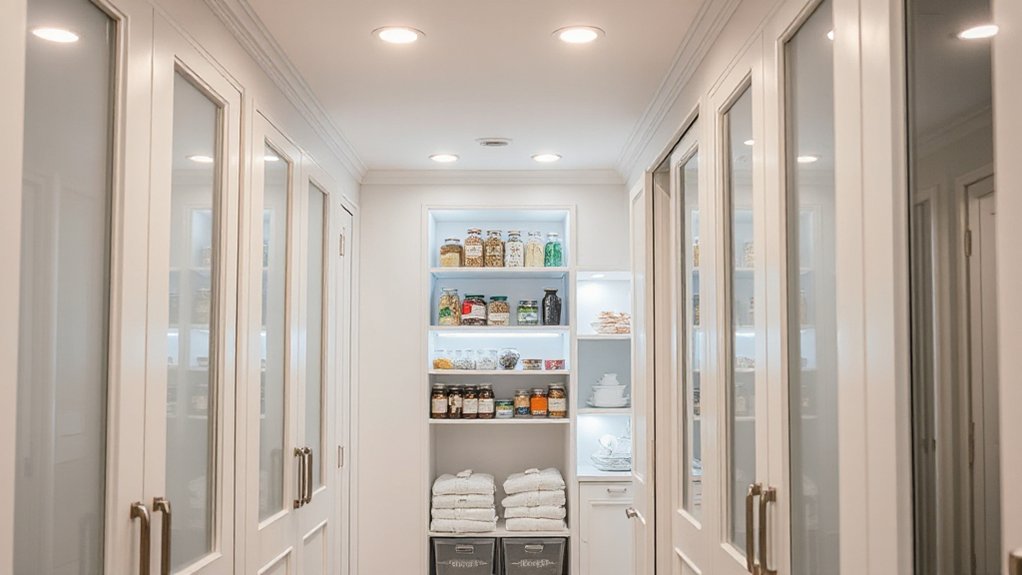
Open doors and smart lighting can instantly expand a slim pantry’s feel. You’ll choose lighting that’s bright but diffuse, so every shelf looks taller and items don’t cast hard shadows. Sensor lighting wakes with your approach, avoiding glare and keeping the space calm when you’re not nearby.
Glass doors reflect light, creating a sense of depth while concealing clutter behind a clean, airy edge. Keep hinges barely visible and frames slim to preserve sight lines. Use frosted or clear glass strategically to balance privacy and openness.
Pair with a light, neutral color palette on walls and shelves to amplify the illusion of space. Install dimmers for mood shifts, so the pantry feels larger during daytime prep and cozier at night.
Doorways and Access for a Narrow Pantry Footprint
When you’re working with a narrow pantry footprint, prioritize doorway clearance and easy access, so every inch serves a purpose. Consider sliding doors for slim spaces or a compact swing that stays out of the aisle, and keep paths clear for quick reach-ins.
We’ll weigh sliding versus swing doors, and share tips to optimize entry width and cabinet reach without crowding the room.
Narrow Footprint Access
For a narrow pantry footprint, doorways and access should prioritize clean sightlines and easy reach, so you can see everything at a glance and grab what you need without twisting or bending. Keep the path unobstructed and doors flush with walls or use pocket doors to minimize intrusion.
Align shelves to maintain a clear carry zone, with more depth at midline for bulk items and shallower tiers for tall bottles. Include corner storage solutions to maximize every inch, such as a lazy Susan or pull-out wedge, ensuring no dead zones.
A compact wine rack integrates style with function, turning limited space into a subtle focal point. Choose slim, multi-height configurations to preserve balance and flow.
Doorway Clearance Tips
Doorway clearance starts with a clear sightline and a smooth path. You optimize the entry by keeping walls free of clutter and choosing a door that doesn’t swing into narrow spaces. Consider pocket or bi-fold options to maximize footprint without sacrificing access.
If you use a hinged door, ensure a minimum distraction-free 32 inches of clearance when opened. Lighting at the threshold helps you see corners and grab items quickly. Choose door hardware with slim profiles that won’t snag pantry shelves.
For tight layouts, prioritize pantry door options that don’t intrude on shelving or walkways. Maintain uniform flooring to avoid trips, and install a low-profile threshold to minimize height changes. These doorway clearance tips blend function with a calm, curated look.
Sliding Versus Swing Doors
Sliding doors can reclaim width in a narrow pantry, letting shelves breathe and access stay effortless. When choosing between sliding versus swing doors, you weigh footprint and flow. Sliding doors glide along a track, saving floor space and reducing door swing conflicts with tall shelves. They feel sleek, modern, and visually lightweight, especially in tight layouts.
Swing doors offer traditional practicality, simpler hardware, and intuitive access without track maintenance, but they encroach on aisle space and risk bumping adjacent items. Consider door hardware quality—soft-close mechanisms, recessed pulls, and durable rollers—to minimize noise and ensure smooth operation.
Finish choices matter too; paint finishes should resist moisture and scuffs for longevity. In small pantries, pairing functional hardware with a restrained color palette elevates the look and keeps pathways clear.
Budget-Friendly Upgrades With Big Impact
Small pantry upgrades don’t have to break the bank; smart choices can transform storage, visibility, and usability in days. You’ll notice big impact from simple swaps that don’t overwhelm the space.
Start with pantry decor that signals function: a cohesive color palette, labeled shelves, and lighting that highlights aisles.
Choose storage containers that maximize vertical space and keep loose items contained, while still feeling open. Clear jars for staples, uniform canisters for cereals, and stackable bins for small snacks make quick decisions effortless.
Install inexpensive adjustable shelving to tailor heights as needs shift.
Add a slim magnetic strip for metal odds and ends, and a pegboard for tools or spice tins.
These tweaks deliver organization, ease, and a polished, approachable look.
Daily Organization Tricks for a Small Pantry
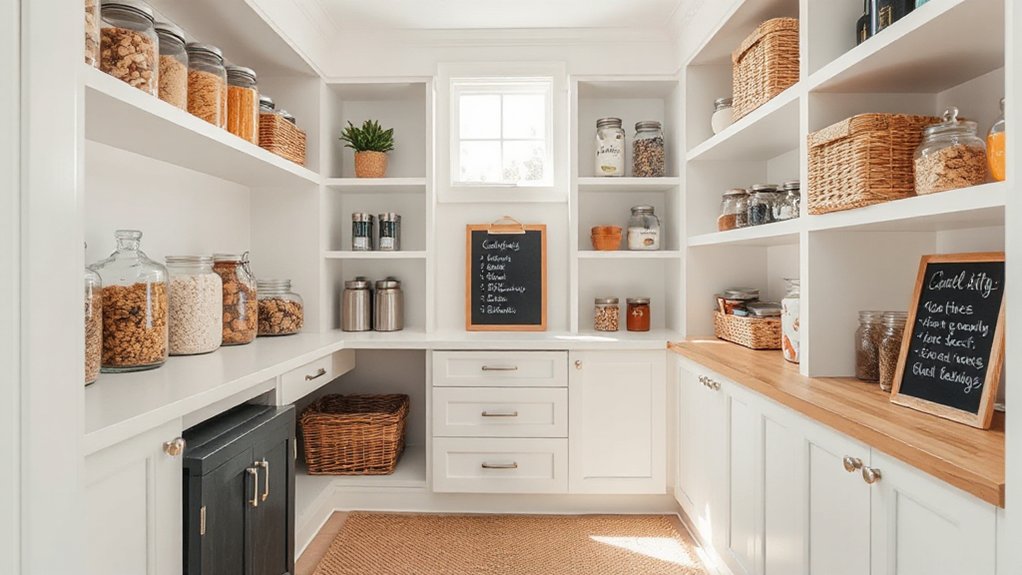
Daily pantry discipline keeps a tight space from feeling cluttered. You optimize every inch by using clear, stackable containers and labeled jars, so you see essentials at a glance. Create zones: grab-and-go staples near the door, baking supplies toward the back, and snacks in accessible bins.
Use uniform heights and colors to reduce visual chaos, letting pantry color schemes feel calm and cohesive. Hang lightweight organizers or magnetic strips for small items, keeping counters clean.
Rotate items monthly to prevent overstock, and write a quick shelf plan to guide restocking. Incorporate decorative accessories sparingly—a single, tasteful jar or a small plant adds personality without crowding.
Maintain a quarterly sweep to preserve order and clarity.
Durable Materials and Finishes for Messy Kitchens
Choosing durable materials and finishes makes messy kitchens feel more controllable in the long run. You’ll prioritize surfaces that resist stains, scratches, and moisture, so daily chaos stays contained.
Opt for matte or soft-gloss laminates in neutral pantry color tones—think warm beiges, stone grays, and muted greens—that hide fingerprints and wear. Quartz or solid-surface countertops offer clean seams and easy cleanup, while sealed porcelain tiles or high-performance vinyl endure heavy use without showing chips.
For cabinetry, select thermofoil or acrylic finishes that wipe down quickly and resist fading. Hardware should be simple and durable, reducing snag points.
Add decorative accents like woven baskets and metal edging to elevate function without clutter, keeping the pantry visually calm and consistently practical.
Maintenance and Long-Term Care for a Busy Pantry
Maintaining a busy pantry is about steady spotting and swift upkeep: set up simple routines that fit your rhythm, then let them run. You’ll protect freshness and clarity with minimal effort, so your shelves stay calm and organized.
Do a quick weekly scan for spills, seals, and dated items, then reset containers to their proper places. Prioritize moisture control by keeping lids tight, using airtight jars, and storing vulnerable foods off the floor or in breathable bins.
Use clear labels and a simple rotation system to prevent waste. Address pantry pests at the first sign—a single crumb or scent warrants action.
Regular temperature and humidity checks help you catch issues early, maintaining longevity and reducing last‑minute fuss. Streamlined maintenance keeps your pantry efficient and inviting.
Frequently Asked Questions
How Do You Plan a Small Pantry Without Sacrificing Counter Space?
Yes—opt for vertical storage, pull-out organizers, and door-mounted racks to maximize space without sacrificing counters. You’ll improve storage organization and space optimization, keeping surfaces clear while you enjoy a clean, aesthetic, practical pantry plan.
What Are the Best Slim Pull-Out Shelves for Narrow Aisles?
You’ll want slim pull-out shelves with adjustable dividers and sliding baskets for your narrow aisle. They maximize visibility, keep items organized, and adapt as you change storage needs, delivering a clean, aesthetic, practical solution.
Can You Install a Pantry Without Compromising Existing Cabinetry?
Yes, you can, and you won’t disturb existing cabinetry if you plan carefully. Coincidences align: you’ll do DIY shelving with sleek panels, and cabinet modifications fit like a tailored pocket. You’ll gain space without compromising style or structure.
What Moisture-Resistant Options Work Best in Tiny Pantries?
Moisture barriers and humidity control protect tiny pantries; choose vapor-rated panels, ~ moisture-resistant shelves, and a low-profile dehumidifier. You’ll maintain dryness, curb mold, and preserve aesthetics while maximizing storage efficiency in compact spaces.
How Often Should You Rotate Pantry Contents and Inventory?
You should rotate pantry contents every 3–6 months, aligning with your rotation schedule, to maintain freshness and avoid waste; track dates, use inventory management notes, and refresh staples first for a practical, aesthetically tidy pantry.
Conclusion
You’ll finish with a pantry that feels planned, tidy, and timeless. You’ll gain clarity from clear zones, accessibility from smart doors, and calm from durable finishes. You’ll maximize vertical storage, optimize layout, and simplify daily routines. You’ll save time, save space, and save stress. You’ll love the quiet efficiency, the aesthetic cohesion, and the practical reliability. You’ll transform clutter into calm, function into beauty, and small into strong. You’ll enjoy a pantry that works—and looks effortless doing it.