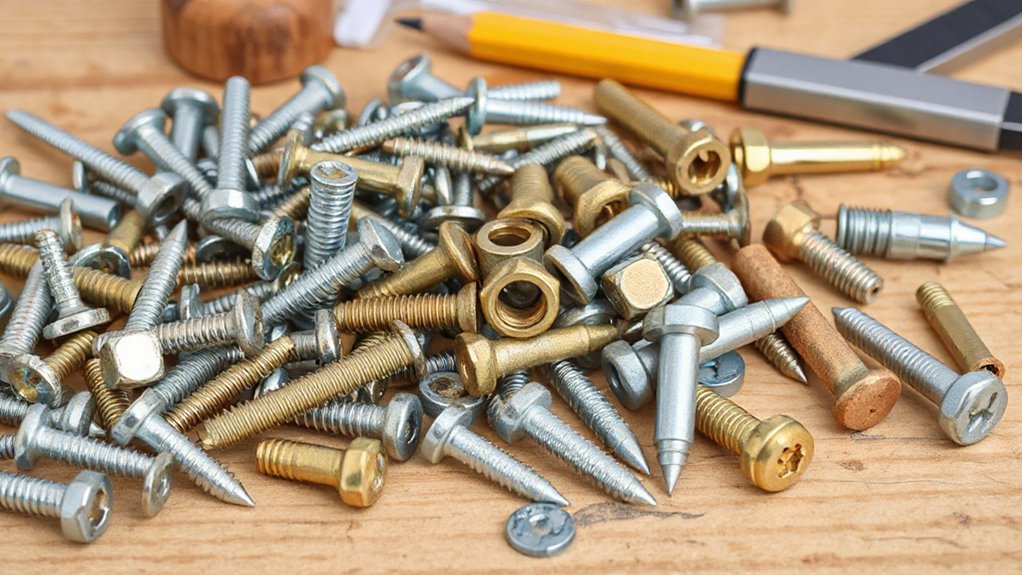
You’ll choose fasteners based on load, environment, and substrate, balancing strength, installation ease, and long-term durability for reliable, cost-effective results. Screws offer strong holding, ideal for hardwoods and disassembly, while nails are faster for framing and softwoods. Anchors suit hollow walls; concrete anchors handle high pullout. For heavy loads, bolts with proper preload are key; outdoor use benefits from corrosion-resistant alloys. Consider cost, tool compatibility, and substrate to pick the right type, then you’ll access better performance as you proceed.
What Fasteners Do and When to Choose Them
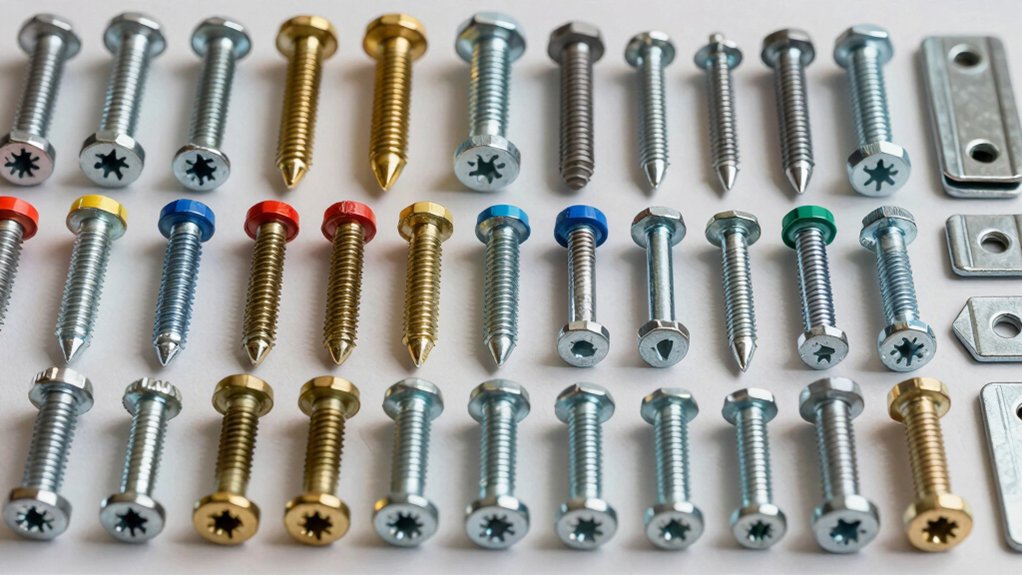
Fasteners hold components together, transfer loads, and keep assemblies stable across materials and conditions. You choose based on function, load profile, and environment.
Fastener types vary in head style, drive, thread, and material, each delivering specific performance. For high shear or tensile demands, you favor bolts or structural screws with appropriate grip length and preload.
In corrosive or outdoor settings, consider stainless or coated options, balancing cost and longevity. When you assess selection criteria, evaluate withdrawal resistance, vibration tolerance, and installation practicality.
If you need rapid assembly with repeatable torque, consider captive fasteners or self-drilling screws. Confirm compatibility with substrates and coatings to avoid galvanic issues.
Always document torque specs, insert depth, and replacement intervals to sustain reliability and power in your projects.
Screws Vs Nails: Which Fasteners Shine in Practice
Screws generally deliver higher strength and holding power in load-bearing joints, but nails can be faster and sufficient for many framing tasks.
The choice hinges on material match and access: screws excel with hardwoods or predrilled holes, while nails suit softwoods and situations prioritizing shear resistance.
Consider ease of use and availability to balance project speed with long-term performance.
Strength And Holding Power
When evaluating strength and holding power, nails and screws behave differently under load, so understanding their mechanics helps you choose the right fastener for each task. Screws resist withdrawal through thread engagement, creating consistent shear and pullout performance when paired with proper pilot holes and substrate.
Nails rely on compression into fibers, delivering rapid seating but variable grip under dynamic stress. You gain predictability by matching load type to fastener geometry: screws excel in joints subjected to withdrawal forces, while nails perform well in shear-dominated connections.
Consider fastener corrosion and material compatibility to maintain long-term strength, selecting coatings and substrates that resist environmental attack. In high-stiffness assemblies, optimize spacing, embedment, and predrill to maximize clamping force without inducing premature failure.
Application And Material Match
Choosing the right fastener hinges on both the application and the material you’re joining; screws and nails each align with distinct substrate behaviors and load paths.
You’ll select screws for high shear resistance, precise clamping, and disassembly needs, especially in hardwoods or pre-assembled joints.
Nails excel in rapid, load-adapted joining of softwoods, where shear transfer is favorable and the material can tolerate slight dimensional shifts.
Consider screw thread engagement, pilot requirements, and withdrawal tendencies when evaluating performance under dynamic loads.
Assess fastener corrosion risks by environment, applying coated or stainless options where you’ll confront moisture or salt exposure.
Material compatibility matters: mismatched hardness, thermal movement, or galvanic pairings degrade joint integrity.
Practically, match fastener type, grade, and coating to substrate, load path, and service life for durable, authoritative assemblies.
Ease Of Use And Availability
Ease of use and availability tilt the practical decision toward screws in scenarios demanding speed, precision, and repeatable results, while nails shine in straightforward, rapid assemblies where simple driving is enough.
You evaluate fastener types by handling, drive systems, and common tooling compatibility. Screws deliver predictable clamping and pullout resistance with controlled overtightening, reducing rework, so their ease of use scales with project complexity and material variety.
Nails excel in speed-focused tasks, enabling rapid assembly with minimal setup and fewer tooling requirements, but sacrifice repeatable torque control.
Availability remains robust for both, yet screws benefit from standardized thread options and broad specialty lines for wood, metal, and composites.
Your choice aligns with task precision, expected longevity, and the required ease of use, balancing efficiency against immediate execution.
Anchors for Hollow Walls Vs Concrete: Pick the Right One
Are hollow walls or concrete surfaces the better anchor base for your project? You evaluate base strength, load path, and installation practicality to choose the optimum anchor.
For hollow walls, you prioritize hollow wall anchors, toggle bolts, and cavity-rated systems that distribute load without breaking the drywall network. Consider stud availability, wall material, and edge distance to prevent brittle failures.
For concrete, you demand high-strength choices like sleeve anchors, wedge anchors, and expansion anchors that resist shear and pullout with predictable performance. Your decision hinges on load type, environmental exposure, and required reuse.
Anchor types must align with substrate rigidity, screw compatibility, and installation torque. Informed selection minimizes retreat risk, maximizes mounting security, and delivers consistent, controllable results for concrete and hollow wall applications.
Bolts and Studs for Heavy Loads: Secure and Accurate
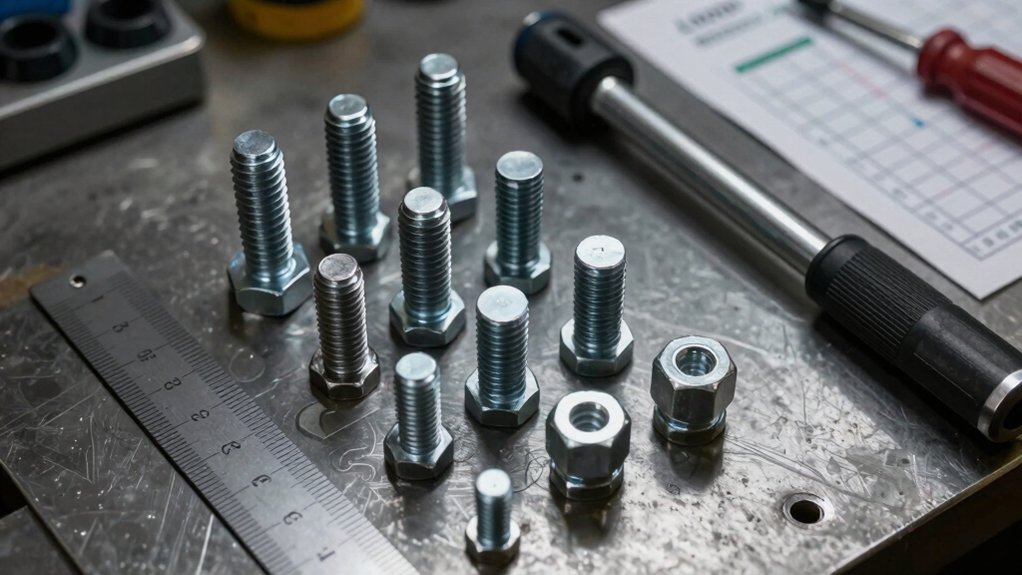
Bolts and studs for heavy loads require accurate sizing, correct threading, and proper embedding to prevent deformation under stress. You select heavy duty bolts and structural studs with precise grip length and thread pitch to match the base material, ensuring load transfer without creep.
Verify bolt grade, coating, and shear strength, then calculate embedment depth for the fixture’s dynamic demands. You’ll align fasteners to engineering tolerances, avoiding under- or over-tightening that can introduce flex or fracture.
Use washers and lock mechanisms to maintain preload and prevent loosening under vibration. Structural studs provide consistent shear paths when reinforcing frames or supports, allowing predictable performance.
In critical assemblies, insist on clean threads, proper substrate preparation, and calibrated torque to realize maximum safe capacity.
Specialty Outdoor Fasteners You Can Trust
Specialty outdoor fasteners bring weather resistance and long-term durability to exterior projects, where exposure to moisture, temperature swings, and UV light tests fastener performance. You select fasteners engineered for corrosion resistance, high-load retention, and secure seating on substrates exposed to the elements.
Use in conjunction with protective coatings and sealants to maximize life cycle performance. These fasteners prioritize installation precision, thread engagement, and pull-out resilience, enabling you to specify correct gauge, length, and head type for each weathered surface.
Decorative finishes enhance curb appeal without sacrificing strength, while Aesthetic options allow coordinated looks with siding, decking, and trim. You avoid compromising longevity by ignoring mismatched materials or improper embedment, ensuring your outdoor system remains steadfast, low-maintenance, and visually authoritative.
Which Fasteners Fit Metal, Wood, or Composites
You’ll match fasteners to substrate by evaluating metal-to-wood fit and the appropriate composite attachment method.
Assess how screw pitch, diameter, and threading influence pullout strength and load distribution in each combination.
This discussion sets the criteria for selecting fixes that maximize joint integrity across metal, wood, and composite assemblies.
Metal-To-Wood Fit
Metal-to-wood connections require selecting fasteners whose shank and coating suit both substrate and environment. You assess load, corrosion potential, and withdrawal tendencies to optimize the metal-to-wood fit.
In practice, you prioritize stainless steel, hot-dip galvanized, or coated carbon steel where exposure demands protection and strength. You choose thread type and length that maximize clamp without inducing wood splitting, accounting for density and moisture.
Fastener compatibility hinges on shank diameter relative to predrilled or pilot holes, ensuring consistent embedment and shear resistance. You verify that coatings resist fungi, moisture, and chemicals while maintaining electrical isolation where needed.
You document performance expectations and installation torque targets, eliminating uncertainty. Precision selection yields durable joints, predictable behavior, and superior structural integrity across wood and metal interfaces.
Composite Attachment Methods
Composite attachment methods require selecting fasteners that perform reliably across metal, wood, and composite substrates. You assess compatibility by substrate hardness, corrosion resistance, and load path continuity, then choose fastener materials matching performance requirements.
For metal joints, use stainless or coated steel with proper thread engagement to minimize galling and creep.
In wood connections, select self-tapping or pilot-driven fasteners that resist splitting while maintaining withdrawal resistance.
For composites, prioritize low-profile fasteners with captive washers and corrosion-resistant coatings to prevent creep and wear.
Fastening techniques should emphasize proper torque control, edge distance, and predrilling to optimize shear and withdrawal strengths.
Match ferrule, washer, and nut types to load direction and service environment, ensuring uniform clamping.
Precision in selection, execution, and inspection guarantees durable, high-performance assemblies.
Installation Quirks That Save Time and Prevent Failure
To save time and prevent failure when installing fasteners, focus on preparation and fit before driving a single screw or nail. You verify hole alignment, drill bit size, and shim consistency, then select fasteners matching material density and load path.
Pre-assembly checks reduce cross-threading and fracture risk, while countersinking and seating depth prevent pullout under dynamic loads. Use appropriate lubrication or thread-locking compounds only when specified, and avoid over-torquing that induces material creep.
Choose compatible coatings to enhance fastener longevity and corrosion resistance, considering environment and substrate. Document batch numbers for traceability, inspect finishes for coating defects, and store materials in controlled conditions to preserve performance.
When you follow these quirks, installation becomes predictable, safer, and markedly more durable.
Choosing by Load and Environment: a Quick Framework
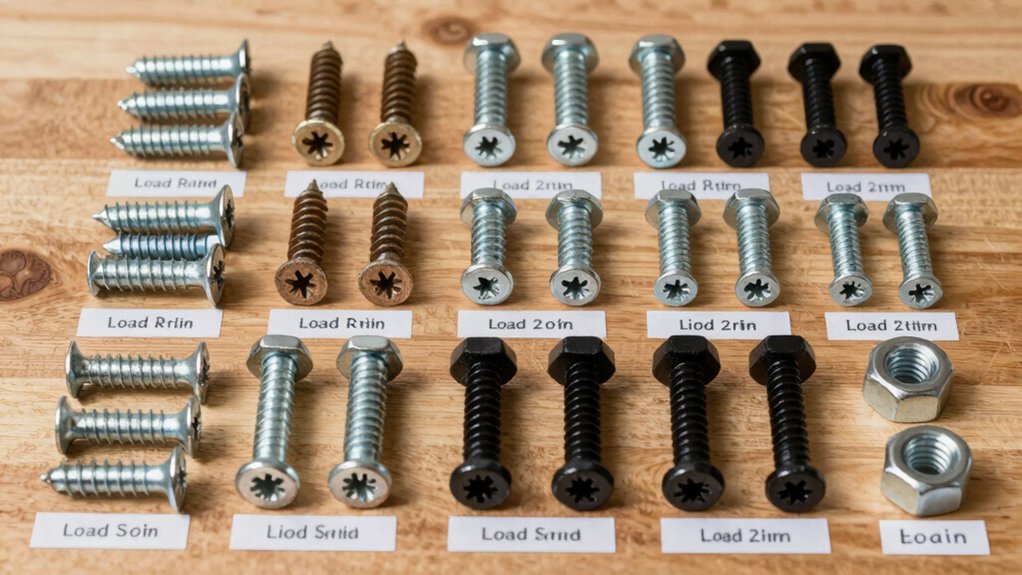
Assess load and exposure as your starting frame: identify actual forces, mounting orientation, and expected duty cycles to size fasteners accurately.
Next, match environment factors—humidity, temperature, and chemical exposure—to material choices and coatings that resist degradation.
Use these two axes to quickly compare options and flag any scenarios that require specialized fasteners or protective steps.
Load Considerations Basics
When selecting fasteners, you must account for load and environment to guarantee safe, durable connections. You assess load capacity by identifying static and dynamic forces, then map how those forces transfer through the joint. Consider weight distribution across the fastener row to prevent localized overloading, and ensure redundancy where failure would be catastrophic.
Material pairings must align with expected loads, corrosion exposure, and temperature range, since mismatches alter effective strength. Choose thread engagement, shank type, and head style that maximize load path efficiency without compromising installation practicality. Document limits for withdrawal, shear, and bending before finalizing hardware.
A precise, data-driven approach minimizes risk, guides installation tolerance decisions, and yields repeatable performance across assemblies. Your framework remains lean: quantify, constrain, verify, and apply.
Environment Assessment Guidelines
Environment matters as much as load when selecting fasteners; a quick, systematic review of exposure, moisture, temperature, and chemical agents determines material compatibility and finishes that resist corrosion and degradation. You ascertain environmental class (indoor/outdoor, wet/dry, chemical exposure) to select fastener materials with proven performance.
Prioritize corrosion resistance as a baseline, then match alloying, coating, and sealants to projected cycles and load duration. Consider galvanic compatibility to avoid galvanic corrosion when dissimilar metals contact each other.
Evaluate temperature swings and UV exposure that can embrittle finishes or weaken coatings. For corrosive atmospheres, choose stainless, hot-dip galvanized, or ceramic-coated options with documented resistance.
Document a decision trail: environment, expected loads, material family, finish specification, and maintenance plan to ensure durable, high-precision assemblies.
Budget Vs Performance: Cost-Effective Picks
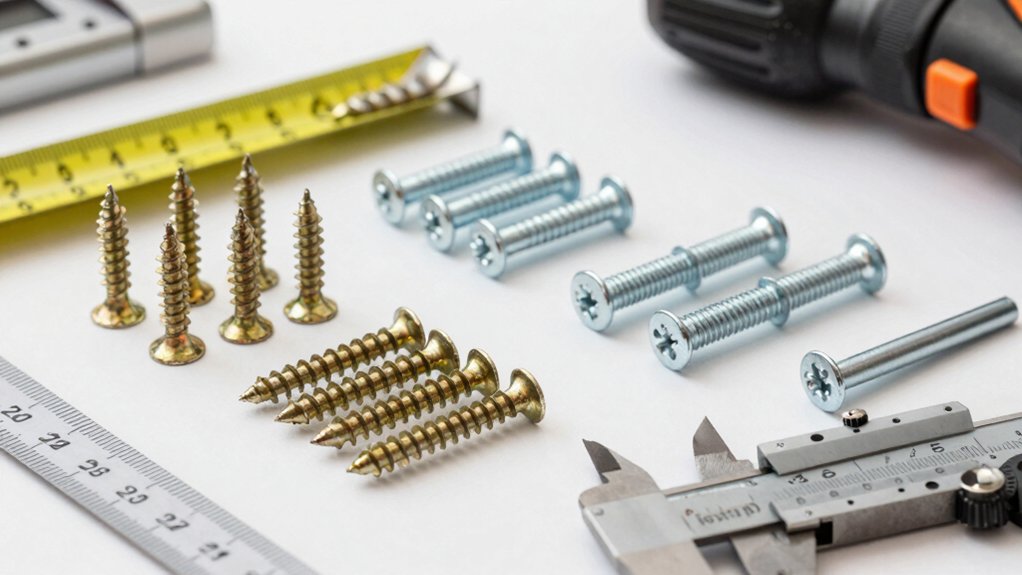
Budget-minded choices must still meet performance needs; in practice, you’ll balance material strength, load requirements, and installation ease to choose fasteners that deliver reliable results without waste. You seek efficiency without sacrificing safety, so compare real-world ratios of strength-to-weight, withdrawal resistance, and torque tolerance.
For cost-conscious projects, stainless steel offers corrosion resistance when exposure is high, while coated carbon steel delivers adequate fastener durability at smaller price points. Aluminum provides light-duty corrosion resistance and ease of handling for non-structural tasks, though strength may lag behind steel.
Nylon and fiberglass fasteners reduce galvanic concerns in dissimilar-material assemblies but can limit load capacity. Prioritize standardized sizes, compatible threading, and manufacturer specifications to maximize performance per dollar and minimize maintenance over time.
Quick-Reference Decision Framework for Projects
A Quick-Reference Decision Framework for Projects streamlines fastener selection by pairing decision criteria with project constraints, enabling you to choose the right type, material, and size quickly. You assess load, environment, and permanence to determine if you need mechanical strength, corrosion resistance, or removable access.
Prioritize compatibility with substrates, installation method, and tool availability to minimize risk and time. Align fastener properties—thread form, head style, and shank length—with functional requirements and aesthetic goals.
Incorporate decorative fasteners when finish quality or visual impact matters, ensuring they don’t compromise performance. Evaluate eco-friendly options for sustainability without sacrificing reliability, especially in high-stress or concealed profiles.
Document decisions to enable repeatable, auditable outcomes and empower future project iterations with confidence.
Frequently Asked Questions
How Do I Calculate Withdrawal and Shear Loads for Fasteners?
To calculate withdrawal and shear loads, you perform fastener load calculations using load direction, geometry, and material properties; estimate shear force via shear stress limits, then compare to resisting capacities to make certain safe withdrawal margins.
Which Coatings Resist Corrosion in Coastal Environments?
Coatings that resist corrosion in coastal environments include marine grade coatings with exceptional saltwater resistance; you’ll select finishes like epoxy and polyurethane hybrids, providing continuous protection, minimizing galvanic issues, and sustaining integrity under aggressive salt spray and humidity.
What Finishes Prevent Wood Splitting When Driving Screws?
Wood grain guides screw tips to prevent splitting; choose sharp, well-matched screws and predrill; finish with clean, even driving, moisture-balanced wood, and appropriate bit types. You’ll minimize splitting, maximize hold, and guarantee durable, professional results.
How Do Temperature and Humidity Affect Fastener Performance?
Lightning crackles as temperature shifts; you’ll see thermal expansion and humidity effects alter preload, joint creep, and corrosion risk, so you tighten gradually, monitor moisture, and select coatings suited to your environment for reliable fastener performance.
Which Fasteners Are Best for DIY Electrical and Plumbing Work?
For DIY electrical and plumbing, use electrical connectors and plumbing fittings rated for your system, with corrosion resistance and appropriate gauge. You’ll guarantee secure connections, proper insulation, and code-compliant performance, minimizing energy loss and leakage while maximizing reliability.
Conclusion
In short, you’ve got a toolkit for every task, from light odds-and-ends to heavy-duty anchors. Choose screws for precision and clean exits, nails for speed, anchors for hollow or concrete bases, and bolts for live loads. Consider material, environment, and load to pick the right fastener, then install with consistent torque and clean alignment. Picture a stair-step chart: correct type, correct size, correct fit—your project stands firm, efficient, and ready for years.