To maximize closet space with a custom organizer system, start by identifying pain points like clutter and wasted vertical space, then set a realistic budget that covers durable materials and installation. Choose a layout that uses high shelves, double-hanging rods, and accessible zones; add adjustable shelving, clear dividers, and pull-out zones for visibility. Maintain order with labeled homes and quarterly tweaks. With modular components, you’ll gain rapid access and lasting efficiency—and you’ll uncover more tips as you continue.
Identify Your Closet’s Pain Points and Goals
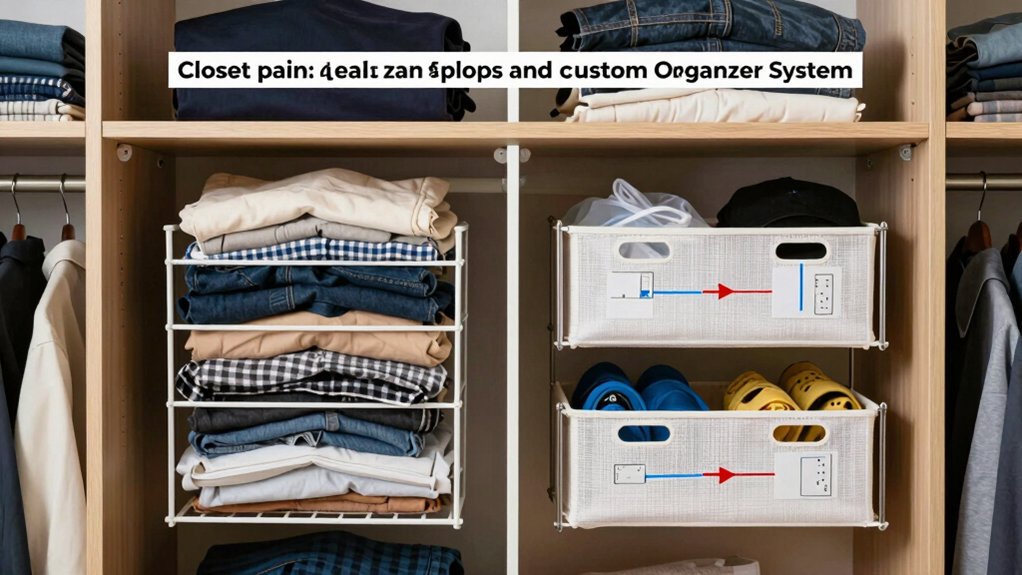
Start by naming the pain points your closet currently creates and your goals for improvement. You know clutter slows you down, items get lost, and mornings feel chaotic. You need a clear, reliable system that supports daily routines and long-term planning.
Focus on optimizing accessibility, visibility, and protection for your wardrobe. Identify specific bottlenecks: mismatched hangers, overflowing shelves, and dark corners that hide garments.
Define goals: faster outfit selection, reduced clutter, enhanced visibility, and durable storage. Plan around clothing organization principles that maximize space without sacrificing access.
Consider closet lighting as a core element to improve readability and reduce misplacement. Align your plan with real needs, prioritizing essential items and scalable solutions to keep consequences measurable and outcomes tangible.
Set a Realistic Budget for a Custom Closet System
To move from identifying closet pain points to implementing a plan, set a realistic budget that aligns with your goals and available funds. You’ll approach budget planning with clarity, prioritizing must-haves over nice-to-haves and benchmarking costs to avoid surprises. A precise budget keeps you focused on value, not vague aspiration.
1) Define core priorities and assign a firm spend cap.
2) Conduct cost comparison across reputable suppliers and materials.
3) Account for installation, delivery, and potential alterations.
4) Build in a contingency to cover unforeseen needs.
Choose a Layout That Maximizes Your Space
Maximizing space starts with a layout that fits how you actually use your closet. Start by mapping daily tasks: where you reach first, what you grab in a rush, and which items sit idle.
Prioritize zones: short accessories at eye level, shirts and pants within easy reach, and seasonal items tucked away yet accessible.
Use a vertical approach—high shelves for rarely used pieces, double-hanging rods for tops and bottoms, and shallow drawers for small items.
Consider a modular system that supports space saving techniques and can reconfigure as needs change.
Favor layout customization that minimizes wasted vertical space and reduces clutter. Keep pathways clear and maintain a clean sightline for quick selection, ensuring each item has a defined home within your space.
Pick Durable Materials and Hardware for Your Closet
Choose durable materials and reliable hardware from the start, since quality you choose today affects long-term performance. Look for solid wood or steel frameworks, corrosion-resistant fasteners, and smooth-operating hinges that handle daily use.
In this section, we’ll outline durability metrics and practical tips to extend the life of your closet system.
Durable Materials Guide
Durable materials and sturdy hardware form the backbone of a closet that lasts, so start with solid plywood or high-grade MDF for all structural panels and, where possible, choose real hardwood fronts for added longevity. You’ll invest in components that hold up to daily use and seasonal shifts, so specify moisture-resistant finishes and reinforced connectors from the start. Consider these essentials:
- Plywood or MDF with edge-banding for clean lines
- Metal hardware rated for weight, with soft-close options
- Durable shelving with minimal sag
- Finishes that resist stains and humidity
For your design, align fabric choices and color schemes with longevity in mind; durable fabrics nearby reduce wear, while cohesive colors prevent rapid style turnover. Your system stays pristine longer, enhancing value and satisfaction.
Hardware Longevity Tips
Investing in hardware that withstands daily use protects your whole system. Choose solid materials rated for continuous load, moisture exposure, and frequent opening and closing. Prioritize corrosion-resistant options, such as stainless steel, brass, or coated alloys, to fight hardware rust over time.
Match finishes to environment: matte coatings for damp rooms, bright finishes for dry areas, and avoid chrome that can chip and expose underlying metal. Ensure screws and anchors are compatible with your closet walls and framing; opt for high-grade screw durability and corrosion-resistant fasteners.
When assembling, tighten to spec without over-torquing, preventing stripped threads and loose components. Regularly inspect hinges, slides, and joints, replacing any worn parts promptly to maintain smooth operation and overall longevity.
Optimize Storage With Adjustable Shelving and Pull-Out Zones
You’ll maximize space by choosing adjustable shelves that shift with your needs, giving you true flexibility as your wardrobe changes.
Zone-based pull-outs organize essentials—tall items, folded garments, and small accessories—without crowding adjacent areas.
This modular approach adapts across seasons and storage demands, delivering consistent, efficient organization.
Adjustable Shelves Flexibility
Adjustable shelves let you tailor your closet to changing needs without a full remodel. With movable panels, you control shelf heights to fit every item, from boots to bags, enhancing storage scalability. You’ll gain quick adaptability for seasonal shifts and new acquisitions, without reconfiguring the entire system.
To maximize impact, consider these steps:
- Set shelf heights to match item categories for instant visibility.
- Reserve zones for frequently accessed pieces to speed daily routines.
- Use evenly spaced tiers to balance load and preserve shelf integrity.
- Reorganize quarterly to maintain optimized access and airflow.
This approach keeps your closet efficient and scalable, empowering a durable, flexible layout that evolves with you, not against you.
Zone-Based Pull-Outs
Zone-Based Pull-Outs combine the precision of adjustable shelving with accessible pull-out zones to maximize efficiency. You design zones for daily items, seasonal gear, and bulk supplies, then deploy smooth-glide trays that reveal contents without full cabinet exposure.
Use adjustable dividers to separate categories, preventing overstacking and confusion. Custom drawer designs let you tailor depths and heights for specific items, optimizing space without wasted gaps.
Hanging rod options can be extended into pull-out sections, offering convenient access to shirts, sweaters, or trousers without tugging from a crowded rail. Align zones to your routine: keep frequently used items forward, reserve rear spaces for backups, and label clearly to maintain order.
This approach delivers fast retrieval, reduces clutter, and preserves long-term organization.
Modular Storage Adaptability
Modular Storage Adaptability builds on zone-based pull-outs by enabling flexible reconfiguration as your needs shift. You gain precision control over how you store items, using modular storage components that adjust to changing wardrobes, hobbies, or spatial constraints.
Adaptability features let you swap shelves, reallocate bins, and create pull-out zones that prioritize accessibility and visibility. This approach minimizes wasted space while sustaining a streamlined, professional look across the closet.
You’ll experience quicker outfit changes and clearer organization with less effort. Embrace these steps:
- Assess current items and vertical space.
- Plan adjustable shelves and pull-out zones for frequent-use categories.
- Implement modular storage blocks that can grow with you.
- Reevaluate quarterly to maintain suitable adaptability features and clarity.
Install Dividers and Accessories for Quick Access
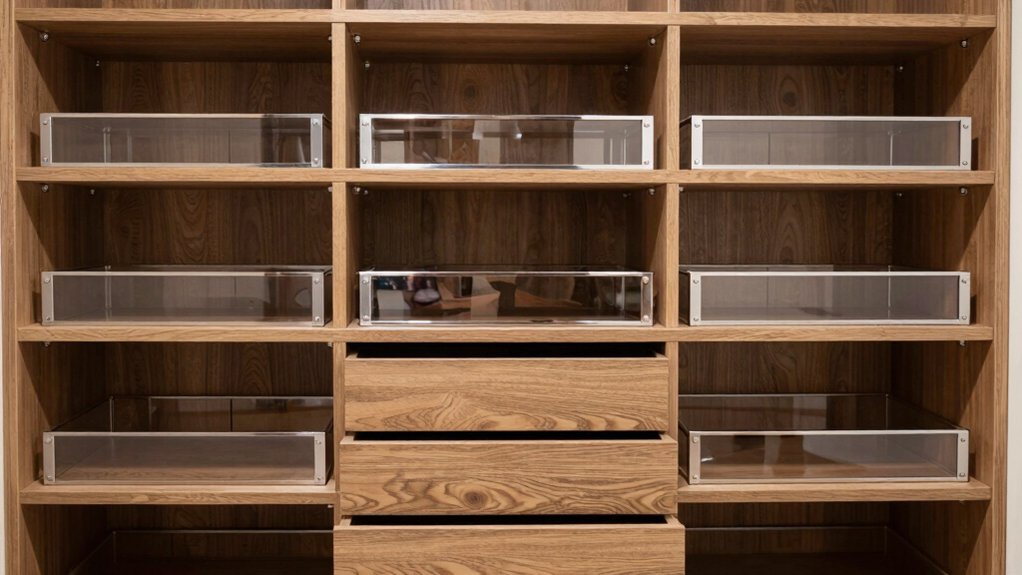
To maximize quick access, install dividers and accessories that keep items visible and reachable at a glance. You should choose adjustable dividers for shelves and drawers, so you can reconfigure as your wardrobe changes. Use clear acrylic or labeled slim dividers to separate categories, reducing rummaging and saving time.
Place frequently worn items at eye level or in front of deeper bins to prevent digging. Integrate drawer organizers to segment small pieces, preventing tangles and misplacement. Include jewelry trays for delicate pieces, positioned near the front of a drawer for rapid selection.
Add pull-out baskets for accessories you rotate seasonally, where containment remains visible. Finally, test accessibility after organizing, adjusting placements to ensure every item is quick to locate and return.
Maintain and Reconfigure Your Closet Over Time
Maintaining and reconfiguring your closet over time keeps it efficient, adaptable, and aligned with changes in your wardrobe. You’ll benefit from proactive tweaks that preserve functionality without overhauls. Use seasonal reorganization to anticipate shifts in attire and frequency of use. Keep maintenance checklists to track wear, adjust rod heights, and refresh hardware as needed.
- Schedule a quarterly sweep to remove unused items and reassess accessibility.
- Label zones clearly and adjust dividers after seasonal changes.
- Inspect hinges, slides, and rails for smooth operation; service promptly.
- Realign shelves and accessories to reflect current habits and wardrobe rotations.
Frequently Asked Questions
How Long Does a Custom Closet Installation Typically Take?
A typical custom closet installation takes 1 to 3 days, depending on space and complexity. You’ll get a clear installation timeline and customization options discussed upfront, ensuring minimal disruption while you upgrade your storage efficiently and stylishly.
Can a Custom System Fit Irregular or Unusual Spaces?
Yes, you can fit irregular spaces with a custom system, adapting shelves and rails to unique angles. You’ll embrace unconventional designs, maximizing every nook while maintaining flow, precision, and a cohesive look that makes your closet truly efficient.
Will My Closet System Increase Home Resale Value?
A well-designed closet system can boost resale value by showcasing home staging and storage optimization. You’ll attract buyers who see organized spaces as functional, durable assets, potentially increasing perceived worth and reducing negotiation time during sale.
Do Custom Organizers Require Professional Maintenance?
Three-in-four closet systems require virtually no ongoing upkeep beyond occasional DIY maintenance, so you can manage it yourself. You’ll save with DIY maintenance, but schedule professional upkeep if components loosen or wear—trustworthy pros handle complex adjustments.
Are There Adjustable Layouts for Seasonal Clothing Changes?
Yes, you can—these systems offer modular components and flexible configurations for seasonal changes. You adjust rods, shelves, and drawers easily, reconfiguring height and access to fit varying wardrobes without tools, maintaining expert organization and efficient space use.
Conclusion
You’ve laid the groundwork, designed with purpose, and stocked your organizer system with purpose-made zones. As you use it, you’ll notice clutter recede and accessibility rise—your closet finally works as hard as you do. Stay flexible: adjust shelves, add a pull-out, and swap dividers as life changes. Think of space as a living tool, not a fixed box; with smart upgrades and consistent upkeep, your wardrobe stays effortless, efficient, and endlessly organized. Your closet, finely tuned.