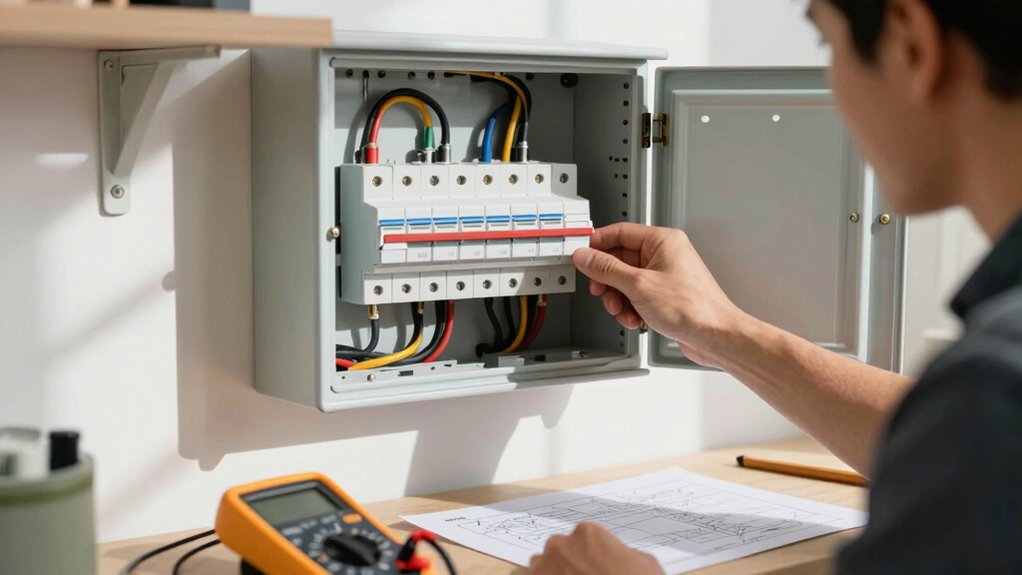
To reset a tripped breaker, first shut off and unplug devices on that circuit to prevent damage. Then flip the breaker fully to OFF, wait a moment, and snap it firmly back to ON with a single decisive movement, listening for a click. Check outlets and appliances for signs of overload or damage, and use a multimeter to test hot and neutral paths. If it trips again, you’ll uncover clues about overloads, shorts, or faulty devices—and there’s more to learn ahead.
Safety First: Prep Steps Before Resetting

Before you touch anything, turn off and unplug sensitive devices on the affected circuit to prevent damage or shock. You’ll prep the scene, not the breaker.
Inspect for obvious hazards: water, frayed cords, or scorch marks.
Confirm you’re wearing dry gloves if available, and stand on a nonconductive surface.
Check that only necessary tools are nearby.
Establish grounding safety by ensuring you have access to a proper ground and a clear path to shut off power if needed.
Label the circuit or breakers clearly before touching anything, so future work avoids confusion.
Document what’s on the circuit for quick reference later.
Keep pets and children away.
Once labeled and safe, you’re ready to proceed with methodical steps.
Reset the Breaker: Step-by-Step Guide
If the breaker has tripped, locate the affected panel and identify the tripped switch, which will be near or above the others and positioned in the opposite direction from on.
You’ll reset by first turning it fully off, then returning it to the on position with a firm, single action. If it feels stiff or won’t stay in, stop and inspect for overload or loose conductors before trying again.
After re-engaging, listen for a click and verify the indicator shows on. Check the circuit diagram inside the panel cover to confirm you’ve restored the correct circuit, and note any unusual heat or burning smells.
Be mindful of breaker types, as some households use dual-pole or smart breakers with different reset procedures. If problems persist, seek a qualified electrician.
Test the Circuit for Root Causes
Start by testing the circuit to pinpoint the root cause, not just reset it. You’ll methodically verify loads and connections, keeping safety first.
Check for a ground fault by inspecting outlets, switches, and fixtures for exposed conductors or moisture. If you find any, address them before reenergizing.
Test neutral and hot paths with a multimeter to confirm continuity and proper resistance values, and note any anomalies.
Consider circuit compatibility—verify breaker rating matches the circuit’s expected load and that any added devices aren’t exceeding capacity.
Tap tested loads one by one to identify abnormal draws, paying attention to trip patterns. If the breaker trips again under load, you’ve narrowed the culprit; proceed to deeper diagnosis or consult an electrician.
Prioritize safety, recheck connections, then restore power only when clear.
Is It Overload, a Short, or a Faulty Appliance?
So, is the tripping caused by overload, a short, or a faulty appliance? First, assess whether a circuit is overloaded by listing connected devices and their amperage. If multiple high-draw appliances run simultaneously on the same circuit, overload is probable.
Next, look for a short by inspecting outlets and cords for exposed wires, melted insulation, or scorch marks; a short will often trigger a rapid, repeated trip.
Finally, consider a faulty appliance if the breaker trips when that device is plugged in or turned on, yet other loads on the same circuit don’t cause trips.
Throughout, prioritize Electrical safety and methodical Appliance testing to avoid guesswork and ensure accurate diagnosis. If uncertainty remains, consult a licensed electrician.
Practical Fixes to Prevent Future Trips
You can tighten up safety and reliability by performing preventive wiring checks and applying overload prevention tips. Inspect outlets, cords, and outlets for wear.
Guarantee circuits aren’t carrying more than their rated load. Use simple steps like redistributing loads, upgrading tight connections, and labeling circuits to prevent future trips.
Preventive Wiring Checks
Preventive wiring checks focus on catching issues before they trigger trips. You’ll inspect connections at panels, outlets, and switches for signs of looseness, corrosion, or damaged insulation that could loosen under load.
Verify that grounding issues are properly bonded and continuous, because a poor ground can obscure fault paths and delay trips when faults occur. Test that wire staples and supports aren’t overly tight or pinching conductors, which can heat and degrade wiring integrity over time.
Look for color mismatches, exposed conductors, or nicked insulation and address them before they become faults. Maintain clear, labeled circuits and document changes to simplify future diagnostics.
Overload Prevention Tips
Overloads happen when you draw more current than a circuit can safely carry, so start by sizing loads and spreading them across multiple circuits. To prevent trips, plan circuit design with balanced loads and avoid overloading outlets, extension cords, or surge strips.
Know your breaker ratings and stay within them; use dedicated circuits for high-draw appliances like space heaters, water heaters, and large tools. Label circuits clearly so you can quickly reallocate if needed.
Use proper gauge wiring for the expected load, and don’t mix lighting and outlets on the same branch if possible. Regularly assess surge and startup currents, especially for motors and HVAC units.
Consider upgrading service capacity if you repeatedly hit limits. Maintain clean panels, tighten connections, and replace worn breakers promptly.
Quick Troubleshooting Checklist
First, you’ll confirm safety and power state before touching anything. Then follow the quick tips to reset safely, trace the circuit cause, and note any tripped breakers or signs of overload.
Finally, use the checklist to verify the reset works and identify the likely source of the trip for faster fixes.
Resetting Safely Quick Tips
If you’ve got a tripped breaker, reset it safely by first confirming the area is dry and free of damage. Then locate the panel and switch the breaker fully to OFF before returning it to ON.
Quick checks save time: confirm no unusual heat or burning smells, inspect nearby cords for damage, and ensure loads aren’t overloaded. Before flipping, verify circuit compatibility—matching the breaker rating to the circuit’s amperage and the connected devices.
If the breaker trips again, investigate potential ground fault indicators or nuisance trips, and reset again only after removing the fault source.
Use short, deliberate actions: switch OFF, wait a moment, then switch ON firmly. If uncertain, pause and consult a qualified electrician to prevent further risk.
Trace Circuit Cause Steps
Trace the fault quickly by isolating variables and tracing from the outlet or device back toward the panel. Begin at the affected outlet or plug, unplug devices, and reset the breaker to test if the fault reoccurs. If it trips again, move to the next device or outlet along the circuit, noting any patterns or shared neutrals.
Use circuit labeling to map which devices live on which breakers; this prevents guesswork during future trips. Check for obvious causes: overloaded outlets, daisy-chained power strips, and damaged cords. If available, perform wireless troubleshooting by disconnecting wireless devices that might draw unexpected surges.
Inspect for signs of short circuits or ground faults, like scorch marks or warmth. Once identified, correct the issue and monitor the circuit to confirm stability.
When to Call a Pro: Red Flags and Next Steps

When a breaker trips or you notice sizzling outlets, it’s time to assess whether you can safely handle it or if a pro is needed. Red flags signal you shouldn’t DIY: recurrent trips, consistent warm outlets, burning smells, buzzing noises, or melted insulation.
If you see sparks, smell burning, or notice scorch marks, evacuate and call emergency services if danger feels immediate. For less severe cues, start with a cautious appliance inspection and circuit review.
Don’t overload outlets, and avoid reseating a breaker that hums or won’t stay on. If trips persist after basic checks, or you’re uncomfortable with any step, contact a licensed electrician.
Electrical safety is nonnegotiable; a pro’s inspection protects your home and prevents future hazards.
Frequently Asked Questions
How Often Should I Replace a Tripped Circuit Breaker?
You should replace a tripped circuit breaker when it fails to reset or shows signs of wear, typically every 10–15 years, or sooner if you notice frequent trips; check breaker compatibility and avoid circuit overload.
Can Water Exposure Cause Repeated Breaker Trips?
Water exposure can trigger repeated breaker trips. Don’t ignore it—prioritize electrical safety, inspect for dampness, and dry thoroughly. If trips persist, call a licensed electrician; you could risk shock, fire, or serious injury. Stay practical, stay protected.
Do Afci/Gfci Breakers Trip Differently Than Standard Breakers?
Yes, they trip differently: GFCI functionality focuses on ground faults, while AFCI safety detects arcing. You’ll feel a nuisance trip sooner with GFCI and broader protection from AFCI against dangerous arc faults.
What Signs Indicate a Panel Needs Replacement?
“Breakers aren’t immortal”—you’ll note panel replacement signs when you see frequent trips, scorched bus bars, corrosion, buzzing, or hot spots. Monitor breaker lifespan, and replace the panel if faults persist beyond expected life.
Are There DIY Tests That Could Void Warranties or Safety?
Yes, some DIY tests can void warranties and risk safety; avoid unnecessary procedures. Follow warranty terms, don’t bypass safety, and consult a licensed electrician. Understand warranty risks, adhere to safety precautions, and document any professional inspections you request.
Conclusion
Picture a ship riding a tempests of circuits. You’re the captain, steady and pragmatic. You reset the breaker, scan the deck for sparks, and dock the culprit with the right fix. You learn which outlets strain the hull, which cords foul the wind, and which appliances slow the journey. Keep the crew briefed, the panels labeled, and the load balanced. When the storm returns, you’ll steering true—calm, prepared, and ready to sail safely home.