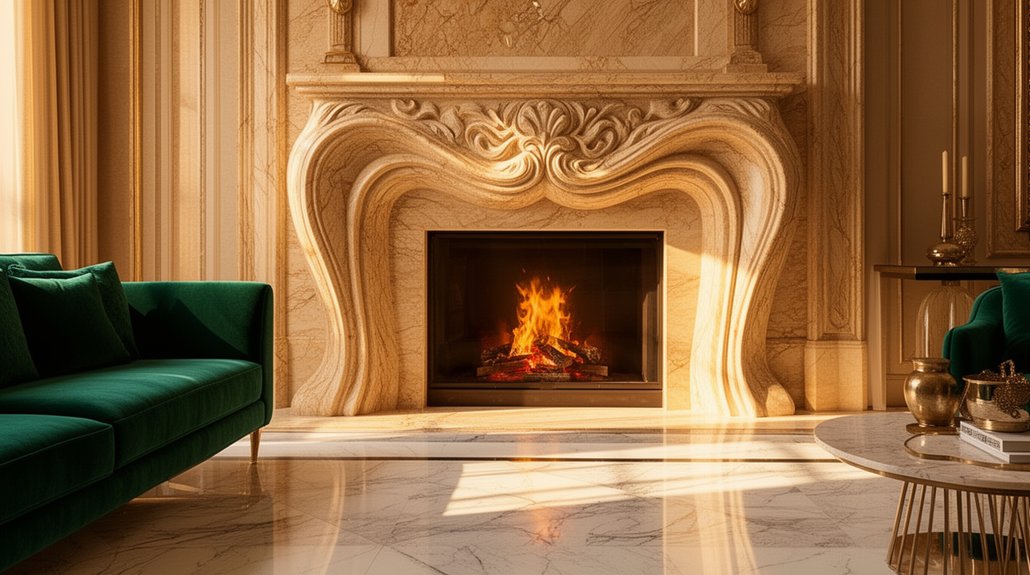
A striking 70% of luxury interiors today feature stone elements carved by hand, underscoring a shift toward artisan precision. You’re drawn to how veins, textures, and finishes transform surfaces into living artworks, while sculptural details anchor rooms with timeless gravity. There’s a balance to strike—between drama and livability, restraint and expression—and the path forward hinges on thoughtful material pairing, durable systems, and maintenance that preserves future value. The next steps reveal a discipline worth pursuing.
Why Hand-Carved Stone Elevates Luxury Interiors
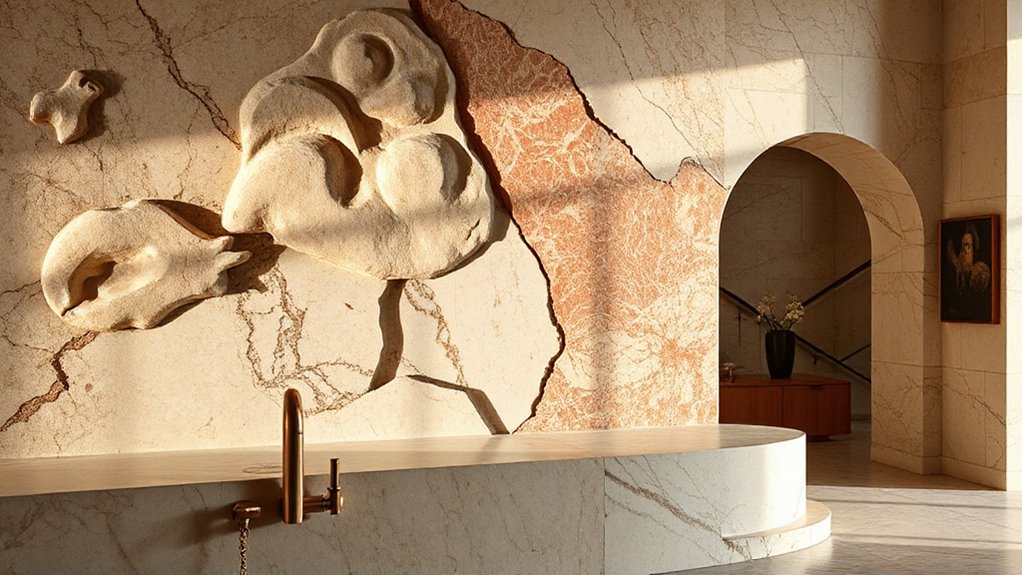
Hand-carved stone instantly signals luxury through its craftsmanship and material richness. When you choose it, you leverage Artisan craftsmanship to convey a tangible sense of care, by design, and durability that lasts generations.
Its depth of texture and weight communicates value beyond mere aesthetics, inviting you to touch and contemplate the material’s provenance. You’ll notice how each motif, carved by hand, carries Cultural symbolism that resonates with heritage, status, and refined taste.
This approach creates a serene, deliberate atmosphere where light interacts with surface nuances, producing refined shadows and highlights. You gain a sense of authenticity that machine-made finishes rarely deliver, reinforcing a curated, timeless appeal.
In practical terms, stone elevates acoustics, resilience, and value retention, supporting a coherent luxury narrative.
How Veins, Texture, and Finish Create Visual Drama
Veins, texture, and finish transform stone from a solid material into a living surface that commands attention. You’ll notice how vein patterns guide the eye, creating rhythm across countertops, walls, and architectural features.
Each vein tells a subtle story, from bold, sweeping networks to fine, spoke-like tracings that punctuate negative space. Texture variations whisper under your touch, adding depth and tactility that elevate tactile experiences in any room.
The finish choice amplifies drama: a honed surface feels restrained and modern, while a leathered or brushed finish heightens contrast and character.
Together, these elements orchestrate visual drama without shouting. You achieve a refined, cohesive aesthetic by selecting stone with deliberate vein patterns and controlled texture variations aligned to your design intent.
Color Palettes and Pairings: Soft Fabrics, Metals, and Lighting
Soft palettes create a serene backdrop for the stone’s character, while thoughtfully chosen fabrics, metals, and lighting reinforce that calm with subtle, high-contrast details.
You achieve textural harmony by balancing matte textiles with polished metal and soft illumination, ensuring the stone remains focal.
Color coordination follows a restrained palette: warm neutrals, cool greys, and earthy accents that echo veining without competing with it.
Fabrics pick up stone warmth or chill, while lighting highlights edge definition and surface depth.
Use metallics sparingly to punctuate rather than dominate, keeping reflections soft.
The result is cohesive, refined interiors where hand-carved stone reads as sculpture, not backdrop, and color relationships feel deliberate, balanced, and timeless.
- Textural harmony through balanced materials
- Subtle contrast with controlled lighting
- restrained color coordination across textures
- Metallic punctuations as refined accents
Signature Applications: Fireplaces, Vanities, and Wall Reliefs
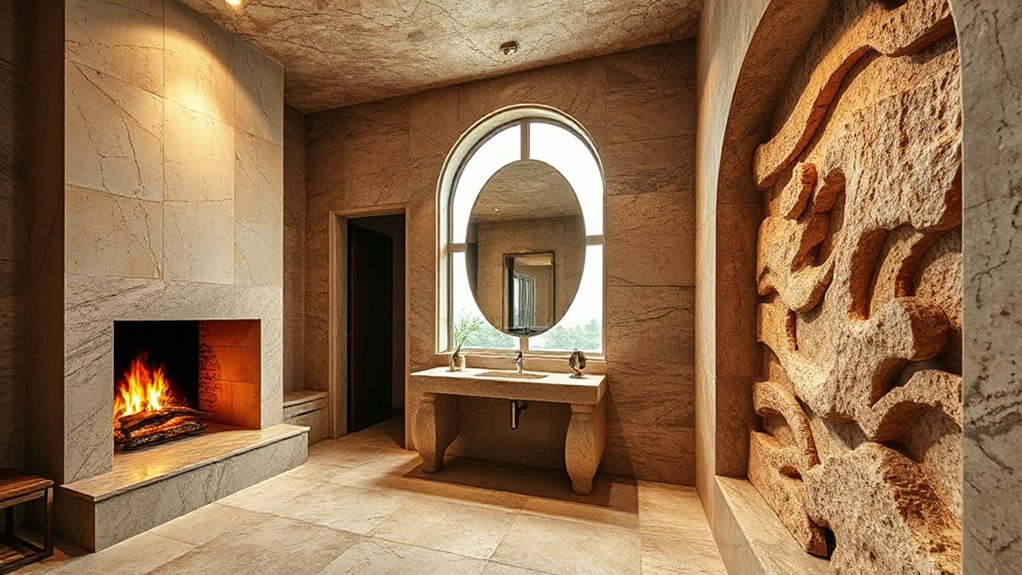
When designed as focal points, hand-carved natural stone elevates fireplaces, vanities, and wall reliefs from functional features to sculptural statements. You witness how natural mineralogy informs texture, vein, and tone, guiding the piece from concept to centerpiece.
In fireplaces, you curate rhythm and depth, letting chiseled margins catch light and cast precise shadows. For vanities, you balance utility with artistry, ensuring seamless integration, ergonomic scales, and tactile surfaces that invite touch.
Wall reliefs become narrative panels, each contour delineating movement, contrast, and harmony with surrounding architecture. Throughout, artistic craftsmanship drives execution, translating vision into durable, elegant forms.
This approach respects material integrity while delivering refined, timeless accents that amplify interiors without overpowering them.
Durability and Care: Maintenance, Restoration, and Longevity
Durability and care are foundational to hand-carved natural stone, ensuring its beauty endures with use. You protect this material by embracing deliberate maintenance, timely restoration, and informed longevity planning. With proper routines, you minimize etching, staining, and wear, preserving intricate texture and color.
- Cleaning techniques: use pH-balanced cleaners, soft cloths, and gentle agitation; avoid acidic or abrasive agents.
- Protective treatments: apply recommended sealants periodically to bolster stain resistance and moisture management.
- Spill response: blot promptly, don’t wipe, and rinse to prevent residue penetration.
- Routine checks: inspect joints, edges, and carved recesses, addressing loosening or crack formation early.
Design Systems for Bespoke, Livable Stone Interiors
You’ll explore how Bespoke Stone Systems harmonize unique textures and dimensions across spaces, creating a coherent, tactile language for your interiors.
Consider how Livable Material Palettes balance warmth, durability, and performance, ensuring every surface feels effortless to live with.
Finally, align Seamless Finish Principles with a refined, uninterrupted flow that elevates hand-carved stone from statement to everyday luxury.
Bespoke Stone Systems
- Modular assemblies tailored to your plan
- Precision cuts, seamless joins, refined edges
- Integrated support for moisture, heat, and wear
- Finish options that celebrate natural variation
These systems empower livable luxury, letting you customize size, curvature, and grade of stone while maintaining consistency across environments. You obtain repeatable aesthetics, easy maintenance, and the assurance that every piece aligns with your vision and the stone’s inherent beauty.
Livable Material Palettes
Harnessing a livable material palette means selecting stone types, finishes, and colorways that remain coherent across spaces while responding to daily use. You establish a design system that pairs durable slabs with complementary textures, ensuring tactile harmony from entry to private retreat.
Prioritize sustainable sourcing to minimize environmental impact and support transparent supply chains, documenting provenance for each material. Favor stone with inherent variation, then curate a restrained color language—neutral bases accented by deliberate, nature-inspired tones—to maintain legibility in evolving interiors.
Cultural influences guide patterning, veining, and surface treatments, enriching texture without fragmenting the palette. Anticipate furniture, fixtures, and millwork early, mapping how each piece echoes the stone’s cadence.
Regularly reassess wear patterns and maintenance needs to preserve coherence while accommodating daily life.
Seamless Finish Principles
- Surface integration across all surfaces
- Texture consistency as a design metric
- Consistent grain, tone, and veining
- Rigorous documentation and inspection standards
Frequently Asked Questions
How Is Hand-Carved Stone Sustainably Sourced and Tracked?
Hand-carved stone is sustainably sourced through certified quarries that adhere to responsible extraction practices. You’ll see traceability methods like chain-of-custody records, GPS-tagged blocks, and digital provenance papers, so every piece can be tracked from quarry to project.
Suppliers also use independent audits and third-party certifications to confirm environmental stewardship, worker safety, and restoration commitments. By requiring transparent documentation, you guarantee sustainable sourcing while maintaining superb artistry and precise, durable installations.
What Are Common Installation Challenges With Large Stone Slabs?
“Every rough edge hides a solution.” You’ll encounter installation challenges with large stone slabs, from weight strain to alignment quirks.
You’ll optimize handling during slab transportation, secure staging, and precise supports.
You’ll address surface prep and seam matching early, harnessing accurate templating.
You’ll schedule space, protect edges, and manage curing times.
You’ll prioritize meticulous Stone polishing and flawless polishing shifts, ensuring seismic compliance and long-term stability.
You’ll communicate specs, train crew, and document every adjustment for repeatable results.
Can Hand-Carved Stone Be Used Outdoors in Climate Zones?
Yes, you can use hand-carved stone outdoors in climate zones, but you must choose materials with proven outdoor durability. Guarantee proper sealing, drainage, and edge detailing to prevent moisture damage.
Assess climate suitability by testing porosity and resistance to freeze-thaw cycles. Regular maintenance matters, too.
If you prioritize outdoor durability and climate suitability, you’ll achieve lasting beauty and resilience in exterior applications, even with intricate hand-carved finishes.
How Do Stone Features Affect Indoor Acoustics and Heat Retention?
Stone features influence indoor acoustics by absorbing and diffusing sound, improving clarity and reducing echoes. They also affect heat retention through high thermal mass. You’ll notice lower reverberation and steadier temperatures in stone-adorned spaces.
Acoustic properties shift with texture and placement, so strategic detailing matters. For efficiency, prioritize high-density slabs and proper insulation to maximize thermal performance.
In short, you’ll gain disciplined acoustics and improved thermal efficiency that support comfortable, refined interiors.
What Is the Lifecycle Cost Comparison to Machine-Cut Alternatives?
You’ll find the lifecycle cost favors machine-cut options over the hand-carved path, due to lower initial labor, faster installation, and predictable maintenance.
Over time, you’ll see cost efficiency from reduced milling downtime and easier replacement parts.
Maintenance needs stay steadier with machine-cut features, while hand-carved elements demand specialized care.
If you prioritize long-term budget stability, machine-cut alternatives generally win, though you may trade artisan uniqueness for predictable upkeep and lower variability.
Conclusion
You’ll see that hand-carved stone isn’t just material—it’s a narrative you live with, shaping spaces that endure. When veins and texture are celebrated through refined finishes, every surface feels sculpted, serene, and eternally relevant. A case-in-point: a boutique hotel where carved marble fireplaces and relief walls define the lobby, blending warmth with grandeur and signaling timeless craft. With thoughtful maintenance and integrated systems, your stone interiors stay pristine, expressive, and unmistakably luxurious for generations.