To arrange a bedroom with two windows, place your bed for light and flow, ideally facing a window or along a clear wall with sightlines. Anchor storage between the openings and keep pathways wide for easy movement. Layer lighting with ambient, task, and accent, and use sheer plus heavier curtains for flexible brightness and privacy. Consider window benches or a slim console to maximize wall space. Want more on color, texture, and layout options? You’ll discover more after this.
Bed Placement and Traffic Flow
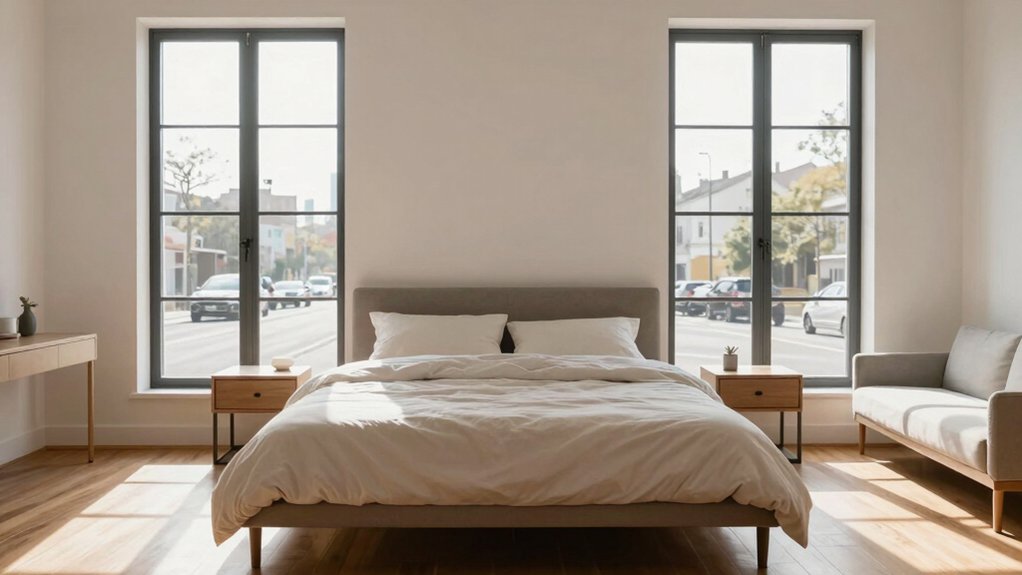
Placing the bed is the anchor of the room’s flow, so start by aligning it with the windows to maximize natural light without glare on your sleeping space.
Position the headboard to face a clear line of sight that doesn’t obstruct traffic, ensuring you can walk around on either side without weaving between furniture.
Consider window alignment so the bed doesn’t block radiating daylight or cast awkward shadows at night.
If you have a window seat, tuck the bed to balance the view while preserving access to the seating area.
Keep pathways wide enough for a couple of steps and a quick exit.
Aim for visual balance, functional routes, and a calm, breathable center.
Maximizing Wall Space With Dual Windows
With two windows, you can treat the wall as a feature instead of a constraint: frame it with furniture that speaks to light and balance. Start by anchoring the space with a slim console or low dresser beneath one window to create a natural focal point without blocking sightlines.
Choose window frame styles that echo your overall mood—sleek minimalism or warm, traditional charm—so the openings feel cohesive rather than competing elements.
Use the other window as a secondary vignette: a compact desk, reading chair, or a narrow shelf that showcases curated decor.
Keep walkways unobstructed by aligning seating and storage along the wall’s length.
Finally, add window sill decor that complements the chosen frame styles without crowding the sill.
Lighting Layers and Window Treatments
A layered lighting approach combines ambient, task, and accent lights to shape mood and function for two-window layouts.
Consider how window treatments—light-filtering and blackout options—sync with switches and dimmers to flexibly control daylight.
Together, they guide the room’s vibe while preserving sightlines and privacy, even in tight spaces.
Layered Lighting Approach
Layered lighting in a bedroom with two windows means more than just turning lamps on and off; it blends ambient, task, and accent lighting to shape mood and function around your windows. You design a hierarchy: soft general light for evenings, focused task light for reading by either sill, and a glow that highlights architectural cues without glare.
Place ambient fixtures overhead or wall washes so daylight forecasts feel natural, then layer task options at bedside and desk height for practicality. Accent lighting accents window frames and artwork, while dimmers let you adjust atmosphere without shifting position.
Remember window security and window maintenance as you select fixtures and cords. Choose cords and plugs you can tuck away, and ensure easy access for routine checks.
Window Treatment Strategies
When you pair lighting layers with window treatments, you boost both function and mood in a two-window bedroom. You balance daylight, task light, and ambience by coordinating curtain styles with shielding options.
Opt for sheer curtains to wash mornings with soft glow, then layer with heavier drapes to control glare and privacy. Curtain styles matter: pick rod-pocket or modern grommets for clean lines, or a tailored panel for formal polish.
Consider window shutters as a sturdy, timeless counterpoint to fabric; they offer instant blackout and crisp, architectural contrast. For flexibility, combine adjustable blinds behind light curtains, so you sculpt brightness without sacrificing texture.
Finally, align hardware finish with fixtures to unify the scheme, ensuring a calm, practical retreat.
Storage Solutions That Complement Two Openings
Two windows frame the room, so opt for storage that sits snugly between them rather than across from them; this keeps the flow open and makes the most of natural light. You’ll want solutions that feel integrated, not bulky.
Choose a low-profile cabinet or a modular unit that aligns with sill heights, so visibility isn’t blocked and foot traffic remains calm. A window bench offers dual purpose: seating and a hidden shelf for linens or seasonal items.
Use decorative curtains to frame each opening, creating soft boundaries without crowding. Install pull-out drawers under the bench for quick access to daily essentials.
Floating shelves above the bed can store small items while preserving floor space. Avoid oversized chests; precision saves room and mood.
Color Schemes and Textures for Balanced Light
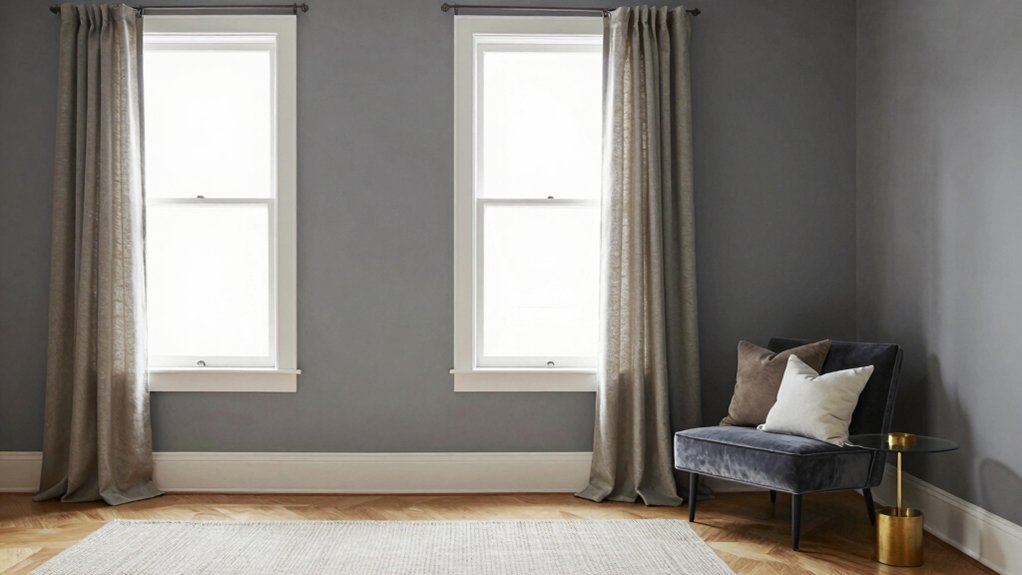
You’ll balance light by pairing Balanced Light Tones with soft neutrals that bounce daylight between both windows.
Use Textural Layering Ideas like woven fabrics, matte paints, and subtle sheens to add depth without stealing brightness.
Keep contrast gentle and consistent so the room feels airy, cohesive, and warmly lit from every angle.
Balanced Light Tones
Balanced light tones rely on soft, luminous colors paired with varied textures to keep the room inviting without feeling flat. You pick a pale palette—ivory, beige, and whisper-gray—as a base, then add subtle contrast through fabric, finish, and surface texture.
Think matte walls with a satin sheen on trim, and a plush rug to anchor the space. Introduce depth with woven baskets, velvety cushions, and smooth ceramic surfaces that catch daylight differently.
Decorative accents should feel purposeful, not cluttered, so choose a few statement pieces that reflect your vibe. Ceiling fixtures become anchors for mood, casting warm pools of light that balance window brightness.
Keep lines clean, scale balanced, and textures varied to preserve openness while enriching tactility.
Textural Layering Ideas
Pair soft, luminous fabrics with varied textures to sculpt a cohesive, balanced light in a two-window bedroom. You’ll blend textural contrast across surfaces to keep daylight tactile, not flat.
Begin with fabric layering: drapery, a quilted cover, and a velvet throw create depth without absorbing too much glow. Pair matte weaves with glossy finishes on pillows and lampshades to bounce light differently, every layer signaling purpose.
Introduce rattan, boucle, and linen for subtle variance that reads as deliberate nuance rather than clutter. Keep color restrained but intentional; cool neutrals with warm accents balance the room’s temperature visually.
Use scale contrasts—oversized cushions beside compact ones—to guide the eye. This approach preserves brightness while cultivating tactile interest, ensuring the space feels calm, inviting, and thoughtfully composed.
HVAC, Privacy, and Window Accessibility
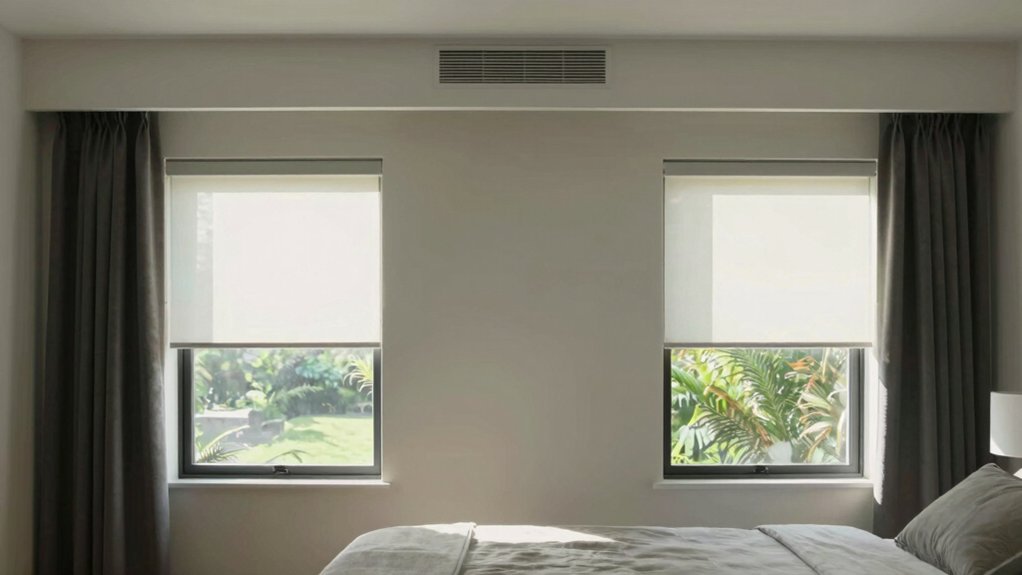
When you arrange a bedroom with two windows, start by balancing airflow and natural light so HVAC performance isn’t compromised; good placement keeps temperatures even and reduces drafts. You’ll position beds and desks to avoid blocking vents and allow easy reach to controls.
Consider privacy options that don’t trap heat: choose window treatments that filter light without sealing the room, like layered blinds paired with sheer curtains. For accessibility, ensure handles, sills, and cords aren’t in awkward reach zones, and leave clear paths for opening egress.
Use soft, reflective surfaces to bounce light while maintaining energy efficiency. Integrate HVAC returns with minimal obstruction, and test after setup to confirm even temperatures.
Clear, purposeful options minimize clutter and maximize comfort.
Conclusion
You’ll wrap the room in calm, not clash, as you learn to read light like a quiet hum. With two windows, think soft boundaries—curtains that drift, blinds that hide secrets, and colors that kiss rather than shout. Let traffic weave around bed and seating without apology, while playful textures keep the air honest and lived-in. Storage gently tucks away excess, HVAC keeps it comfortable, and privacy stays respectful. In balance, the space whispers welcome, never overwhelming, always easy on the eyes.