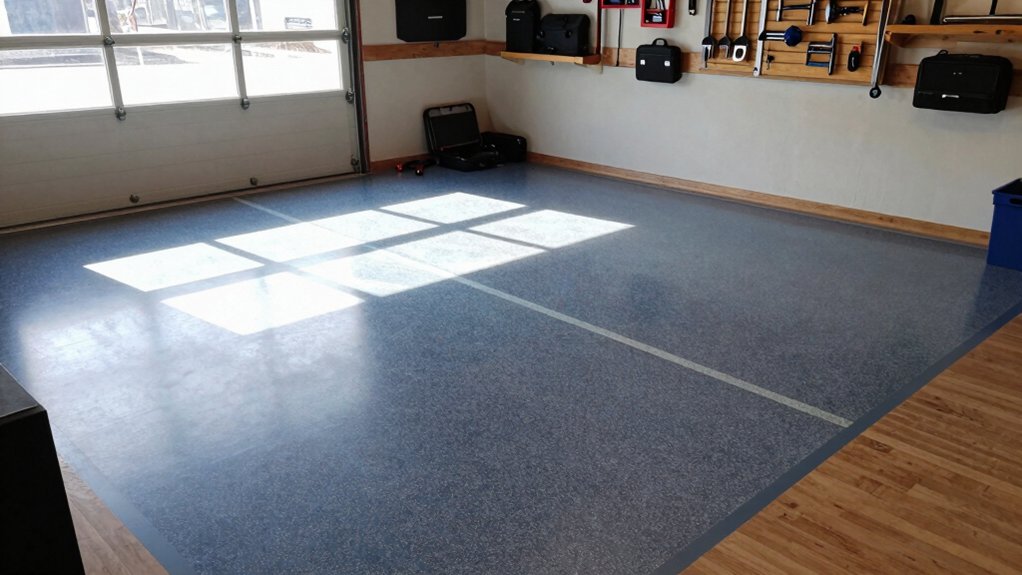
When you choose a garage floor for multi-use spaces, prioritize durability, slip resistance, and moisture tolerance—think sealed concrete, epoxy, or porcelain tiles. Consider load-bearing needs, how you’ll manage spills, and embedded traction for safety. Compare material performance, maintenance, and installation implications, then plan for color or patterns that define zones. The right choice balances longevity with easy upkeep, while leaving room for future changes—so you’ll want to explore options that adapt as you add activities.
Durability and Load-Bearing Capabilities

A garage floor must support a variety of loads—from vehicles and equipment to foot traffic and stored items—without cracking, deflecting, or failing. You choose a surface with high compressive strength and appropriate modulus to resist point loads and rolling loads.
Concrete mixtures should favor low water-cement ratios and adequate aggregate size to reduce permeability and improve wear resistance. Consider reinforcement options—rebar or fibers—to limit crack propagation under temperature shifts and heavy use.
Subbase integrity matters: a well-compacted, properly graded substrate minimizes settlement and frost heave. Specify curing methods that minimize shrinkage and curling.
Surface density, abrasion resistance, and impact tolerance determine longevity in multi-use contexts. Plan for maintenance cycles that address early wear patterns, restoring planarity and load transfer efficiency over time.
Safety Features and Slip Resistance
To prevent slips and falls in multi-use garages, prioritize surface texture, traction aids, and edge safety features that work together under varying conditions. You’ll evaluate tread patterns, microtextures, and flatness to maintain footing on wet, oily, or dusty floors.
Choose slip-resistant coatings or aggregates that meet relevant standards and resist wear in high-traffic zones. Integrate traction aids like anti-slip mats or embedded grit in progressions between work areas, ramps, and entry points to reduce sudden slips.
Edges deserve attention too: rounded corners, anti-slip edging, and clearly marked boundaries help prevent missteps on stairways, ramps, and platform edges. Maintain cleanliness, inspect regularly, and reapply coatings as wear shows.
Your goal is predictable, continuous grip without compromising mobility or safety.
Porcelain, Epoxy, and Concrete: Material Comparisons
Porcelain, epoxy, and concrete each offer distinct performance profiles for multi-use garage floors. You’ll evaluate hardness, durability, and installation impact to match your space.
Porcelain tiles resist chemical exposure and staining, but require precise substrate flatness and dedicated grout lines; expect higher upfront costs and slower install.
Epoxy coatings deliver seamless, easy-clean surfaces with strong resistance to chemicals and abrasion, yet can peel if substrate prep is incomplete or humidity is high.
Concrete floors provide budget-friendly, rugged substrates with customizable finishes and good long-term wear, but cure times and surface porosity demand proper sealing and curing.
Consider maintenance access, expansion joints, and load distribution when choosing. Your decision should align with traffic patterns, spill risks, and budget, balancing durability with installation practicality.
Maintenance, Cleaning, and Longevity

Establish a consistent cleaning protocol that targets high-traffic zones and spillage promptly to protect durability.
Track wear patterns and schedule periodic maintenance checks to extend longevity and performance.
Keep clear, concise records of products used, surface conditions, and any repairs to inform your upkeep plan.
Cleaning Protocols Durability
When you clean garage floors intended for multi-use spaces, durability hinges on choosing the right regimen and sticking with it. Start with a schedule that matches traffic patterns and contaminant types, not guesswork. Sweep or vacuum daily to remove grit that abrades coatings, then mop with a manufacturer-approved cleaner suitable for the floor’s material. Rinse thoroughly to prevent residue buildup that attracts dirt.
Use pH-neutral cleaners on epoxy or polyaspartic surfaces to preserve gloss and cure. For concrete, follow a proven degreasing protocol before sealing; avoid harsh solvents that can degrade densifier or sealers. Dry surfaces completely to prevent water intrusion and mold.
Test cleaners on small areas first, and document outcomes to refine the protocol over time. Consistency drives measurable durability gains.
Longevity Maintenance Plan
A longevity maintenance plan couples routine cleaning with targeted upkeep to extend service life and preserve performance. You establish a regular cleaning cadence, then tailor maintenance to material and exposure. Schedule inspections for wear, loosening, and coatings, addressing issues before failures.
Use manufacturer-recommended cleaners and pH-neutral solutions to avoid surface damage, and rinse thoroughly to prevent residue buildup. Seal or recoat high-traffic zones per timeline or wear indicators, prioritizing joints, edges, and concrete penetrations.
Apply protective mats in entryways to reduce grit ingress and abrasion. Track service intervals, material warranties, and repair costs to optimize budgeting. Document cleaning agents, temperatures, dwell times, and incident responses for reference.
This proactive plan minimizes costly downtime, preserves color and gloss, and sustains performance across mixed-use environments.
Aesthetics, Color, and Customization

Colorful finishes and personalization options let you tailor your space for style and function without compromising durability.
You’ll evaluate colorfastness, slip resistance, and maintenance needs to pick options that stay sharp after heavy use.
Start with practical palettes and modular accents, then layer in customization features that support multi-use performance.
Colorful Finishes
Consider how color choices can transform function as well as feel in a garage. Colorful finishes give quick visual cues for zones, traffic flow, and safety. You’ll benefit from choosing high-contrast combinations for steps, edges, and storage aisles, aiding visibility and reducing missteps.
Use durable, UV-stable pigments that resist fading in light exposure and chemical contact. Epoxies, polyurethanes, and quartz-filled systems offer wide color ranges and gloss levels; matte finishes hide minor imperfections while maintaining cleanability.
Coordinate with tools, shelves, and workbenches to create cohesive workflows, not chaos. Test samples under your typical lighting and traffic patterns, recording wear and ease of cleaning.
Avoid overloading with overly bright or busy palettes that hinder focus. Favor purposeful tones that reinforce zoning and maintenance efficiency.
Personalization Options
Personalization options let you tailor your garage’s aesthetics and function without sacrificing durability. You’ll pick finishes, colors, and textures that resist wear while aligning with your space’s use.
Start with a base system that supports customization without compromising performance. Choose color-fast coatings or epoxy blends that resist fading, chemical exposure, and heat cycles, so you won’t repaint yearly.
Add decorative flecks, metallic accents, or matte sheens to hide grime and simplify maintenance.
Consider patterns or zoning to differentiate work zones, storage, and loading areas, improving flow and safety.
If you expect moisture or heavy traffic, select add-ons like anti-skid aggregates or sealers that lock in gloss and reduce glare.
Finally, document color codes and material specs for future repairs.
Installation Tips for Multi-Use Spaces
Installing multi-use garage floors requires solid preparation and a clear plan: start with a clean, dry substrate, repair cracks, and make certain the surface is level within tolerance before applying any coating. You should work room by room, declaring zones for vehicles, workbenches, and storage to minimize cross-traffic during cure.
Cleanliness matters: remove dust, oil, and residue with a degreaser, rinse, and dry thoroughly. Verify humidity and temperature meet the coating’s specifications; allow extra curing time in damp or cool conditions.
Mix products as directed, avoid extended open times, and apply in uniform coats using a consistent technique. Use the recommended roller or squeegee pattern, and back-roll to eliminate ridges.
Inspector-approved dry-to-touch times ensure traffic-safe results before declaring space ready for use.
Frequently Asked Questions
How Do I Budget for a Multi-Use Garage Floor Renovation?
You’ll set a budget by itemizing materials, labor, and contingencies, then assign a symbolic safety margin as a percentage you won’t touch. You’ll compare alternatives, track costs weekly, and adjust decisions to stay within your target total.
Which Garage Floor Lasts Best Under Extreme Chemical Exposure?
Urethane-applied epoxy floors resist many chemicals but lose gloss and adhesion with ketones; polyaspartics handle aggressive solvents better. For extreme chemical exposure, consider a vinyl ester or cementitious approach, plus continuous surface sealing and proper cure.
Can I Install a Floor While Vehicles Are Still in the Space?
Yes, you can, but don’t spill vehicles or fumes. Move them aside, prep the floor, and cure periods matter. Coincidentally, you’ll notice smoother adhesion when you remove confined vibration, so schedule downtime and ventilate thoroughly.
What Is the Environmental Impact of Common Garage Flooring?
The environmental impact varies by material, but you’ll cut emissions with concrete or epoxy recyclables and heat-resistant composites; you’ll increase waste with solvent-based coatings. You’ll optimize by choosing low-VOC options and proper disposal.
How Do I Prepare a Budget-Friendly DIY Installation Plan?
Scratch that—start with a budget: measure space, list must-haves, compare DIY kits, factor tools, primer, sealant, and underlayment. You’ll save money, allocate contingencies, and finish efficiently; as they say, plan thin and cut once.