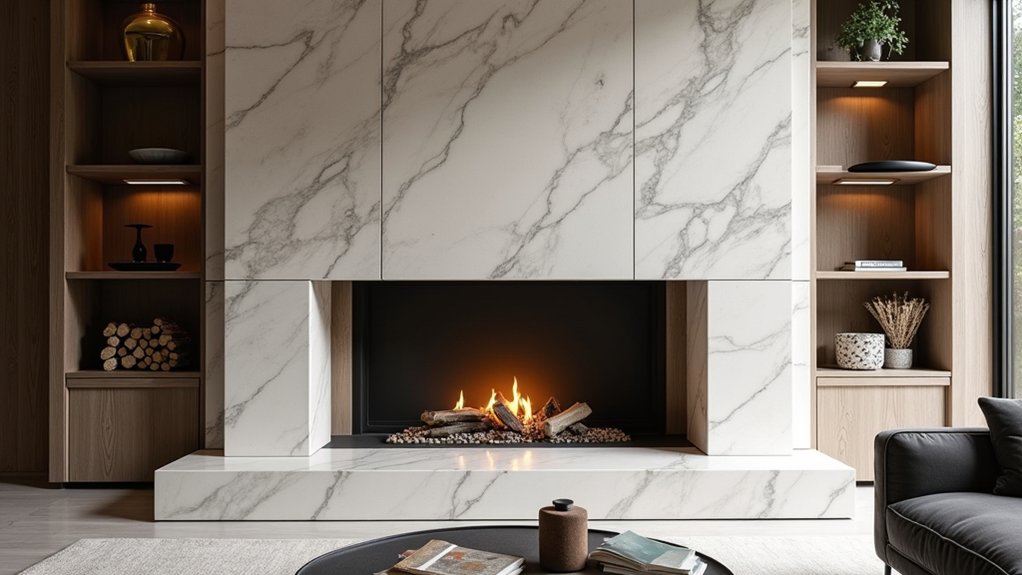
As marble whispers power and permanence into a room, you’ll notice how its veining and finish set the tone for luxury. You choose balanced undertones, precise edge profiles, and a mantel that speaks to refined restraint. The decision—polished, honed, or leathered—defines texture and light play, while thoughtful pairings with textiles, metals, and woods anchor the space. Stay tuned to how scale, lighting, and craftsmanship align to create a timeless focal point.
Why Marble Sets a Luxe Tone in Living Rooms
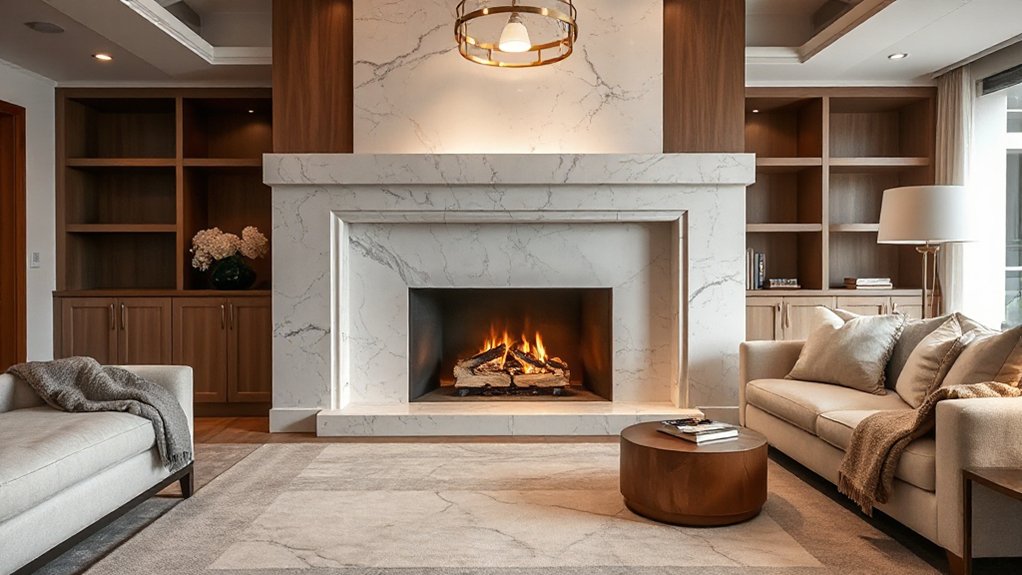
Marble instantly elevates a living room because its natural veining and luminous surface create a focal point that feels both timeless and luxurious. You recognize that marble sets a luxe tone through its inherent honesty: premium material, refined texture, and deliberate balance with other finishes.
In practice, this translates to confident decisions about scale, layout, and lighting, ensuring the stone commands attention without shouting. When you plan marble installation, you prioritize precision joints, correct substrate, and professional sealing to preserve brightness and prevent staining.
Marble sourcing matters, too; you select quarries and slabs that match your design intent, color, and veining intensity. The result is a cohesive aesthetic where craftsmanship, durability, and visual impact reinforce a high-end living room narrative.
How Vein and Undertone Decide Marble Mood
Veins and undertone govern the mood of marble, shaping everything from atmosphere to perceived movement. You assess a slab by its vein pattern and undertone influence, knowing these cues set the tone for a high‑end room.
Heavier, dramatic vein patterns convey gravitas, directing eye flow and anchoring focal points without overpowering real architectural lines. Lighter or feathery veining creates a sense of airiness, enhancing openness and complementing restrained palettes.
Undertone influence matters as much as color; cool undertones tend toward modern minimalism, while warm undertones invite warmth and hospitality.
Consider continuity with surrounding materials, ensuring vein rhythm aligns with furniture silhouettes and fireplace proportions. By matching vein cadence and undertone mood, you achieve a cohesive, refined marble signature throughout the space.
Edge Profiles and Mantel Shapes for a Sophisticated Marble Hearth
Edges and mantel shapes frame the marble’s character, guiding how light plays across the surface and how the hearth anchors the room. You select edge profiles that balance refinement with durability, favoring clean chamfers or subtle bevels that soften progressions without competing with veining.
Mantel shapes should echo architectural lines in the space, from straight, monolithic plinths to gently curved shelves that create layered depth. Consider ornamental carving to punctuate the silhouette, yielding decorative accents that elevate the composition without overwhelming the marble’s natural drama.
Proportions matter: keep mantel height in harmony with ceiling scale, and guarantee overhangs don’t cast distracting shadows. Precision in detailing—miter joints, consistent radii, and seamless progressions—delivers a cohesive, sophisticated hearth presentation.
Finish Options: Polished, Honed, or Leathered for Texture
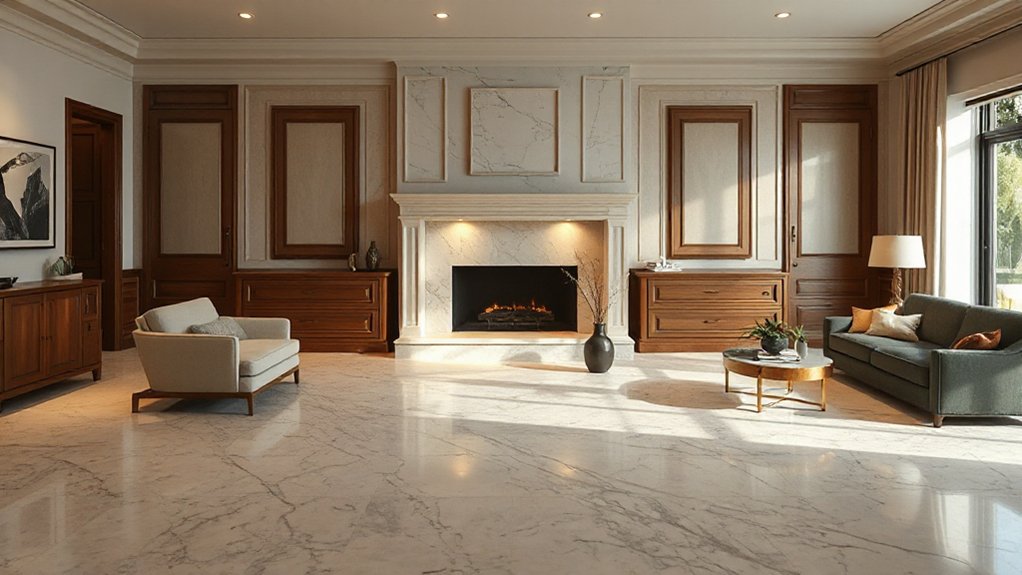
Polished, honed, and leathered textures each define the marble’s presence, shaping how light interacts with the surface and how the veining reads across the hearth. You choose a finish that balances sheen, slip resistance, and maintenance cadence.
Polished surfaces reflect maximum light and emphasize movement within the veining, but show fingerprints and etching more readily. Honed finishes soften glare, reduce conspicuous wear, and invite underfoot comfort, yet require more ongoing marble maintenance to preserve the flat, satin touch.
Leathered textures provide natural texture with lower reflectivity and enhanced grip, hiding minor imperfections while adding depth. Your selection should align with lifestyle, cleaning routines, and desired ambience.
With customized finishes, you achieve a tailored, durable centerpiece without compromising elegance or performance.
Colorways and Material Pairings to Anchor Your Marble Hearth
Color pairing guides you to establish a cohesive base for your marble hearth, balancing undertones, contrasts, and mood.
Align material choices—stone, metal, wood, or composites—with the core marble to create harmony and a clear focal point.
Use these principles to anchor your design: purposeful contrasts, restrained palettes, and thoughtful texture interplay.
Color Pairing Principles
When designing a marble hearth, start with a deliberate color logic: select a dominant stone color and anchor it with complementary tones that echo the room’s palette. You establish a controlled spectrum by balancing light and dark values, ensuring the hearth reads as a cohesive anchor rather than a distraction.
Prioritize Color contrast to define edges and emphasize the marble’s veining, while using subtle tonal shifts in surrounding finishes to reinforce depth.
Aim for Pattern coordination across textiles, wood, and metals so motifs align rather than clash. Limit the palette to two or three core tones and one accent hue for emphasis.
Choose materials with analogous or harmonious undertones to preserve continuity, preventing fragmentation.
The result: a refined, high‑end composition with unwavering visual clarity.
Material Harmony Guide
To anchor your marble hearth, align colorways with purposeful material pairings that reinforce the chosen palette. This Material Harmony Guide helps you select complementary textures and finishes that elevate marble patterning while remaining practical in daily use.
Focus on controlled contrasts and coherent material families to maintain timeless luxury.
- Pair light-veined marble with soft, matte neutrals to emphasize patterning without competing highlights.
- Use warm woods for warmth and balance, ensuring install techniques preserve subtle veining.
- Integrate metallic accents sparingly to crystallize focal points without overpowering the stone.
- Choose textiles with restrained luster and simple weaves to anchor the room and simplify maintenance.
Scale, Proportion, and Lighting for Marble Hearth Installations
Achieving the right scale and proportion in marble hearth installations matters as much as the material’s veining and finish. When the surrounding room’s architecture is cohesive, the hearth becomes a focal point that feels naturally integrated.
You assess overall mass, ceiling height, and fireplace opening, aligning mantel width with furniture rhythm and wall space. Maintain balance through proportional tests: use scale balancing to guarantee the hearth neither overwhelming nor underperforming its setting.
Lighting techniques matter: position fixtures to illuminate the marble’s grain without glare, creating depth and warmth that enhance form.
Select thickness and profile that echo architectural lines, assure a seamless passage from hearth to mantel. Precision in measurement guarantees a refined, enduring composition.
Care and Longevity: Keeping a Marble Hearth Timeless
Care and longevity hinge on simple, deliberate maintenance that preserves marble’s elegance and performance. You’ll maintain beauty by adopting a steady routine that minimizes staining, etching, and wear. Precision matters: the right products, timely action, and careful restoration when needed keep the hearth timeless.
- Marble cleaning: use a pH-neutral cleaner and soft cloth; avoid acidic or abrasive agents.
- Immediate spill response: blot—don’t wipe—to reduce penetration and staining risks.
- Marble sealing: follow manufacturer guidance; reseal periodically to preserve barrier performance.
- Routine inspection: check for veining changes, dull spots, or micro-scratches, and address promptly with professional care.
Frequently Asked Questions
How Much Does Marble Cost per Square Foot Installed?
Marble typically costs $40 to $100 per square foot installed, depending on grade, thickness, and edge details. You’ll pay more for rare vein patterns or large slabs.
Expect additional costs for prep, sealant, and labor.
For maintenance, you should plan marble maintenance routines and marble cleaning as part of ongoing care, since improper care can raise long‑term expenses.
You’ll want a precise estimate from your contractor and a recommended maintenance schedule to protect your investment.
Which Marble Grades Withstand Heat and Chips Best?
You’ll want to choose higher-grade marbles like N- or A-grade classic white, plus engineered options, for better heat resistance and fewer chips.
Marble color variations and marble pattern options stay consistent when you stick to dense, tightly grained varieties.
For durability, guarantee you seal and maintain, and prioritize slabs with low porosity.
Expect Calacatta and Carrara to vary in color; select those with uniform veining to minimize chipping under heat.
Can Marble Be Used With Radiant Floor Heating?
Yes, you can use marble with radiant floor heating. It conducts heat nicely, so you’ll feel warmth quickly.
Though you should select a low-porosity, dense marble and guarantee proper installation with a compatible substrate.
Follow marble maintenance guidelines to prevent staining from heat exposure, and seal as recommended.
Keep marble design trends in mind for borders or accents.
Use a professional for consistent heat distribution, and monitor slabs for cracks or crazing over time.
Are There Eco-Friendly Marble Sourcing Options?
Yes, there are eco-friendly marble sourcing options. You can prioritize sustainable quarrying practices, ensuring lower environmental impact and responsible land restoration.
Look for certifications and transparent supply chains that verify origin and extraction methods. Consider recycled marble options to reduce quarry demand and waste.
You’ll want suppliers who document carbon footprints and transport distances.
How Often Should Marble Hearth Reseal or Treat?
Sealing should be done every 1–2 years for most marble hearths, depending on wear and environment. If you notice etching or dull spots, reseal sooner.
You’ll want to follow maintenance tips that emphasize consistent protection, not waiting until staining appears.
You’ll also benefit from using a high-quality penetrating sealer and avoiding harsh cleaners.
Maintenance tips—keep spills wiped promptly and reapply sealant as needed—help preserve luster and prevent moisture ingress.
Conclusion
When you choose a marble hearth, you set a lasting tone of refinement that anchors the room. You’ll balance vein, undertone, and finish to achieve cohesive luxury, then select edge profiles, mantel shapes, and textures that echo your stays in the space. For example, a client paired a bold Calacatta Vein with a leathered finish and bronze accents, creating a timeless, uncluttered vignette. You’ll maintain elegance through precise joints, thoughtful lighting, and regular care to keep it timeless.