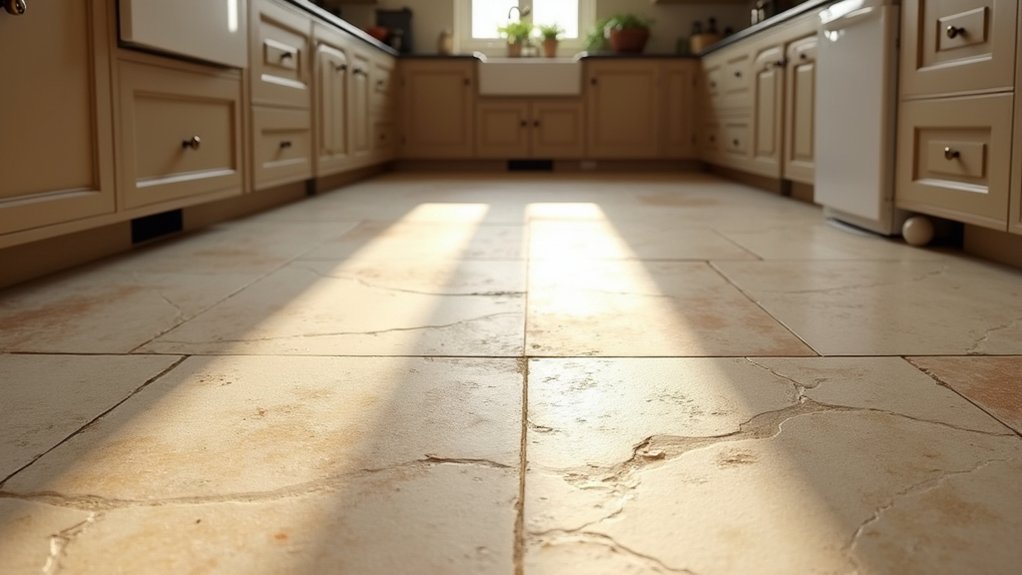
Did you know stone floors can raise a home’s resale value by up to 15% in luxury markets? You’ll want durability, moisture resistance, and a timeless vibe that ages well. Start with the right stone family and finish, then plan patterns and grout for a cohesive, country-luxe feel. Curious how to balance rustic charm with modern practicality without overdoing it? Let’s map the essentials that keep stone both stylish and enduring.
Why Stone Sets the Tone in a Luxury Country Kitchen
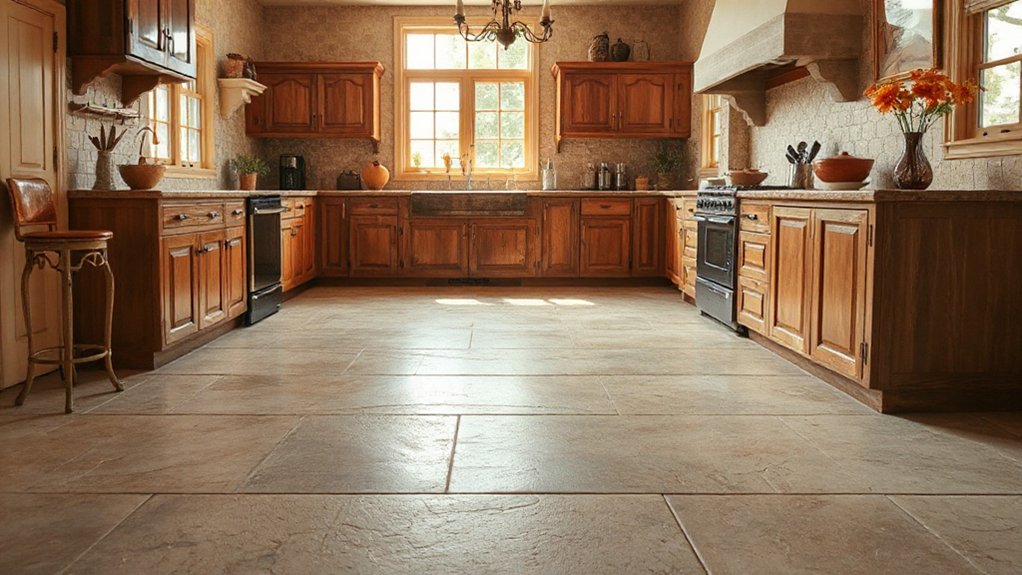
Stone sets the tone by grounding a luxury country kitchen in durability and timeless elegance. You’ll appreciate how stone’s natural durability anchors high-traffic areas, resisting wear while preserving form and function.
Choose textures and finishes that highlight aesthetic versatility, from honed slabs to brushed surfaces, so your space reads refined without feeling cold. In design terms, stone offers a neutral scaffold that adapts to evolving palettes and hardware, keeping your kitchen cohesive over time.
Performance matters: thermal mass stabilizes room temperature, while slip resistance and moisture tolerance protect daily use. Maintenance remains straightforward with sealed surfaces and appropriate cleaning protocols.
This combination delivers a confident, enduring backdrop for culinary activity, entertaining, and daily routines, reinforcing luxury through understated, deliberate material choice.
Stone Families for Warm, Timeless Interiors
Choosing the right stone families is essential for warm, timeless interiors; choose varieties that soften yet retain durability. You’ll prioritize stone families with subtle, natural textures that read as cohesive rather than contrasting. Look for consistent grain patterns, gentle veining, and restrained contrast to support color harmony across surfaces, from counters to floors.
Favor limestone, sandstone, and certain marbles that balance hardness with tactile warmth, avoiding highly polished, mirror-like finishes that create sterner atmospheres. Consider consistent porosity and sealer compatibility to minimize maintenance while preserving texture.
Texture variation within a family should be modest to prevent visual fatigue. Audit samples under lighting similar to your cooking and entertaining areas, confirming that each piece contributes to a unified, enduring palette rather than a disjointed mix.
Finish and Color: Pairing Stone With Country Charm
To pair stone with country charm, align finish and color with your warm, textured palette from the previous section. You’ll optimize impact by selecting precise finish options and testing color coordination in samples before installation.
Key choices include matte, satin, or honed surfaces, each affecting light reflection and perceived warmth. Consider stone undertones and cabinet hues to prevent clashes and to maintain cohesive character.
- Determine finish options that support your lighting and traffic needs.
- Balance stone color with cabinetry and hardware for consistent color coordination.
- Preview swatches under room lighting to confirm tonal harmony and durability.
Final selection should deliver a refined, rustic elegance while preserving practical maintenance expectations and visual depth.
Layouts and Patterns That Elevate Stone Floors
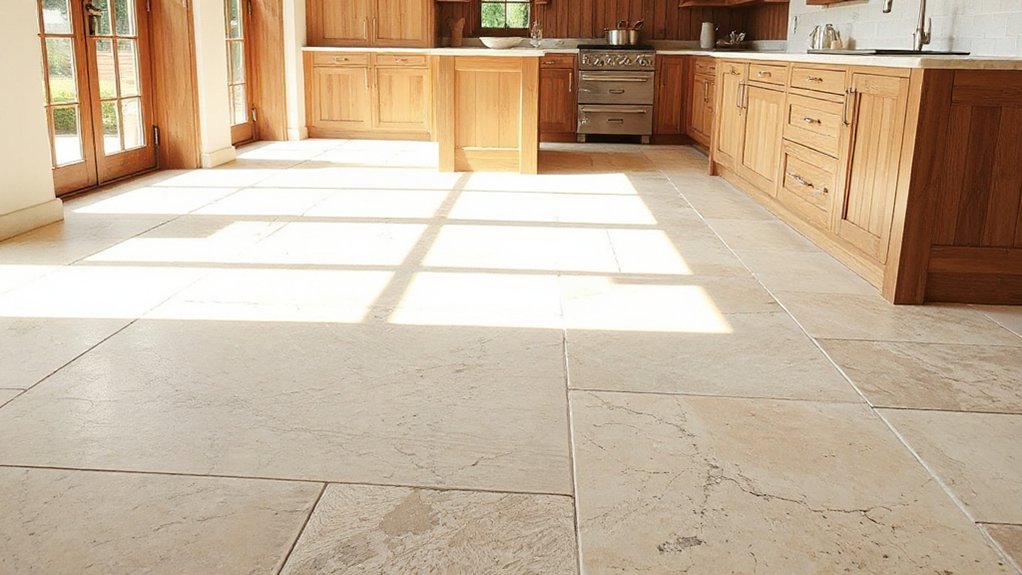
You’ll explore pattern play ideas, from herringbone and basket weave to running bands, to add rhythm and perceived flow in your stone floors.
Consider layouts that guide movement through the kitchen, using directional lines and zone shifts to balance work zones with seating areas.
Pay attention to texture and tone variants to create depth while maintaining cohesion with the room’s color palette.
Pattern Play Ideas
Pattern play transforms stone flooring from a backdrop to a design feature. You’ll optimize stone surfaces by choosing deliberate patterns that reflect weight, movement, and texture. Focused decisions lead to precise visual rhythm, minimizing waste and maximizing durability.
- Pattern combinations: mix tile shapes and grain directions to create focal points without overwhelming the space.
- Creative layouts: alternate bond patterns or introduce misaligned joints for subtle tension that enhances luxury appeal.
- Benchmarking steps: test scale, grout color, and underlayment compatibility to guarantee stability and longevity.
Limit complexity, then refine with light professional detailing. Maintain a disciplined approach to grout width and joint spacing, matching stone characteristics to regional climate. The result is a cohesive surface that elevates, rather than competes with, cabinetry and hardware.
Layouts That Flow
Use consistent orientation of stone slabs or tiles to reinforce directional continuity, minimizing abrupt shifts in pattern that can interrupt progression. Decorative accents should echo the floor’s grain or color shifts to unify spaces without overpowering the room.
Plan lighting fixtures to enhance rhythm; place them along sightlines that draw attention to transitions between zones, not walls. Maintain purposeful contrast—subtle variations in texture emphasize flow without creating distraction.
This approach yields a refined, functional layout for luxury country kitchens.
Texture and Tone Variants
- Surface texturing: choose a consistent grit for slip resistance and cleanability.
- Tonal variations: match mid-tones with dark accents to sculpt light and shadow.
- Pattern alignment: blend layouts to emphasize flow and scale in the room.
Maintenance Essentials: Cleaning, Sealing, and Care Schedules
Maintenance of stone floors hinges on a clear routine: clean, seal, and schedule regular care to preserve appearance and surface integrity.
You establish daily wiping with a neutral cleaner and damp microfiber methods, avoiding acidic or abrasive agents that etch stone.
For cleaning routines, you target spills promptly and use pH-balanced products to minimize residue buildup.
Sealing is performed per manufacturer guidance, with frequency dictated by traffic, finish porosity, and stone type; reapply as the sealant shows wear or after deep-clean sessions.
Document care intervals and surfaces with test patches to confirm compatibility.
Maintain ventilation during sealing, cure times, and reentry windows.
Track maintenance dates, replace worn pads, and verify grout tolerances remain intact.
Sealing techniques remain consistent across stone varieties to guarantee uniform sheening.
Stone-Edge Details and Boundary Treatments for a Seamless Look
In designing stone floors for a seamless luxury look, pay close attention to edge profiles and boundary treatments. You’ll optimize transitions by selecting edge details that echo the stone’s natural character and minimize grout interruption.
- Natural edging: favor shaved or chamfered edges that reveal stone’s texture and reduce visual breaks at joints.
- Boundary accents: use narrow contrasting belts or a stone step-off to delineate zones without breaking continuity.
- Field-border integration: align border tiles with substrate reveals and install with consistent caulk color to preserve a single, uninterrupted plane.
Maintain precision with tight tolerances and uninterrupted grout lines in high-traffic zones. These choices yield a cohesive, premium look while preserving durability and ease of maintenance.
Budgeting and Sourcing: Estimating Cost and Finding Quality Stone
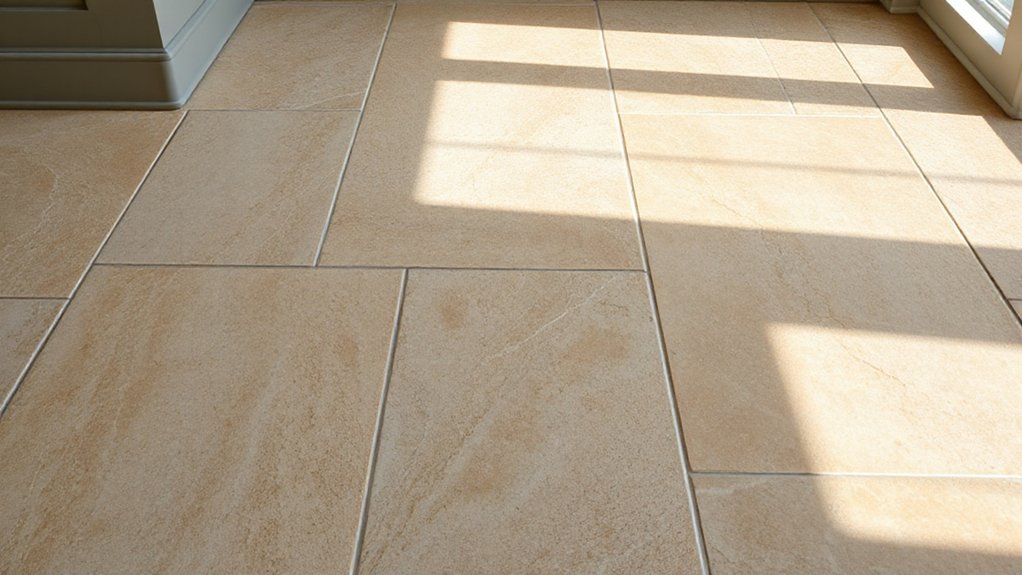
Budgeting for stone flooring starts with a realistic assessment of material costs, installation, and ongoing maintenance, then aligns those figures with project goals and timelines.
You’ll perform a rigorous cost comparison across options (natural stone, engineered, tile), accounting for waste, cutouts, seaming, and underlayment.
Budgeting also includes long-term maintenance like sealing and cleaning, which affect lifecycle value.
For sourcing, identify reliable suppliers offering consistent batch quality and documented warranties, then request samples, cross-check hardness and slip resistance, and verify certifications.
Use transparent quoting: line-item prices, delivery, and potential surcharge windows.
Refinement comes from clear quantity takeoffs and contingency buffers around price volatility.
Finally, define sourcing strategies—local versus import, bulk discounts, and installer coordination—to minimize lead times while preserving stone integrity and finish.
Your Quick Decision Checklist to Pick the Right Stone
If you want to pick the right stone quickly, start with a tight decision checklist that focuses on performance and fit for your kitchen. Your quick decision hinges on durable surface, slip resistance, and maintenance needs.
- Assess performance targets: hardness, porosity, care routine.
- Align with kitchen fit: color, texture, and edge profile to harmony with cabinets and countertops.
- Plan palette integration: Choosing color palettes, test samples, and decorative accents to ensure cohesion.
Use this framework to avoid overbuying or mismatches. As you evaluate, consider how the stone interacts with traffic and spills. Prioritize minimal upkeep without sacrificing style.
Incorporate decorative accents sparingly yet purposefully, and confirm color balance with lighting. This disciplined approach speeds selection and yields a timeless, country-luxe result.
Frequently Asked Questions
How to Choose Stone for Underfoot Comfort in Rustic Kitchens?
To choose stone for underfoot comfort, prioritize texture, thermal mass, and density. Opt for lightly textured or tumbled surfaces to reduce hardness, and select stones with low porosity to minimize slipperiness.
Consider radiant-heat compatibility and scale of natural stone patterns to suit your space.
Apply stone sealing techniques after installation to guard against moisture and stains, then reseal as recommended.
You’ll balance comfort, durability, and performance with careful quarry choice and proper finishing.
Which Stone Wears Best in High-Traffic Breakfast Areas?
Granite durability is your best bet in high-traffic breakfast areas. You’ll resist scratches, heat, and heavy footfall better than most alternatives.
Marble elegance is tempting, but it wears faster in daily use, showing etching and pitting with spills and acids.
If you want a balanced choice, choose a dense granite with a proper honed or brushed finish, and seal regularly.
You’ll enjoy long-lasting performance paired with a refined, understated look.
Can Stone Floors Improve Kitchen Acoustics and Warmth?
Yes, stone floors can improve acoustics and warmth when you choose the right approach.
Use soundproofing techniques like underlayment, cork or rubber underlayment, and strategic rug placement to reduce footsteps and echo.
For warmth, pair with radiant floor heating and high-density thermal insulation options beneath the stone.
Maintain a balanced system with proper insulation, sealing, and airflow controls to minimize heat loss while preserving comfort and sound performance in your kitchen.
Are Eco-Friendly Stone Options Available for Luxury Kitchens?
Eco-friendly options exist. About 60% of premium stones now use eco-friendly sourcing and low-impact processing.
You’ll find options with sustainable finishes that resist wear while reducing emissions. You can choose reclaimed or certified slabs, and opt for non-toxic sealants to keep indoor air quality high.
Eco friendly sourcing supports reduced quarry impact, while sustainable finishes extend lifecycle.
You’ll achieve luxury aesthetics with responsible material choices that meet performance and environmental standards.
How to Restore Old Stone Floors Without Damage?
Yes, you restore old stone floors by first cleaning thoroughly, then evaluating porosity and damage. Use gentle restoration techniques and avoid harsh acids.
Seal cracks with compatible filler, dry thoroughly, and apply a compatible stone sealer in thin coats.
For damaged areas, perform controlled rewaxing or honing. Monitor pH and moisture to prevent etching.
Regular maintenance matters. Stone sealing should be refreshed per product guidelines, and restoration techniques should minimize surface wear while preserving patina.
Conclusion
You walk into a kitchen where stone greets you with quiet authority—the matte surface soft underfoot, the warmth of limestone or sandstone echoing a rural hearth. Sealed seams gleam, patterns like herringbone guiding the eye, grout barely a whisper. Maintenance is a ritual, not a burden: wipe, seal, and schedule. With careful selection and steady care, your stone floors endure, aging gracefully from rustic charm to timeless country-luxe, anchoring every meal, memory, and moment.