
Choosing the right wood stain for classic interior joinery starts with your intended look—depth and warmth or a faithful, grain-forward finish. You’ll weigh oil, water, or hybrid formulas, test color depth on scraps, and consider how species responds to stain. Then you align application, prep, and environmental conditions to achieve an even, durable result. Get ready to compare options, and decide how far authentic millwork should carry the room—there’s more to refine before you commit.
Choose the Right Stain for Classic Joinery: A Decision Framework

Choosing the right stain sets the tone for classic joinery, so start with your intent: do you want warmth and depth, or a crisp, natural look that preserves grain?
You determine the framework by examining two pillars: Historical accuracy and Environmental impact. Match your finish to period-appropriate hues when restoration or reproduction is involved, ensuring color, sheen, and aging behavior align with era expectations.
Evaluate wood species, consistency of grain, and the desired level of contrast, then select a stain that complements, not competes with, the joinery details.
Consider project life cycle, maintenance needs, and compatibility with existing finishes.
Document decisions for future refinishing, and prioritize low-VOC options where possible to minimize Environmental impact while preserving historical integrity.
Oil-based, Water-based, or Hybrid Stains: Pros, Cons, and Best Uses
Oil-based stains deliver depth and durability, but they require longer drying times and odor control. You’ll see rich color and lasting protection, yet environmental impact and cleanup considerations matter. Use for high-traffic joinery or where matching older finishes is critical, as color enhancement tends to be more pronounced on dense woods.
Water-based stains dry quickly, emit far less odor, and clean up with water, making them practical for enclosed spaces and projects demanding faster turnaround. They excel at preserving true wood tone and offer easier pigment control, though they can raise grain and may require a sealer for uniform color.
Hybrid stains blend benefits, delivering moderate drying, easier cleanup, and improved color control. Choose based on tolerance for odor, project duration, and environmental impact considerations.
Match Stain Depth and Color to Wood Species and Grain
When selecting stain depth, consider how the wood species and grain pattern respond to pigment and resin. You’ll achieve predictable results by matching depth to both color and grain.
Test samples on representative scraps or hidden panels to verify color consistency across boards, knots, and rays. Darker depths emphasize figure but can obscure subtle grain; lighter depths reveal more nuance without masking texture.
For species with dense, tight grain, deeper stains may saturate evenly, while open-grain woods benefit from lighter tones to avoid blotching. Aim for a balanced tone that enhances natural warmth without overpowering features.
Use controlled, even brushing and wipe-off to preserve grain integrity. Prioritize color consistency and grain enhancement over dramatic shift, ensuring timeless, authentic millwork aesthetics.
Application Techniques and Site Considerations for Authentic Millwork
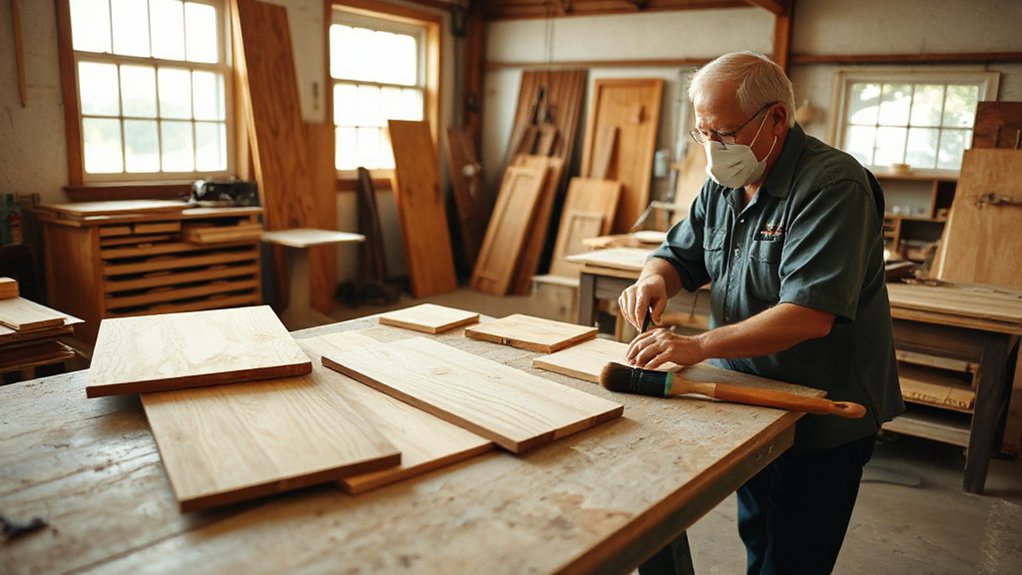
With authentic millwork, mastering application techniques and site considerations is essential to preserve grain, color, and texture. You’ll apply stain evenly, work with grain direction, and avoid blotching by proper prep and tested seals. Choose tools that deliver control, and respect ambient conditions to minimize uneven drying.
- Prepare the surface meticulously, matching grain flow with sugaring and sanding intervals.
- Control environment—temperature, humidity, airflow—to reduce variability and preserve historical accuracy.
- Plan site logistics to minimize dust, moisture exposure, and environmental impact.
You should document each step for future restorations, ensuring durability and authenticity. Informed decisions reduce environmental impact while honoring period details. This approach supports historical accuracy and delivers a finish that remains faithful to original appearance without overprocessing.
Maintenance and Touch-Ups to Keep Profiles Vibrant Over Time
Regular maintenance keeps profiles looking fresh and authentic; soon after finishing, inspect for wear, uneven sheen, and color shifts.
You should schedule periodic touch-ups only where needed, not the entire run, to preserve original character.
Begin with light cleaning to remove dust and oils, then assess surface wear and micro-scratches.
If color fading is evident, match the original stain and finish in thin, even coats, allowing full cure between applications.
Use high-quality brush or pad techniques to avoid lap marks.
Recoat on worn edges and high-traffic profiles, but avoid over-saturation that can darken the wood unevenly.
Protect repaired areas from UV exposure to minimize future color fading.
Maintain consistency with existing sheen by blending new with the old, ensuring a seamless shift across joints and profiles for lasting vibrancy.
Frequently Asked Questions
How Do Stains Affect Long-Term Aging of Oil-Rich Woods?
Stains slow oil-rich woods’ aging by stabilizing surface oils and blocking UV-driven chemical reactions.
Over time, staining techniques can mask or alter natural patina, but they also reduce surface checking and water absorption.
In oil-rich timbers, choose penetrating products and UV inhibitors to limit photo-oxidation.
Regular maintenance matters.
If you re-stain, guarantee compatibility to avoid uneven appearance.
Stain depth influences aging more than color alone, so balance aesthetic goals with protective chemistry.
Can Stain Color Influence Perceived Wood Grain Depth?
Color saturation can influence perceived wood grain depth, yes. When you apply stain, richer color tends to enhance grain contrast, while lighter tones may soften it.
You’ll notice Grain enhancement as the pigment settles into pores and rays, making textures pop. Do you want a deeper look that preserves natural variation or a subtler finish?
Use controlled saturation, wipe-off timing, and a compatible topcoat to maintain precise, enduring depth.
Are There Regional Finish Allergies to Consider for Interiors?
Regional finish allergies can affect interior choices, so you should verify finishes for sensitivities and ventilation. You’ll want products with low volatile organic compounds to protect Indoor air quality.
With that in mind, investigate regional finish allergies among occupants, and select finishes labeled low-emission. You’ll also seek documentation from manufacturers about allergens and safety data sheets, ensuring proper drying times and venting.
What Impact Does UV Exposure Have on Interior Joinery Stains?
UV exposure accelerates UV degradation, causing your interior joinery stains to fade over time. You’ll notice stain fading on exposed panels and trim where sunlight hits most.
To mitigate this, you should use UV-stable formulas, apply protective topcoats, and consider window treatments or location choices that reduce direct sun.
Regular reapplication of the finish will slow UV degradation, preserving color accuracy and reducing the risk of noticeable mismatch across surfaces.
Should Stain Choices Align With Traditional or Modern Hardware Finishes?
Yes—stain choices should align with traditional or modern hardware finishes. You’ll achieve consistent, convincing results when you consider hardware compatibility and style harmony from the start.
Pick finishes that echo the metal’s tone and detailing, so the look feels intentional rather than mismatched. You’ll feel confident knowing every element speaks the same design language, whether classic or contemporary, creating a cohesive, enduring interior.
Conclusion
In sum, you’ll guide your joinery toward authenticity by testing colors on scraps, selecting a stain that suits the wood and era, and mastering preparation and application. Think of your finish as a quiet steward—enhancing grain without overpowering it. Like a well-turnished room that echoes past craftsmen, your work should endure with regular maintenance and deft touch-ups. Align depth, tone, and species, and your millwork will speak with assured, enduring character.