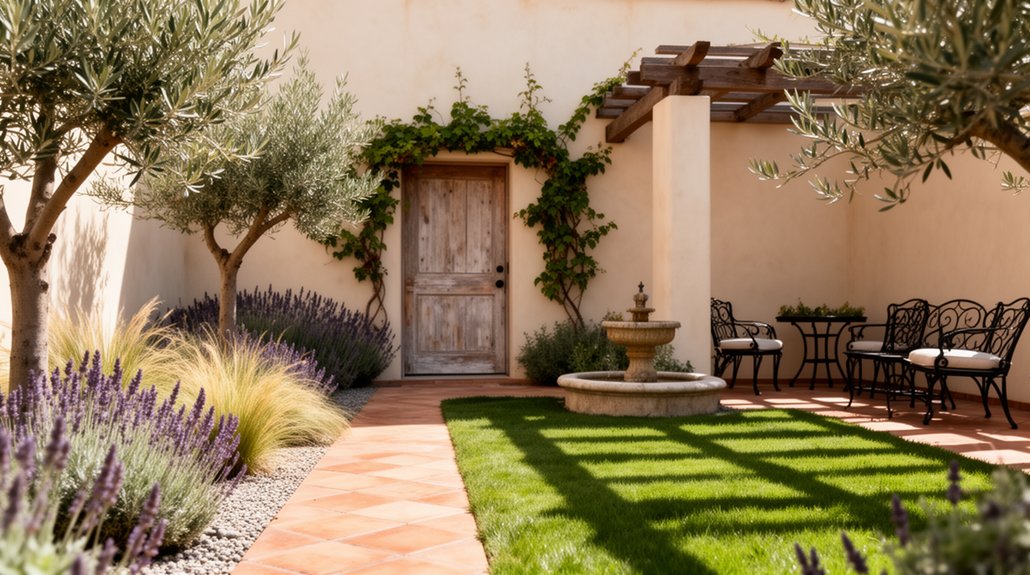
Did you know a well‑placed shade structure can cut surface temps by several degrees, while still inviting airflow? In hot climates, a Mediterranean‑inspired patio pairs stone or tile with drought‑tolerant lawns and native ground covers to reduce irrigation needs. You’ll balance rustic furnishings and smart irrigation to keep maintenance low without sacrificing comfort or style. Keep an eye on material choices and palette to guarantee durability under strong sun, then the next move becomes clear and practical.
Design Principles for Mediterranean Patios in Hot Climates
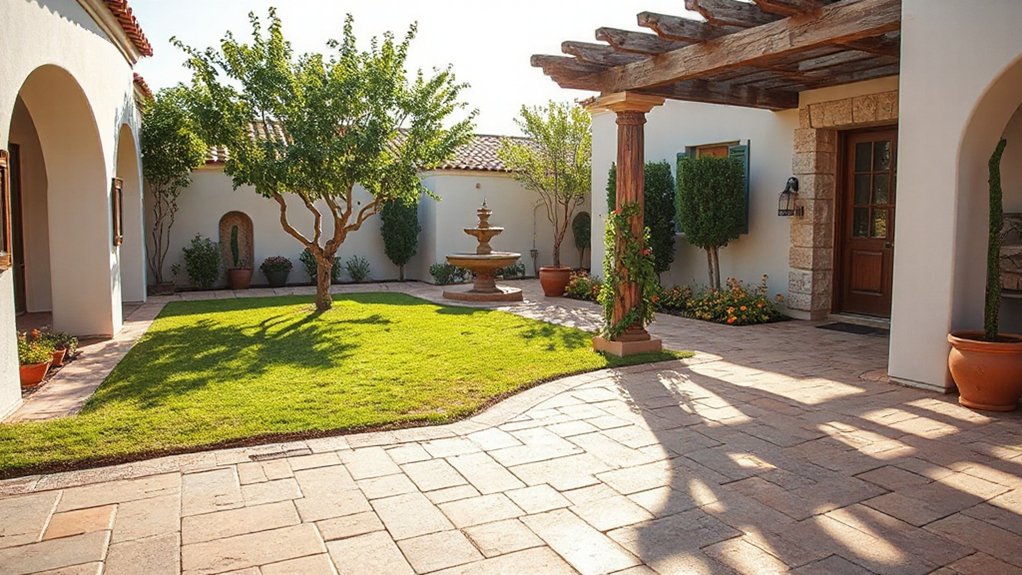
Mediterranean patios thrive in hot climates by prioritizing shade, air movement, and durable materials. You design with intent: optimize microclimates, reduce heat gain, and sustain long-term performance.
Begin with shade strategies—terra-cotta arches, pergolas, and vine-covered canopies—to cut solar load without sacrificing light. Favor porous, cool surfaces that promote evaporation and airflow, such as stone pavers and lime plaster.
Select materials with low thermal mass in exposed zones, and implement ceiling fans or discreet jets for convection. For visual cohesion, use Traditional tile patterns to anchor the space and guide circulation.
Pair with Rustic furniture styles crafted from weathered wood and metal, sized for proportion and comfort. Guarantee drainage, maintenance access, and consistent color temperature to maintain durable, timeless Mediterranean character.
How to Choose Low-Water Lawn Alternatives That Stay Green
To keep patios green in hot climates without taxing water resources, start by selecting lawn alternatives that tolerate drought while maintaining visual appeal. Focus on species and ground covers with low irrigation needs, deep rooting, and high density to reduce evapotranspiration.
Prioritize native or adaptive varieties suited to your climate zone, and assess long‑term maintenance, salt tolerance, and wear resistance for foot traffic. Compare mowing frequency, fertilizer requirements, and reseeding needs to minimize inputs.
Evaluate color, texture, and seasonal interest to preserve a green appearance year‑round while using less water. For decisions, apply a structured framework: lawn alternative selection criteria, expected turf‑loss tolerance, and expected water savings.
Embrace Water efficient gardening as a guiding principle and document performance metrics.
Create Shaded Outdoor Nooks for Cool Comfort
Initiate shaded outdoor nooks by selecting structures and plantings that maximize cooling without obstructing airflow. You’ll create comfortable, durable spaces within a hot-climate palette by prioritizing shade structures that span sun angles and allow breeze to pass.
Pair these with compact, sculpted greenery to form cozy retreats, ensuring materials resist heat and weathering. Use placement to minimize direct sun on seating while capturing afternoon cooling breezes.
1) Choose pergolas or trellises with breathable coverings and defined siting to optimize shade and airflow.
2) Integrate climbing vines and light, drought-tolerant shrubs to enhance privacy without blocking circulation.
3) Align seating toward prevailing winds and reflective surfaces to reduce ambient heat while maintaining visual openness.
Drought-Tolerant Plants for Sun and Heat
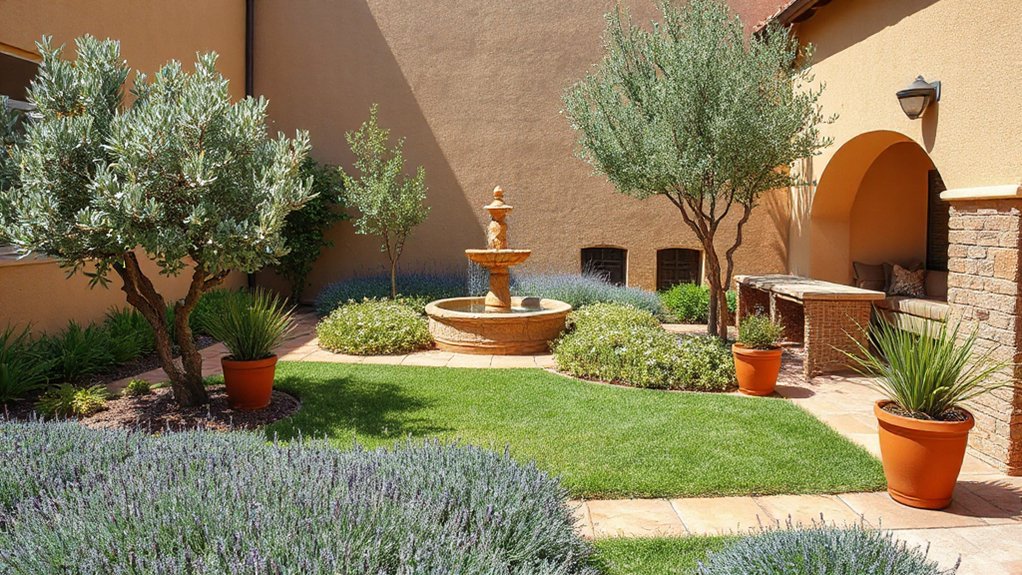
Succulent gardens excel here because their low water needs and architectural foliage provide year-round structure.
For containers, terracotta planters enhance heat tolerance by reducing soil temperature fluctuations and improving drainage, supporting hardy specimens.
Choose drought-adapted evergreens or flowering perennials that tolerate intense exposure, such as agave, echinocactus, and certain lavenders, pairing them with light, gravel-filled substrates.
Maintain minimal irrigation, monitor soil moisture, and allow seasonal pruning to retain form, ensuring sustained color and texture without excess input.
Install Smart Irrigation for a Breathable, Low-Maintenance Space
Smart irrigation systems align with drought-tolerant strategies by delivering water precisely where and when it’s needed, reducing waste and supporting breathable, low-maintenance spaces. You’ll optimize schedules, meter run times, and adapt to seasonal demands, ensuring plants survive without overwatering.
Use zones to target turf, natives, and shrubs separately, minimizing evaporation and runoff in hot climates.
- Configure smart controllers to weather- and soil-based adjustments, aligning irrigation with real conditions.
- Create separate zones for Mediterranean plantings and lawn substitutes to maximize efficiency and reduce maintenance.
- Monitor data dashboards to fine-tune runtimes, cycle watering, and seasonal shifts for consistent moisture without saturation.
Embrace smart irrigation systems as a core component of breathable outdoor spaces, delivering reliability, conservation, and simplified maintenance.
Mediterranean Palettes, Materials, and Finishes: A Practical Guide
You’ll start by pairing a restrained Mediterranean color palette with durable materials that resist heat and wear.
Focus on practical finishes—textured plasters, stone, and ceramic tiles—that balance aesthetics with low maintenance.
Use clear, actionable choices and measurements to guide material selection and application in hot-climate patios and lawns.
Mediterranean Palette Elements
- Use warm terracotta, olive, and sand with high-contrast accents to delineate paths, seating, and planting beds.
- Layer textures—from matte plaster and tumbled stone to rugged pavers and brushed concrete—to create tactile interest.
- Prioritize finishes with UV stability and low porosity to minimize fading and staining over time.
Practical Finishes Guide
Mediterranean palettes demand finishes that hold up under heat, UV exposure, and wide temperature swings, so select materials with proven durability and low porosity. You’ll prioritize dense stone, porcelain pavers, and silica-based stucco that resist cracking and staining.
Choose sealants and coatings with UV inhibitors and high dry-film hardness to reduce color fade and surface wear. For textures, favor brushed or lightly troweled surfaces that hide patina while remaining easy to clean.
Coordinate colors with Mediterranean tones—warm ochres, terracottas, and deep olives—without overloading contrast. Garden furniture should be containerized, weather-resistant, and easily refreshed with durable finishes.
Guarantee outdoor lighting is integrated into the design, using low-heat, low-UV fixtures that won’t heat surfaces or degrade finishes. Regular maintenance schedules extend performance and appearance.
Frequently Asked Questions
How Do Salts Affect Mediterranean Patio Plants in Hot Climates?
Salts stress Mediterranean patio plants in hot climates by increasing root salinity, reducing water uptake, and triggering leaf burn. You’ll see stunted growth and yellowing if salinity is high.
To manage this, guarantee good drainage, avoid over-irrigation, and select salt-tolerant species.
Incorporate soil amendment strategies like organic matter addition, gypsum (where appropriate), and leaching programs to flush salts.
Regularly monitor EC levels and adjust irrigation and fertilization accordingly to sustain vigorous, low-maintenance plantings.
Can I Use Edible Herbs in Low-Water Landscapes?
Yes, you can use edible herbs in low-water landscapes. Start with a compact herb garden design that prioritizes drought-tolerant cultivars, and group by sun and water needs.
Choose culinary herb choices like thyme, rosemary, and sage for reliability, and mix with low-water perennials to reduce irrigation.
Use mulch and drip irrigation, plus companion planting to minimize maintenance. This herb garden design supports efficient water use and flavorful, harvest-ready plants.
What Are Pet-Safe, Drought-Tolerant Groundcovers?
Native grasses serve as pet-safe, drought-tolerant options, and soft groundcovers provide safer, cushioned coverage. Like a calm green blanket, they stabilize soil while minimizing irrigation.
You should choose species such as Bouteloua, Eragrostis, and Muhlenbergia for resilience, low toxicity, and non-invasive behavior. Avoid sharp textures near paws.
Establish with deep, infrequent watering, mulch, and gradual trims. These groundcovers meet safety and drought needs, while maintaining a natural, breathable landscape.
How to Maintain Soil Health Without Frequent Fertilizing?
To maintain soil health without frequent fertilizing, you should soil test to tailor amendments, then apply organic amendments only as needed.
Start with a soil test to determine pH, nutrient balance, and microbial activity.
Based on results, incorporate compost, well-rotted manure, or biochar, and mulch to conserve moisture.
Reassess annually.
Avoid over-fertilizing; rely on organic amendments and soil testing to sustain fertility and structure.
Which Pests Are Common in Hot Mediterranean Landscapes?
In hot Mediterranean landscapes, common pests include aphids, whiteflies, scale, and spider mites. You’ll also encounter invasive insects and soil borne diseases that exploit stressed plants.
Monitor weekly and inspect undersides of leaves, stems, and trunks.
To prevent problems, maintain plant vigor, prune properly, and avoid overwatering.
If you spot mites or scale, apply targeted horticultural oil; for invasive insects and soil borne issues, deploy integrated pest management promptly with resistant varieties and clean tools.
Conclusion
So you can transform your hot-climate space into a Mediterranean retreat that’s cool, green, and low-maintenance. By combining shaded nooks, drought-tolerant plantings, and smart irrigation, you’ll maximize airflow and minimize water use without sacrificing style. Choose low-water lawn alternatives that stay green, select durable materials, and craft breathable layouts that invite outdoor living. Ready to create a sustainable patio that thrives under intense sun and high heat? Yes—let’s begin.