Bifold doors can be a sensible upgrade for your extension, offering a softer way to frame a bold shift between indoors and out. You’ll gain natural light, flexible opening options, and a spacious feel, but expect higher initial costs and a more intricate installation that demands careful planning. Material choices, weather seals, and hardware quality all influence long-term performance, so weighing durability against maintenance is essential before you commit to a layout that could redefine how you live in that space.
Why Install Bifold Doors in an Extension
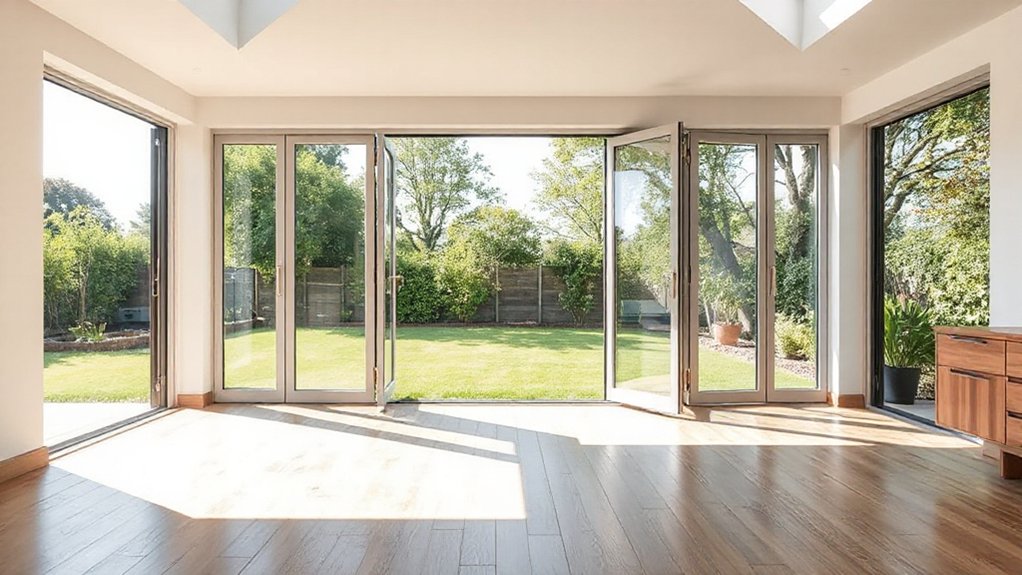
Bifold doors in an extension maximize space and light by folding away to create a wide, seamless shift between indoors and outdoors. You’ll gain immediate perceptual enlargement, improved ventilation, and enhanced access for furniture movement and entertaining.
From a technical standpoint, these doors integrate with existing glazing beads, thresholds, and drainage design, requiring careful alignment to avoid misruns or air leakage.
Color options influence thermal performance, UV resistance, and aesthetics, while material choices dictate durability, maintenance, and cost. You evaluate aluminum for strength and slim sightlines, timber for warmth but higher care, and uPVC for cost efficiency and low upkeep.
Consider expansion joints, threshold ramps, and hardware quality to assure smooth operation over years. Your choice should balance performance, style, and lifecycle value.
Key Decision Criteria for Bifolds
Choosing the right bifold system hinges on a clear set of decision criteria that balance performance, cost, and long-term value. You’ll assess structural load handling, sash accuracy, weather sealing, and hinge quality to prevent sagging and leaks over time.
Consider frame material and thermal performance, including U-values and air leakage ratings, to sustain comfort year-round. Operability should be tested for smooth opening, corrosion resistance, and consistent gasket compression.
Evaluate color options for fade resistance and maintenance needs, ensuring consistency across components. Glass types matter for U-value, solar gain, and acoustic performance; select laminated or double-glazed units with appropriate coatings to meet local climate demands.
Finally, confirm compatibility with framing, drainage, and building codes, then align these attributes with预算 and project timelines without compromising performance.
Cost, Installation Time, and Durability
You’ll weigh the upfront costs, ongoing maintenance, and potential resale value to understand overall value.
The analysis covers cost implications, installation timeline, and how each choice affects long-term durability under typical residential use.
Expect a precise comparison of price ranges, lead times, and material performance to guide your decision.
Cost Implications
There are three key factors that drive the cost implications of bifold doors for an extension: upfront price, installation duration, and long-term durability.
You’ll want a clear cost analysis to guide budget planning, balancing upfront investment against longevity and maintenance. Consider these elements:
- Upfront price, including frame, glass, hardware, and installation fees.
- Installation duration, factoring site access, adjustments, and potential subcontracting.
- Long-term durability, accounting for warranty, materials, and ongoing energy efficiency gains.
Installation Timeline
What does the installation timeline look like when considering cost, installation time, and durability for bifold doors? You’ll assess upfront costs, tradeoffs, and the warranty window as you align procurement with your extension schedule.
Material choices influence fabrication lead times and on-site fitting, so expect differences between aluminum, timber, and uPVC components. Color options add finish delays if custom hues or lacquer layers are requested, but standard shades streamline delivery.
Installation time hinges on frame accuracy, threshold integration, and track alignment, with longer projects for multi-panel systems versus simpler single-span assemblies. Plan around site preparation, weather windows, and alignment verification, since missteps increase durability concerns later.
Durability Considerations
Durability hinges on a careful balance of cost, installation time, and long-term performance, so evaluate materials and build quality against the extension’s expected use. You’ll assess how material selection impacts maintenance, corrosion resistance, and hinge reliability over the life of the doors.
Budget-friendly options may save upfront, but could require earlier replacement or higher service costs. Conversely, premium assemblies often deliver superior corrosion resistance and smoother operation, reducing downtime.
- Material performance and corrosion resistance
- Hinge reliability under frequent cycling
- Total cost of ownership including installation and maintenance
Prioritize frame tolerances, weather seals, and finish quality to minimize creeping gaps and operating stiffness. Confirm manufacturer specifications for tolerances, lubrication intervals, and load ratings to avoid premature wear and ensure consistent performance.
Material corrosion and hinge reliability drive long-term durability and satisfaction.
Design Possibilities and Layout Impacts

Design possibilities with bifold doors on an extension hinge on how the panels stack and how you configure the opening. Your layout decisions influence flow, sightlines, and furniture placement, so you’ll map each segment for traffic pattern and glazing alignment.
Consider stack direction: inward or outward folds affect room closure when open and storage footprint. Configurations range from full-width openings to partial bays, impacting load distribution and hardware count.
Color options and glass types determine exterior rhythm and interior mood while affecting glare and privacy without compromising structure. You’ll balance slim profiles with structural tolerances, ensuring corner connections stay watertight and operation remains smooth.
Precision in seam alignment, thresholds, and reveal gaps minimizes drafts and visual clutter, delivering a coherent integration with existing architectural lines.
Energy Efficiency and Weather Performance
You’ll want to start with clear thermal performance metrics to benchmark heat transfer and condensation risks across the door system.
Consider air sealing strategies and test results for gasket integrity, frame geometry, and alignment, since small gaps dominate overall U-values.
Finally, assess weatherproofing durability under cycling, wind-driven rain, and thermal stress to predict long-term performance.
Thermal Performance Metrics
- Compare U-values across frame types and glazing options to identify best-fit configurations.
- Assess thermal bridging risks at corners, posts, and thresholds, and quantify their impact on overall heat transfer.
- Review spacer and seal integrity to minimize insulation gaps during operation and in different weather.
These metrics guide design choices for durable, energy-efficient extensions.
Air Sealing Strategies
Use high-performance sealing techniques that account for movement, deformation, and seasonal expansion, ensuring continuous contact without restricting operation. Evaluate contact pressure along the meeting rails and corner joints to minimize thermal short circuits, then verify with blower door testing to quantify air leakage rates.
Select materials rated for outdoor exposure and UV stability, emphasizing compatible substrates to reduce adhesive failures. Implement staggered seal layouts at perimeters to accommodate door fold cycles, and document maintenance practices to preserve long-term performance.
Weatherproofing Durability
Weatherproofing durability hinges on materials and details that resist devolved performance under cycling exposure and climate extremes. You assess how bifold assemblies maintain tight seals, drain paths, and frame integrity across seasonal shifts, ensuring energy efficiency and weather resistance. Consider how joint geometry, gasket compounds, and glazing choices influence long-term performance.
- Frost resistance: evaluate seal elasticity, substrate coatings, and drainage to prevent deformation or cold transfer.
- Wind resistance: verify anchoring, reinforcement studs, and hardware tolerances to withstand gusts without leaks.
- Thermal bridging control: inspect insulating breaks, low-conductivity frames, and proper cavity fills to minimize heat loss.
A disciplined installation approach minimizes maintenance cycles, preserving performance and reducing operational costs over time.
Security, Maintenance, and Longevity
You evaluate multi-point latches, hinge timing, and corner bracing for consistent engagement under thermal cycling and frequent use. Consider security risks posed by misaligned panels, worn rollers, or compromised seals, then plan targeted adjustments and component replacements.
Maintenance challenges include routine lubrication, corrosion checks on metal finishes, and ensuring track cleanliness to avoid binding.
Longevity hinges on material quality, weatherstripping resilience, and proper installation tolerances. Document cycles of operation and service dates to predict wear patterns, enabling proactive reinforcement before performance loss occurs.
Is a Bifold Extension the Right Choice for You?
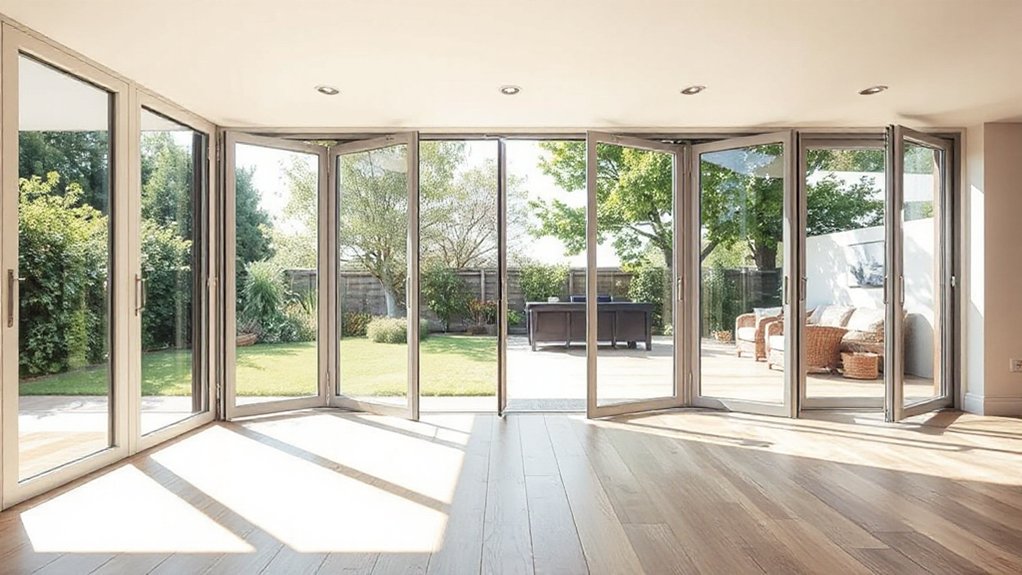
- Assess spatial impact: footprint, usable area, and flow.
- Compare configurations: stacked, pocket, and corner folding patterns.
- Align aesthetics and performance: color options, weather seals, and glazing.
If you need maximal openness with predictable performance, a bifold can excel; otherwise, proceed with alternatives.
Frequently Asked Questions
How Do Bifolds Affect Resale Value and Market Appeal?
Bifolds boost resale value by enhancing energy efficiency and aesthetic appeal; you’ll attract buyers who expect better insulation and a seamless indoor–outdoor flow, though premium installation costs may temper ROI. Combined, they improve marketability and perceived quality.
Can Bifolds Be Installed in Listed or Historic Homes?
Yes, in certain scenarios you can install bifolds in historic homes, but you must respect symbolism of hinges as fragile trust. You’ll need Historic regulations and Listed building permissions, plus compliant frames, detailing, and approved materials before work proceeds.
What Maintenance Frequency Is Recommended for Rollers and Seals?
You should perform Roller maintenance monthly and Seal inspection quarterly. Regular lubrication and cleaning prevent jammed tracks, while monitoring seals for wear avoids leaks; adjust gaskets promptly, and replace damaged rollers to preserve smooth operation and consistent seal integrity.
Do Bifolds Require Planning Permission in My Area?
You should check local planning rules, because bifolds may trigger permission in your area, depending on size and location; privacy concerns and security enhancements are central to decisions, affecting masking of interiors and reinforcing door hardware during approval.
Are There Anti-Fade or Corrosion-Resistant Frame Options?
Did you know 70% of corrosion failures occur at joints? You’ll want anti-fade and corrosion-resistant frame options with proven material durability, plus robust frame coating options that withstand weather, UV, and salt exposure for long-term performance.
Conclusion
A bifold extension feels like opening a canal to your home—light spills in, air climbs the walls, and space blooms beyond the threshold. Yet beneath that glow, you’ll wrestle with upfront costs, precise install needs, and ongoing seals and tracks. If you crave seamless indoor-outdoor living and can manage maintenance, it’s a smart, high-design move. If budget or DIY confidence is tight, you may find the dream draining into a lengthy, costly upkeep cycle. Choose deliberately.