To convert your UK property into a fully compliant HMO, start by confirming you meet the HMO criteria and check local planning and licensing rules specific to your area. Plan early with a clear budget for licensing fees, safety upgrades, and ongoing compliance. Set standards for room sizes, ventilation, lighting, and shared spaces, and implement robust fire safety measures and documentation. Keep a centralized, up-to-date record system and engage tenants from the outset—more detailed steps follow.
Do You Qualify as an HMO? A Quick Check

Determining whether your property qualifies as an HMO is simpler than you might think. First, check how many unrelated occupants you plan to house and whether you’ll share essential amenities.
If you have three or more tenants from at least two separate households sharing facilities, you likely meet the core threshold. Then assess your tenancy mix, ensuring it’s not just family members.
Next, verify that you have a legitimate tenancy or license for each occupant, avoiding single-family exemptions misused as HMO status. Consider local licensing rules that may raise the bar.
Throughout, keep tenant rights in view—clarify safety, space, and access.
Finally, factor in property valuation implications, since HMO status can affect value and resale.
Do You Need Planning Permission for an HMO?
Whether you’ll need planning permission for an HMO depends on the specifics of your property and local rules, not just the number of tenants.
- Check local planning guidance for HMOs in your area and any caps on rooms or occupancy.
- Confirm whether the conversion changes the use class or triggers a change of use issue.
- Understand legal requirements tied to HMO licensing, even if planning isn’t needed.
- Expect possible conditions or restrictions tied to property size, parking, or safety standards.
- Remember renovation permits may be required if you alter structure, plumbing, or electrical systems during conversion.
Plan Your HMO Compliance: Step-By-Step Path
To get your HMO compliant, map out a step-by-step plan that covers licensing, safety standards, and property use.
Start with a baseline property valuation to anchor your budget, then set a phased timeline for upgrades, permits, and inspections.
Define licensing requirements early—know whether you need a license and which conditions apply in your area.
Establish safety standards: electrical, gas, fire, and sanitation benchmarks, with a clear maintenance calendar.
Outline property use specifics: room layout, shared spaces, and tenant access points.
Integrate tenant screening into your process—preselect applicants, verify references, and document decisions to guarantee fairness and legality.
Track progress with a simple checklist, revisiting milestones quarterly to stay aligned with evolving regulations and your investment goals.
Fire Safety Essentials for UK HMOs

Fire safety isn’t optional in UK HMOs—it’s foundational. You’ll prioritize reliable fire alarm systems, regular testing, and clear signage so occupants act quickly if alarms sound.
Plan emergency exit routes that remain unobstructed, well-lit, and easy to follow from every room.
Keep a documented maintenance log and stay compliant with local guidance to avoid penalties.
- Install and regularly test fire alarm systems with appropriate detection for sleeping areas
- Schedule annual professional inspections and keep records accessible
- Mark all emergency exit routes with durable, illuminated signs
- Maintain clear, unobstructed corridors and stairwells
- Provide portable extinguishers and train occupants on their use
Minimum Room Sizes and Occupant Standards
Room size regulations dictate minimum floorspace, headroom, and egress, reducing crowding and hazards. For example, guarantee bedrooms offer breathable area per occupant and easy access to exits or stairways.
Alongside space, occupant safety standards cover lighting, ventilation, and moisture control to prevent mould and fatigue. Document measurements and confirm them against local council requirements before leases start.
Adhere to uniform criteria across all units to avoid disputes and audits. By prioritising these standards now, you simplify inspections and protect both tenants and your investment.
Must-Have Amenities for UK HMO Compliance
Having established solid room-size baselines, you’ll want to pair each unit with the right amenities to meet UK HMO standards and keep tenants comfortable. A clear, cohesive interior design improves flow and reduces maintenance calls, while durable fittings withstand shared use.
Prioritize secure storage, separate laundry access, and adequate heating with sensible controls. Provide a well-equipped kitchenette or communal cooking area to support healthy routines and tenant engagement.
- En-suite or accessible bathroom with secure locks and hot water
- Adequate storage and labeled, easy-clean surfaces
- Reliable heating, ventilation, and energy-efficient lighting
- Functional, compact kitchen facilities for shared use
- Adaptable communal spaces that encourage interaction and quiet zones
HMO Licensing: Process, Checks, and Costs
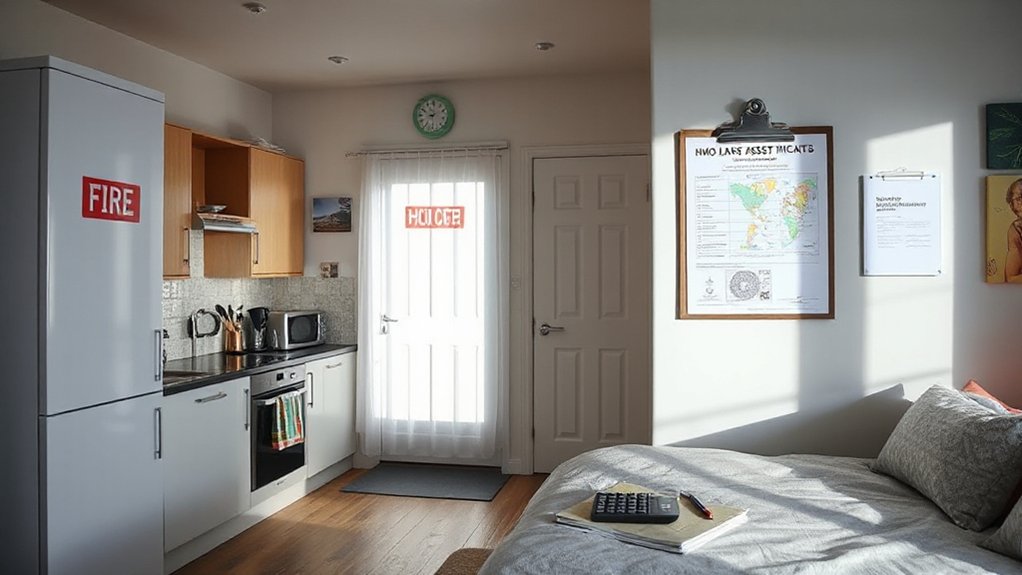
Obtaining an HMO license is a structured, hands-on process that varies by local authority, but the core steps stay consistent: confirm eligibility, prepare the required documentation, submit the application, and meet ongoing compliance checks.
You’ll typically need an up-to-date property valuation to prove adequate space and facilities, plus a detailed tenancy plan. The licensing officer will assess safety standards, fire precautions, landlord accreditation, and amenity adequacy for shared living.
Expect fees that cover application processing, annual or renewal charges, and potential conditional approval costs, so budget accordingly for ongoing compliance checks.
You’ll also provide evidence of gas and electrical safety, energy performance, and robust tenancy administration to protect rental income. Clear records streamline renewals, inspections, and any future licensing updates.
Budgeting and Timelines for the Conversion
Converting a UK property into a fully compliant HMO is a coordinated effort that hinges on clear budgeting and a realistic timeline, so you map milestones against regulatory requirements and cost realities from day one. You’ll set a baseline budget that includes refurbishment, safety upgrades, and licensing fees, then add a contingency for surprises.
Timeline decisions align with planning approvals, contractor lead times, and rent-ready targets, so you avoid bottlenecks and keep tenants moving in smoothly. Incorporate property valuation early to validate costs and return, and plan tenant screening as a non-negotiable step before occupancy, ensuring compliance and safety from the start.
- Establish a realistic budget with contingency and highlight major cost drivers
- Align milestones with regulatory approvals and contractor availability
- Secure a timely property valuation to inform decisions
- Plan and document tenant screening procedures upfront
- Build a milestone-driven schedule to track progress and adapt
Documentation and Sign-Offs to Prove Compliance
From budgeting and timelines, you’ve mapped the where and when of the build. Now you’ll gather documentation and secure sign-offs that prove compliance in a clear, verifiable trail.
Start with tenancy records and consent forms, then compile energy performance certificates and building control sign-offs.
Keep a master folder with up-to-date floor plans, room sizes, and occupancy limits that align with HMO conditions.
Include a current tenancy agreement and a schedule of services to demonstrate governance of shared spaces.
Tenant screening results should be stored securely, with consent logs and privacy notices.
Add a property valuation or an independent assessment to confirm asset adequacy.
Finally, obtain formal sign-offs from the local authority or a compliant housing body to certify readiness.
Common HMO Pitfalls and How to Avoid Them
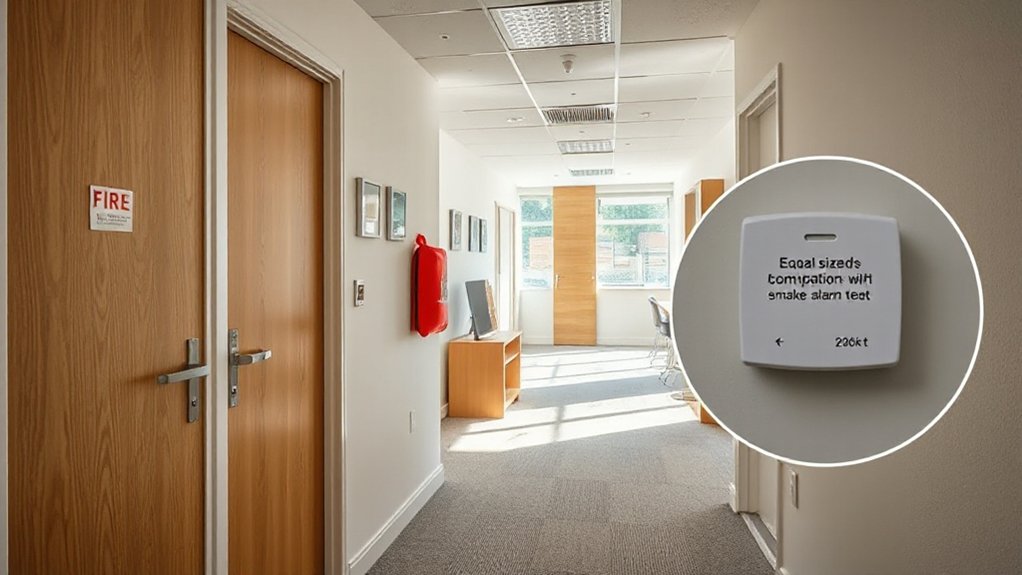
You’ll want to start by closing Documentation Gaps to prevent compliance delays. Then lock down Licensing and Permissions so you’re not scrambling later.
Keep Room Standard Consistency in check across all occupied units to avoid mismatches that trigger checks or fines.
Stay methodical, anticipate risks, and document every step to keep your HMO on solid, compliant footing.
Documentation Gaps Risk
Documentation gaps are a common, costly pitfall in HMOs, yet they’re avoidable with a simple, disciplined approach. You’ll reduce risk by systematizing records, aligning documents to standards, and checking cross-references before submission.
When gaps appear, you’ll spot incomplete tenancy agreements, missing consent forms, or undocumented safety checks that could derail compliance and tenant privacy. You’ll also protect property valuation by maintaining up-to-date inventories, licenses, and maintenance logs that reflect a well-managed asset.
By adopting a consistent filing regime, you’ll enhance transparency for inspectors and lenders alike, and you’ll work proactively rather than reactively.
- Create a centralized document library with version control
- Tag files by compliance area: safety, tenancy, finances
- Regularly reconcile licenses, notices, and certificates
- Audit consent, privacy, and data-handling records
- Maintain up-to-date inventory and maintenance logs
Licensing and Permissions
Check room counts, bathroom ratios, fire safety standards, and existing planning permissions to confirm compatibility. Documented compliance is your best shield against enforcement risk.
Property valuation informs funding decisions and helps you negotiate sensible improvements without overinvesting.
Engage tenants early about licensing plans; their cooperation smooths inspections and reduces disputes.
Maintain a clear paper trail: licenses, certificates, and renewal dates. Regularly review compliance as rules evolve, updating safety features and occupancy plans to stay current and avoid penalties.
Room Standard Consistency
Ensuring room standard consistency across an HMO prevents disputes, penalties, and costly refits later. You should define a uniform baseline for finishes, dimensions, storage, and fixtures so every room meets the same practical expectations.
Prioritize room aesthetics without compromising ease of maintenance or safety, and verify occupant comfort through consistent lighting, ventilation, and noise control. Use a simple checklist during refits to avoid drift between bedrooms, doubles, and studio spaces.
Document standards in your tenancy guide to align expectations with tenants and inspectors. Consistency reduces confusion, supports compliance, and speeds inspections.
- Standardize floor coverings and paint schemes for a cohesive feel
- Match door heights, wardrobes, and power points across rooms
- Ensure similar heating, insulation, and ventilation
- Normalize window sizes and natural light access
- Audit cleanliness and furniture quality for every room
Next Steps: Building Your Compliant HMO Portfolio
So, what’re the practical next steps for building a compliant HMO portfolio? Start with a clear plan: assess each property’s potential, identify compliance gaps, and set a timeline for upgrades.
Prioritize robust tenant engagement—regular check-ins, accessible channels, and responsive maintenance—to boost retention and reviews.
Build a scalable system for licensing, fire safety, and electrical checks, using a checklist you can reuse across properties.
Document a standardized room mix and common area rules to maintain consistency.
Develop marketing strategies that highlight safety, convenience, and value to attract reliable tenants.
Create a simple portfolio dashboard to track rents, compliance dates, and repairs.
Finally, reinvest proceeds from early rentals into capex upgrades, ensuring each new HMOs meets your growing compliance standard.
Frequently Asked Questions
What Are Hidden Costs Not Covered by Estimates?
Hidden fees can sneak up; you’ll often face unexpected legal obligations, permits, or inspections. Budget for permit variations, council fees, and professional advice, because these hidden costs add up and influence your compliance timeline and overall property viability.
How Long Can a Single HMO License Cover Multiple Properties?
You’ll typically need a separate HMO license for each property; one license doesn’t cover multiple sites. Navigate the licensing process and meet legal requirements, then maintain records, inspections, and renewals to stay compliant and impeccably organized.
Can a Property Convert Without Altering External Appearance?
No, you can’t convert without altering exterior appearance if required by planning. You may need exterior modifications, and you must obtain planning permissions before proceeding to guarantee your property remains compliant and aesthetically balanced.
Do Tenants Have Rights Beyond Standard Tenancy Agreements?
Tenants do have rights beyond standard tenancy terms, including protections around notice, deposits, and housing conditions. You should pursue lease extensions if needed, documenting improvements and negotiating clearly to safeguard your occupancy and guarantee ongoing rights.
What Tax Implications Arise From HMO Income?
Income from an HMO affects your taxes: you’ll face scheduling, allowances, and possible VAT implications. You should focus on tax planning and accurate income reporting, tracking expenses, and staying compliant with HMRC to avoid penalties.
Conclusion
So you’ve mapped the maze, ticked every box, and lifted the lid on your compliant HMO. Picture a fortress of fire doors, spotless utilities, and rooms that breathe safety and space. It’s not just compliance—it’s a well-oiled machine humming with tenants happy to stay. You’ll sleep easier, plan smarter, and watch your portfolio grow like a well-watered garden. Stay diligent, stay adaptable, and let the system you built keep growing with you.