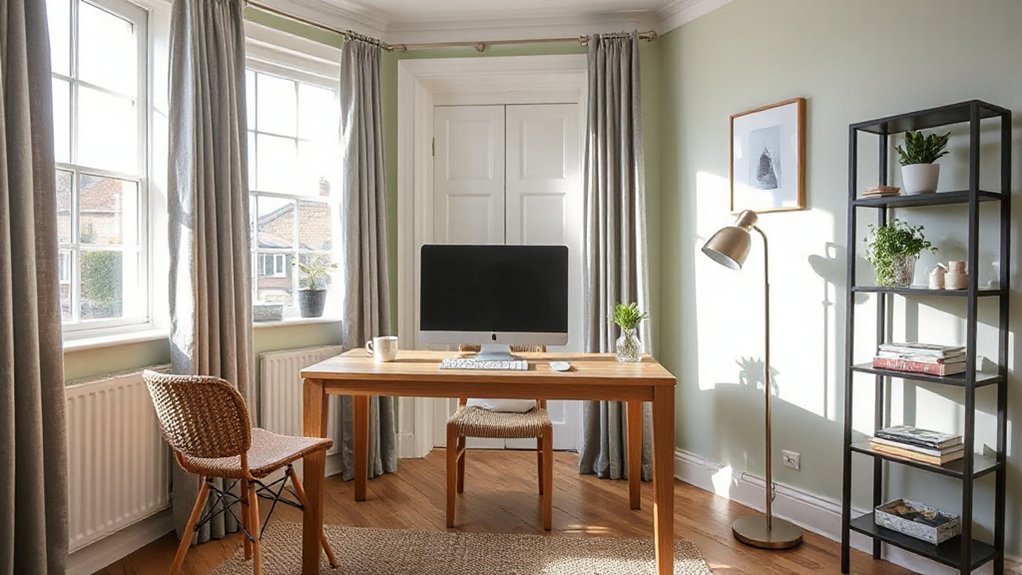
Design a stylish UK home office by clarifying your goals and zoning for tasks like paper management, video calls, design, and coding. Choose a layout that fits your space, maximize natural light with desk placement near windows, and use dimmable, high-CRi lighting to reduce glare. Pick a calming neutral palette with warm textures, add ergonomic, budget-friendly furniture, and weather-proof finishes for UK climates. Finish with smart cable management and acoustics for focus; more tips await.
Identify Your UK Home-Office Goals
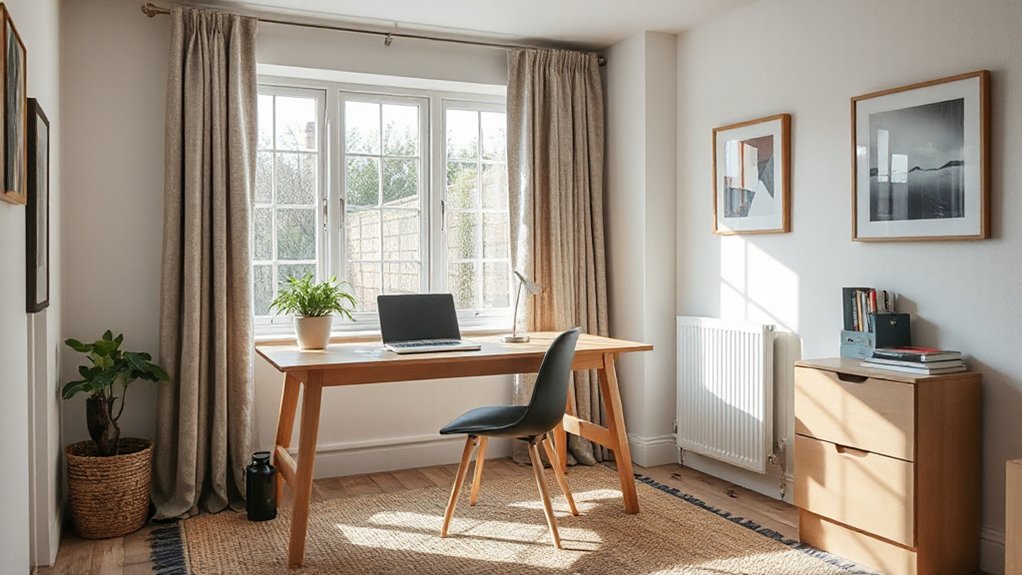
Before you start choosing a setup, clarify your UK home-office goals. You map the function first: what tasks must you complete, and when? Define core activities—paper management, video calls, design work, or coding—and assign a dedicated zone for each.
Consider daylight patterns and your tolerance for glare to determine screen placement and lighting needs. Establish your must-haves: a reliable desk, ergonomic chair, ample storage, and a color palette that boosts focus.
Budget realistically for foundations before accessories. Reflect on how you’ll present the space in everyday life, since Office decor and tasteful Garden lighting influence mood, perception, and productivity.
Align goals with present constraints, then iterate. Your criteria now guide sourcing, layout, and future upgrades with fewer pivots.
Choose a Layout That Fits Your UK Property
How can you shape a layout that truly fits a UK property? Start by mapping the room’s architecture and thresholds.
Prioritize functional zones: a focused desk area, storage that doubles as a divider, and a small drafting or task space if you need it. Choose a layout that enhances flow—avoid cluttered corners and awkward door sweeps.
Consider how you’ll access power and data hubs, placing the desk within easy reach of outlets and network points.
Balance scale with proportion: compact flats benefit from wall-mounted storage and a slim desk; larger properties tolerate floating islands or L-shaped configurations.
Use interior lighting to define work zones, then select home decor accents to unify the palette without overcrowding.
Maximise Natural Light in Small UK Flats
Maximising natural light in small UK flats starts with smart placement and reflective surfaces. You’ll optimize window access, use light-coloured wall finishes, and choose furniture with slim profiles to avoid blocking daylight.
Position your desk near a source of natural light, but angle screens to reduce glare during peak sun. Mirrors and glossy surfaces amplify brightness, while breathable fabrics keep the space feeling airy. Integrate indoor plants and artwork display to balance light with texture and focus.
- Use translucent window treatments to control glare without sacrificing daylight.
- Place tall storage against exterior walls to avoid shadowing work zones.
- Align plant placement and wall art with natural light patterns for consistency.
These tweaks create a brighter, more productive work zone, effortlessly.
Pick a Bright, Calm Colour Palette for UK Homes
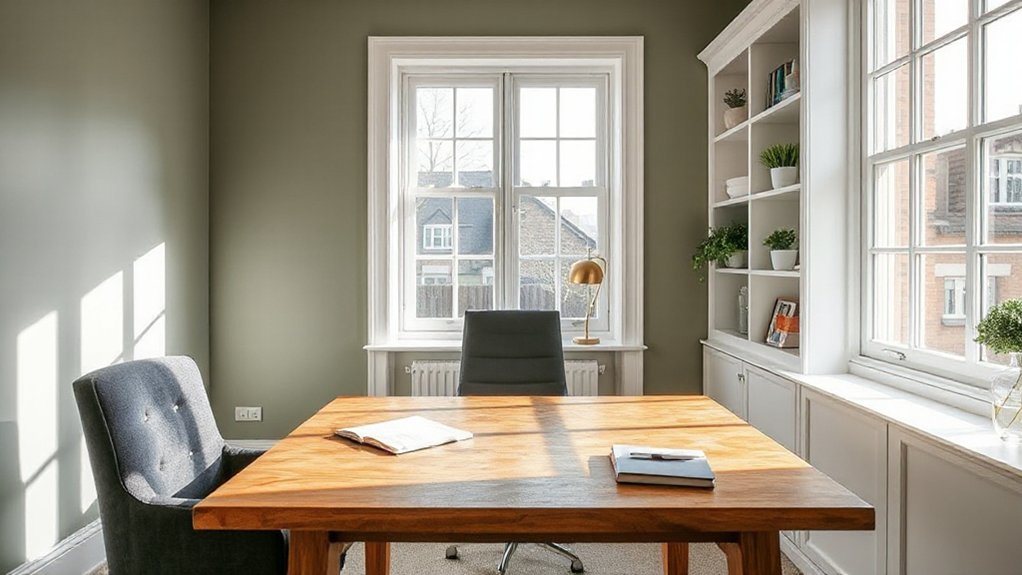
Choosing a bright, calming colour palette for UK homes starts with selecting a light base and pairing it with soft, grounded accents. You’ll create a serene backdrop by choosing whites, creams, or pale greys as walls, then layer with tactile textures in warmer tones.
Consider Colour psychology to guide mood: cooler neutrals invite focus, while warm undertones boost approachability without shouting. For work zones, keep contrast minimal between walls and built-ins to preserve openness.
Paint finishes matter: matte or soft-sheen walls reduce glare; eggshell trims offer durability in high-traffic areas. Test swatches in natural light at different times of day to confirm balance.
Limit saturated hues to small accessories or feature panels to avoid visual fatigue. A coherent palette supports productivity and timeless appeal.
Select Ergonomic, Budget-Friendly Furniture
When you choose ergonomic, budget-friendly furniture, you’ll prioritize support, adjustability, and durability without inflating the cost.
Start with compact, space-saving desks and chairs that offer proper lumbar support and multiple height options to suit long work sessions.
I’ll guide you toward smart picks that balance function with a clean, design-forward look.
Ergonomic Budget Picks
A tight budget doesn’t mean you have to sacrifice comfort or posture. You can still optimize ergonomics with affordable picks that don’t skimp on support or adjustability. Prioritize parts that move with you: height-adjustable desks, 2D lumbar back support, and a seat with a breathable, contouring cushion.
For a cohesive feel, pair these with practical textures and a restrained palette. Lighting design and colour schemes matter here, shaping mood and focus without added cost. Look for chairs with tilt tension, desk rails for monitor arms, and footrests to support circulation.
Choose finishes that echo your scheme to avoid visual clutter and maximize perceived space. Small investments yield big returns on comfort and productivity.
- Height-adjustable desk with reliable lift
- Ergonomic chair with adjustable lumbar support
- Monitor arm and footrest for posture alignment
Space-Saving Office Furniture
Look for modular systems that reconfigure as your needs shift, and choose desks with cable management to keep the surface clean. Prioritize ergonomic accessories, like wireless solutions, monitor arms, and footrests, to reduce strain while preserving space.
Use multitasking furniture—folding stools, wall-mounted shelves, and storage ottomans—to keep essentials at hand without crowding the floor. Pair with decorative accents that reflect your style, ensuring the space feels calm and productive while remaining highly functional.
Design-forward choices deliver comfort, efficiency, and a polished UK-property edge.
Define Work, Storage, and Relaxation Zones in Open-Plan UK Rooms
Open-plan UK rooms thrive on clearly defined zones: work, storage, and relaxation. You’ll create distinct areas with smart zoning, so each function feels intentional yet cohesive.
Position a compact desk within easy sightlines to natural light, then anchor storage with shelving that doubles as a room divider. Use soft boundary cues—rug, lighting, and color—to signal shifts between zones without breaking flow.
Keep circulation clear and furniture arrangement deliberate to minimize clutter and maximize scale.
- Furniture arrangement that emphasizes function, yet preserves openness
- Lighting techniques to differentiate tasks and moods
- Subtle room dividers that don’t obstruct sightlines or airflow
Prioritise Cable Management and Your Tech Setup
Prioritize cable management from the outset, so your tech setup stays clean and safe as your UK home office evolves.
We’ll tune power, data, and charging flows to minimize clutter while maximizing performance and flexibility.
Start with a tested layout: discreet routed cables, a central power hub, and accessible outlets to support future devices.
Cable Management Essentials
Cable management isn’t just about looks; it’s a foundational part of a productive, design-forward setup. You’ll keep cables organized and accessible, reducing clutter while boosting reliability and safety.
Start with a simple plan: map ports, outlets, and device placement to minimize excess length. Use cable concealment strategies—under-desktop trays, wall channels, and furniture with built-in cable management—to keep wand-waving wires out of sight but within reach.
Choose low-profile clips and Velcro ties to secure runs without damage. Prioritise wireless charging where practical to reduce visible cords, and label bundles for quick reconfiguration. Regular audits prevent creeping tangles as devices evolve.
- Map and label every device and outlet
- Use under-desk channels and built-in trays
- Choose wireless charging where feasible
Tech Setup Optimization
To optimize your tech setup, start by mapping every device to its ideal location and power source. Then design a clean, scalable cable plan that minimizes visible runs.
Begin with a centralized hub or surge-protected strip placed under or behind your desk, pairing each port with a labeled cable to your device. Use single, branded cables where possible and conceal them with routed channels or a cable raceway.
Prioritize ergonomic accessories—adjustable monitor arms, a comfortable keyboard tray, and a chair with proper lumbar support—to reduce strain during long sessions.
Integrate smart gadgets for automation, like a single wireless charger station and a smart plug system, to control power efficiently.
Choose durable, heat-dissipating enclosures for routers and NAS devices to maintain performance without clutter.
Smart Storage Solutions to Cut Clutter
Smart storage is the backbone of a calm, efficient home office, so start by mapping every category of clutter and then designing spaces that disappear the moment you’re done using them. You’ll deploy accessible zones, hidden compartments, and modular units that adapt as needs shift.
Prioritize vertical storage and drawer dividers to keep cables, office supplies, and documents organized at a glance. Integrate decorative accessories and indoor plants as visual anchors, ensuring they don’t encroach on work surfaces.
Use labeled bins and a catch-all tray near the exit to prevent overflow. Regular 5-minute resets keep momentum.
Aim for a clean silhouette with soft edges, matte finishes, and concealed hardware for a refined, distraction-free environment.
- Use modular wall shelves for flexibility
- Add labeled bins and tray near the exit
- Pair decorative accessories with indoor plants for balance
Task Lighting for Focused Work at Your Desk
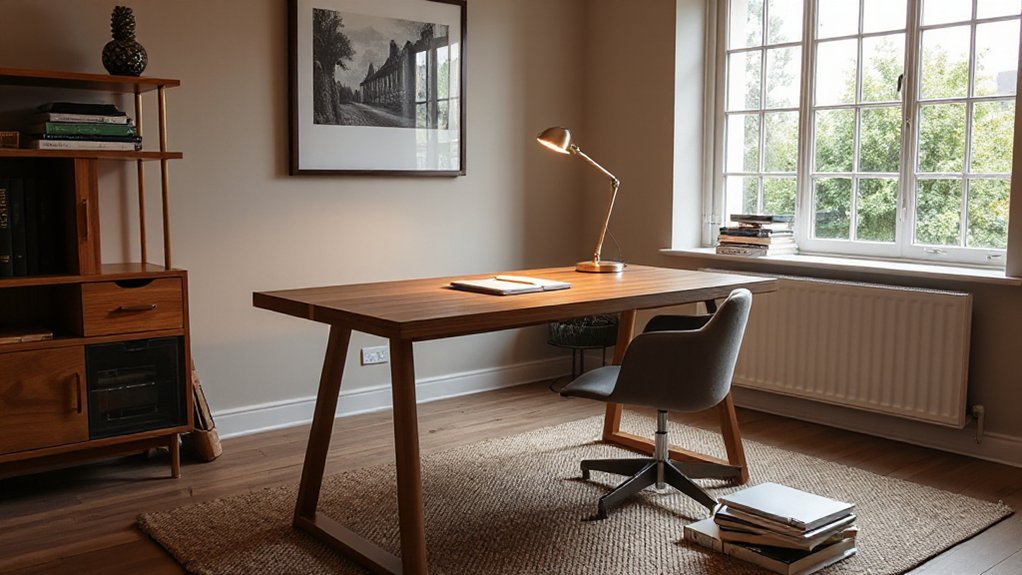
Good task lighting is essential for sustained focus at your desk, and the right setup reduces eye strain while boosting productivity.
Start with a dimmable, higher-CRI LED desk lamp placed to the side of your dominant hand to minimize shadows. Combine ambient wall lighting with a focused task light to balance contrast and prevent glare.
Choose a colour temperature around 3500–4000K for daylight-like clarity that supports prolonged concentration. An adjustable arm or clip-on option lets you redirect light without reshaping your entire desk.
Use a matte finish and avoid reflective surfaces to curb glare. Make certain cables are hidden or clipped, so the workspace feels calm.
Prioritize task lighting that delivers consistent, focused illumination for precise, error-free work.
Personalise With Uk-Perfect Accents and Textiles
Accent your UK home office with thoughtfully chosen textiles and accents that reinforce a calm, professional vibe. You’ll elevate focus with tactile details that feel refined yet practical, balancing texture and color without clutter.
Choose textiles that echo vintage decor sensibly—think rich weaves, subtle patterns, and durable finishes—so your space stays polished long-term.
Incorporate botanical accents to bring life and gentle energy, from potted greenery to pressed works on shelves.
Align accents with your desk setup: minimal, understated, and cohesive.
- Velvet cushion pops in a restrained palette
- Linen curtains with soft drift for daylight control
- Botanical accents and vintage decor pieces that echo a unified theme
Sound-Tuning Tips for Quiet, Productive Spaces
You’ll start by selecting acoustic materials that balance absorption and clarity, from fabric panels to wooden ceilings, so distractions stay down without muting detail.
Consider your layout for silence: position doors, work zones, and storage to minimize footfall and noise transfer while keeping daylight and air flow intact.
Finally, layer sound masking tactics—quiet ambience, targeted speakers, or white noise apps—to sustain focus without overwhelming conversations.
Acoustic Material Choices
If you’re shaping a home office, the right acoustic materials can make the difference between distracting echoes and focused, comfortable work. Choose targets that balance performance and style, prioritizing materials that absorb mid to high frequencies while staying visually refined.
Acoustic panels should be mounted at standing-eye level to treat primary reflections, with fabric-wrapped options in neutral tones to blend with the room.
Soundproof curtains can layer in for extra control at windows, reducing outside noise and glare.
Pair these with soft furnishings and a rug to tame floor bounce without cluttering sightlines.
- Acoustic panels
- Soundproof curtains
- Layered soft furnishings for sound diffusion
Layout For Silence
Good layout choices amplify the work you’ve already built with sound-absorbing materials. You’ll want a footprint that minimizes noise reverberation while maximizing focus zones.
Place your desk away from entry doors and windows to cut footfall and street sounds; orient it toward a solid wall if possible to reflect sound inward rather than outward.
Use a tall bookcase or plants as a soft barrier on the side where conversation may spill, and keep seating arranged for short, contained discussions rather than open, long ones.
Layer textures: wool rugs, cork, and fabric partitions absorb mid and high frequencies without cluttering the space.
Consider the visual impact of home decor accents that reinforce discipline, and if you’ve got an outdoor workspace, place it to reduce indoor noise intrusion during pleasant weather.
Sound Masking Tactics
- Soundproof curtains for window control and noise reduction
- Acoustic panels on reflective surfaces to tame echoes
- Discreet, scalable masking gear that fits your layout
Budget-Smart Upgrades That Make a Difference
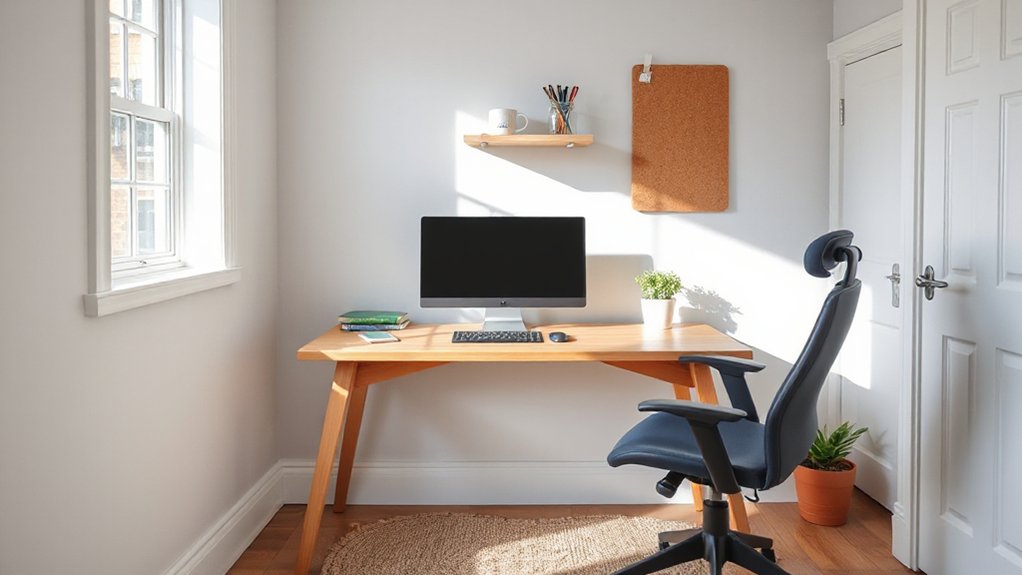
Budget-friendly upgrades can dramatically improve a home office without blowing your budget. You’ll maximize impact with targeted, practical changes that don’t disrupt flow or space.
Start by revitalizing lighting: swap in a bright, warm LED desk lamp and add a dimmer for mood control during late sessions.
Choose functional storage that doubles as display, like shallow cubbies or wall-mounted shelves to keep surfaces clear.
Invest in a quality chair with lumbar support for consistent comfort.
Introduce small touches of Vintage decor and plant integration to soften edges and improve air quality without clutter.
Use a cohesive colour palette—neutral walls with accent tones—so accessories read as intentional design.
Prioritize cable management and a simple, scalable layout to accommodate future upgrades.
DIY Improvements for Victorian or Narrow Rooms
If you’re working with a Victorian or narrow room, clever layout and restraint are your best tools: you can maximize light, circulation, and perceived space without sacrificing character.
Prioritize built-in storage and floating desks to keep floorline open, and choose a monochrome palette with warm timber accents to enhance depth.
Use vertical lines—tall shelves, slim curtain rods, and column-like lamps—to elongate walls while maintaining Victorian decor charm.
Opt for doorless or pocket doors to preserve sightlines, and select compact seating that folds or tucks away when not in use.
Keep clutter to a minimum with hidden cable management and multi-purpose furniture.
- Ventilated, slim-profile desk
- Concealed storage solutions
- Light-reflecting, narrow room layout strategies
Weather-Proofing and Thermal Comfort in UK Climates
Choose thermal insulation that targets key areas: roof and cavity walls first, then floors, with a breathable, moisture-controlled system to prevent damp. Use thermal mass materials—concrete, tile, or stone—to even out temperature swings without bulk.
For heating, install zoned controls and underfloor or low-temperature radiators to keep comfort steady while cutting energy use. Emphasize weather resilience in exterior cladding and roof membranes to endure UK drizzle and wind.
This approach delivers consistent comfort, reduced running costs, and a polished, professional aesthetic.
Small-Space Desk Alternatives for Garages and Loft Getaways
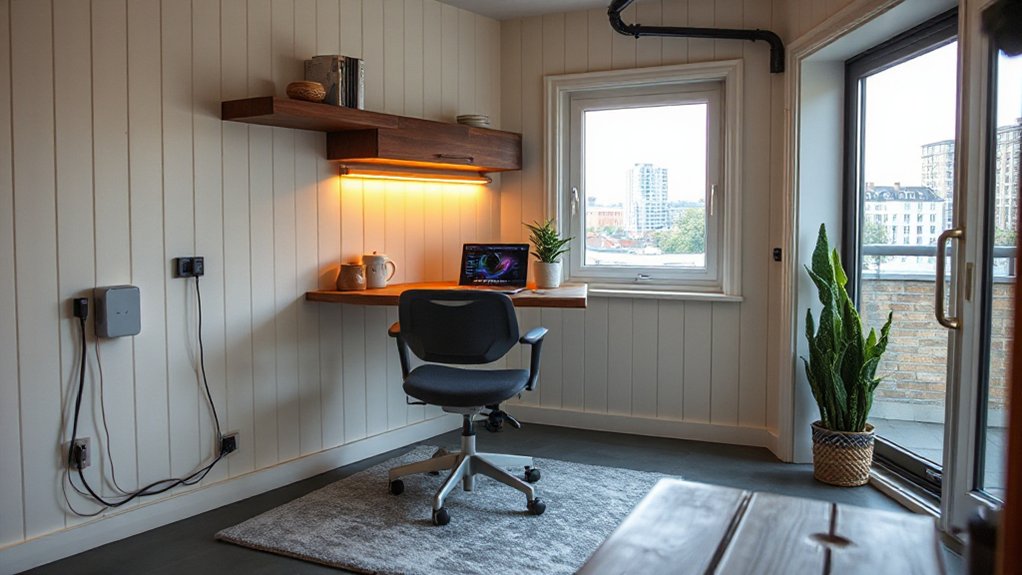
Compact garage desks and loft-space work zones redefine tiny footprints with multi-functional layouts. You’ll prioritize linear work surfaces, hidden storage, and modular components that flex for changing needs.
Start by mapping flow and lighting, then pick compact desks that pair with wall-mounted or fold-away options for a clean, design-forward setup.
Compact Garage Desks
For compact garage desks, space-efficient designs are a practical gateway to productive loft getaways and workshop studios. You’ll optimize every inch with a wall-mounted fold desk and a slim, steel-frame base that stays sturdy without crowding.
Embrace garage organization by grouping cables with labeled clips, using a pegboard for tools, and selecting compact storage bins under the work surface.
Choose desk accessories that balance form and function, like a magnetic ruler, a recessed power strip, and a beveled monitor riser to keep screen height ergonomic.
Finish with a durable worktop treatment to resist oil and grime, plus a neutral color palette that widens the space visually.
Small changes, big impact.
- Wall-mounted fold desk
- Pegboard tool organization
- Recessed power strip and monitor riser
Loft-Space Work Zones
In a loft conversion, designate a primary drafting perch near natural light, then tuck a secondary task surface along the opposite wall for quick edits.
Use vertical, creative shelving to keep supplies within reach without intruding on floor space.
Opt for a slim, wall-mounted desk that folds away when not in use, paired with a compact chair with ergonomic adjustability.
Implement a narrow filing spine behind a sliding door to hide documents.
Finish with low-profile lighting and a neutral palette to maintain flow between zones.
Maintenance and Care for Longevity of Your Office
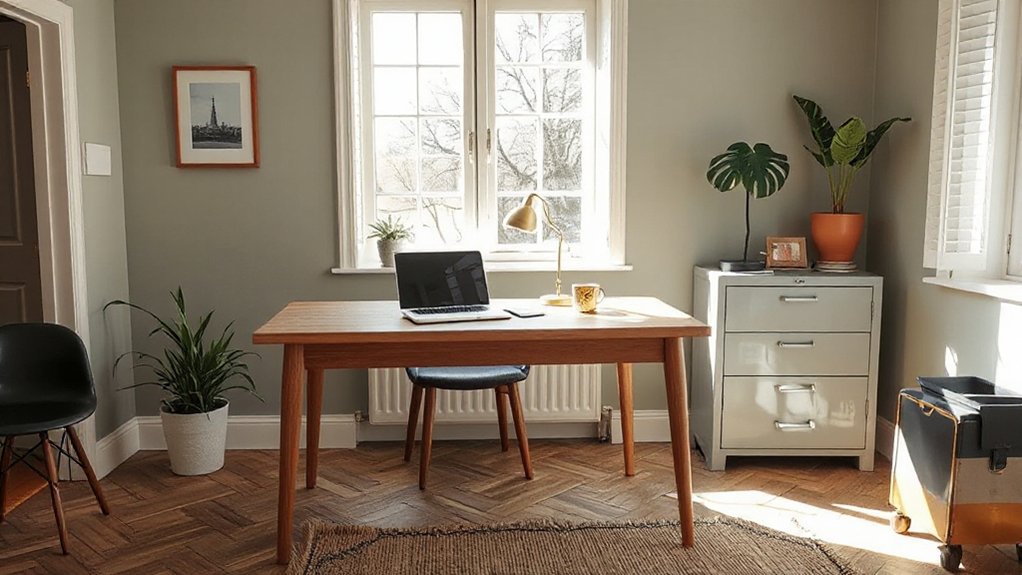
Regular upkeep is essential to keep a home office performing at its best, so start with a simple, proactive regimen: inspect surfaces and systems monthly, address wear before it escalates, and document adjustments for long-term reliability.
By prioritising durable finishes and easy-to-clean materials, you extend life without sacrificing style.
Maintain ergonomic comfort through consistent chair height, monitor alignment, and cable management to prevent fatigue.
Schedule seasonal checks on lighting and airflow to protect electronics and preserve mood-enhancing atmospherics.
Use a disciplined approach to furniture arrangement and decorative accessories, ensuring balance, accessibility, and minimal clutter.
Small, deliberate tweaks now save bigger renovations later, keeping your workspace sharp, cohesive, and built to last.
- Inspect, adjust, log
- Prioritise ergonomic, durable choices
- Tidy cables, optimise lighting
Before-and-After Checklist to Finalise Your Space
Before you call it done, run a focused before-and-after checklist to lock in a cohesive, high-functioning space: verify layout flow, confirm critical measurements, and assure that lighting, acoustics, and storage systems work together without hindrance.
Start with the layout: assure clear sightlines to your primary task area and that cables are tucked, not strewn. Check chair height, desk depth, and monitor alignment for ergonomic comfort.
Reassess lighting levels at key tasks and ambient spill, adjusting timer or dimmers as needed.
Test acoustics by softening echoes with rugs or panels, and confirm storage accessibility.
Finish with decorative elements: place tasteful Decorative accessories and Inspirational artwork that reinforce focus without distraction.
Document final specs and commit to a concise maintenance plan for lasting polish.
Frequently Asked Questions
How to Budget for a Stylish UK Home Office Setup?
Set a realistic budget by prioritizing ergonomic accessories first, then invest in a versatile desk and comfortable chair, leaving room for interior color schemes. Track costs, compare options, and buy smart with durable, timeless pieces for enduring style.
Can I Repurpose Existing UK Furniture for a Desk?
You can repurpose existing UK furniture as a desk, overcoming size-technique concerns by choosing a sturdy surface and proper clearance. Furniture reuse boosts space optimisation while preserving character; measure, adjust height, and add cable management for a clean, practical setup.
What Are Legal Lighting and Electrical Safety Tips in the UK?
Electrical regulations require you to guarantee compliant fittings, have safety inspections, and maintain certification. You should schedule regular checks, use RCDs, and avoid daisy-chaining outlets. Keep documentation handy; follow professional guidance for upgrades and safe lighting choices.
How to Choose Uk-Compliant Energy-Efficient Tech?
Energy-saving gadgets meet UK sustainability standards by prioritizing efficiency, certifications like Green Deal, and smart monitoring. You choose ENERGY STAR or BREEAM-rated tech, compare energy labels, and verify vendor warranties to maximize long-term savings. Your setup shines.
Any Quick Decluttering Tricks for Small UK Spaces?
Store smart with vertical shelves and labeled boxes; use under-bed bins, built-in niches, and hidden cords. Decluttering hacks: adopt a 30-second daily tidy, donate extras weekly, and rotate essentials. You’ll maintain calm, space-efficient storage solutions.
Conclusion
You’ve designed a chic, functional UK home office that fits your space, climate, and budget. With a calm palette, ample natural light, and ergonomic gear, focus feels effortless and your workday runs smoother. Keep maintenance simple to preserve longevity, and use our quick before‑and‑after checklist to refine. As you’d expect from a pro, integrate smart storage and weather-ready details now, so future tweaks stay minimal. Now, channel your inner time‑manager—think modern, not medieval, in your home oasis.