To turn a plain UK new-build into a warm, cohesive home, start with a room-by-room plan that prioritizes flow and function, then layer textures and color. Add warmth with soft textiles, layered fibers, and warm hues, while using budget-friendly finishes like matte fixtures and textured panels. Introduce strategic color pops and feature walls to create depth, and refresh hardware and accents regularly to maintain cohesion. By swapping textures and accents, you’ll see character emerge—and you’ll discover more tricks as you go.
Why a New-Build Feels Cold: and How Homes Start to Feel Warm
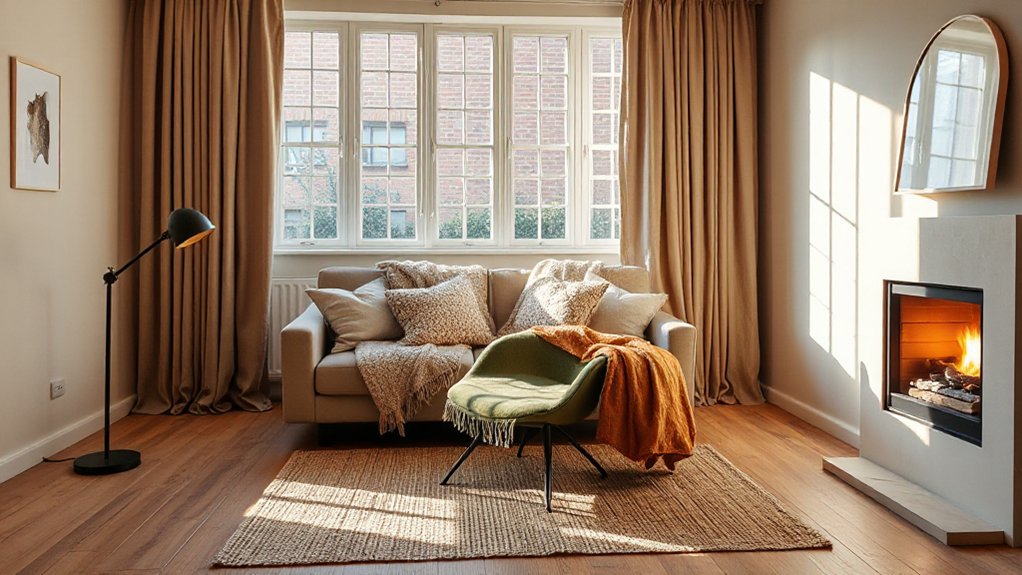
New-build homes often feel cold at first because the initial shell isn’t yet optimized for comfort. You’ll notice drafts, single-glazed vibes, and quirky temperature swings as the building sits on its future potential.
Start with a practical plan: seal gaps, insulate floors, and upgrade doors to reduce heat loss. You’ll gain immediate gains by tightening the envelope and choosing warm hues and textiles that trap heat.
Then integrate Home automation to monitor and adjust temps without wasting energy, so rooms stay even without cranking the boiler.
Focus on energy efficiency in every choice—low-E windows, efficient boilers, and well-placed radiators.
As sealing and systems improve, warmth becomes predictable, and the home’s character begins to emerge through thoughtful, functional styling.
Plan the Layout for Flow and Character (Begin With a Room-By-Room Plan)
Start with a room-by-room map that prioritizes flow, function, and character. You’ll draft zones for daily life first, then refine details to suit how you actually move through the space.
Define clear paths between entrance, living area, kitchen, dining, and workspaces so furniture can sit without blocking sightlines or doors. Consider sightlines from doorways to key views, and plan for natural gathering points where conversations happen most often.
Prioritize furniture placement that supports usage patterns without clutter, like a sofa arrangement that invites conversation yet preserves easy circulation. Use the map to test spatial flow during a stroll-through, adjusting distances and angles as you go.
A precise layout saves rework later and accelerates cohesive, lived-in character.
Layer Textures to Add Warmth (Soft Surfaces, Layered Fibers, and Visual Weight)
Layering textures adds warmth and depth to a plain UK new-build by inviting touch and shaping visual weight. You can achieve this with deliberate textural layering, pairing soft surfaces with sturdy foundations to create balance.
Choose fiber combinations that suit your space, mixing wool throws with cotton upholstery and linen drapery to deliver contrast without clutter. Introduce tactile interest through rugs, cushions, and upholstery that vary in pile height and weave.
Layered fabrics should flow from room to room, reinforcing the route of movement while keeping a cohesive feel. Think scale, too: larger textures balance smaller details, while tonal harmony prevents overwhelm.
Finally, guarantee textiles are practical for daily life, easy to clean, and aligned with your lighting strategy.
Colour Pops That Work in UK Homes (Strategic Accent Palettes)
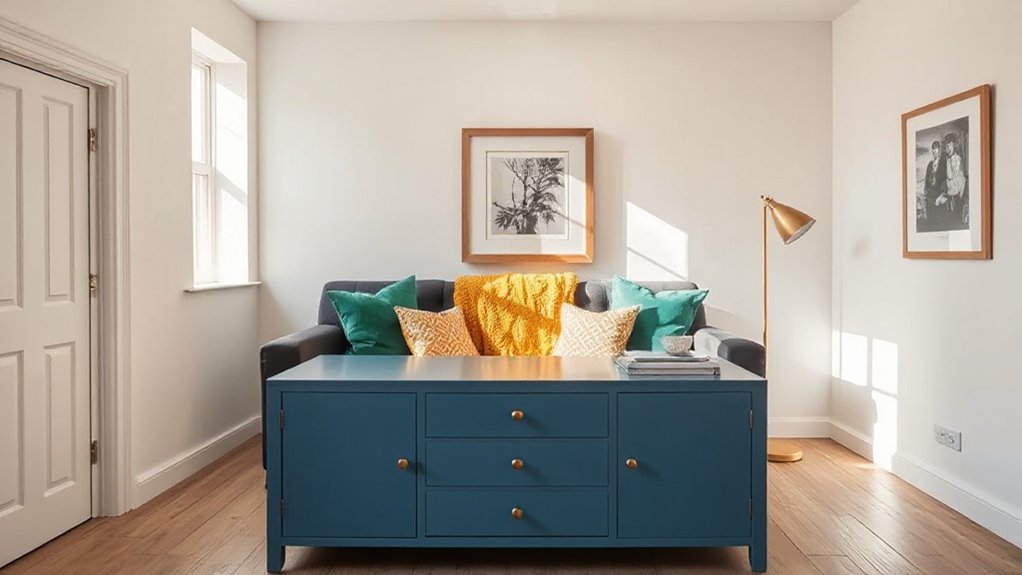
Think about bold colour combinations as strategic focal points that elevate your plain-build rooms without overpowering them. Start with timeless accent palettes that pair well with UK lighting and architectural details.
Then test small swatches before committing. You’ll create anchored schemes you can repeat across spaces for a cohesive, liveable look.
Bold Colour Combinations
Bold colour pops can energize a plain UK new-build without overpowering the space. You choose bold colour combinations strategically, balancing hue, value, and saturation for living areas, kitchens, and halls.
Start with a dominant neutral backdrop, then add two or three accent hues that echo architectural details. Use contrast to define zones without shouting.
Wall treatments can amplify the effect: a single feature wall in a saturated tone or a carefully layered wallpaper pattern creates depth and interest. Pair bolds with lighter neutrals to prevent fatigue and maintain cohesion.
Consider furniture styles that support the palette: streamlined pieces keep lines clean, while textured fabrics add warmth.
Timeless Accent Palettes
Choose a primary accent hue—dusty navy, sage, or ochre—and carry it through furniture ties, lampshades, and artwork for coherence.
Incorporate vintage textiles as tactile statement pieces or throws to evoke history without dated looks. Pair these with eclectic accessories—quirky ceramics, sculptural vases, or patterned rugs—to create personality without chaos.
Limit brightness to one or two focal zones per space; seasonally swap cushions or a rug to refresh the scheme.
Maintain balance, harmony, and a curated, lasting finish.
DIY Finishes That Look Designer on a Budget
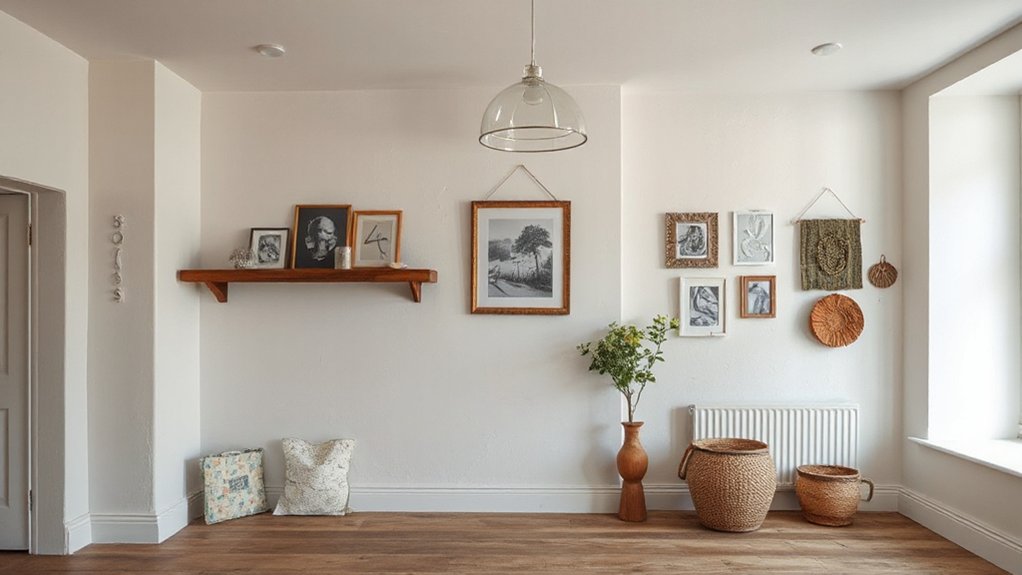
If you want designer-style finishes on a budget, start with smart materials and simple techniques that dramatically elevate a plain UK new-build. You’ll transform surfaces without overhauling layouts.
Use vinyl-backed wallpaper or textured panels for tactile walls, paired with statement trims to mimic high-end millwork. Embrace matte finishes on fixtures and cabinetry, resisting gloss pitfalls that scream “budget.” Layer color through filters of warm neutrals and charcoal accents to add depth.
Integrate vintage finds with modern fixtures to blend history and contemporary ease. Refinish a wooden table or console with a durable matte lacquer for longevity.
Choose budget-friendly decors—ceramic discs, woven textiles, and task lighting—that read expensive when arranged with intention. Plan, test samples, and execute precise, controlled applications for polished results.
Lighting Tricks for Depth and Ambience in Small UK Rooms
Smart, layered lighting can make compact UK rooms feel larger and more inviting, so start with a plan that pairs ambient, task, and accent layers.
You’ll want ambient light that fills the room without glare, task lights for reading or cooking, and carefully placed accents to sculpt depth.
Use dimmers to modulate mood and convert a single ceiling fixture into a flexible foundation.
Incorporate vintage fixtures as focal points to add character without clutter, pairing them with modern, low-profile sources for balance.
Place wall washes behind artwork or shelves to reveal texture and create soft shadows.
Choose warm white LEDs for a cohesive glow, and align light angles with furniture lines to avoid flatness.
Finish with statement art lighting to spotlight personality without overpowering the space.
Personal Touches: Small Details That Reveal You
Personal touches aren’t about cluttering a space with “stuff” — they’re about signals that reflect you: hobbies, memories, and daily rituals. You shape rooms with intent, choosing pieces that tell a story without overwhelming the design.
Prioritize moments over mass; display personal mementos in curated vignettes that stay tidy and readable. Limit what you rotate, so each item earns its place. Pair photos with concise captions or dates to anchor nostalgia in the present.
Integrate unique accessories that contrast slightly with the room’s palette for focal pops, not chaos. Use symmetry or deliberate asymmetry to guide the eye, reinforcing function.
Finally, keep surfaces clear, letting your personal signals remain legible, intentional, and authentic in every room.
Sourcing Affordable Character Upgrades: A Practical UK Guide

Sourcing affordable character upgrades in a UK home starts with a clear plan: identify the small, high-impact changes that deliver the most personality without breaking the budget. You’ll focus on spaces that matter most—entry, living room, and kitchen—then pair ideas with a practical budget and a timeline.
Prioritize adaptable items like vintage furniture and statement artwork that add character without major renovations. You’ll source smartly by mixing secondhand finds with affordable new pieces, plus DIY finishes to maximize impact.
- Target a few anchor pieces (vintage furniture) to set tone
- Introduce one bold feature (statement artwork) per room
- Refresh hardware and handles for cohesion
- Use color and texture swaps to unify the scheme
Frequently Asked Questions
How Can I Add Character Without Compromising New-Build Insulation?
Yes, you can: integrate historical influences and artistic accents with smart, insulation-safe choices like decorative plaster, period-style fixtures, and reclaimed wood trims. Prioritize airtight yet breathable treatments, selectively applied color, and layered textures to enhance character without compromising efficiency.
Which Finishes Create Warmth Without High Cost or Effort?
You can create warmth with practical, cost-efficient finishes like warm neutrals, cork flooring, and textured fabrics, plus vintage accessories and statement lighting. You’ll transform spaces strategically, mixing vintage accents with modern bases for polished, inviting atmosphere.
What Small Details Instantly Feel Like a Lived-In UK Home?
Satirically, you’ll notice the instant charm: you keep Vintage accessories and Bold artwork within reach, you mix textures, and you curate small, practical touches that feel lived-in, strategic, and undeniably you in a fresh UK home.
How Do I Mix Modern and Classic Styles Cohesively?
You mix modern and classic cohesively by layering vintage accents with disciplined architectural details, balancing clean lines with warm textures, and selecting timeless materials. You prioritize contrast, symmetry, and thoughtful proportion to create a practical, polished, strategic home.
What Are Quick, Affordable Updates for Texture and Depth?
You’ll transform spaces faster than a chameleon, with texture-popping tricks you’ll actually use. Try vintage accents and color accents, then layer inexpensive materials, paint, and hardware for depth that’s practical, polished, and strategically dramatic.
Conclusion
You’ve got the skeleton of a UK new-build, now give it a heartbeat. Start small: a rug that hums, a chair with a story, textures that clog the air with coziness. Plan room-by-room, layer finishes, and let lighting behave like a designer—without the price tag drama. Add colour pops, but keep the palette sane. Personal touches arrive late but land hard: a quirky lamp, a salvaged frame, a plant that refuses to die. In short, character, not cost, wins the day.