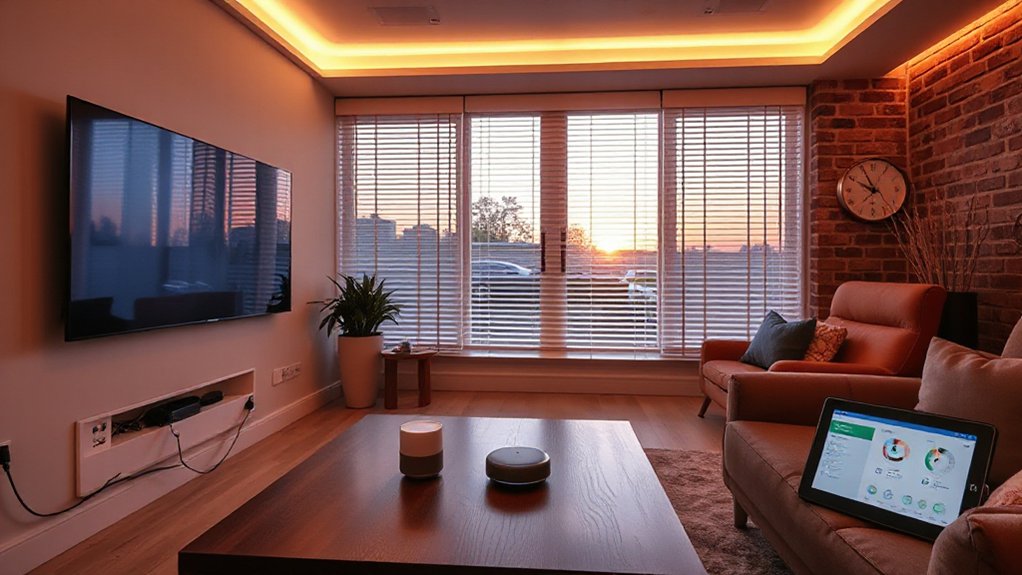
Smart-home features are becoming popular in UK properties as you gain precise energy control, seamless ecosystem integration, and enhanced security with on-device processing. You’ll see modular setups with sensors, hubs, and actuators that automate routines, regulate heating, and cut waste. Remote thermostats, zoning, and energy-monitoring boost efficiency, while cameras and sensors provide cohesive security with privacy-focused edge processing. Choose a platform that fits your privacy and scalability goals—HomeKit, Google, or Alexa—and discover how to future‑proof your home as you progress.
What Are Smart-Home Features in UK Homes?
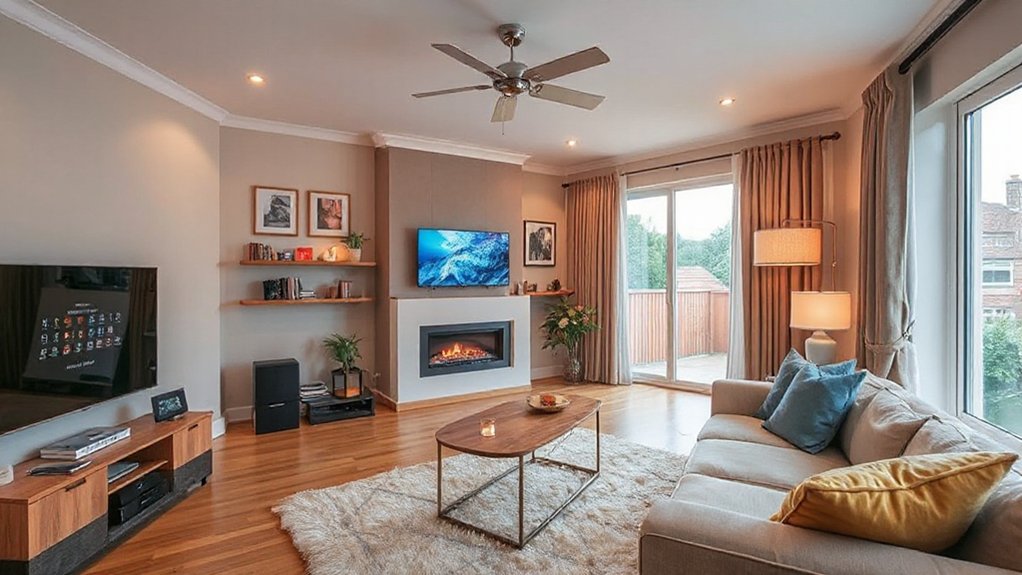
Smart-home features in UK homes encompass connected devices and systems designed to automate and optimize daily living, energy use, and security. You’ll describe a cohesive ecosystem where sensors, hubs, and actuators communicate to coordinate routines, alerts, and data insights.
In smart home design, integration matters: standards, interoperability, and a modular approach let you scale without clutter. You’ll prioritize energy management by selecting devices that monitor consumption, time-based control, and automated dimming or scheduling to reduce waste.
Security profiles integrate camera streams, access control, and remote shutdown, yet you maintain privacy through local processing and encrypted connections.
User interfaces balance sophistication with usability, so you act decisively. The outcome is a sustainable, responsive environment that supports comfort, efficiency, and resilience across daily routines.
How Smart Boilers Slash Bills and Keep Homes Warm
Smart boilers boost efficiency with smart controls and rated combustion, trimming energy use without sacrificing comfort. You’ll benefit from remote thermostat control and zoning to tailor heat exactly where and when you need it.
This approach aligns with sustainable design, lowering bills while keeping homes consistently warm.
Smart Boiler Efficiency
How do smart boilers cut energy use while keeping homes cozy? You optimize operation with modulating burners, weather-aware controls, and demand-responsive scheduling. Your system learns occupancy patterns, reduces domestic hot water waste, and prioritizes high-efficiency modes during shoulder seasons.
With real-time diagnostics, you preempt efficiency drops, sustaining the boiler’s performance without manual tuning. You’ll notice improved heat-on-demand matching, lower standby losses, and fewer temperature swings, all while maintaining comfort.
To guarantee long-term reliability, prioritize smart boiler maintenance, including filter checks and refrigerant-style seals if applicable, so the unit remains at peak efficiency.
When budgeting upgrades, compare boiler installation costs against projected energy savings, and select components that support high-efficiency cycles, reduced flue losses, and durable controls for sustainable performance.
Remote Thermostat Benefits
Remote thermostats empower you to tailor heat precisely where and when you need it, trimming waste and preventing overheating. With smart boilers, you gain real-time feedback on consumption and boiler response, enabling proactive adjustments before comfort drops.
You’ll enjoy tighter energy control through adaptive schedules, weather-optimized routines, and zoned heating that targets occupied rooms. This isn’t just convenience; it’s improved energy conservation, because the system learns occupancy patterns and reduces boiler runtime during empty periods.
The result is steadier climate control, fewer temperature swings, and lower bills. Integration with mobile apps lets you fine-tune remotely, audit usage, and verify savings.
In short, remote thermostats deliver efficient, reliable warmth while supporting sustainable home energy management.
Voice Assistants and Connected Lighting: Practical Benefits
Voice assistants and connected lighting simplify daily routines by centralizing control and boosting energy efficiency. You interact with a cohesive system that interprets a Voice command to adjust scenes, scenes that tailor ambience, shade, and HVAC timing without manual toggles.
In practice, lighting automation reduces standby power and extends bulb life by avoiding unnecessary on durations, while sensors adapt luminance to natural light, maintaining consistent comfort. You gain predictable energy bills as smart bulbs learn your patterns, optimizing color temperature for wakeful mornings and relaxing evenings.
Integration with hubs and apps ensures quick overrides for guests or errands, yet remains secure through device isolation and encrypted communication. The result is a stylish, sustainable footprint that scales across rooms and routines without clutter.
Remote Security Monitoring: Cameras, Sensors, and Alerts
Smart-home security now centers on remote monitoring that combines cameras, sensors, and real-time alerts into a cohesive system. You’ll access a unified dashboard that streams live footage, tracks motion, and logs events across doors, windows, and critical zones.
Cameras offer adaptive resolution, night vision, and edge processing to minimize bandwidth while preserving privacy. Sensor networks detect tamper, air quality shifts, or unusual vibrations, triggering immediate notifications and automated responses.
Real-time alerts are actionable, surfacing concise incident details and suggested steps. This approach embodies home automation and security integration, delivering proactive deterrence and rapid verification without on-site visits.
System health checks, firmware updates, and encryption maintain resilience and sustainability. You benefit from scalable, future-ready protection that adapts to evolving threats and energy-efficient requirements.
Automations That Learn Your Schedule to Save Energy

Automations that learn your schedule optimize energy use by aligning device activity with your daily routines, minimizing waste without sacrificing comfort. You’ll set baseline patterns, then let algorithms refine them with real-time occupancy, weather, and appliance performance data.
In practice, smart schedules reduce redundant cycling on HVAC, lighting, and hot water, while preserving comfort windows. Your system continuously analyzes usage, identifying small inefficiencies and correcting them proactively.
A smart garden integration adjusts irrigation and lighting in response to soil moisture, sun exposure, and forecasted conditions, conserving water and power.
Energy auditing insights appear as actionable dashboards, highlighting where tweaks yield the largest savings. The result is a responsive, resilient home that learns without intruding, reinforcing sustainable habits and long-term cost reductions.
How to Choose a Smart-Home Platform: HomeKit, Google, or Alexa
Choosing a smart-home platform isn’t just about features; you’ll weigh platform compatibility, ongoing costs, and ecosystem security from the start.
Consider how Apple’s HomeKit, Google, or Alexa ecosystems align with your devices, data protections, and long-term maintenance.
The right choice also affects voice assistant accessibility, so you’ll want a solution that stays usable across your daily routines and home upgrades.
Platform Compatibility Costs
Platform compatibility guides your cost analysis by revealing which devices natively support HomeKit, Google, or Alexa, and where optional bridges save or raise fees.
Expect higher initial expenditure if you lean into Apple’s tighter control and faster local processing, versus potentially lower first-term costs with broader compatibility across Google and Alexa.
Consider annual app subscriptions, voice-assistant tier services, and firmware maintenance that extend device lifespans.
Sustainable budgeting means forecasting upgrade cycles, choosing modular components, and prioritizing interoperability over brand loyalty.
Your goal: predictable, efficient performance without locking you into costly ecosystem refreshes.
Ecosystem Security Considerations
When weighing HomeKit, Google, or Alexa, ecosystem security becomes the anchor for your smart-home strategy. You assess each platform’s encryption, secure boot, and update cadence to minimize exposure. Prioritize end-to-end security, device attestation, and zero-trust principles so devices from different ecosystems can’t silently chain exploits.
Consider how on-device processing mitigates data leaks and reduces reliance on cloud trust. Cybersecurity risks rise when vendors default insecure settings or abandon timely patches, so choose platforms with transparent vulnerability response and clear remediation timelines.
Data privacy matters just as much as protection; review data collection, storage, and sharing controls, and opt for granular permissions. A sustainable choice balances robust safeguards with long-term maintenance, energy efficiency, and clear user governance.
Your selection should empower safe automation without compromising convenience.
Voice Assistant Accessibility
Ever wondered which voice assistant actually fits your daily routine without getting in the way? In modern homes, voice assistant accessibility shapes usability, not just novelty. You’ll compare how voice recognition performs across environments—bright kitchens, busy hallways, quiet bedrooms—to guarantee reliable control without repetition or misfires.
Prioritize accessibility features that empower all users: tactile feedback, clear prompts, and adjustable wake words that respect privacy and reduce accidental activations. Platform choices matter: HomeKit emphasizes privacy-centric, on-device processing; Google emphasizes contextual learning; Alexa prioritizes broad device compatibility.
Balance latency, accuracy, and energy efficiency to maintain a sustainable footprint. Choose a system with scalable voice profiles, robust accessibility options, and clear guidelines for maintenance, updates, and security patches that keep your smart-home ecosystem both nimble and responsible.
Budget and ROI: What a UK Smart Home Really Costs
Smart budgeting for a UK smart home hinges on upfront costs, ongoing maintenance, and the tangible returns you can expect. You assess device prices, installation fees, and potential retrofit costs, then weigh energy savings, increased property value, and insurers’ incentives.
Expect a range: entry kits, mid-range ecosystems, and premium bundles, each with subscription margins for cloud services. Ongoing maintenance includes firmware updates, device replacements, and security patches, which protect your time and budget long term.
ROI hinges on energy efficiency, demand reductions, and smarter load management. Plan for depreciation, tax relief, and potential resale appeal.
Smart home ethics and privacy concerns influence vendor selection, data handling, and device hardening. Prioritize transparent data policies, local processing options, and rigorous network segmentation to optimize cost, performance, and sustainability.
Practical Setup for Existing Homes: Wired vs Wireless

For existing homes, choosing between wired and wireless smart setups hinges on reliability, retrofit effort, and future-proofing. You’ll weigh stability against disruption, then map a plan that respects Vintage decor and Traditional architecture while staying sleek and sustainable.
- Reliability first: wired networks deliver consistent performance with fewer interference issues, ideal for high-load devices.
- Retrofit ease: wireless minimizes invasiveness, letting you upgrade rooms without major renovations.
- Future-proofing: hybrid systems blend both approaches, preserving aesthetic integrity and scalable expansions.
In practice, assess your walls, floors, and existing cabling to decide readiness. Choose components with long lifespans and energy efficiency, then document zoning for maintenance.
Your setup should feel invisible yet capable—smart living that honors tradition while modernizing responsibly.
Leasing, Rentals, and Compliance: What Buyers Should Know
Leasing, rentals, and compliance shape how you adopt smart-home tech without locking you into unmanageable obligations. In this landscape, you’ll navigate rental regulations that affect device permissions, data handling, and long-term use.
Choose energy-efficient hardware and remote-management features that align with property taxes incentives, ensuring utilities optimize consumption without inflating costs for tenants.
Clarify landlord consent, service-level agreements, and firmware update rights to prevent friction at renewal.
Verify portability of smart devices between tenancies and document security configurations, so you’re not reworking controls with every lease.
Understand who owns integrations and how changes impact resale value.
Prioritize transparent disclosure of data practices, third-party controls, and privacy protections as part of due diligence, safeguarding compliance while preserving smart-home performance.
Frequently Asked Questions
How Secure Are UK Smart-Home Networks Against Hacking?
Smart-home networks in the UK vary, but you’re not defenseless: cybersecurity vulnerabilities exist, yet you can harden systems with updated firmware, strong passwords, network segmentation, and multi-factor authentication—a proactive hacking prevention approach that minimizes exposure and protects privacy.
Do Leases Allow Installing Smart Devices in Rental Homes?
Leases typically require landlord approval for installing Smart devices; review Lease agreements and Smart device permissions before you proceed. You’ll need written consent, guarantee reversible setup, and prioritize sustainable, secure integration that respects property guidelines.
What Grants or Incentives Exist for Smart-Home Upgrades in the UK?
You’ll find grants for smart technology and energy efficiency upgrades through programs like UK government incentives, local authority schemes, and energy supplier initiatives; you can access funding for heat pumps, smart meters, and efficiency retrofits to modernize your home.
Can Smart Devices Be Recycled or Disposed of Responsibly?
Did you know 85% of e-waste could be recycled? You can recycle smart devices through official Recycling programs, and follow disposal regulations to guarantee impact; your responsible choice ensures proper materials recovery and safer, sustainable end-of-life handling.
How Do Privacy Laws Affect Data Collected by Smart Devices?
You must guarantee data encryption and obtain user consent, because privacy laws define how smart devices collect, store, and share information. Institutions enforce protections, audits, and transparency, so you safeguard personal data while maintaining sustainable, stylish, technical ecosystems.
Conclusion
Smart homes aren’t just flashy; they’re efficient, sustainable upgrades you can actually justify. By 2024, UK households saving on energy from smart boilers and thermostats reduced bills by up to 20% on average, a clear visual of impact. You’ll gain reliability, automation that learns your schedule, and tighter security without clutter. Choose a scalable platform, balance wired and wireless setups, and align with rental or compliance needs. Your space becomes resilient, accessible, and future-ready.