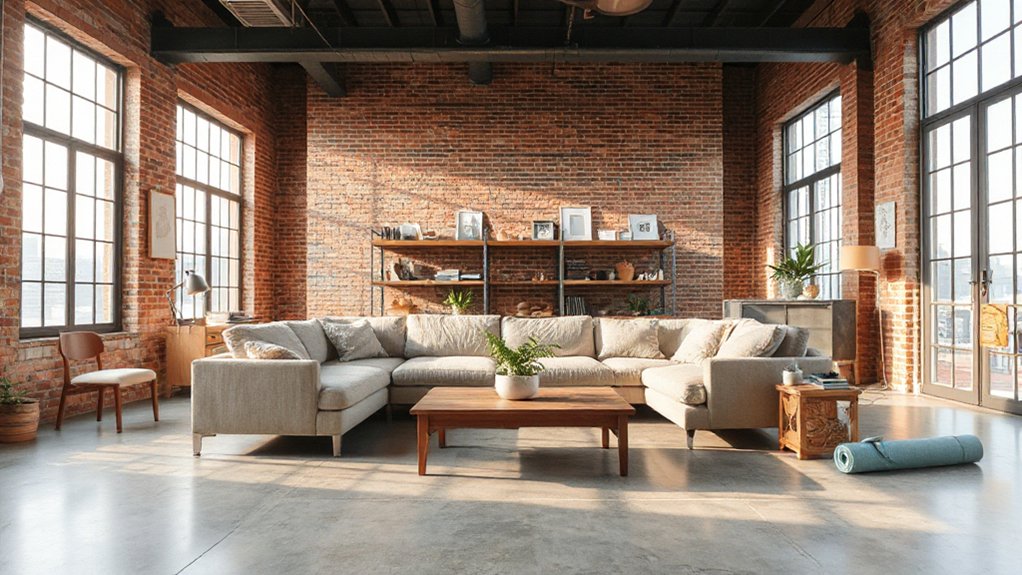
Ready to transform your loft? Start by optimizing light, airflow, and privacy so daylight flows through every zone without glare. Free thick wall clutter with slim, wall-mounted storage, then max vertical space with modular, multi-functional pieces. Layer color, texture, and material contrasts—think warm plaster with cool concrete, matte finishes with brass accents—to craft depth. Zone areas for use and privacy, highlight architectural features, and refine with budget-friendly upgrades. Stay curious—there’s more to unveil beyond this overview.
Assess Your Loft’s Light and Airflow
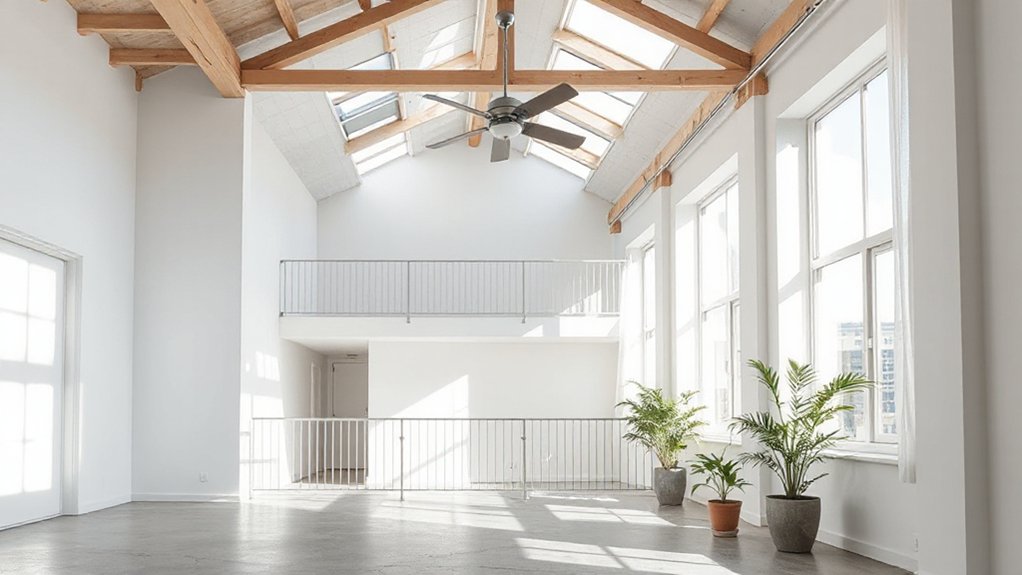
To assess your loft’s light and airflow, start by observing how natural light moves through the space at different times of day and checking for any glare or dim corners. You’ll map spots where daylight hits most and where it fades.
Then, test airflow by opening windows and doors to feel cross‑breeze strength. Note where warm air pools or cool drafts rush in, and consider how changes in furniture placement alter comfort.
Prioritize natural ventilation by aligning airflow paths with openings, vents, and transom gaps.
Gauge daylight optimization by dimming artificial lights during the day and leveraging sunlit zones for tasks. Keep surfaces reflective and uncluttered to maximize light bounce.
Your goal: a brighter, breathable loft that uses less energy.
Free up Wall Space With Smart Storage
Freeing wall space starts with smart storage that tells clutter to stay away. You tap into hidden storage to carve room without sacrificing style. Start with wall mounted solutions that function as both shelves and organizers, keeping everyday items out of sight yet immediately accessible.
Choose slim profiles in matte finishes to blend with loft walls, so vertical space remains your primary canvas. Stack modular bins above the desk, tuck cords into shallow conduits, and deploy magnetic strips for tools you reach often.
Hooks and slim cabinets cling to studs, not drywall, so you don’t weaken old plaster. Integrate a few retractable rails for flexible display, and rotate seasonal items to maintain clean lines.
Smart storage minimizes clutter, maximizes flow, and preserves your open, airy loft aesthetic.
Choose Multi-Functional Furniture for Small Footprints
Multi-functional furniture is your best ally when space is precious. When you choose pieces that serve more than one purpose, you reveal cleaner sightlines and easier traffic flow.
Look for furniture that folds, nests, or climbs—tables that extend, ottomans that store, beds with drawers, and desks that convert to dressers. Your goal is seamless furniture placement that reduces clutter without sacrificing function.
Prioritize lift-off lids, hidden compartments, and modular components you can reconfigure as needs shift. Think vertically: storage under a sofa, wall-mounted desks, bed frames with built-in shelves.
This approach boosts space optimization by minimizing gaps and maximizing usable surface area. With careful selection, your loft feels expansive, tidy, and purpose-driven.
Create Depth With Color, Contrast, and Texture
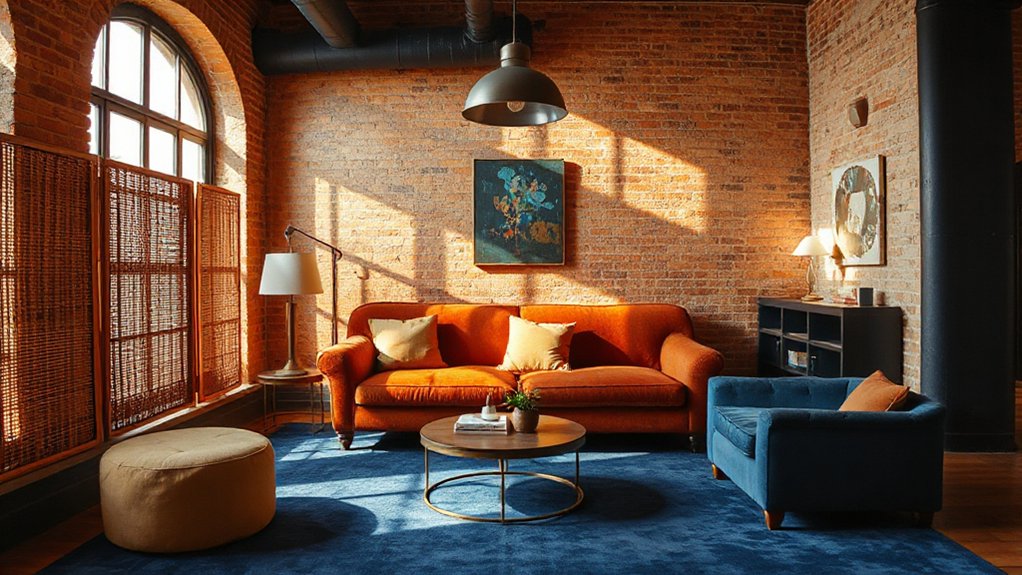
Color creates depth the moment you introduce it. You wield color to carve zones, draw attention, and soften hard lines. Start with a base palette and layer in undertones through textiles, artwork, and cabinetry, so spaces feel cohesive yet dynamic.
Color layering lets subtle shifts accumulate into mood—pastels deepened with a charcoal edge, or warm creams amplified by smoky accents. Introduce contrast with textures: a matte wall against glossy accents, linen beside leather, velvet beside metal. Texture wins in tactile perception, guiding the eye across surfaces.
Pattern mixing adds rhythm; pair a geometric rug with organic cushions, or a striped throw with a floral wall print kept restrained by solid furniture. Used intentionally, depth emerges without clutter.
Zone Your Loft for Light, Privacy, and Use
Zoning a loft starts with a simple map: light, privacy, and use. You’ll translate that map into concrete zones that feel intentional, not crowded. Begin by marking ambient zones: softly lit corners for reading, a work nook, and a quiet retreat away from action.
Use dividing partitions strategically—not to box in, but to carve flow, sightlines, and acoustic cues. Opt for low, movable screens or shelving that double as storage to keep clutter at bay. Prioritize light pathways so daylight travels across the space without glare, and privacy is achieved without walls that trap you.
Assign each zone a purpose, then tune furniture placement, textiles, and color to reinforce it. When done, the loft breathes—distinct yet cohesive.
Plan a Lighting Scheme That Makes Every Nook Shine
A well-planned lighting scheme turns each nook into its own storytelling moment. You map functions to zones: a reading corner, a display shelf, a cooking alcove.
Start with ambient lighting to wash ceilings softly, then layer task lighting where you’ll need focus. Use dimmers so you can adjust mood without changing fixtures.
Decorative fixtures add personality, but keep scale intentional—narrow lofts benefit from sleek sconces or pendants that don’t crowd sightlines. Highlight architectural cues with directional spots, aimed to avoid glare.
Balance warm and cool tones for depth, selecting bulbs around 2700–3000K for coziness and contrast. Place lights at eye level for human scale, not just overhead.
Test layouts at different times of day, refining angles until every nook feels intentional and bright enough.
Highlight Exposed Beams Without Overwhelm
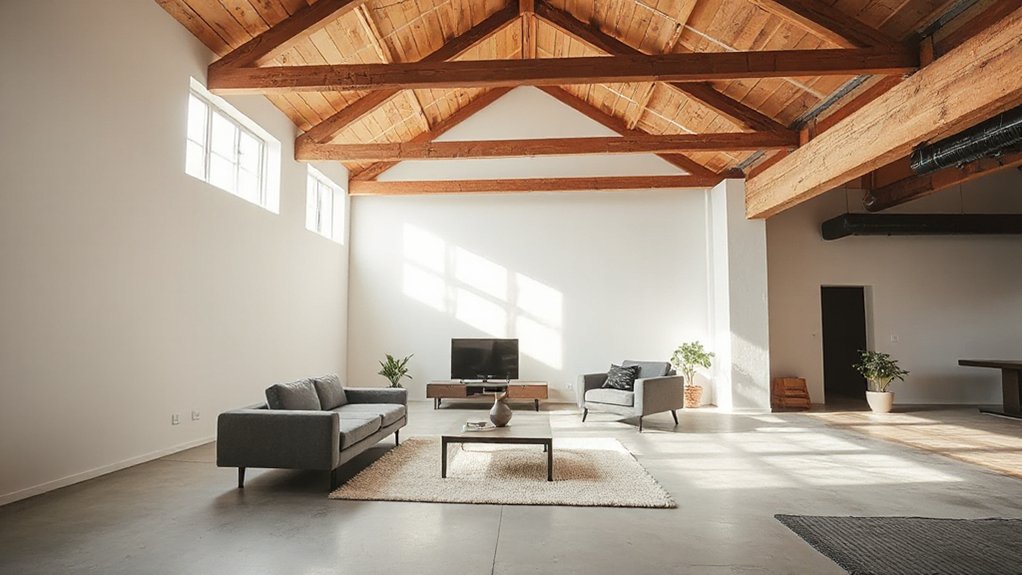
Exposed beams can anchor a loft’s character, but they shouldn’t shout louder than the room. You achieve calm drama by pairing them with restrained palettes and deliberate spacing. Keep the focus upward with matte whites, warm neutrals, and a single accent hue that echoes the wood’s undertone.
Let natural light bounce off pale walls, so the beams read as architectural detail, not decor. Introduce simple, linear furnishings that align with the ceiling’s rhythm, preserving visual balance. When you accessorize, choose minimal metal or glass accents that won’t compete with the timber’s texture.
If the beams feel heavy, lighten nearby surfaces and use soft textures to soften edges. The result is cohesive, not crowded—exposed beams enhancing space without overwhelm.
Budget-Friendly Loft Makeovers With Big Impact
You’ll discover budget-smart loft tricks that stretch your space without breaking the bank. Big-impact space hacks show up in clever storage, multi-use furniture, and smart lighting that makes rooms feel larger.
Start with a precise plan and lean into bold, simple changes that punch above their price tag.
Budget-Smart Loft Tricks
Looking to transform a loft on a shoestring? You can achieve big changes with smart, budget-smart moves. Start by redefining your space with modular furniture that fits tight corners and avoids bulky overhangs.
Prioritize sturdy basics—paint, lighting, and textiles—then layer personality through affordable details. Opt for multipurpose pieces: a sofa bed, storage ottoman, and wall-mounted desks to maximize floor area.
Add impact with industrial decor elements like exposed pipes or metal shelving, but keep lines clean to avoid a cluttered feel. Introduce vintage accents through a single, statement piece—think a weathered mirror or retro lamp—to anchor the room without breaking the bank.
Finish with cohesive color, tactile textures, and purposeful clutter-free staging for a polished, spacious vibe.
Big-Impact Space Hacks
Big-Impact Space Hacks lean on bold choices that amplify even small lofts without blowing the budget. You’ll transform tight footprints with strategic zoning, multifunction furniture, and high-contrast accents that draw the eye upward.
Start with vertical storage and wall-slung shelves to free floor space, then add a fold-and-stow sofa or murphy bed for flexibility. Choose lighting that doubles as decor: track systems, exposed bulbs, or archival fans that cast warm, even light.
Loft lighting should feel intentional, not incidental, and color temperature matters—soft white with a touch of daylight for tasks. Improve comfort with efficient loft insulation, sealing gaps and insulating floors to curb drafts and noise.
Finish with a cohesive palette, texture mix, and a few statement pieces to boost impact without clutter.
Texture and Material Pairings for a Rich Loft Look
Texture and material pairings set the tone you live in—think tactile contrasts that invite you to touch and linger. Mix rough and smooth, matte and gloss, warm woods with cool metals to spark Texture Contrast Tones and Material Mix Mastery.
Start with a bold, textured rug as your anchor, then layer fabrics and finishes to create a cohesive, richly layered loft look.
Texture Contrast Tones
Texture contrast in a loft comes alive when you pair raw materials with refined surfaces, letting depth and light alternately soften and sharpen the space. You mix rugged bricks with smooth plaster, a matte concrete with polished metal, then watch tonal shifts create architectural drama.
To emphasize texture contrast tones, keep a restrained palette—charcoals, warm whites, and mineral hues—so surface differences read clearly. Introduce tactile variety through textiles: a nubby wool rug against slick epoxy, a suede chair beside glass.
Wall art should punctuate without crowding, and ceiling details can draw the eye upward with recessed lighting and discreet molding. Balance shadows and highlights to sustain rhythm, ensuring every surface contributes to the loft’s sculptural, cohesive feel.
Material Mix Mastery
Layer textures and materials to create a tactile, cohesive loft by pairing rugged with refined—think brick with plaster, concrete with brass, or reclaimed wood with glass. You blend surfaces to tell a story, balancing weight and polish across zones.
Start with a neutral canvas—warm plaster walls, cool concrete floors—and layer texture through furniture, textiles, and accents. Introduce industrial elements like steel shelving or exposed piping for edge, then soften with vintage accents: a weathered leather sofa, patinated mirrors, or a distressed rug.
Keep rhythm by repeating materials at varying scales, avoiding visual overload. Let metal contrast with soft textiles, and wood warmth counterbalance glass reflectivity. The result feels purposeful, cohesive, and alive, inviting linger and admiration without shouting.
Real-World Loft Makeovers: Personal Takeaways and Next Steps
Real-world loft makeovers remind us that transformation starts with a clear plan and honest priorities. You’ll see how a bold layout, measured budgets, and a honest list of must-haves shape outcomes more than any single trend.
Start with spaces you actually use, then map how each zone earns its keep. In practice, you’ll borrow from the past and push for function: tall storage, flexible seating, and lighting that hugs architecture. Then test, tweak, and trim, cutting fluff that doesn’t serve daily life.
Your progress hinges on decorative accents and personal touches that reflect you without shouting. Document small wins, note lessons learned, and set next steps: refine workflow, refresh with seasonal textures, and plan a longer-term upgrade that aligns with evolving needs.
Frequently Asked Questions
How Can I Maximize Natural Light in a Dark Loft?
Increase natural lighting by maximizing window exposure and using light, reflective colors; prefer sheer window treatments and minimal clutter. You’ll diffuse daylight, reflect it with mirrors, and choose strategically placed lamps to complement natural lighting.
What Are Budget-Friendly Ways to Create Sound Barriers?
Did you know 60% of room noise comes from walls? You can cut it with DIY acoustic panels and fabric wall coverings. You’ll create budget-friendly sound barriers, maximizing privacy and comfort in your loft with simple, practical steps.
Is It Better to Mix Metallics or Unify With a Single Metal?
Mix metallics thoughtfully: unify with a single metal to create cohesive, timeless appeal. Embrace metallic decor sparingly, then add accents in the unified metal schemes for depth, texture, and a refined, uncluttered look you’ll love.
How Can I Reuse Existing Materials Without a Heavy Look?
You can reuse existing materials without a heavy look by layering reclaimed wood and vintage fixtures lightly, avoiding bulk; embrace understated gaps, playful contrasts, and clean lines, so your space remains airy, witty, and stylishly sustainable.
What’s a Simple Method to Measure Ceiling Height for Furniture Placement?
To measure ceiling height, you stand upright, place the tape against the wall, and record from floor to ceiling—a quick ceiling height measurement. Use it for precise furniture placement tips that fit without crowding or scraping.
Conclusion
So there you are, dreaming big with a budget that refuses to behave. Loft life isn’t a straight line; it’s a zigzag of clever storage, multi-tasking furniture, and color that doesn’t fight the space but woos it. Embrace the beams, chase light, and zone like a tactician with a sense of humor. If your loft ends up feeling too polished, just blame the shelves—after all, satire loves a dramatic, well-organized backdrop. Now go, transform with intention and swagger.