To install a GFCI outlet for code compliance and safety, start by de-energizing the circuit and identifying line and load wires. Use a proper rated GFCI, connect the power wires to LINE and any downstream feeds to LOAD, and guarantee the ground is solid. Mount securely, tighten terminals firmly, and restore power to test the Trip and Reset functions. Verify grounding and label if needed; skipping steps invites risk. If you keep going, you’ll learn more about flawless execution.
Do You Need a GFCI? Quick Requirements by Area
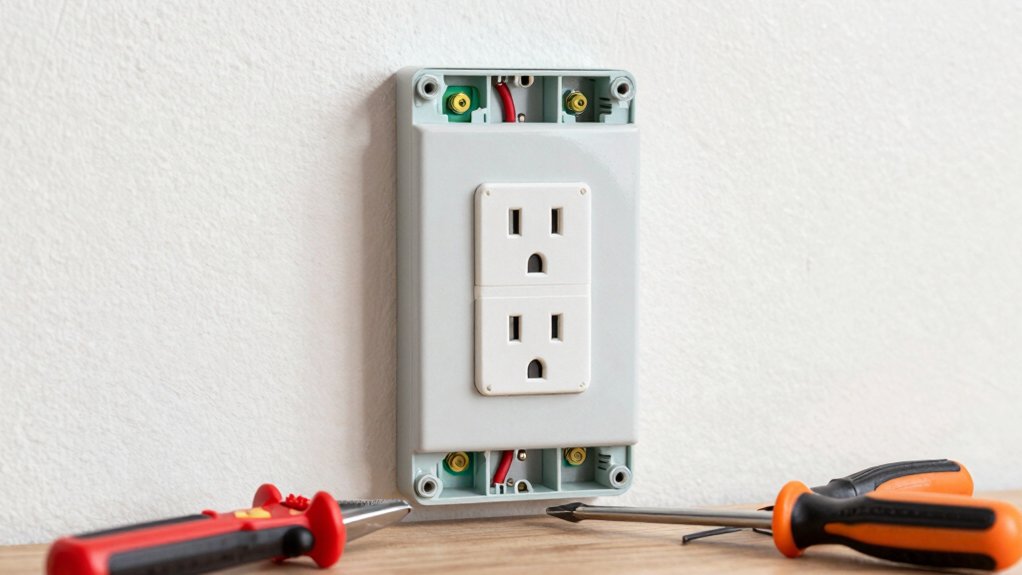
GFCI protection isn’t optional in many spaces—it’s required by code in specific areas and situations. You’ll need to know where a GFCI is mandated and how it affects outlet placement and grounding requirements.
In kitchens, bathrooms, laundry rooms, garages, unfinished basements, and outdoor locations, a GFCI-receptacle or a protected circuit is typically required. Some dwellings use GFCI breakers to cover multiple outlets, aligning with local amendments.
Check if your project involves renovations or new installations, as rules can shift by jurisdiction. For locations exposed to moisture or wet environments, assume GFCI necessity unless code explicitly states otherwise.
Always verify grounding requirements linked to your panel, and plan outlet placement to ensure accessibility, testability, and reliable protection. Then proceed with measured, code-compliant steps.
Tools, Materials, and Safety Steps Before You Begin
Before you begin, gather the essential tools, materials, and safety gear, then review the plan for a code-compliant installation. You’ll need a voltage tester, non-contact preferable, a screwdriver set, wire strippers, and needle-nose pliers. Have a voltage detector, utility knife, and electrical tape on hand.
For materials, acquire a grounded GFCI outlet, compatible electrical box, wire connectors, and new cable if required. Check wire gauge compatibility with the device’s backwire terminals and the circuit breaker’s rating for your circuit. Confirm the circuit breaker is accessible and labeled.
Wear safety glasses and insulated gloves; work with dry hands and dry surroundings. De-energize the circuit, test for absence of voltage, and keep a clear workspace. Follow local codes and manufacturer instructions for a safe, compliant start.
Identify Wiring: Line vs Load and Choose the Right GFCI
To determine where to connect and how to pick the right GFCI, start by identifying line and load wires. The line wires bring power from the panel, while the load wires protect downstream outlets. Use a non-contact tester or multimeter to confirm each conductor’s live status with the switch in the OFF position.
If a cable feeds other devices, designate it as load; if it only powers the outlet, it’s line. Choose a GFCI with the correct amperage rating for the circuit and labeled line and load terminals.
Consider grounding issues; a properly grounded receptacle enhances protection and trips reliably. Consult wiring diagrams for your configuration, ensuring the wiring path from source to load is clear and compliant with code.
Double-check compatibility before proceeding.
Step-by-Step Installation for Code Compliance
Start by confirming the circuit is de-energized and the correct GFCI model is on hand, then identify line and load connections exactly as previously determined. You’ll follow a precise sequence to meet code expectations and guarantee safety, focusing on proper wiring diagrams and grounding issues.
- Mount the GFCI securely in the box, aligning with the wall surface and ensuring the screws bite into a solid support.
- Attach line wires to the terminals marked LINE, tightening each screw firmly without over‑torquing.
- Connect load wires to the terminals marked LOAD, preserving the color order and securing conductors.
- Restore power briefly to verify tripping on fault and correct reset behavior, then finalize with a cover plate and double‑check grounding integrity.
Test, Troubleshoot, and Common Mistakes to Avoid
After wiring the GFCI, you’ll test its function, troubleshoot common issues, and note mistakes to avoid.
Begin by pressing the Test and Reset buttons to ensure the outlet trips a ground fault condition and returns to normal. If it fails to trip, disconnect power and recheck line/load connections, then verify the device is compatible with your circuit.
Common issues include loose wiring, incorrect line/load orientation, and a tripped circuit breaker from overloading the circuit.
If a ground fault persists, test with a known-good tester and confirm the supply is properly grounded.
Don’t bypass protection or substitute a standard outlet.
Maintain clear labeling, and document outcomes for future reference to prevent recurring faults.
Frequently Asked Questions
Can GFCI Outlets Be Installed Outdoors or in Damp Locations?
Yes, you can install GFCI outlets outdoors or in damp locations, provided you choose weatherproof models and weatherproof enclosures. Make certain of correct installation placement, use proper sealing, and consider weatherproofing considerations to prevent moisture intrusion and corrosion.
How Often Should GFCI Outlets Be Tested for Reliability?
Your safety spark fires a quick reminder: test GFCI outlets monthly. In electrical code terms, reliability hinges on routine outlet maintenance; test, reset, note results, and replace if no trip.
Do GFCI Outlets Require a Licensed Electrician by Code?
No, GFCI work isn’t always required to be done by a licensed electrician, but electrician licensing and code compliance demand you adhere to local rules. Hire one when required by your jurisdiction to ensure safe, compliant installation.
What Are Signs a GFCI Is Failing or Tripping Too Often?
“A stitch in time saves nine.” If you notice rising tripping frequency, or indicator lights behaving oddly, you likely have a fault. You’re right to investigate, monitor load, reset properly, and call an electrician if issues persist.
Can Existing Outlets Be Converted to GFCI Without Rewiring?
You can’t safely convert existing outlets to GFCIs without rewiring in many cases; consider outlet conversion only if wiring meets requirements. You must assess Rewiring requirements, then upgrade circuit proper, or hire a licensed electrician for compliant installation.
Conclusion
You’ve learned the essentials, now snap the circuit into obedience. GFCI isn’t just a box; it’s a safety net woven into your walls, catching shocks before they strike. Follow the line and load logic, cap every bare copper, and seal the birth with a test that proves reliability. When the lights blink, you won’t guess—you’ll know. Code-compliant, tool-worn, purpose-driven—you’ve built a safer outlet where water and electricity finally keep their distance.