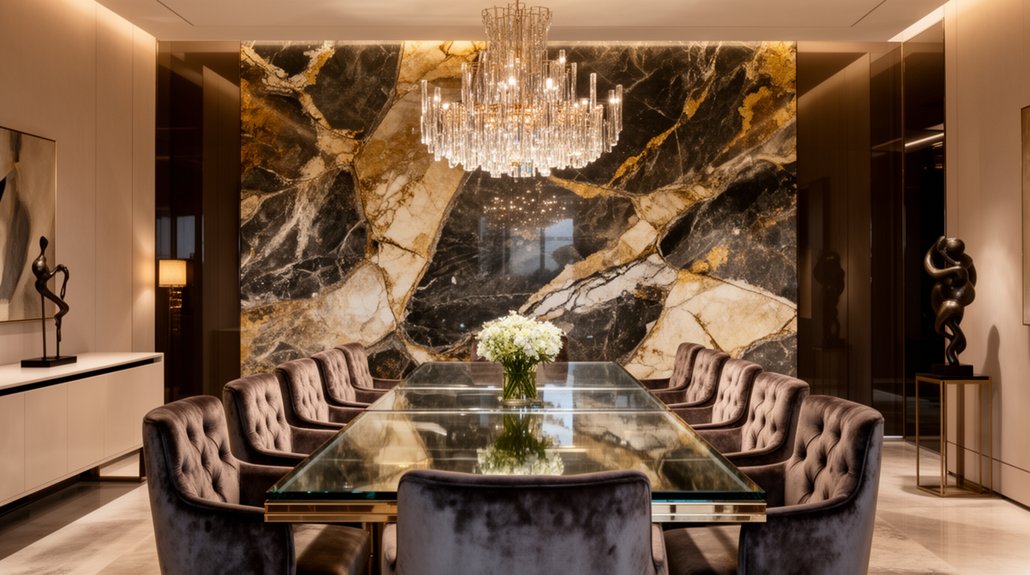
Like a well-placed signature in a gallery, a stone feature wall instantly elevates your dining room. You’ll choose materials with refined veining and uniform color to craft a calm, elegant backdrop, while lighting reveals texture without shouting. The key is balance—proportions that integrate with furniture and scale that keeps the wall as focal, not a dominate statement. Ready to explore how color, texture, and layout combine to create timeless sophistication?
What Makes Stone Feature Walls Feel Luxe
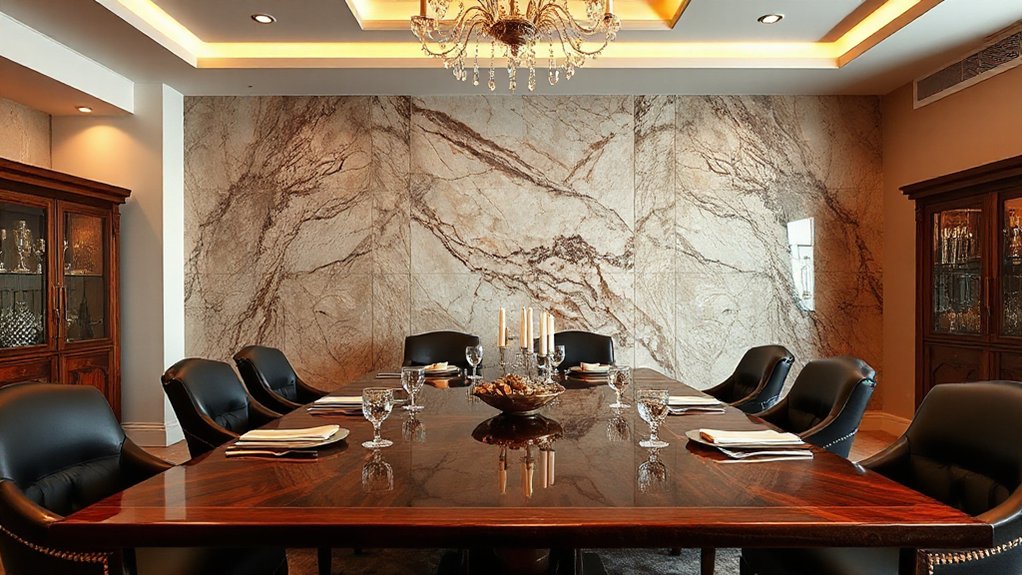
Stone feature walls read as luxe when they balance material quality with design restraint. You optimize texture, scale, and seam precision to elevate perceived value without crowding the room.
The material choice matters: a consistent, finely graded surface reads as sophisticated, while natural variations should remain controlled to maintain uniform light reflection. You pair the stone’s inherent warmth with minimalistic surroundings to cultivate luxury ambiance and modern elegance.
Light handling is critical; you design for balanced illumination that highlights veining and depth without glare. Surface treatment matters too—polish, matte, or honed finishes each convey different tactility and reflectivity.
You also consider installation method, joint consistency, and substrate stability to guarantee durable, visually quiet walls that read as refined, timeless, and intentional.
Pick Stone Types for Your Dining Room
Consider how Natural Stone Varieties, along with Color and Vein Patterns, frame the room’s tone and light play.
Weigh Maintenance and Durability to guarantee the chosen type performs under dining-room use and reveals expected longevity.
This discussion sets the criteria for selecting stone that aligns with both aesthetic goals and practical demands.
Natural Stone Varieties
Selecting the right natural stone varieties for a dining room hinges on durability, aesthetics, and maintenance. You’ll evaluate stone hardness, porosity, and sealing needs to guarantee long-term performance under heat, spills, and frequent use.
For high-traffic walls, opt for dense marbles or granites with low absorption, or consider engineered stone as a practical alternative.
Aesthetic considerations matter: veining, color fidelity, and grain pattern should harmonize with cabinetry, lighting, and furniture.
Eco-friendly options exist—look for suppliers with recycled content, responsible quarrying, and low-emission finishes.
Cultural inspirations can guide material choices, referencing regional stones or historic palettes to create a coherent narrative.
Balance cost against durability, maintenance, and installation expertise to finalize a resilient, refined centerpiece.
Color and Vein Patterns
For a calm atmosphere, favor restrained marble veining with uniform color background, reducing visual clutter while maintaining sophistication. If you seek drama, opt for bolder vein paths and higher contrast, leveraging color contrast to emphasize sculpture-like wall planes.
Consider vein direction relative to furniture alignment; horizontal patterns can widen the room, while vertical cues heighten grandeur. Material finish also matters: polished surfaces enhance glare and reflectivity, while matte or leathered textures temper sheen.
Balance the vein activity with surrounding elements to achieve cohesive, timeless luxury.
Maintenance and Durability
For durability, consider engineered or natural stones with dense crystalline lattices, or high-grade marble and granite variants treated for enhanced performance.
Regular maintenance should be defined by your surface’s exposure and use. Cleaning procedures should be straightforward: use pH-neutral cleaners, avoid acidic or abrasive agents, and promptly blot spills to prevent etching.
Sealing techniques matter; schedule initial sealing after installation and re-seal per manufacturer recommendations to preserve surface integrity.
Pair stone choice with protective finishes and appropriate maintenance intervals to guarantee lasting beauty and function.
Set the Mood With Color, Vein, and Texture
To set the mood in a luxury dining room, leverage color, vein, and texture as deliberate design levers: choose a palette that reinforces the space’s atmosphere, highlight dramatic veining to create focal points, and layer textures to add depth without overpowering the stone feature wall.
You’ll calibrate color temperature with cabinetry and seating fabrics, balancing warm neutrals against cooler stone undertones. Emphasize artistic patterns in inlays or mosaic backdrops that echo the stone’s natural movement, while preserving clean lines for a refined look.
Texture comes from textiles, wall panels, and rug substrates that complement custom finishes on the stone without competing. Maintain restraint by limiting contrast and ensuring proportionate scale, so the feature wall remains the room’s quiet, authoritative focal point.
Layouts to Highlight Stone Without Overpowering
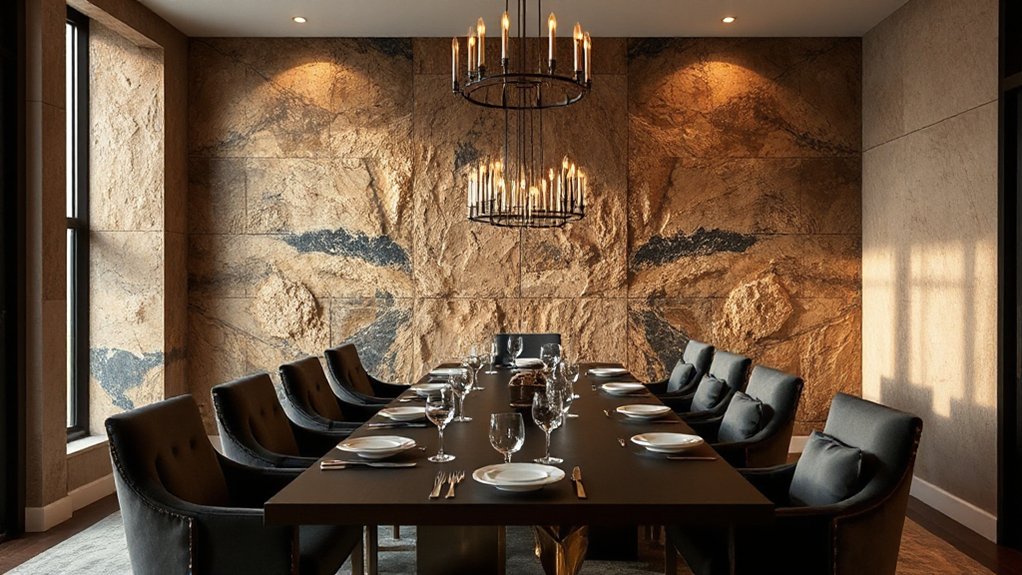
You can achieve a balanced composition by sizing stone features to harmonize with surrounding elements, ensuring proportions support the room’s flow.
Use lighting strategically to reveal texture without creating glare or visual crowding, so the stone remains a focal cue rather than a dominant element.
Emphasize complementary materials and clean lines to guide the eye, pairing balanced stone proportions with lighting that enhances texture.
Balanced Stone Proportions
- Align stone thickness with adjacent materials for seamless shifts
- Use restrained patterns to prevent busyness
- Prioritize flush, precise joints for polish
- Respect scale when layering secondary textures
Lighting to Enhance Texture
When lighting stone surfaces, aim for a layered approach that highlights texture without creating glare or harsh contrasts. You’ll balance ambient lighting with targeted accents to reveal surface depth while preserving daylight cues.
Position wall-washing and grazing fixtures to emphasize veining and relief without washing out tonal variation. Use dimmable LEDs with high CRI to maintain color fidelity and reduce color shift across stone.
Incorporate shadow play by placing fixtures at oblique angles; this creates soft, tactile drama that enhances dimension without overpowering the stone. Make certain beam spread, wattage, and mounting height are calibrated to preserve texture all around the feature wall.
Avoid overlighting; keep the stone as the focal point, supported by restrained, complementary ambient illumination.
Light and Sound: Enhancing Stone Walls in Dining Rooms
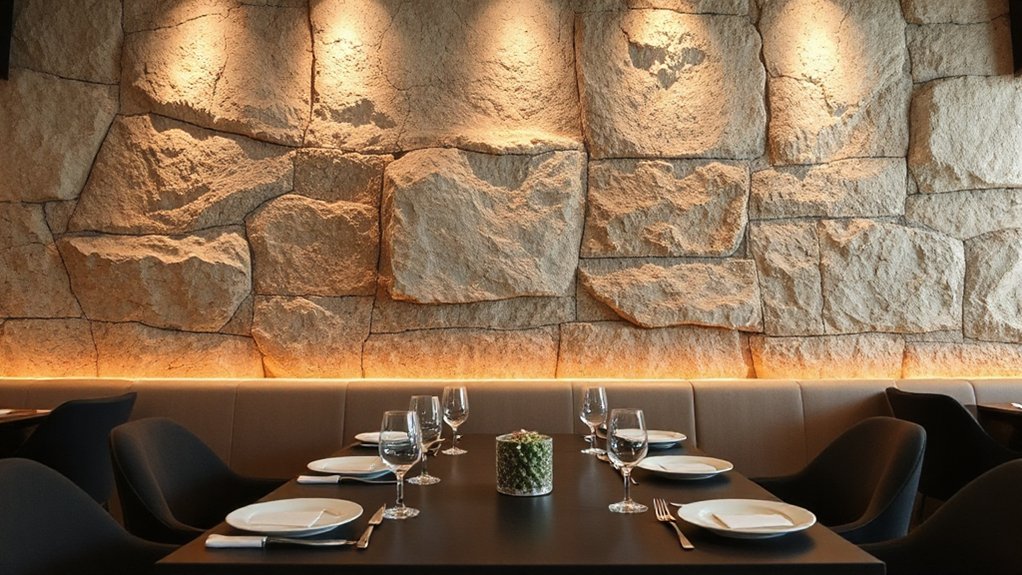
Lighting and acoustics are essential when showcasing stone walls in a dining room, because the right combination enhances texture, color, and ambiance without overpowering the space. You optimize your stone feature by aligning ambient acoustics with precise lighting integration, ensuring sound clarity while maintaining visual impact.
Hard surfaces demand controlled reflections; use calibrated absorbers and diffuse fixtures to balance reverberation. Integrate dimmable LEDs with color tuning to highlight mineral veins without glare.
Strategic placement of sconces and track lighting accents texture, while a discreet ceiling or wall absorber preserves conversation comfort. Pair these elements with a quiet HVAC footprint to avoid masking the stone’s character and the room’s harmony.
- Align ambient acoustics with lighting integration for balanced perception
- Calibrate fixtures to emphasize texture without glare
- Use dimmable, color-tunable LEDs at strategic angles
- Install discreet absorbers to tame reflections without dulling ambiance
Durability, Maintenance, and Protecting Your Investment
Verify substrate preparation, proper sealing schedules, and industry-grade fasteners to prevent movement or veneer delamination over time. Implement routine cleaning using manufacturer-recommended products, avoiding acidic or abrasive agents that degrade surface bonds.
Establish a protective protocol for high-traffic zones and seating, including mats or runners to reduce wear. Plan cost-effective upgrades, such as reinforced joints or non-slip edge profiles, to extend life without extensive renovation.
Favor eco-friendly materials and low-VOC sealers to maintain indoor air quality while preserving beauty and resale value. Regular inspections ensure early remediation, safeguarding your investment.
Frequently Asked Questions
How Much Does a Stone Feature Wall Cost per Square Foot?
A stone feature wall typically costs about $10 to $35 per square foot, depending on material, labor, and complexity.
You’ll see higher prices for natural stone and intricate layouts.
For a precise figure, you should request a formal cost estimation that includes delivery, installation, and potential subsurface prep.
In your planning, consider stone maintenance needs and long-term upkeep.
This approach gives you a realistic budget and guarantees you’re comparing apples to apples across options.
Can Stone Walls Hide Imperfections in Older Rooms?
Yes, stone walls can hide imperfections in older rooms. Think of them as symbols of restoration and resilience, turning flaws into character through texture and tone.
For Historical restoration, you’ll use expert wall concealment techniques, careful plastering, and matched stone to maintain authenticity. You’ll assess substrate, address settling gaps, and install a durable, seamless surface.
This approach delivers a polished, technically sound result that preserves history while concealing cracks and unevenness.
Which Lighting Accents Best Enhance Natural Stone Tones?
You’ll want warm, even lighting that flatters natural stone tones. Use lighting techniques like grazing wall washers at mid-height to reveal texture, complemented by adjustable accent lighting to emphasize color variation.
Keep color temperature around 2700–3000K for warmth, and avoid overpowering glare. Place dimmable fixtures to control contrast, and angle lights to minimize shadows.
This approach prioritizes subtle, precise accent lighting, enhancing stone hues without washing out their natural karakter.
Are There Eco-Friendly Stone Sourcing Options Available?
Yes, eco-friendly sourcing options exist. You can specify stone from quarries with verified sustainability certifications, use recycled-content stone composites, and choose suppliers that track lifecycle impacts.
Eco friendly sourcing emphasizes reduced energy, water use, and responsible quarrying practices. You’ll want to demand transparent material passports and third-party audits.
Sustainable materials include reclaimed stone, low-emission finishes, and carefully managed extraction. By prioritizing these, you guarantee durable, high-performance surfaces aligned with your project’s environmental goals.
How Do I Resize or Replace Damaged Stone Panels?
To resize or replace damaged stone panels, you’ll first assess panel dimensions and attachment methods. Then plan precise cuts with a wet saw.
Remove damaged panels carefully, justify the gap, and template the replacement panel.
Use epoxy or mortar compatible with the stone, secure with appropriate fasteners, and seal joints.
This process aligns with Stone maintenance and Panel replacement standards, ensuring seamless integration and long-term stability.
Confirm you cure and grout accordingly for a durable, polished finish.
Conclusion
You’ll elevate dining with a stone feature that speaks luxury in every facet. Choose calm, uniform veining and durable finishes, then align layout and lighting to spotlight texture without shouting. Consider color temperature and acoustics to refine ambiance, while selecting low-maintenance surfaces that safeguard longevity. Think of your wall as a calibrated instrument—your room’s quiet, confident crescendo. In short, a well-crafted stone wall is investment-grade drama that remains timeless, resilient, and effortlessly sophisticated.