
You’ll likely find it prudent to admit that beauty isn’t enough on a busy site. A Cotswolds‑style garden with gravel drive and cottage lawn demands deliberate restraint and a clear plan. You’ll balance stone, honeyed hues, and soft greens while shaping informal paths and low-maintenance borders. The result should feel effortless yet purposeful, inviting moments of quiet respite. Start with a cohesive palette and textures, then decide how the drive, lawn, and borders will circulate and support year‑round interest.
Defining a Cotswolds-Style Garden: Key Traits and Goals

A Cotswolds-style garden blends timeless rusticity with refined structure, favoring soft, honeyed hues, natural stone, and intimate garden rooms.
You define the look by balancing informal planting with deliberate geometry, ensuring walking paths invite lingering pauses rather than marching lines.
Garden furniture sits thoughtfully within sightlines, inviting casual seating while preserving circulation and focal points.
Water features punctuate calm and movement, providing audible quiet and reflections that enhance stone textures.
You select materials that weather gracefully: oolitic limestone, terracotta pots, and brushed timber finishes.
Plant choices emphasize cottage diversity—blues, creams, and greens—without chaotic repetition.
Scale and proportion remain tight to human scale, creating approachable intimacy.
Your goals are a coherent, adaptable framework that ages gracefully while maintaining modern, low-maintenance expectations.
How to Choose a Low-Maintenance Gravel Driveway
Choosing a low-maintenance gravel driveway starts with purposefully selecting base depth, substrate, and edging that support drainage, longevity, and clean lines. You’ll prioritize well-graded aggregate, compacted subgrade, and a border that keeps gravel in place while maintaining accessibility.
Opt for a permeable, stable base to minimize rutting and weed growth, and choose edging that resists movement without sharp transitions that snag tires. Consider a compacted, angular gravel for consistent density; avoid rounded stones that scatter.
Guarantee proper drainage gradients to prevent pooling near garden features. Integrate garden furniture or water features in adjacent zones to route foot traffic and visually anchor the drive.
Use a professional sealant or stabilization product where appropriate, and schedule periodic top-ups to preserve uniform appearance and ease of maintenance.
Crafting a Cottage Lawn: Layouts, Mowing, and Care
Set the stage with clean layout principles for your cottage lawn, balancing open turf with thoughtful edge work to guide sightlines and foot traffic. Establish mowing rhythm that respects growth patterns and seasonal shifts, pairing a tuned mowing height with a steady cadence.
Keep seasonal care at the forefront—adjusting feeding, aeration, and weed management to preserve a resilient, design-forward lawn.
Layout Principles For Lawns
Designing a cottage lawn hinges on clear layout principles: define paths and borders first, then allocate thoughtfully shaped greens that flow with the surrounding beds. You shape the overall rhythm by aligning lawn edges to sightlines and adjacent features, preserving balance between openness and enclosure.
Establish focal points—a gate, trellis, or perennial border—to guide the eye without clutter. Keep paths narrow and curving to reinforce the intimate, cottage character.
Use hearth-like patches of lawn as gradual stages between gravel drives and planting zones. Integrate Landscape lighting and Irrigation systems to support year-round usability and plant health, but conceal them within borders for seamless aesthetics.
Prioritize scale and proportion, ensuring mowing patterns emphasize soft, undulating contours over rigid geometry. Finally, document zones for maintenance, enabling effortless upkeep.
Mowing Rhythm Guidelines
To keep a cottage lawn looking cohesive with its surrounding beds, establish a mowing rhythm that emphasizes soft, flowing edges and gradual shifts rather than rigid lines. You set a predictable cadence: wide swaths, minimal edge chasing, and a consistent cutting height that respects blade wear.
Favor staggered pass patterns to avoid lap marks and preserve texture, especially near borders and garden furniture. Align mowing intervals with growth rate, adjusting for rainfall so lawns never appear stressed or uneven.
Avoid abrupt changeovers at bed lines; let mower paths curve gently to echo garden curves. Use grass clippings as a light mulch where appropriate, supporting pest control and soil health.
Maintain visibility for maintenance tasks, and guarantee access to tool storage and pest control supplies without clutter.
Seasonal Care Tips
Seasonal care for a cottage lawn hinges on aligning maintenance with the changing weather, not chasing a fixed schedule. You’ll tailor actions to conditions, not calendars, prioritizing durable structure and refined texture.
Begin with soil awareness: test compaction, adjust drainage, and apply a targeted top-dress of compost to sustain moisture.
Manage mowing by height discipline, cutting only a third at a time, and rotate patterns to avoid wear.
Garden composting recycles clippings into nourishment, reducing inputs while strengthening resilience.
When pests threaten, implement pest control strategies that minimize collateral harm, favoring integrated approaches, barriers, and timely interventions.
Schedule seasonal checks for irrigation, shade, and turf wear, adjusting fertilization to growth cycles.
Preserve a cohesive aesthetic through careful bed-edge definition and thoughtful path maintenance.
Edging, Pathways, and Informal Circulation That Feels Natural

In Cotswolds-style gardens, edging, pathways, and informal circulation should read as a seamless continuation of the landscape, guiding movement with understated clarity. You define the route with deliberate restraint, letting form and material choice establish hierarchy rather than signage.
Use natural materials to blend with gravel drives and cottage lawns, such as sawn limestone, unmanaged brick, or timber battens that age gracefully. Edging design should appear as a quiet boundary, not a barrier, curving softly to reflect grass contours and existing grown edges.
Pathways stay narrow, smooth underfoot, and free of clutter, inviting exploration without shouting. Favor continuous mulch or gravel in a single tone to preserve cohesion, and guarantee transitions between lawn and border feel effortless and intentional.
Structured Borders: Texture, Color, and Wildlife Value
Structured borders in a Cotswolds-style garden balance texture, color, and wildlife value with disciplined restraint. You shape layers of foliage to create tactile contrast—glossy greens, soft felty grasses, and mineral-bright blooms—without overpowering the scene.
Choose plant textures that read at a distance and up close, so the border engages as you move along gravel paths. Color is deliberate, not loud: a cohesive palette that shifts with seasons, drawing the eye along the bed’s length.
You design for wildlife value by incorporating structural perennials and woody witnesses that provide shelter and nectar. Consider soil health as a design parameter; repeated mulching and compost feed soil enrichment, sustaining wildlife habitats while strengthening border longevity.
This disciplined approach yields durable, intimate edging with evolving interest.
Integrating Borders With Pockets of Wildflowers
You’ll map Wildflower Pocket Planning to your borders, ensuring pockets read as intentional focal points rather than accidental patches.
Border Integration Techniques guide you to weave seasonal color with structure, so you get continuity across the bed and into the meadow.
Use a concise Seasonal Color Palette to keep the palette cohesive while the wildflowers provide texture, movement, and bursts of spontaneity.
Wildflower Pocket Planning
Can you turn small spaces into vibrant ecosystems by pairing tidy borders with bursts of wildflowers? In wildflower pocket planning, you design micro-planting zones that read as intentional, not accidental. Allocate a pocket near a path or seating area where guests notice color shifts without overwhelming the border line.
Choose a cohesive palette by pairing native plant selection with complementary textures—grasses, forbs, and low shrubs—to sustain year-round interest. Prioritize well-draining soil and sun exposure, then layer plants by height, ensuring visible drama at eye level.
Focus on robust, low-maintenance species that support pollinators and resist neglect. Implement catkin-free seed mixes for predictable bloom windows, and use drip irrigation to conserve water.
Wildflower propagation becomes a scalable element of a refined, cottage-inspired landscape.
Border Integration Techniques
Small spaces deserve composed borders that act as stages for pockets of wildflowers. You integrate borders with careful flow, balancing structure and spontaneity to boost wildlife habitat and soil enrichment.
- Align bed edges to echo the border’s rhythm, creating a seamless shift from lawn to wildflower pockets.
- Layer plant height so shortflowers front, mid-height blooms center, and tall species back, guiding eye naturally.
- Use native grasses as anchors, reinforcing texture while improving soil structure and moisture retention.
- Install narrow, permeable edging to minimize disruption and allow ongoing soil enrichment through leaf litter and microbe activity.
Seasonal Color Palette
Seasonal color should be treated as a guided rhythm across borders and pockets, not as a collection of isolated blooms. You orchestrate the palette to move the eye, balancing bold accents with quiet notes for lasting impact.
Choose a core trio—cool greens, warm neutrals, and a punch of seasonal bloom—to anchor borders and wildflower pockets alike.
Integrate repeating motifs, so a lavender fringe echoes through the herb border and spills toward the gravel drive. Maintain contrast with foliage texture, not just hue, for depth.
Position Garden furniture as punctuation, framing vistas without crowding plant lines, while subtle Water features reflect the palette and extend color through reflections.
Keep maintenance practical: prune for shape, seed for continuity, and rotate emphasis with the seasons.
Year-Round Care and Styling: Practical Tips and Quick Fixes
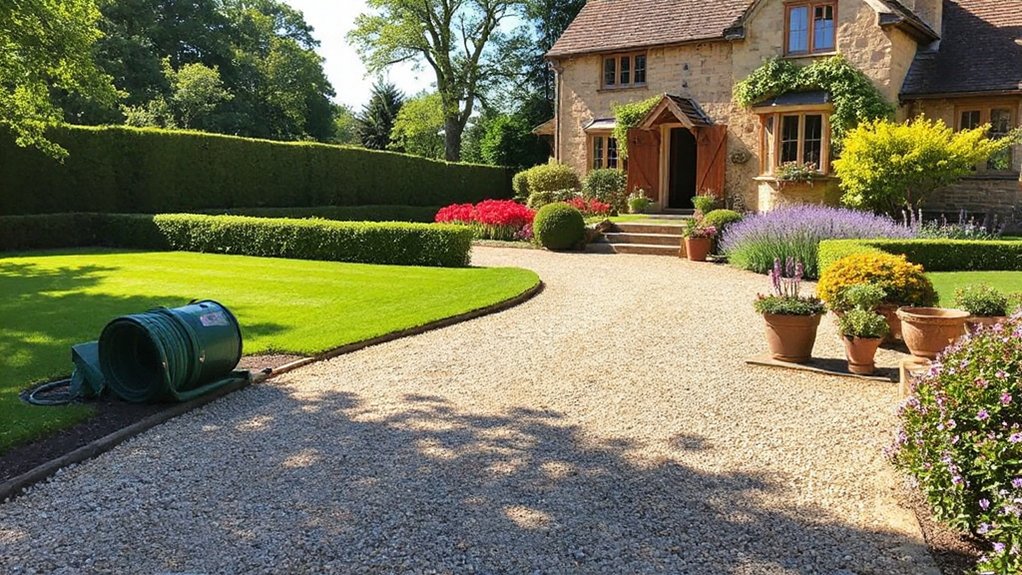
To keep Cotswolds-style gardens thriving year-round, establish a simple, repeatable routine that blends design intent with practical fixes. You’ll protect structure and texture while maintaining a refined, calm atmosphere.
Prioritize four core actions that integrate garden art and water features with ongoing care.
1) Inspect gravel paths and lawns weekly, smoothing edges and removing debris to preserve form and accessibility.
2) Schedule seasonal pruning and composting windows, aligning with flowering arcs and the gravel palette.
3) Clean and reset water features and garden art monthly, ensuring reflections remain crisp and surfaces free of algae.
4) Apply a focused, low-maintenance irrigation plan that supports cottage borders without overwatering.
This approach keeps the look intentional, resilient, and quietly sophisticated.
Frequently Asked Questions
How to Balance Formal Structure With Cottage Garden Whimsy?
To balance formal structure with cottage garden whimsy, you design with clear axis lines and restrained materials, then soften with layered blooms.
Use garden furniture as focal punctuation and decorative ornaments as occasional accents, not overloads.
Maintain crisp bedding edges, repeat a limited palette, and let informal paths weave through structured beds.
You’ll create rhythm by alternating tall and low plantings, ensuring formal form holds while whimsy breathes, guiding the eye gracefully through the space.
What Gravel Colors Best Suit Cotswold Aesthetics?
Gravel colors that suit Cotswold aesthetics are warm and earthy, like amber, honey, and pale buff. You’ll prefer mixes that echo historic stonework, pairing softer taupes with subtle grays to avoid glare.
Don’t fear contrast—opt for pastel color palettes to brighten borders without overpowering the stone. You’re balancing texture and cohesion, delivering a design-forward, authoritative look that feels timeless yet precise.
This approach enhances pathways while supporting cottage garden whimsy and refined structure.
Can You Mix Lawn-Free Zones With Mature Trees Safely?
Yes, you can mix lawn-free zones with mature trees safely, provided you plan shading, root zones, and drainage carefully.
You’ll pair durable groundcovers or artificial turf beneath canopies, keeping turf edges clear of trunks.
Use mulch beds to protect roots, and install irrigation with zones for trees.
Add garden sculptures as focal points, and let a low-profile artificial turf blend with gravel for a cohesive, design-forward look.
Guarantee ongoing maintenance and air circulation.
Which Wildlife-Friendly Plants Thrive in Dry, Gravel-Rich Soil?
Surprisingly, the best wildlife-friendly choices thrive in dry, gravel-rich soil: native grasses and drought-tolerant shrubs. You’ll attract pollinators and birds by planting these smart selections.
You’ll mix robust native grasses like little bluestem and prairie Junegrass with drought-tolerant shrubs such as ceanothus and sage.
You’ll design with texture, keep irrigation minimal, and celebrate resilience.
You’ll create a low-water, high-wildlife, design-forward garden that functions beautifully year-round.
How to Address Drainage Without Compromising Charm?
Drainage isn’t optional—you implement smart drainage solutions that balance form and function. Start by grading surfaces to encourage runoff away from foundations.
Then, install permeable gravel beds and French drains discreetly beneath pathways. Incorporate charming water features as focal points to mask practical tweaks, using hidden channels and programmable pumps for quiet operation.
You’ll preserve charm while avoiding puddles, creating a design-forward garden that stays dry, resilient, and visually cohesive.
Conclusion
A Cotswolds garden isn’t merely a scene; it’s a quiet handshake between stone, turf, and sky. Your gravel drive traces a thoughtful rhythm, your cottage lawn breathes with seasonal ease, your borders whisper textures that invite wildlife. When you maintain, prune, and plant with restraint, you’re tending a living symbol: hospitality in endurance. Let each meander, each pocket of wildflower, be a small oath that beauty and practicality endure together, year after year.