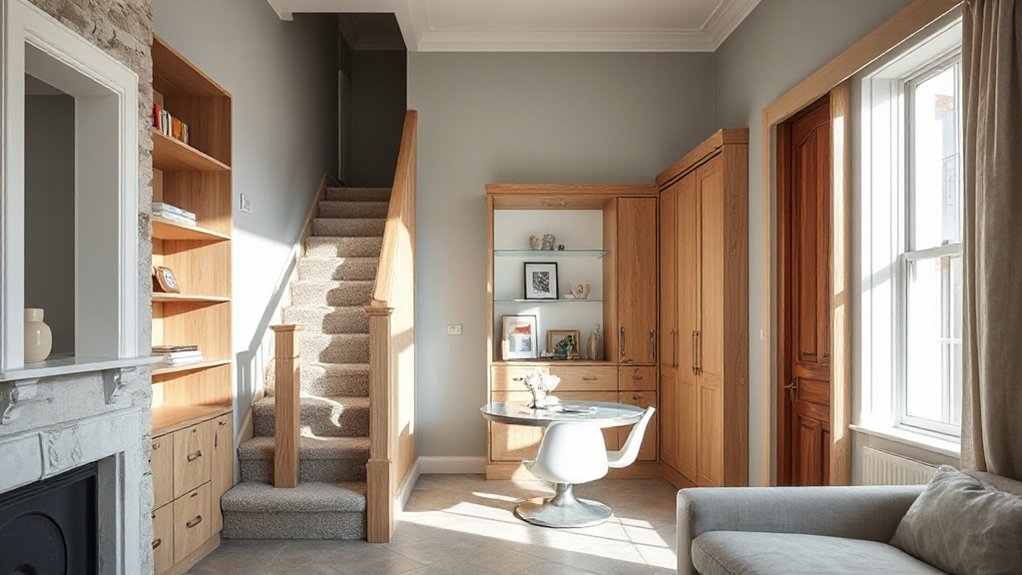
Maximise space in your UK townhouse with smart, design-forward storage that stays practical. Map every usable inch—alcoves, eaves, and under stairs—then plan vertical solutions like ceiling-height wardrobes and modular shelving. Choose space-saving products: wall-anchored supports, slim profiles, and bedframes with built-in storage. Use hidden compartments, fold-away desks, and convertible furniture to keep floors clear. Accessorize with pegboard or slatwall for quick reconfigurations. Curious how to tailor this to your layout? There’s more you can apply.
Assess Your UK Townhouse for Storage Potential

Assess your UK townhouse’s storage potential by mapping every usable inch. You’ll approach each room like a design brief, noting alcoves, eaves, radiators, and high corners that can host built-ins. Measure wall lengths precisely, then translate measurements into scalable storage options, from shallow pullouts to deep shelving.
Align your plan with urban planning realities—public transport access, shared walls, and building codes—and avoid clutter-causing dead space. Factor climate considerations into material choices: moisture-resistant finishes in damp areas, ventilated storage behind wardrobes, and breathable fabrics for linen zones.
Prioritize verticality to maximize footprint without expanding the footprint, leveraging ceiling-height cabinetry and under-stair nooks. End with a prioritized list: must-haves, nice-to-haves, and a phased implementation path for cohesive, durable results.
Choose Space-Saving Wardrobes for British Homes
To maximize storage in British homes, pick space-saving wardrobes that align with your measured plan and the room’s quirks—alcoves, radiators, and sloped ceilings included.
You’ll benefit from a tailored approach: consider deep drawers, slender profiles, and door options that don’t block circulation.
A Custom closet can transform awkward recesses into usable storage with smart dividers and adjustable rails, keeping garments organized and accessible.
For tight corridors, opt for sliding or bi-fold doors to preserve floor space and maintain flow.
Wardrobe design should prioritize modular components, so you can reconfigure as needs evolve.
Finish with a neutral, durable coating that resists wear and reflects light.
In short, precise sizing, strategic internals, and adaptable doors are your quickest wins.
Under-Stair Storage: Hidden, Practical Niches
Under-stair storage isn’t an afterthought—it’s a design lever. You’ll transform wasted depth into practical niches that disappear until you need them. Hidden niches can cradle seasonal gear, cleaning supplies, or shoes, while keeping main circulation clear.
Use shallow pullouts for under-stair drawers to maximise accessibility without crowding the hallway. A smart, compact rail or hooks tucked into lower recesses handles bags or coats without creating bulk.
Finish choices matter: matte lamination or timber veneer reduce glare and feel built-in, not extra. Align drawer fronts with skirting and stair risers for a cohesive, seamless look.
Prioritise adjustable organisers inside each compartment so you grow with your collection. The result: a tidy, efficient passageway that breathes.
Multi-Functional Furniture for Narrow Townhouses
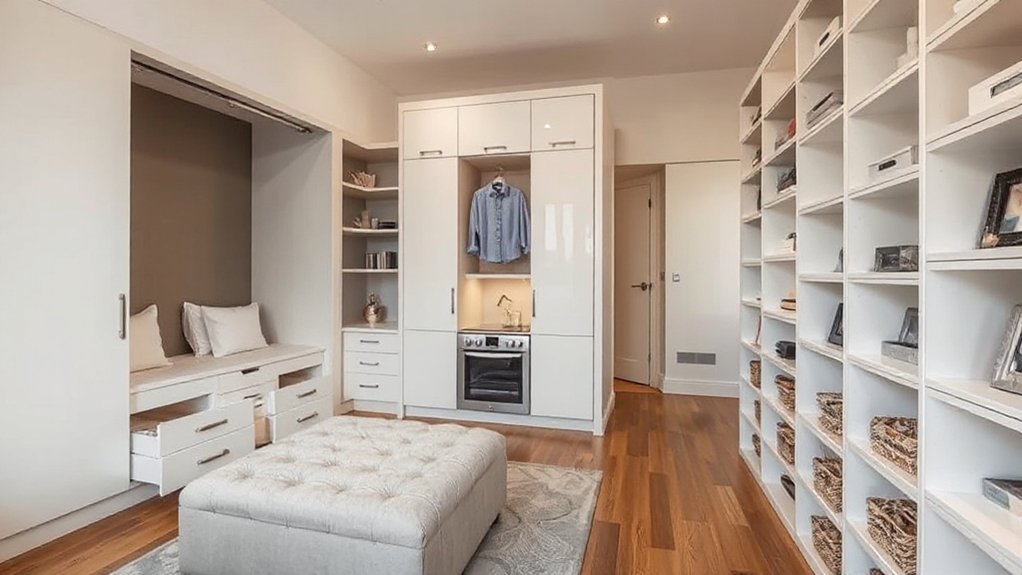
Multi-functional furniture is a clean answer to the space constraints of narrow townhouses. You optimise layouts with pieces that serve dual roles, reducing clutter while enhancing flow.
Choose convertible beds that shift from sleeping to seating without sacrificing floor area, and pair them with compact, built-in storage to keep linens out of sight.
Modular shelving adapts to evolving needs, letting you reconfigure storage as rooms change use, from home office to guest room.
Look for wall-anchored supports and slim silhouettes that maintain generous circulation. Prioritize mechanisms that feel smooth—soft-close drawers, fold-away desktops, and hidden USB recharging.
Colour and material continuity unify the space, making even tight zones feel deliberate. The result is flexible, purposeful rooms that stay tidy without sacrificing character.
Wall-Mounted Storage: Free Up Floor Space
Wall-mounted storage frees floor space by drawing depth from the wall, not the room. You optimize clutter-free zones by using floating shelves and wall mounted units that align with architectural lines.
Choose slim profiles for corridors and entryways to preserve circulation, while higher placements keep sightlines open.
In kitchens, opt for a compact rail system or open brackets that organize spices, mugs, and pans without encroaching on counters.
In living areas, staggered floating shelves create visual interest while maintaining floor clearance.
In bedrooms, mount slim wardrobes or modular wall units to house essentials without bulky footprints.
Prioritize brackets and hardware rated for daily use, ensuring stability.
Consistency in finish and mounting height yields a cohesive, breathable space.
Hidden Utility Storage for an Efficient Home
Hidden utility storage quietly boosts efficiency by tucking essential items out of sight without sacrificing access. You’ll gain linear, clutter-free walls by designating discreet slots for tools, cords, and cleaning kits behind panels or within slim cabinets.
Use hidden compartments integrated into stair nooks, under stairs, and in kitchen islands to maximize usable footprint without visual noise. Prioritize utility concealment that remains accessible—pull-out trays, lift-up doors, and magnetized holds keep essentials at hand yet tucked away.
Choose finishes that blend with existing surfaces to preserve a cohesive look. Plan zones for everyday items, seasonal gear, and electronic cables, ensuring each item has a dedicated, easy-reach space.
This approach supports efficiency while maintaining streamlined, contemporary appeal.
Materials and Lighting That Make Storage Feel Deliberate

Materials and lighting can transform storage from a daytime afterthought into a considered feature. You’ll design shelves and compartments with clean lines, choosing finishes that read as deliberate rather than improvisational.
Opt for consistent material textures across cabinetry, doors, and built-ins to create cohesion that visually expands small footprints. Use lighting strategically: warm ambience for inviting corners, cooler accents to reveal upper tiers and inset niches.
Layered lighting—perimeter LEDs, hidden uplights, and task beams—reduces perceived clutter while guiding you to essentials. Prioritize matte surfaces to minimize glare and fingerprints, then contrast with a subtle gloss only where you want a focal pop.
Keep hardware minimal, aligned, and monochrome to preserve the illusion of seamless, high-precision storage.
Budget-Friendly Storage Plans That Deliver Big Gains
You can boost storage without breaking the bank by integrating budget-friendly space hacks that optimize every inch. Try multi-use furniture that folds, hides, or stacks, and pair it with vertical storage solutions to reclaim floor area.
Start with a simple plan: combine affordable, adaptable pieces with wall-mounted organizers to maximize gains now and scale as needs change.
Budget-Friendly Space Hacks
Even with a tight budget, smart planning can unbolt serious storage gains in a UK townhouse. You’ll gain floor-to-ceiling efficiency by prioritizing verticals: wall-mounted shelves, pegboards, and slim cabinetry that tucks into alcoves.
Use modular, stackable boxes for flexible curation, and label everything for quick retrieval. Embrace creative decluttering to reduce clutter without compromising function, then reallocate freed space to high-use zones.
Opt for multi-purpose surfaces—bedrooms with under-bed drawers, desks with integrated storage, and coffee tables that conceal essentials. Choose light finishes and concealed hardware to sustain a clean, aesthetic organization.
Maximize door real estate with slim over-the-door organizers and hallway nooks for shoes and coats. Finally, schedule quarterly audits to maintain efficiency and prevent regime creep.
Multi-Use Furniture Ideas
Could you squeeze more function from a single piece of furniture? In tight UK townhouses, multi-use designs matter more than ever. Choose convertible beds that fold into wall alcoves or sofa frames, freeing floor space by night and delivering a guest-ready setup by day.
Pair them with fold away desks that tuck into nooks or under stairs, so your workspace vanishes when not needed and reappears with a quick pull. Opt for pieces with integrated storage—footrests, chests, or shelving—to keep essentials accessible without clutter.
Favor slim profiles, solid finishes, and soft-close mechanisms for longevity. Prioritize modular systems you can rearrange as needs shift, maximizing every inch without sacrificing style or function.
Vertical Storage Solutions
Vertical storage can transform a tight UK townhouse without breaking the bank. You’ll gain big gains from budget-friendly plans that focus on high-impact, modular solutions. Prioritize verticals that free floor space while keeping essentials accessible.
Install slim, wall-mounted shelves tiered for cookware, books, or decor, maximizing every inch without crowding rooms. Choose pegboard or slatwall panels to reconfigure quickly as needs shift, reducing clutter and enabling future changes.
Integrate vertical gardening where light allows, using compact, right-sized planters to breathe greenery into tight corridors or kitchens. Pair with wall art storage to conceal diplomas, keepsakes, or cables behind framed pieces.
Keep zones defined: work, relax, store. Durable finishes, hidden hardware, and clean lines ensure a design-forward look that remains practical and scalable.
Room-by-Room Storage Playbook: Corridors, Living Areas, and Bedrooms
Corridors, living areas, and bedrooms demand clever, space-maximizing solutions that stay out of sight yet stay accessible. You’ll map each room with modular, built-in options that slide, hinge, or hinge-less retreat into walls, corners, and underbeds.
In corridors, choose slim cabinets, wall niches, and şəxeled shoe cubbies that double as art displays, keeping sidewalks clear.
Living areas benefit from coffee tables with concealed storage, media consoles hidden behind decorative panels, and ceiling-height shelves that don’t overpower the space.
In bedrooms, opt for storage beds, under-bed drawers, and wardrobe dividers, all designed for quick access.
Favor decorative storage that blends with finishes, and explore vintage solutions that add character without clutter, ensuring every square inch serves a precise purpose.
Frequently Asked Questions
How Can I Maximize Storage Without Sacrificing Natural Light?
You can maximize storage without sacrificing light by using creative shelving and under stair storage that stays open and slim, lets in daylight, and keeps surfaces clear while you optimize every inch for practical, design-forward space efficiency.
What Are the Best Ventilated Storage Options for UK Homes?
Ventilated storage options in UK homes include breathable bins and mesh-front cabinets. You’ll optimize airflow with smart shelving and hidden compartments, keeping items accessible. It’s practical, design-forward, space-saving planning—you’ll feel like you’ve gained a whole extra room.
Which Stubborn Odd Corners Are Easiest to Convert?
The easiest stubborn corners to convert are hidden niches and loft conversions. You’ll carve hidden niches for slim storage and maximize headroom with loft conversions, achieving practical precision, design-forward space optimization that feels seamless and deliberately engineered.
How Do I Disguise Storage Within Living Room Décor?
Sure, you hide storage with style: decorative storage blends in, and hidden compartments vanish till needed. You’ll integrate clever shelves, benches, and art dashboards, maximizing space with precision while staying design-forward, practical, and perfectly unobtrusive. Irony included, of course.
Can Compact Storage Solutions Affect Home Resale Value?
Compact storage can positively affect home resale value, you’ll boost appeal with thoughtful upgrades. Focus on garage organization and closet efficiency, you’ll create a practical, design-forward space that signals optimized living and higher perceived quality to buyers.
Conclusion
You’ll find that great storage isn’t about more stuff, it’s about smarter placement—the same hallway becomes an archive with wall-mounts and hidden nooks, the stairwell doubles as a pantry, and a slim wardrobe reads bigger than its footprint. Coincidentally, the least expected corner often holds the best solution, proving restraint is a design choice. So plan, measure, and refine: small moves, bold results, and a calmer, roomier UK townhouse you’ll actually enjoy living in.